
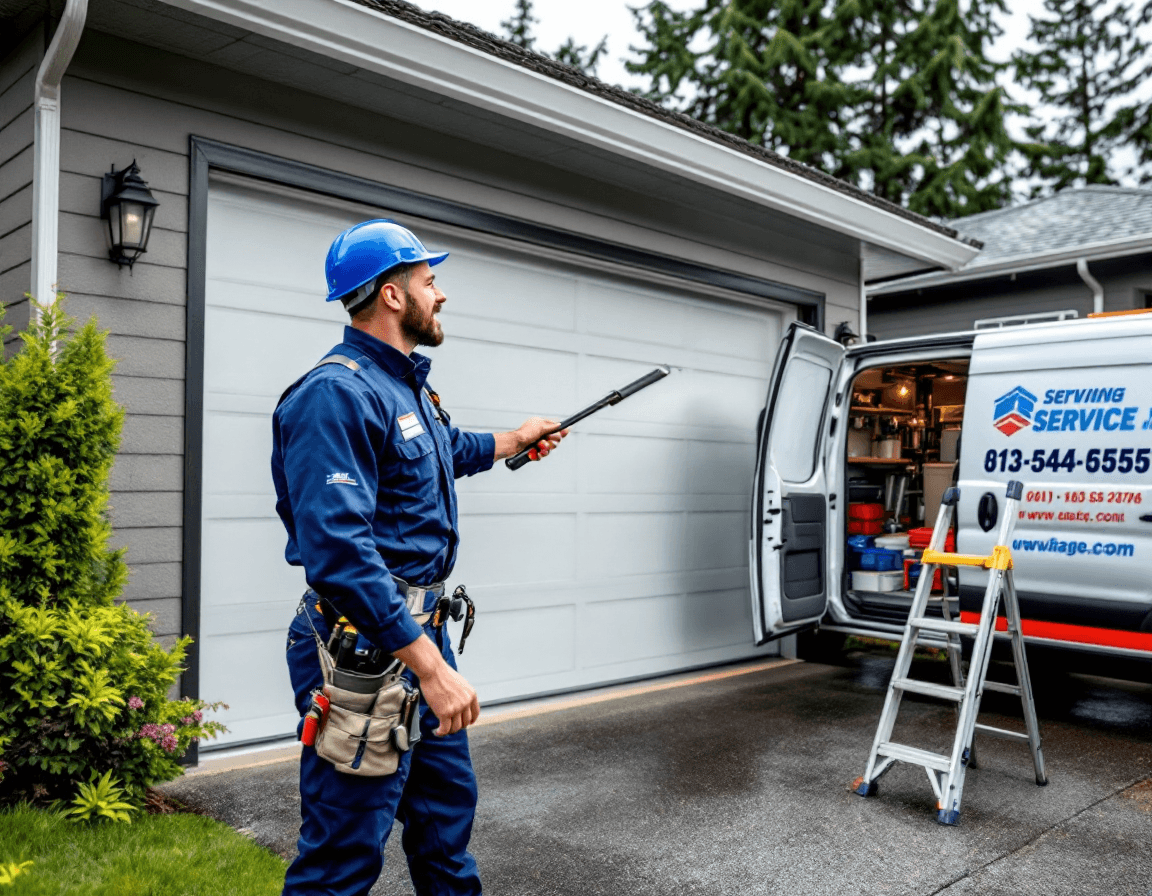
Garage door repair in Duvall, WA is often a matter of getting a stubborn door moving again before the morning commute, a delivery, or a rainy evening makes it worse. Duvall sits in the Snoqualmie Valley, where the Snoqualmie River, the surrounding farmland, and the forested hillsides shape daily life. Many homes here have detached garages, long gravel driveways, and workshops or storage space that gets used hard. When the door stops working, the inconvenience shows up quickly, and so does the question of whether it's a small fix or a bigger problem.
This page covers the most common reasons a residential garage door in Duvall stops opening, closing, or moving smoothly, and what those problems usually mean. We'll go through the symptoms we see most often, from a dead remote to a door that reverses halfway down or sits crooked in its tracks. You'll also find practical guidance on what you can check yourself and where the safety line falls. Our goal is to help you describe the problem accurately when you call and to set realistic expectations about cost and timing.
Seattle Garage Door Fix serves Duvall homeowners with licensed, bonded, and insured technicians who handle repairs on most residential door types, including sectional steel, insulated, wood-look, and older tilt-up models. Most residential repairs we perform fall in the range of $95 to $450, depending on the parts involved and the complexity of the job. A clear description of the symptoms, along with the age and brand of your opener if you know it, helps us prepare for the visit. Call (888) 799-3819 whenever your door is misbehaving, and we'll walk you through what to expect.
Why Duvall Garage Doors Feel the Pacific Northwest Weather
Duvall's climate is one of the first things that shapes how garage doors wear out. Winters bring long stretches of damp air, frequent rain, and cool temperatures that rarely dip far below freezing for long, but rarely warm enough to dry things out completely. That moisture finds its way into hinges, roller bearings, and the bottom of wooden panels, and over time it contributes to rust, swelling, and sticky movement. Homes near the river and in lower-lying pockets of the valley often notice this more than houses on higher ground, since humidity lingers longer in those areas.
Spring and fall bring their own challenges. Heavy wind systems can push against a large, flat door panel, and the tracks and rollers have to handle that force along with the regular daily cycles. The shift from damp winter to dry summer heat can cause metal to expand and contract, which sometimes changes how a door sits on its tracks and how the balance feels when it lifts. A door that worked perfectly in January may start to drag or hesitate in July, and that change is often the weather revealing a part that was already close to its limit.
Rural and semi-rural properties add another layer. Dust and fine debris from gravel roads, pine needles, and leaf litter collect in the track channels and around the bottom seal. Garages in the surrounding countryside also tend to see more wildlife, including raccoons and deer that can bump into a door or chew through weatherstripping. None of these factors automatically means something is broken, but together they explain why a door that seems fine one season may need attention the next.
Reading the Symptoms: When the Door Stops Mid-Travel
A door that stops partway up or down is one of the most common calls we receive from Duvall homeowners, and it's also one of the most informative. When a door halts and stays put, the opener is usually doing exactly what it was designed to do, which is detect resistance or a mismatch in force and shut off. The real question is what created the resistance. Sometimes it's something simple like a buildup of grime in the track, a loose roller, or a rail that has shifted slightly out of alignment.
Other times the stall points to the balance system or the opener's force settings. If a door is hard to lift by hand or feels much heavier at one point in its travel, the counterbalance may be out of tune, and the opener is working harder than it should. Forcing the door to continue can damage the opener, strip gears, or bend track sections. For that reason, we recommend stopping the door, disconnecting nothing, and noting exactly where it stops before trying to force movement.
Pay attention to the pattern. Does the door always stop at the same height, or does it stop at random points? A consistent stopping point often indicates a specific section of track, a particular set of rollers, or a limit setting that needs adjustment. Random stops may point to electrical issues, a worn photo-eye, or intermittent pressure problems. Describing the pattern when you call makes it much easier for a technician to narrow down the cause quickly.
Remote and Wall Button Failures Before You Call
Before you schedule a visit, it's worth checking the simple things that cause a surprising number of "dead door" calls. A remote that doesn't respond may simply have weak batteries, and a remote that works from the driveway but not from the car may be dealing with interference from nearby devices or a fading signal. Wall buttons can stop working because of a loose wire, a sticky switch, or a power interruption to the opener itself. A few quick checks can save time and money, and they also give a technician useful information when you do call.
Start with the basics, and keep it simple:
- Replace the batteries in the remote and test the wall button first.
- Check whether the opener's power light is on, and confirm the outlet or breaker feeding the opener is working.
- Look for any lockout feature or a "vacation" setting on the wall panel, which some openers use to disable remote control.
- Make sure the door is not locked by a manual slide bolt or lock on the inside of the door.
If these checks don't solve the problem, avoid pressing the wall button repeatedly, since that can confuse some openers. Instead, note whether the motor hums, clicks, or makes no sound at all. A hum without movement often points to a drive or track issue, while silence usually indicates a power, switch, or control problem. Describing exactly what you hear or don't hear is one of the most useful things you can do before a technician arrives.
Noises That Point to Specific Parts
Garage doors make noise, and not every sound signals a failure. A bit of rattle when a door starts moving is normal in many systems. The problem is when a sound is new, loud, or consistent in a way that suggests metal is rubbing, bearings are dry, or parts are coming loose. Duvall homeowners often describe a grinding sound that gets worse on cold mornings or a squeal that appears after a rainy stretch, and those patterns can help narrow down the cause.
Grinding that comes from overhead, especially when the opener is running, often traces back to the drive system. Chain or belt-drive openers can develop worn gears or a stretched chain, and the noise tends to be harsh and rhythmic. Squealing is more often associated with dry or corroded rollers, hinges, or a bearing that needs lubrication. Banging, especially when the door reaches the top or bottom of its travel, may mean a loose track bracket, a limit setting that's off, or a worn roller that's knocking against the rail.
Whatever the sound, avoid trying to diagnose the spring or cables yourself. Those components store a great deal of tension, and the sound may be a warning that a spring is weakening or a cable is fraying. Spring and cable work should always be handled by a licensed professional with the proper tools and training. If you hear a sharp snap or see a gap in the spring, keep people and vehicles clear of the door and call for service.
Doors That Reverse Before Hitting the Floor
A door that starts to close and then immediately reverses is frustrating, and it's also a safety feature doing its job. Modern openers are equipped with a force-sensing system and, in many cases, photo-eyes mounted near the bottom of the door tracks. If the sensors detect an obstruction, or if the door encounters more resistance than the opener's settings allow, the door will reverse to prevent injury or damage. In Duvall, we see this often after a leaf, a stray branch, or a bit of mud has moved into the photo-eye's path.
The photo-eyes are two small units, one on each side of the door opening, that send a beam across the doorway. If the beam is blocked or misaligned, the opener assumes something is in the way and refuses to close. Check that both sensors have a steady light, that nothing is covering the lenses, and that the units are facing each other. A sensor that has been knocked out of position by a bumped car or a yard tool is a common cause, and realigning it is often a quick fix.
If the eyes are clear and aligned, the reversal may be caused by the door's own travel. A bottom seal that has become stuck to the floor, a track that has shifted slightly, or a door that needs better balance can all trigger the reversal. Force settings on the opener may also need adjustment if they're set too tightly or have drifted over time. A technician can test the entire sequence and identify whether the issue is with the safety system or with the mechanics of the door.
Crooked Travel, Track Trouble, and Off-Track Doors
When one side of a garage door rises faster than the other, or when the door looks tilted as it moves, the problem usually lies in the tracks, the rollers, or the cable and drum system. A door that is crooked can bind, strain the opener, and eventually come off its tracks entirely. This symptom is especially common in older homes and in doors that have taken a hard impact from a vehicle or a fallen limb. Duvall's wind events and occasional heavy storms can occasionally knock tracks out of alignment without much warning.
Track problems often begin quietly. A bracket that has loosened, a section of track that has been bent, or a roller that has popped out of its channel can change how the door moves without making a dramatic noise right away. Look along the track for gaps, dents, or spots where the door seems to catch. If you can see daylight between the track and the wall or the ceiling bracket, something has likely moved. Do not try to hammer the track back into shape, since that can make the problem worse and create a safety hazard.
An off-track door is an urgent situation. If the door has jumped out of its tracks, do not attempt to lift it manually or force it back into position while the opener is still connected. Disengage the opener by pulling the emergency release cord, keep everyone clear of the area, and call a licensed technician. Doors that have come off their tracks may also have damaged rollers, stressed cables, or bent hardware, so a careful inspection is essential before the door is used again.
Sagging Panels, Gaps, and Weatherstripping on Rural Lots
Sagging panels and visible gaps can make a garage feel drafty and invite moisture, dust, and pests inside. In Duvall, where many garages are used for storage, tools, or hobby work, a gap at the bottom of the door can lead to dampness on the floor and in stored items. A door that sags in the middle or bows outward may also be showing the effects of worn hardware or a balance that is no longer doing its job. Left alone, these issues tend to get worse as the weather changes.
Start by checking the bottom weatherstripping. A seal that is cracked, flattened, or pulled loose will let in water, leaves, and insects, and it is usually one of the easier parts to replace. Next, look at the hinges and the panel connections. Loose hinge bolts or worn brackets can allow the door to shift, and that movement can create gaps along the sides or top. Sagging panels are a sign to look more closely at the rollers, tracks, and balance, since a door that is out of balance puts uneven stress on its sections.
If the door appears to be bowing or pulling away from its frame, have it inspected before it becomes a bigger problem. Panels that have been bent or cracked may need replacement sections rather than simple tightening. Technicians can assess whether the issue is limited to hardware or whether the door's structure has been compromised. In many cases, a combination of seal replacement, hardware tightening, and balance adjustment restores the door's fit and cuts down on drafts.
When a Door Slams Shut Too Fast
A door that drops quickly or seems to slam at the end of its closing cycle is more than an annoyance. It can crack the floor, damage the bottom seal, injure fingers, or strike a vehicle or stored items. Doors that close too fast often have a problem with the opener's close-speed or force settings, or with the balance system that controls how the door moves in both directions. Some openers also have a soft-stop feature that slows the door near the bottom of its travel, and that feature can fail or be set incorrectly.
The first step is to observe the door closing from a safe distance. Notice whether it accelerates steadily or drops in one sudden motion. A sudden drop often indicates a balance problem, since a door that is too light on the counterbalance will fall faster than intended. If the door seems to drop only near the end, the opener's limit or soft-stop setting may need attention. Do not attempt to adjust the springs or tension yourself, since that work requires specialized equipment and training.
Because balance and spring tension are involved, any repair in this category should be handled by a licensed professional. A technician can check the springs, cables, and drum system, verify the opener's settings, and make adjustments within safe limits. In many Duvall homes, a smooth, controlled closing motion can be restored with a combination of spring service and opener calibration. Keep children and pets away from the door until the repair is complete.
What a Typical Duvall Repair Visit Looks Like
Many homeowners want to know what happens once a technician arrives. A typical visit begins with a conversation about the symptoms, including when the problem started, whether it's constant or intermittent, and whether anything changed recently, such as a storm, a vehicle bump, or a battery replacement. The technician then inspects the door, the tracks, the rollers, the hinges, the opener, the photo-eyes, and the balance system. This sequence helps identify the cause rather than simply treating the most visible symptom.
After the inspection, the technician explains what was found and what can be done. Some repairs can be completed during the same visit, such as replacing a remote, realigning a sensor, tightening hardware, or replacing a roller. Others may require parts that need to be ordered, in which case the technician will outline the timeline and any temporary precautions. For spring and cable work, we always recommend a licensed professional, and the technician will explain the safety considerations before any tension-related work begins.
Duvall homeowners often ask whether a repair needs to be scheduled around work hours or household routines. Many of our visits are planned to fit around those needs, and the technician will confirm the expected time window in advance. It helps to clear the area around the garage, move vehicles if possible, and have any relevant model information or previous repair notes on hand. These simple steps help the visit proceed smoothly and reduce the time needed for diagnosis.
Pricing, Safety, and When to Call a Licensed Technician
Most residential garage door repairs we handle fall in the range of $95 to $450. Simpler jobs, such as replacing a remote, adjusting a sensor, or tightening loose hardware, tend to sit near the lower end of that range. Repairs involving rollers, hinges, opener components, or seal replacement often fall in the middle, while jobs that require larger parts or more extensive work may reach the higher end. The final cost depends on the door type, the parts required, and the complexity of the diagnosis, and a technician will confirm the scope before work begins.
Safety should guide every decision about a garage door. Springs and cables are under high tension, and mishandling them can cause serious injury. Doors that have come off track, cables that appear frayed, springs that show gaps, or panels that have bent should be treated as urgent. Keep hands, tools, and vehicles away from the door's path, and do not stand under a door that is partially open and unsupported. If you're unsure whether a problem is safe to handle, the safest choice is to stop and call a professional.
When you're ready to schedule service in Duvall, call Seattle Garage Door Fix at (888) 799-3819. Describe the symptoms, mention any recent changes, and let us know the make of your opener if you have it handy. Our licensed, bonded, and insured technicians will help you understand what's happening with your door and what it will take to get it running safely again.