
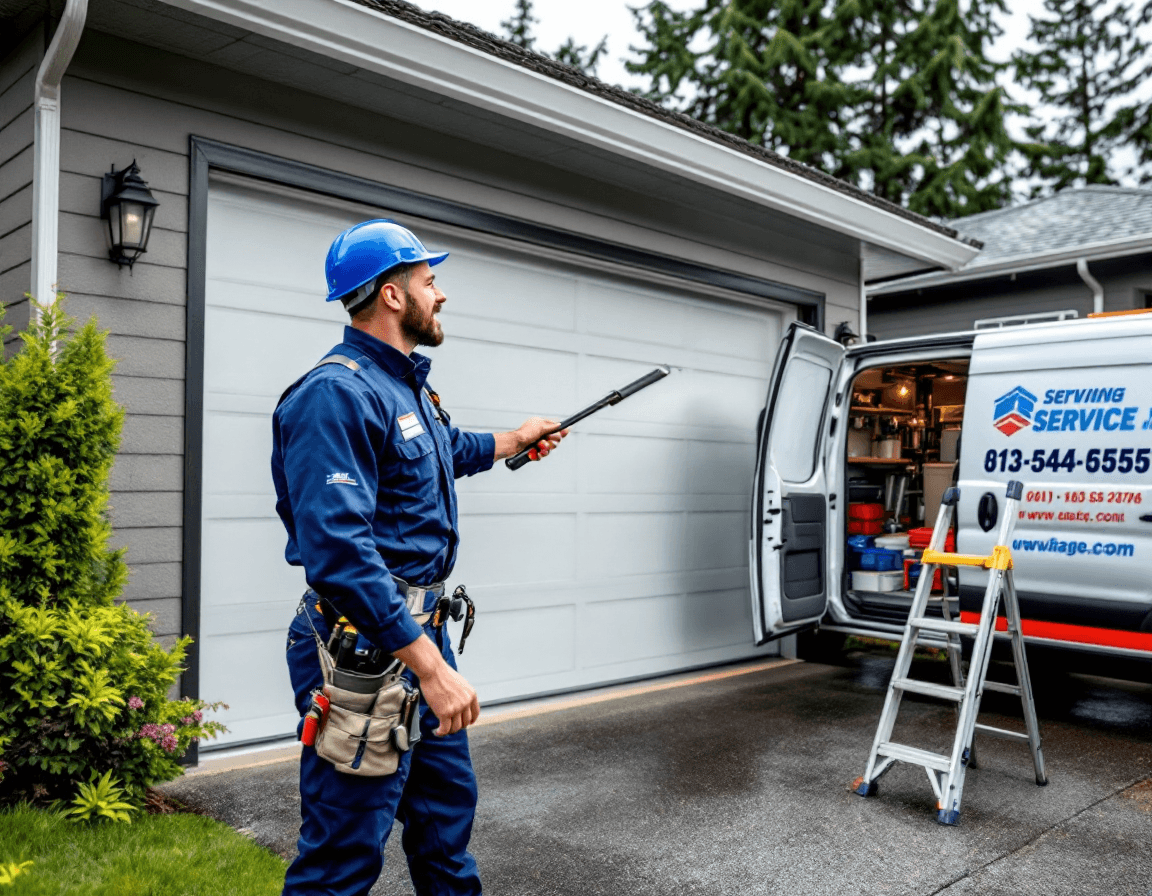
Garage door problems rarely announce themselves politely. A door that sticks at knee height on a gray Tuesday morning, or a remote that suddenly stops responding before a school run, can throw an entire household off schedule. In Monroe, where many homes sit along the Skykomish and Snohomish River corridors and the surrounding farmland, garage doors work hard every day, and they tend to show wear sooner than homeowners expect. Seattle Garage Door Fix handles residential repairs across Monroe and the wider Snohomish County area, and most of the calls we take fall into a handful of familiar patterns.
The good news is that most residential repairs are straightforward once a technician understands what the door is trying to tell you. A door that won't open may have a dead opener, a tripped safety sensor, a misaligned track, or a worn roller that has finally seized. Typical repairs for a single-car or double-car residential door generally fall between $95 and $450, depending on the part involved and how much labor the diagnosis requires. Knowing the symptoms, and knowing which ones are safe for a homeowner to check and which ones need a professional, can save time and keep the household out of trouble.
This page walks through the most common garage door complaints we hear from Monroe homeowners, explains what typically causes each one, and describes how we approach repairs. It also covers the safety line we draw around spring and cable work, the local weather factors that quietly wear down hardware, and simple habits that help a door last longer. If your door is currently stuck, make sure no one is standing under it and keep children and pets clear while you read on.
Why Monroe's Damp Seasons Wear Down Garage Doors
Monroe's climate is one of the main reasons garage doors here need attention more often than some homeowners anticipate. Western Washington winters bring steady rain, heavy morning condensation, and stretches of cold that keep metal surfaces damp well after the sky clears. Moisture is the enemy of steel hardware, and the garage is often the one building component that gets opened and closed dozens of times a week while exposed to the weather. Over several seasons, that combination encourages surface rust on hinges, rollers, and track sections.
The Snohomish River valley also tends to hold humidity, particularly in the lower-lying neighborhoods and around the fairgrounds area where open land and water catch the air. Humidity can make tracks and rollers gummy when lubricant breaks down or collects grit, which then makes the door work harder than it should. Garages attached to older homes sometimes have weather seals that have shrunk, cracked, or pulled away, letting in drafts that accelerate corrosion on the bottom bracket and lower panel. A door that looked fine during a dry August can start to grind by November simply because the environment changed around it.
Because of these conditions, we recommend that Monroe homeowners think of seasonal maintenance as part of owning a garage door rather than an occasional extra. Wiping down tracks, checking the bottom seal, and looking for early rust spots before the first hard rain can prevent a minor roller replacement from becoming a full-door failure. A quick visual check every few months will catch most of the problems described in the sections below while they are still inexpensive to fix.
Reading the Noises: What Grinding, Squealing, and Banging Usually Mean
Sound is often the first clue that something has gone wrong, and each type of noise tends to point toward a different cause. A high-pitched squeal during opening usually signals dry or dirty hinges, rollers, or bearings that need lubrication or replacement. A low grinding noise, particularly one that comes and goes as the door climbs, can indicate worn rollers with flat spots or a track section that has shifted slightly out of plane. Banging or clunking that happens at the top or bottom of the travel often points to loose hardware, a damaged roller stem, or a bottom bracket that has worked itself loose.
Homeowners sometimes assume that a noisy door just needs more grease, but that approach can make things worse. Heavy grease on a track collects dirt, grit, and road dust that drifts into the garage in Monroe's dusty summer months, creating a paste that grinds on every cycle. Lubricant should be applied sparingly to the rollers, hinge pivots, and the chain or belt only if the manufacturer's guidance supports it, and the track itself is typically cleaned rather than oiled. Our technicians will often clean and inspect before applying any product, because the cleaning step alone solves a surprising number of noise complaints.
Banging noises deserve more caution than squealing. If a door clanks loudly and then jerks, there may be a cable, spring, or drum component under strain, and that situation should not be handled by the homeowner. Stop operating the door, keep people and vehicles clear of its path, and call a licensed technician to inspect it. Noises that accompany a door that looks uneven or sits lower on one side are especially important to take seriously, because they can signal a balance problem that worsens with each cycle.
When the Door Reverses Before Reaching the Floor
Many Monroe homeowners first notice a problem when the door starts to close, drops partway, and then rises again before touching the ground. This reversal is almost always the safety system doing its job. Modern garage door openers are required to reverse when they detect an obstruction, and the most common trigger is the photo-eye sensor pair mounted near the floor on either side of the opening. If those sensors are misaligned, obstructed by cobwebs or a stray cardboard box, or receiving too little light on an overcast afternoon, the opener will treat the path as blocked and reverse.
Before calling for service, check the sensors yourself. Look for two small lenses, one on each side of the door near the bottom track, and confirm that the indicator lights on both are steady rather than blinking. Gently wipe the lenses with a dry cloth, since Monroe's dusty fields and wet road spray can leave a film that interferes with the beam. If one sensor is slightly out of line, the bracket may be bumped loose, and nudging it back so the two lenses face each other often resolves the issue. If the lights stay off or the door still reverses, the sensor wiring or the logic board may have failed, and that requires a technician.
Reversal can also come from the door itself. A bent track, a jammed roller, or a section that has come out of alignment can create enough resistance that the opener's force settings interpret the door as obstructed. The opener's force adjustment is not a substitute for repairing the underlying problem, and turning it up without understanding why the door is resisting can damage the opener or the door. Our approach is to test the sensors first, then check the track and rollers, and only then adjust the opener's limits if the door is operating correctly otherwise.
Remotes and Wall Buttons That Stop Responding
A remote or wall button that suddenly does nothing is frustrating, but it is one of the most affordable problems to diagnose. Start with the simplest explanation: the remote battery is weak or dead, which is especially likely after a few months in a cold car or a damp coat pocket. Replace the battery with the correct type, and test the remote while standing close to the opener's receiver. If the door responds to the remote near the garage but not from the driveway, the signal may be weakened by distance, a metal vehicle frame, or interference from nearby devices.
Wall buttons fail for different reasons. The wire that runs from the button to the opener can be pinched, pulled loose at the terminals, or damaged by a nail or staple during a remodel or fence project. In older Monroe homes, the wall button may also share a wire path with other low-voltage lines that have been modified over time. Before assuming the opener is at fault, check that the button's wires are secure and that the button itself is not stuck or broken inside its housing.
Sometimes the remote and the opener have simply fallen out of sync. Many openers have a learn button on the motor unit, and reprogramming a remote is often a few-minute task that requires a ladder and a bit of patience. If you have a keypad or smart-home integration, check whether the code was changed or whether the connected device lost its network connection, since those systems can stop working after a router reset or a power outage. Our technicians can troubleshoot the full control system, including receivers, keypads, and the wiring between them.
Crooked Travel, Off-Track Panels, and Sagging Sections
When a garage door looks crooked, sits lower on one side, or has a gap that wasn't there last winter, the problem is usually mechanical and needs prompt attention. Garage doors are built with a balanced system, and when one side is working harder than the other, the door can twist, rack, or pop out of its tracks. A sagging section is especially concerning because it means the panels are no longer supported evenly, which increases the chance of further damage or a sudden drop.
Visible gaps around the top or sides of the door can indicate several issues at once. Worn rollers may allow the door to wobble as it travels, the track may have loosened from the wall or ceiling bracket, or a hinge may have pulled out of a panel. Off-track doors are a serious matter, and the homeowner should never try to force a panel back into the track while the door is under tension. If a door has come off its tracks, keep the opener disconnected or set to manual, stay clear of the door, and call a technician.
The following signs deserve a professional visit as soon as possible:
- The door sits noticeably lower or higher on one side than the other
- A panel appears bent, dented, or pulled away from its neighbors
- The door wobbles, jerks, or travels unevenly during opening or closing
- Light shows through new gaps at the top, sides, or bottom corners
- A roller or track section appears out of its normal alignment
Each of these conditions can be checked by a trained technician who will measure the track alignment, inspect the rollers and hinges, and determine whether the door can be realigned or whether a component needs replacement. Early repair often costs less than waiting for a complete failure.
Doors That Slam Shut or Stall Halfway
A door that closes too quickly or slams hard against the floor is more than an irritating habit. Rapid closing can damage the bottom seal, the opener's drive system, and the panels themselves, and it can injure someone who is standing near the opening. Usually the cause is an opener setting, a worn gear or belt, or a counterbalance system that is no longer correctly tensioned. In some cases the door's own weight distribution has shifted, making it drop faster than the opener expects.
A door that stalls halfway up or down is a different symptom with its own set of causes. Stalling can come from a jammed roller, a track that has moved slightly, a bottom bracket that has caught on something, or a counterbalance that is no longer lifting its share of the door's weight. Many homeowners in Monroe discover stalling after a long dry spell has been followed by a wet week, when rust or swelling makes a previously smooth track suddenly resistant. Do not repeatedly press the button to force the door, because the opener may keep pushing against an obstruction and strain the components.
When a door stalls or slams, the first step is to turn off the opener and manually check whether the door moves freely by hand. A door that feels heavy, uneven, or jumpy when operated manually has a mechanical issue that requires more than an opener adjustment. Our technicians will evaluate the entire system, including the opener's force and travel limits, the track alignment, and the counterbalance, so that the repair addresses the true source of the problem rather than just the symptom.
Spring and Cable Work Belongs With a Licensed Technician
Garage door springs and cables are the most dangerous components in the entire system. Torsion and extension springs store enormous amounts of tension, and when a spring breaks or a cable frays, the energy can cause serious injury or property damage in a fraction of a second. For this reason, Seattle Garage Door Fix recommends that all spring and cable work be performed by a licensed, bonded, and insured professional with the proper tools and training. Attempting this work yourself, even with online tutorials, is not worth the risk.
Common warning signs of spring or cable trouble include a loud bang from the garage, a door that suddenly feels much heavier, a gap where the spring used to be, or a door that hangs crooked after an unexplained drop. If you see any of these, do not try to lift the door manually or open it repeatedly, and keep vehicles and people out of the garage. A broken spring often leaves the door looser than normal, which can make the door unstable and difficult to control. Stay safe and call for service.
Replacement springs must be sized correctly for the door's weight, height, and track configuration, and the correct tension must be set carefully. Cables must be matched to the drum and routed properly, and mistakes can lead to a door that fails again within days. Because these tasks involve high tension and precise measurements, we treat them as professional-only work regardless of the homeowner's experience level. Monroe homeowners who want a clear explanation of their options will receive it from our technicians before any work begins.
What a Typical Repair Visit Looks Like
Many homeowners wonder what happens once a technician arrives, and the process is more structured than most people expect. The first step is usually a conversation about the symptoms, including when the problem started, whether it happens every time, and whether any noises or changes occurred just before the failure. This information helps narrow the diagnosis before anyone touches the door. Technicians will also ask about the opener brand and age, the door style, and whether the household has made any recent changes, such as new shelving, a new fence, or a remodel that may have affected the wiring.
From there, the technician usually moves through a logical inspection. A standard visit often includes checking the photo-eye sensors and their wiring, testing the remote and wall control, examining the track alignment and roller condition, inspecting the hinges and bottom bracket, and evaluating the springs and cables for wear or damage without performing unsafe adjustments. The technician will explain what they found in plain language and recommend either a simple adjustment or a repair, depending on the situation. Where possible, minor fixes are completed during the same visit.
A few practical tips can make the appointment go more smoothly. Clear a path to the door and the opener so the technician can work without moving boxes, and note any patterns you have noticed, such as whether the door behaves differently in the morning or after rain. If the door is currently stuck closed, let the technician know whether anyone in the household needs to use the garage as a walkway or emergency exit. Clear communication helps the team prioritize the repair and restore safe operation quickly.
Honest Pricing: Where the $95 to $450 Range Comes From
Price questions come up on almost every call, and it is reasonable for Monroe homeowners to want a clear picture before work begins. For most residential repairs, our typical range is $95 to $450. Simple jobs, such as replacing a photo-eye sensor, reprogramming a remote, tightening loose hardware, or lubricating and adjusting rollers, tend to fall near the lower end. More involved repairs, such as replacing multiple rollers, a damaged track section, a bottom bracket, or a larger control component, usually land higher in the range. The actual cost depends on the door, the parts needed, and the complexity of the diagnosis.
Spring and cable replacements are generally priced differently because they involve specialized parts and higher-risk labor. Those repairs fall outside the everyday range described above, and our technicians will provide a specific estimate after inspecting the door. Whenever a repair is needed, we aim to explain the reasoning behind the recommendation, including what happens if the problem is left unrepaired. Some homeowners choose to address a minor issue now and schedule a larger repair later, and that decision is theirs to make with full information.
Be cautious of any provider who promises a fixed low price without seeing the door, or who pressures you into an expensive repair without explaining the safety concern. A responsible technician will document the findings, describe the options, and let you decide. Seattle Garage Door Fix stands behind its work as a licensed, bonded, and insured company, and we believe homeowners deserve transparent conversations about cost before any parts are installed.
Simple Habits That Protect Monroe Garage Doors Year-Round
Preventive care is the most cost-effective way to keep a garage door running smoothly through Snohomish County's wet winters and humid springs. Start by testing the auto-reverse feature every month, which means placing a flat object such as a piece of wood on the floor in the door's path and confirming that the door reverses when it contacts the object. This is a quick safety check that also reveals sensor or force problems early. Repeat the test any time the door has been serviced or the opener has been adjusted.
Next, keep the tracks, rollers, and sensors clean. Wipe dust and grime from the track with a dry cloth, check that the photo-eye lenses are clear, and inspect the bottom seal for cracks or flattening. In late autumn, before heavy rains set in, take a few minutes to look for surface rust on hinges and brackets and address it while it is still minor. A light, appropriate lubricant applied to the rollers and hinge pivots, rather than the track, can help keep the door moving quietly during the damp months.
Finally, pay attention to changes in how the door sounds and moves. Monroe homeowners often notice that a door becomes noisier after a cold snap or a long rain, which is a useful early warning. If the door starts to lean, drag, or reverse unexpectedly, do not wait for the problem to become an emergency. Scheduling an inspection at the first sign of trouble is almost always less expensive than repairing a door after a component has failed completely, and it keeps the household safer in the meantime.
Scheduling Garage Door Repair Across Monroe and Nearby Areas
Our service area covers Monroe and the surrounding Snohomish County communities, including neighborhoods near Downtown Monroe along Main Street, homes close to the Evergreen State Fairgrounds, and the rural and semi-rural properties that spread outward into the valley. Whether your garage is attached to a single-family home in a established neighborhood or sits in a detached building on acreage, the same principles of safe inspection and careful repair apply. Our technicians plan routes to reach Monroe homeowners efficiently, which helps keep appointment windows practical for busy households.
When you call, have a few details ready: the approximate age of the door and opener, the brand if you know it, the specific symptoms you are seeing, and whether the door is currently stuck open, stuck closed, or operating with restrictions. If there is any safety concern, such as a door that has come off its tracks or a suspected broken spring, tell the scheduler right away so the appointment can be prioritized appropriately. Clear information helps us arrive prepared with the right parts and tools.
If your garage door is giving you trouble in Monroe, do not wait for it to fail completely. Call Seattle Garage Door Fix at (888) 799-3819 to speak with a licensed, bonded, and insured technician about fast, reliable residential garage door repair. We will explain what we find, outline your options, and help you get your door moving safely again.