
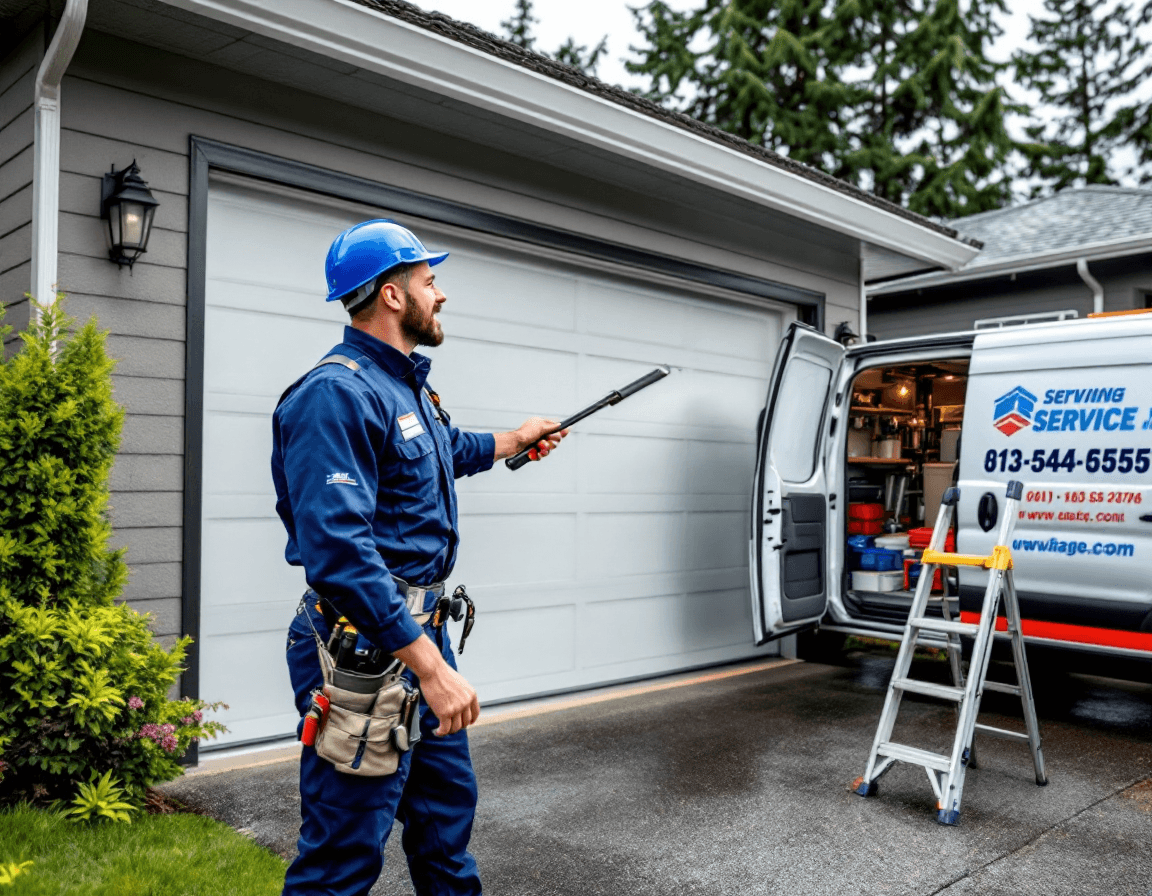
Garage door repair in Snohomish, WA is one of the most common calls we handle in the older neighborhoods around Historic Downtown Snohomish and in the Clearview area, where many homes have single-car or two-car doors that have been running for fifteen or twenty years. A door that won't open, closes unevenly, or stops halfway usually isn't a sudden failure. It's the result of parts that have been working against wet winters, temperature swings, and daily use for a long time. Most of the time the cause is identifiable and the repair is manageable, but only if someone takes the time to read what the door is telling you.
This page explains what we see most often in Snohomish homes, from the 98290 and 98296 ZIP code areas and the surrounding county roads. We'll walk through the symptoms that matter, what they typically mean, and where the line sits between a homeowner's quick check and a job for a licensed technician. We'll also cover what affects the cost, since most residential repairs we perform fall in the $95 to $450 range depending on the parts and labor involved. Nothing here replaces a hands-on inspection, but knowing the basics can help you describe the problem accurately and avoid paying for work you don't need.
If your door is currently stuck, making a grinding noise, or ignoring the remote, you don't need to read the whole page before calling for help. Keep the door closed if it's safe to do so, stay clear of the springs, and call (888) 799-3819 so a technician can look at it. The sections below are here so you can understand the diagnosis when it's explained to you.
Why Snohomish Garage Doors Wear Differently
Western Washington weather is hard on garage doors in ways that aren't always obvious. Our winters bring long stretches of rain, damp air, and temperatures that hover near freezing in the early mornings, while summers are mild enough that many homeowners keep doors closed and never think about lubrication. That combination causes moisture to sit on steel hardware, which leads to surface rust on hinges, roller stems, and the spring system. Over time, rust makes parts move less freely, and the door has to work harder to lift, which strains the opener and the springs.
Wood doors and older insulated steel doors common in historic and mid-century homes near downtown Snohomish have their own issues. Wood panels can swell after a wet season and bind in the tracks, and the seams between sections can open up as the wood dries out in drier months. Moisture also gets into the bottom weatherstripping and the rubber seal along the floor, which can cause the door to drag or hang up on the threshold. A door that stuck in February may slide freely in July, and that seasonal swing often confuses homeowners into thinking something new has broken.
Because our daylight hours shorten considerably in winter, many people open and close their garage doors in the dark or under porch lights. Dim conditions make it harder to notice a door that's sitting slightly crooked or a sensor that's gotten dirty. Checking your door during daylight once or twice a season is one of the simplest habits that catches problems early.
Reading the Warning Signs Before the Door Stops
Most garage doors give warnings before they quit completely. The first sign is often a change in how the door moves: it might start to pause partway up, drift to one side, or take longer than usual to reach the top of the track. Some homeowners notice that the opener motor sounds strained, or that the door feels heavier when they lift the emergency release by hand. These early symptoms are your best opportunity to schedule a repair during normal hours instead of waiting for a weekend breakdown when the family needs to leave for work.
Pay attention to how the door behaves at both the top and the bottom of its travel. A door that moves smoothly through the middle but jerks at the start or end of its path often has a balance issue, a worn roller, or a loose track bracket. A door that looks level when closed but rises with a visible lean may have one side of the spring system weaker than the other. Make a mental note of which side seems to struggle, since that detail can speed up diagnosis considerably.
Finally, watch for changes in the door's seal and fit. If you can see daylight around the edges when the door is closed, or if the bottom seal is cracked or flattened, the door may be sagging or pulling away from its frame. Left alone, that gap lets water and pests into the garage and can gradually stress the panels and hinges. Small adjustments are often enough at this stage, but ignoring the gap usually makes the eventual repair more expensive.
When the Door Reverses Before It Reaches the Floor
A garage door that starts closing and then springs back up before touching the ground is one of the most frustrating symptoms, and it's almost always related to the safety system. Every modern residential opener is required to include photo-eye sensors mounted a few inches above the floor on either side of the door opening. These sensors send an invisible beam across the doorway, and if the beam is interrupted during closing, the door is designed to reverse. This protects people, pets, and vehicles from being pinned.
In Snohomish, sensor problems often begin with dirt, cobwebs, spider activity, and moisture on the lenses. A sensor that's been splashed with road grime during a rainy stretch may not align properly, and a small bump from a broom, a bike, or a recycling bin can knock it out of position. Wiring can also become damaged where it runs along the wall, especially if rodents have been chewing on insulation in the garage. We recommend checking that both sensor lights are steady and that the lenses are clean before assuming a more serious fault.
Sometimes the reversal isn't caused by the sensors at all. If the door's closing force is set too tightly, or if the door has become heavier because of worn rollers or a weakened spring, the opener may detect resistance and reverse as a safety measure. A technician can test the force settings and confirm whether the door's balance is within normal range. Adjusting safety settings is not a job for a casual DIY attempt, because the reverse function is what keeps the door from causing injury.
Grinding, Squealing, and Banging: What Each Sound Points To
Noise is one of the most useful clues a garage door can give you, provided you listen carefully. Different sounds tend to point to different parts, and recognizing them can help you describe the problem accurately when you call. A high-pitched squeal usually means dry or rusted metal rubbing against metal, while a deep grinding noise often signals gears or a drive system under strain. Banging, clunking, or rattling can indicate loose hardware, worn rollers, or a track that has shifted slightly out of alignment.
Here is a quick reference we often share with homeowners to help them describe what they're hearing:
- A squeal that repeats as the door rolls up or down often points to dry hinges, rollers, or bearings that need lubrication or replacement.
- A rumbling or grinding noise from the opener itself may indicate a worn drive gear, a chain or belt needing adjustment, or a motor struggling with added resistance.
- Sharp banging at the top or bottom of travel often comes from loose track brackets, a misaligned track, or a door that is hitting the stops too hard.
- A rhythmic clicking or ticking may suggest a loose roller stem or a hinge that has worked itself partly out of position.
- A deep metallic groan while the door is lifting can be a warning sign related to the springs, which should be inspected by a licensed professional immediately.
Noise alone doesn't always identify the exact fault, so it's worth describing when the sound happens. Note whether it occurs at the beginning of motion, the middle, or the end, and whether it's worse in cold weather. A technician can usually narrow the cause down quickly once they hear the door run through a full cycle. Please avoid trying to tighten or pull on spring hardware while you're investigating a loud noise, since stored tension can cause serious injury even when the door looks still.
Crooked Travel, Uneven Lifts, and Doors Off the Track
A door that looks crooked or moves unevenly is often one of the first problems homeowners notice, and it deserves attention before it becomes a bigger failure. When one side of the door rises faster than the other, the panels can bind, the cables can slacken, and the track can start to pull away from the wall. Off-track doors are more serious, because a door that jumps out of its tracks can drop suddenly or twist badly, creating a real risk to anyone nearby.
Causes of uneven movement include a broken or worn spring on one side, a cable that has frayed or come off its drum, rollers that have worn flat, and track sections that were bumped during a move or a minor collision with a vehicle. Older Snohomish homes sometimes have tracks that were never perfectly level to begin with, so a door that always looked slightly off may suddenly become more noticeable after a few years of settling. In any case, the fix requires careful measurement and balance, which is why we always recommend a technician inspect uneven movement.
If you see a door hanging crooked, don't try to lift or force it manually. Keep vehicles and people away from the opening and avoid using the opener until the door has been checked. A door that is partially off the track can be damaged further by continued operation, and a sagging door can put uneven load on the opener, which may burn out the motor. Calling for a same-day look is almost always the right move in this situation.
Remotes, Keypads, and Wall Buttons That Go Silent
When the remote or wall button does nothing, it's tempting to assume the opener has died. In reality, the problem is often much simpler. Remote batteries lose strength over time, especially in cold weather, and the small coin cells inside keypad remotes and wall controls can drain faster than expected. Before you call, try replacing the batteries in the remote and checking whether the wall button's indicator light responds when pressed. If the light flickers but the door doesn't move, the issue may be with the opener's receiver or wiring.
Signal interference can also cause trouble. New electronics, a neighbor's smart home devices, or even metal shelving placed near the opener can sometimes block the signal. Some openers were programmed years ago and can lose their synchronization after a power outage or a storm that knocked out electricity to the neighborhood. Reprogramming a remote is usually a quick process, but the exact steps depend on the opener brand and model, so the manual or a technician is the best reference.
If the opener appears completely unresponsive, check the breaker and make sure the outlet is still powered. Look for a tripped GFCI outlet if the opener is plugged into one, since moisture in the garage can sometimes cause those outlets to trip. If there's no power, the issue could be in the wiring or the opener's internal circuit board, which requires professional diagnosis. Please don't attempt to open the motor housing while it's plugged in, and avoid working near exposed wiring.
Springs and Cables: The Part Nobody Should Touch
Torsion springs and extension springs carry enormous tension, and they are the most dangerous part of any garage door system. A torsion spring that has broken can release energy with enough force to cause serious injury, and even a spring that appears intact may be under stress that can cause it to fail without warning. For that reason, spring and cable work is something we consider strictly a job for trained, licensed professionals with the right tools and experience. Homeowners should never attempt to wind, unwind, adjust, or remove springs, and should never try to replace a cable on their own.
Signs that a spring may be failing include a loud bang from the garage, a door that suddenly won't lift, a visible gap in the spring coil, or a door that feels much heavier than usual when raised manually. Broken cables are often signaled by a door that sags on one side, hangs unevenly, or drops suddenly. If you suspect either problem, keep the door closed, stay clear of the springs, and avoid operating the opener until a licensed technician has inspected it. Continuing to run the door on a broken spring can damage the opener and create additional hazards.
Replacing springs and cables is one of the more significant repairs we perform, and the cost varies with the size and weight of your door and the type of spring system you have. Our typical residential repairs fall in the $95 to $450 range, but spring replacement can sit at the higher end of that spectrum depending on the materials involved. We always explain what needs to be done and why before any work begins, so you know exactly what you're paying for.
Doors That Slam Down or Stall Halfway
A door that closes too quickly and slams against the floor can be startling and hard on the components. It often indicates that the door is out of balance, that the opener's close-speed or force settings have been changed, or that the rollers and tracks are binding in ways that cause the door to fall faster than it should. In some cases the door may be dropping because a spring has weakened and can no longer hold the weight evenly. Repeated slamming can damage the bottom seal, crack the panels, and strain the opener's internal parts.
A door that stops halfway through its travel is a separate issue but can have overlapping causes. The opener may have detected an obstruction, the door may have bound on a worn roller or a bent track section, or the spring tension may be insufficient to carry the door through the full range of motion. Sometimes a door will stall because of a loose connection in the opener's limit switch settings, which tell the motor where to stop at the top and bottom of travel. Those settings can drift over time, particularly after a power interruption.
Please don't try to force a stalled door by pushing or pulling it up or down. A stalled door can slam or drop unexpectedly once it releases, and it can cause injury to hands or fingers caught in the panel gaps. Use the emergency release only if you understand how it works, and keep anyone else away from the door while you check it. Most stalled doors are diagnosed quickly during a service visit once the balance and travel limits are tested.
What a Typical Repair Visit Looks Like in Snohomish
When a technician arrives for a garage door repair in Snohomish, the first step is usually a walk-around of the door, the tracks, the opener, and the safety sensors. We'll ask you to describe what happened and what you've noticed in the days before the problem appeared. Then we'll test the door through a full cycle, observing how it moves, listening for noises, and checking the balance and travel settings. This inspection helps us identify the root cause rather than simply replacing the part you noticed first.
Repair pricing for most residential jobs falls between $95 and $450. Simpler repairs, such as sensor realignment, remote programming, or minor track adjustments, tend to sit near the lower end, while larger jobs like roller replacement combined with new cables or spring work will usually cost more. The final price depends on the parts needed, the complexity of the work, and the type of door and opener you have. We aim to explain the options clearly so you can decide how to proceed before any repair begins.
It's reasonable to ask questions during the visit. If a part is recommended, you should understand why it's needed and whether any related components are showing wear. Some repairs can be staged, such as addressing an urgent safety issue first and scheduling a lower-priority adjustment later. A good technician will tell you what's essential now, what can wait, and what signs to watch for in the coming months.
Keeping a Snohomish Garage Door Running Through Wet Seasons
Routine care is one of the most effective ways to prevent emergency calls. Because moisture is such a factor in our region, a few simple habits can make a noticeable difference in how your door performs through the wet months. Lubrication should be applied to the right parts using the right type of product, since some lubricants attract dirt or leave residue that causes more trouble. Keep the garage clean, and avoid storing items that trap damp air against the door panels.
Here are several maintenance steps that homeowners in our area can handle safely between professional visits:
- Wipe the photo-eye sensor lenses monthly with a dry or slightly damp cloth, and confirm both indicator lights remain steady.
- Inspect the bottom weatherstripping every few months for cracks, tears, or flattened areas, and replace it if daylight appears around the edges.
- Check the door balance once a season by manually lifting it about halfway with the opener disconnected. A well-balanced door should stay in place without drifting.
- Look over the visible hardware, including hinges, rollers, and track bolts, for rust or looseness, and report anything concerning to a technician rather than tightening spring-related parts yourself.
- Test the auto-reverse function by placing a flat board on the floor in the door's path and confirming the door reverses on contact, then have a professional verify the force settings if the test fails.
These checks take only a few minutes but can reveal problems while they're still small. If anything seems off during the inspection, or if the door has already started behaving unusually, call a licensed technician before it becomes an emergency. Routine checks are never a substitute for professional service on springs, cables, or opener adjustments.
For homeowners in Snohomish, Clearview, and the nearby ZIP codes of 98290 and 98296, reliable garage door repair starts with a clear diagnosis and a respectful, transparent service visit. If your door is stuck, noisy, crooked, or unresponsive, call Seattle Garage Door Fix at (888) 799-3819 and a licensed technician will help you get it moving safely again.