
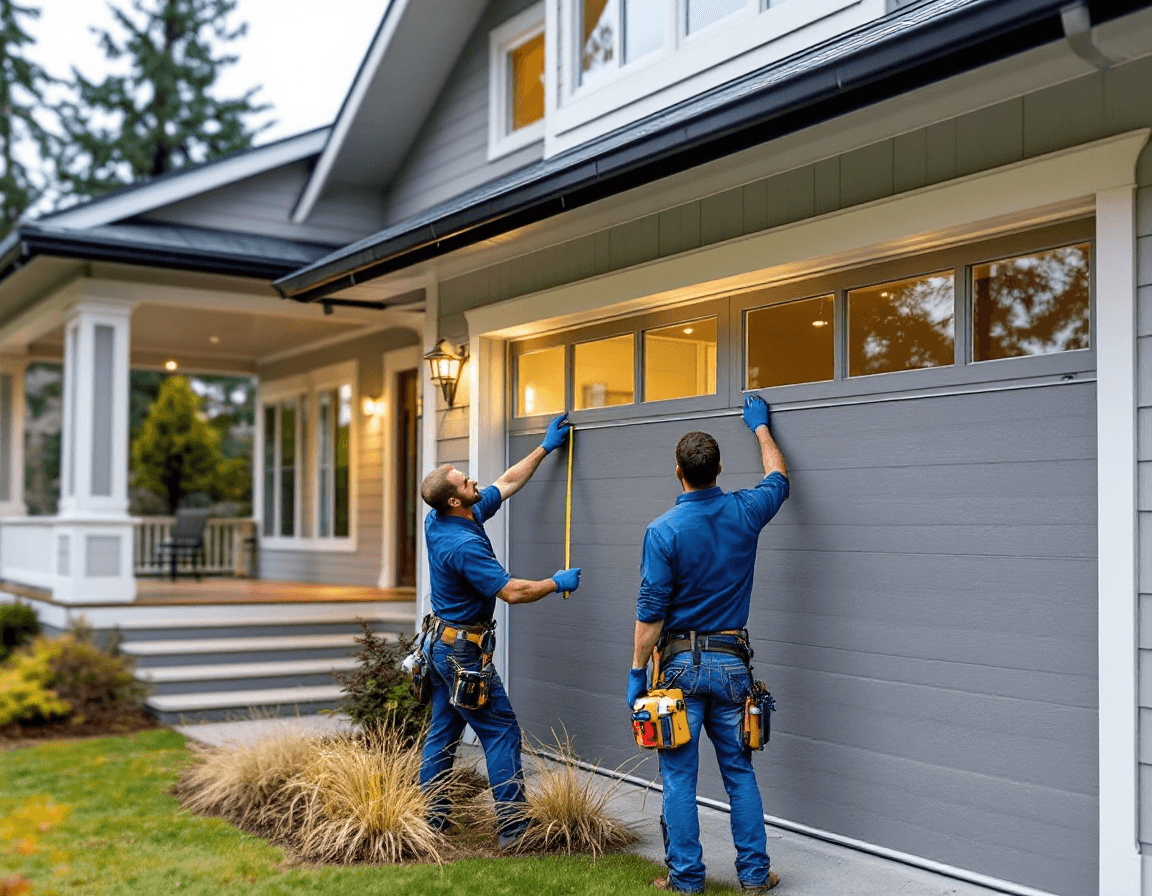
Garage Door Installation & Replacement in Snohomish, WA is often the right call when a door has moved past the point of sensible repair. Homes in this part of Snohomish County have been dealing with wet winters, long gray stretches, and the occasional windstorm off the Cascade foothills for generations, and a garage door takes that punishment every day. If your current door is warped, letting in drafts, or failing again and again, a well-chosen replacement can improve your home's security, comfort, and curb appeal in one project. We install single and double doors in insulated steel, carriage-style, wood, glass, and aluminum, and we work with homeowners across the city and nearby neighborhoods.
Replacement is a bigger decision than a repair, so it helps to know what you are paying for before you start. Installed prices generally run from about $950 to $3,800 or more, and the spread depends on door size, material, insulation rating, hardware, and how much prep the opening needs. A simple steel door on a standard opening sits at the lower end, while a custom wood or glass carriage-style door on a double-wide opening lands higher. This guide walks through how we think about those choices as local technicians, so you can make the decision with clear expectations rather than guesswork.
Every project starts with the same question: what is the door actually doing for your household, and what do you need it to do next? Some owners want a quieter, warmer garage they can use as a workshop. Others want a dramatic street-facing upgrade, or simply a reliable door that stops failing on a weekday morning. Those goals point to different materials and features, and a good installer will ask about them before recommending anything. The sections below cover the factors that matter most in Snohomish and the surrounding area.
Matching a New Door to Snohomish's Older Homes
Snohomish has a long-established character, and many of the houses around the historic core and older residential streets were built with gabled rooflines, covered porches, and modest garages that were designed to blend in rather than dominate the street. A modern flat-panel door with oversized glass can look out of place on a 1920s bungalow, while a plain builder-grade door can make a well-kept older home feel unfinished. The goal is usually a door that reads as part of the house from the sidewalk.
Start by looking at the materials and proportions already on the home. If the trim is painted wood with narrow profiles, a short-panel door with simple recessed detailing often works well. If the house has a deep porch or heavy columns, a carriage-style design with divided top glass and bracing that mimics old barn doors can tie the garage to the front elevation. Colors matter too, and deep greens, charcoal, and warm neutrals tend to suit the local palette better than stark white on a dark siding.
If your property sits in or near the historic downtown area, check with the City of Snohomish before you commit to a major exterior change. Design expectations and review processes can vary by district and by the scope of work, so a quick call to the planning office will save you from redoing finished work. We are happy to share spec sheets, photos, and color options so you can bring something concrete to that conversation.
Insulation Choices for Cool, Damp Winters
Western Washington winters are rarely brutally cold, but they are long, wet, and humid, and that combination makes an uninsulated garage door a surprisingly weak point. Heat escapes through a single-layer door quickly, and cold air leaks around worn seals and gaps at the bottom and sides. If the garage is attached to the house, the door becomes part of your home's thermal envelope, which means it affects heating bills, the temperature of the mudroom, and how comfortable adjacent rooms feel. Upgrading to an insulated door is one of the most noticeable comfort improvements you can make to a garage.
Insulated steel doors are typically built with a foam core bonded between two steel skins, and the R-value you see on a product listing tells you how well it resists heat flow. Higher R-values generally cost more, but the difference is most meaningful when the garage is heated, finished, or used as a living space. For a detached garage used mainly for storage and parking, a mid-range insulated door may give you most of the benefit at a more modest price. We will explain the tradeoffs for your specific setup rather than pushing the highest number on the chart.
Insulation also works best when the rest of the opening is sealed. We check the weatherstripping on the perimeter, the bottom seal that meets the concrete slab, and the stop molding that the door closes against. A new door with a poor seal will still leak air, so we treat sealing as part of the installation rather than an optional extra. Ask us about pairing the door with updated seals if your garage has a history of drafts or moisture near the floor.
Steel, Wood, Glass, or Aluminum: Picking the Right Material for River-Valley Weather
Each material has real strengths, and in our area the wettest months are the ones that reveal the weaknesses. Insulated steel is the most common choice for good reason. It resists dents, holds up well in rain, and comes in a wide range of styles, including faux-wood textures that look convincing from the street. Steel also needs very little maintenance beyond occasional cleaning and a look at the seals.
Real wood carriage-style doors are beautiful and can be a stunning match for an older home, but they demand more attention. Wood expands and contracts with humidity, so a wood door in a damp garage needs proper sealing, a finish that is refreshed on a schedule, and a bottom seal that keeps water away from the panels. Engineered wood and composite products offer much of the same look with better moisture stability, and they are often a practical compromise for homeowners who want the traditional appearance without the constant upkeep.
Glass and aluminum doors bring a more contemporary feel and let in natural light, which can make a garage feel larger and more usable. Aluminum frames are lightweight and resist corrosion, but glass sections should be specified with care for insulation and privacy. Tinted or frosted glass, and panels with insulated glazing units, can reduce heat loss and glare. Whatever material you choose, we will talk through how it will hold up to rain, wind, and the damp air that settles in the foothills during fall and early spring.
Rot and Rust: When Replacement Beats Another Repair
Moisture is the main enemy of garage doors in this region, and it shows up in predictable ways. Wood doors can swell, split, or develop soft spots near the bottom panels. Steel doors can rust at the bottom edge, around hinges, and where the paint has chipped from road salt or rough handling. Aluminum rarely rusts, but its finish can chalk or pit over time, and its frames can loosen if fasteners were set into deteriorated trim. Recognizing the early stages helps you decide whether a repair will buy you a few years or whether the door has reached the end of its useful life.
Here are signs that replacement is usually more sensible than patching:
- Soft or spongy wood on several panels, or rot that extends into the stiles and rails
- Rust perforating the steel skin, not just surface discoloration
- Panels that have bowed or separated, so the door no longer sits flat in its track
- Repeated failures of springs, rollers, or openers on a door that is already out of square
- Gaps at the bottom or sides that let in water, pests, or drafts even after new weatherstripping
If your door shows only one of these issues and the rest of the structure is sound, a targeted repair may still make sense. When two or more appear together, or when the door has been repaired several times in the past few years, a replacement is often the more economical path. We will tell you plainly which situation applies to your garage. Cable and spring work on any door should always be handled by a licensed professional, because the springs carry enough tension to cause serious injury if mishandled.
Carriage-Style Doors and Historic Downtown Character
Carriage-style doors have become popular across Snohomish because they echo the look of traditional barn and carriage doors while providing the convenience of modern operation. Typically they feature vertical or horizontal bracing, decorative hardware such as strap hinges and handles, and sometimes divided glass in the upper panels. On a home with a gable, dormers, or a front porch, this style can make a detached or attached garage feel like a deliberate architectural element rather than an afterthought.
These doors also suit homes with a bit of rural heritage, including properties on larger lots that border open fields and older farm-style outbuildings. The look pairs well with lantern-style lights, timber accents, and natural landscaping. For homes near the historic downtown core, a carriage-style door in a muted finish often respects the neighborhood without imitating a museum piece. Lighting and house numbers deserve equal attention, because the garage door is only one part of the street-facing picture.
Installation details matter with this style. Decorative hardware should be fastened into solid framing, and the hinges and rollers must be matched to the door's weight, which can be substantial on wood and composite designs. We check the header, the jamb condition, and the track alignment before we set the door, because a carriage design that is even slightly out of square will look wrong and wear faster. Our technicians can also advise on finish colors and stain options that hold up better under Pacific Northwest rain.
Sizing, Openings, and Remodel Additions
One of the most common reasons homeowners in this area replace a door is that they are adding a garage bay, expanding a workshop, or finishing a remodel that changes the opening. A standard single door is often around nine feet wide, while double doors commonly run about sixteen feet, but older Snohomish homes do not always follow modern dimensions. Framing can be out of plumb, headers can be undersized for a wider opening, and slab conditions can make sealing a challenge. Measuring carefully is the first step, and it is worth doing before you buy anything.
When a project includes a new opening or an enlarged one, the structural work should be planned with the framing carrier or builder. A wider door may require a larger header, and the header may need to carry load from the roof above. We do not guess at these details. If the opening is changing, we will recommend the appropriate review by a qualified contractor or engineer, and we will confirm what permits your project requires before installation begins.
Remodels also affect the look and function of the door. If you are adding a second story above the garage, the new door should match the proportions of the upper windows. If you are converting part of the garage into living space, you may want a door with a higher insulation rating and an operator that runs quietly enough not to disturb a bedroom or office. Share your plans early, and we can suggest a door size and style that fits the finished home rather than the house as it was before the remodel began.
Wind Loads, Storms, and Securing Your Opening
Snohomish County experiences seasonal windstorms, and a large garage door acts like a sail when gusts push against it. Wide doors are especially vulnerable, and a door that is not properly braced or fastened can bow, pull from its tracks, or be damaged by flying debris. Storm-related damage is one of the main reasons homeowners call us after a bad night, and the causes are often a combination of old hardware, loose fasteners, and a door that was never rated for the exposure of its location.
When you shop for a new door, ask about wind-load ratings and the reinforcement options available for the model. Good installation matters just as much as the product itself. We check the track bracing, the header anchors, and the tension on the springs, and we make sure the locks and handles are fastened into solid framing rather than thin trim. If your home sits on an exposed lot or receives strong gusts from a particular direction, let us know so we can look at additional bracing or a heavier-duty track system.
Security is another reason to choose a quality door. A steel or reinforced wood door with a sturdy lock system is harder to force than a lightweight panel, and a properly installed opener with rolling-code technology reduces the risk of signal capture. We can also discuss keypad and smart-control options, along with the way those features interact with the rest of your home security setup.
What a Typical Installation Day Looks Like
Many homeowners wonder what happens once the new door arrives. A typical installation begins with removing the old door, inspecting the opening, and checking the header, jambs, and slab. We clear out the tracks and hardware, take note of any rot or damage in the framing, and talk with you about anything unexpected before going further. If the opening needs minor repairs, such as replacing a rotted jamb board or shimming a crooked frame, we will explain the work and the cost before proceeding.
Once the opening is ready, the new door is assembled or positioned, the tracks are hung and leveled, and the springs and operator are set according to the manufacturer's specifications. Spring installation is a job for licensed professionals with the right equipment, and this is where we do not cut corners. The door is balanced, the auto-reverse safety features are tested, and the seals are adjusted so the door closes evenly against the stop molding. Most standard replacements can be completed in a single visit, though custom sizes and complex framing work may take longer.
Before we leave, we walk you through the operation of the door, the remote and keypad programming, and the basic maintenance schedule. We recommend a simple routine: check the balance monthly by lifting the door partway and seeing whether it stays put, clean the tracks, and inspect the weatherstripping for cracks or gaps. You should never attempt to adjust, wind, or repair springs or cables yourself. Those tasks belong to a licensed technician.
Budgeting From $950 to $3,800-Plus
Pricing for a new garage door depends on several factors, and understanding them helps you compare quotes fairly. Installed prices commonly range from about $950 to $3,800 or more, with the wider end of that range reflecting custom sizes, premium materials, and extensive hardware. A quote should always list the door model, the insulation rating, the hardware, the removal and disposal of the old door, and any framing or sealing work included. If two quotes differ widely, check whether they describe the same product and the same scope.
Several factors drive the final number. Here is what tends to move the price up or down:
- Door width and whether the opening is single or double
- Material, such as insulated steel, composite, real wood, glass, or aluminum
- Insulation rating and quality of the weatherstripping system
- Decorative hardware, carriage-style details, and custom finishes
- Opener type, including smart controls, keypads, or battery backup
- Framing repairs, header upgrades, or slab work needed to fit the new door
We aim to give you a clear written estimate with no surprises. If a repair to the opening is needed, we will identify it before work begins and explain the reason. Many homeowners find that a mid-range insulated steel door with good seals delivers the best balance of cost, durability, and comfort for everyday use. A premium wood or glass door is a worthwhile investment when the appearance is central to the project, but it should be chosen with eyes open about the added maintenance.
Warranties, Licensing, and Who Should Handle the Old Springs
Warranties vary significantly between manufacturers and between the door, the hardware, and the finish, so read the terms carefully before you buy. Typical coverage may differ for panels, springs, openers, and paint or stain, and some warranties require specific maintenance to remain valid. We will provide the manufacturer's warranty information in writing and explain which parts are covered and for how long. Keep your receipts, installation paperwork, and maintenance notes in one place.
Licensing and insurance matter as much as the product itself. We are a licensed, bonded, and insured garage door company, which protects you if something goes wrong during the work. When you hire anyone for a replacement, ask for proof of coverage and confirm that the people in your driveway are trained to handle high-tension springs and heavy panels. Installing a door is not a weekend project for most homeowners, and the risks of unsafe spring handling are serious enough that professional service is the right choice.
Finally, be cautious about shortcuts. Used springs, mismatched hardware, and do-it-yourself torsion adjustments can turn a good door into a hazard. A correctly installed door, with proper balance and safety reversal, will serve you reliably for many years. If you are weighing a replacement in Snohomish, we are glad to walk through the options, measure your opening, and give you a straightforward recommendation.
If your garage door has become unreliable, drafty, or too worn to repair, now is a good time to plan a replacement that fits your home and your budget. Call Seattle Garage Door Fix at (888) 799-3819 to schedule an on-site assessment and a clear written estimate for your Snohomish property. We will measure the opening, talk through insulation and style options, and help you choose a door that will handle Western Washington weather for years to come.