
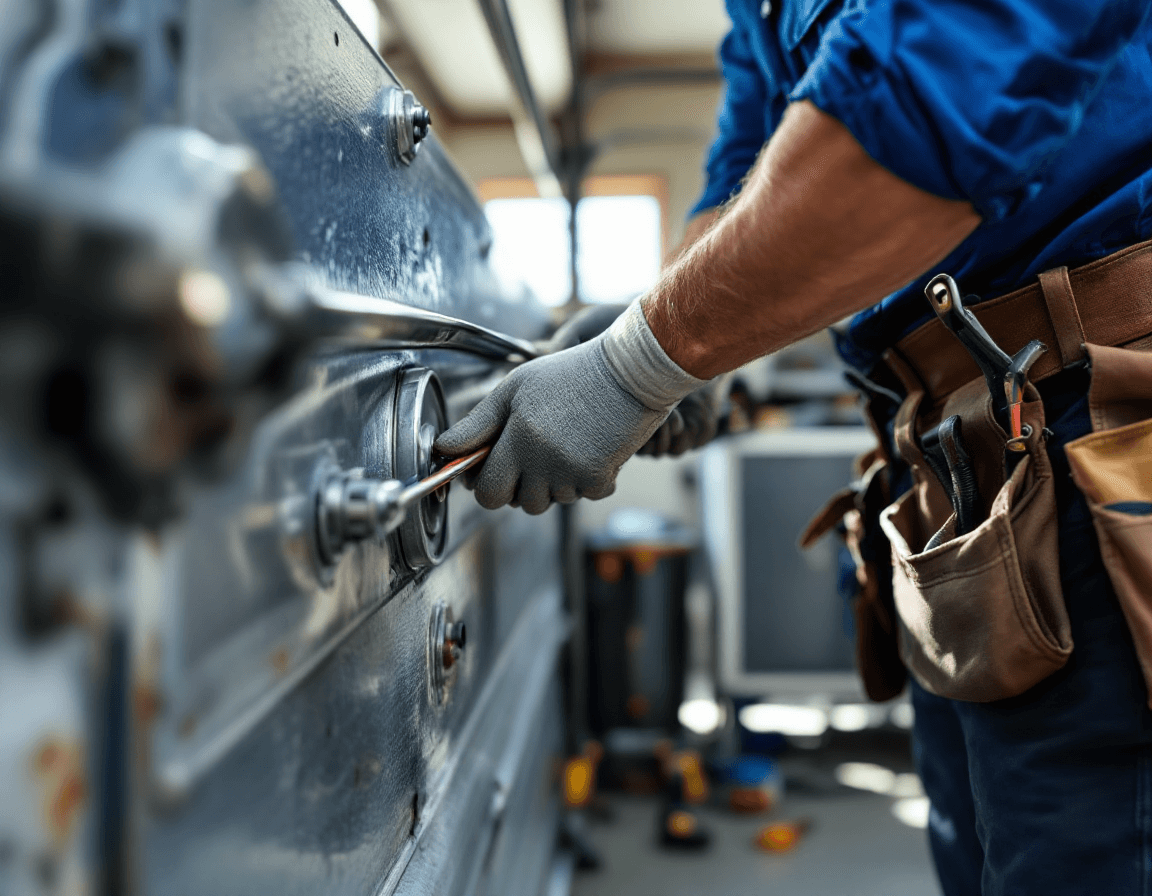
Garage Door Cable Replacement in Snohomish, WA is one of the most common repairs our technicians handle for homeowners from the historic downtown core out to the quieter streets around Clearview. A lift cable that has snapped, frayed, or jumped off its drum can leave a heavy door hanging crooked or stuck halfway open, and it can happen without warning. Because the cables are under very high tension, this is a repair that should be handled by a licensed, insured technician rather than a do-it-yourself project. This page explains what causes cables to fail in our area, how to recognize the early signs, and what to expect when you call for service.
Snohomish homeowners deal with a particular mix of conditions that affect garage hardware. Many properties sit in the Snohomish River valley, where humidity stays high for much of the year and the air carries moisture into every unheated space. Older homes near the center of town may have detached garages or bays that were never built with modern insulation or ventilation. Whether your door is a decades-old wood section door or a newer steel model, the cables and drums are exposed to the same damp, cool conditions, and that steady moisture is hard on steel. This guide is written to help you understand those conditions and make sound decisions about your door.
If you suspect a cable has failed, you do not need to diagnose the problem perfectly before calling. Keep the door closed, keep people and pets away from the door and its tracks, and avoid pulling on the door by hand. Our team can come out, inspect both sides of the door, and explain exactly what needs to be replaced. The sections below walk through the details so you know what to look for and what a proper repair involves.
Why Snohomish Garages Put Extra Strain on Lift Cables
Lift cables are made of braided steel, and steel responds to its environment over time. In the Pacific Northwest, the long stretches of gray, wet weather mean garage interiors rarely dry out fully between storms, especially in bays with a dirt floor, a shared wall with a damp crawlspace, or a door that is opened often in the rain. Moisture settles into the strands of a cable and begins to form surface rust, which weakens the wire from the outside in. Homeowners often do not see this because the damage hides under the braid and along the spots where the cable wraps around the drum.
Temperature swings add another layer of wear. A cold morning followed by a damp afternoon can cause condensation on metal parts, and repeated cycles of expansion and contraction slowly fatigue the steel. Doors that sit closed through the winter months may develop stiff rollers and sticky tracks, which forces the cables to work harder when the door finally moves. That extra resistance is one reason cables in our area sometimes fail at the moment you ask the door to do its normal job, not because the door was abused.
Salt and road grime carried in on vehicles can also reach the lower portions of the cable and the drum. When a vehicle drips water and grit onto a concrete floor, that residue collects near the bottom bracket, and it can accelerate corrosion at the points where the cable is anchored. Keeping an eye on those lower connections during routine checks is a simple way to catch trouble early, and it is one reason our technicians look at the full cable path rather than only the spot that appears damaged.
Reading the Signs That a Cable Is About to Fail
Most cable failures give some warning, even if that warning is subtle. The earliest sign is often a door that seems to rise unevenly, with one side lifting a few inches ahead of the other. You might also notice a faint popping sound during operation or a lurch when the door begins to move. These symptoms usually mean one cable is carrying more load than the other, which can happen when a cable begins to stretch, fray, or slip on its drum.
Visible wear is another clear indicator. Look along the length of each cable for broken strands, which may appear as tiny hairlike filaments sticking out of the braid, or for orange-brown rust patches that feel rough to the touch. A cable that has started to fray should be replaced promptly rather than monitored, because the remaining strands carry the full load and can part without notice. Please do not attempt to inspect the cable while the door is under tension or while anyone is standing in the path of the door.
Watch for these common warning signs that call for professional attention:
- A door that hangs crooked or sits lower on one side than the other
- A sharp snap followed by the door stopping partway open or closed
- Frayed, rusted, or visibly stretched cables along either side of the door
- A door that closes unevenly or seems to bind on one side of the track
- A cable that has come off the drum or looks tangled around it
- A door that feels suddenly heavy or sags when you open it by hand
Any one of these symptoms is enough reason to call for an inspection. Several together usually mean the cable system has been wearing for a while and may need more than a single component replaced.
How a Lift Cable Works Inside Your Door
To understand why cable repair is serious work, it helps to know what the cable is doing. The springs on a garage door, either torsion springs mounted on a bar above the opening or extension springs running along the track, store the energy that makes a heavy door feel light. The lift cables connect the bottom corners of the door to the drums at each end of the spring shaft. As the springs unwind or wind up, they turn the drums, and the cables wrap or unwrap around them to raise or lower the door in a controlled way.
Because each cable is matched to the door's weight and spring tension, the two cables are designed to carry equal loads. When one cable fails, the door loses that balance and the remaining cable is forced to carry more than its share. That imbalance is why a single broken cable can cause the door to jam or twist in its tracks. It also explains why a technician should never simply swap one cable and leave the other one original, since the older cable may be nearly as worn as the one that failed.
The drum itself is a precisely machined component that guides the cable as it winds. Its grooves keep each wrap of cable in position, and any damage to those grooves can cause the cable to bunch, slip, or ride up over the edge. A cable tangled around the drum is often the result of a drum that has been worn, loosened, or knocked out of alignment. For that reason, cable replacement and drum inspection are usually handled together during a single service visit.
Downtown Snohomish Homes and the Garage Setups They Often Have
The historic downtown area of Snohomish contains a wide mix of residential garage configurations. Some properties have detached garages set back toward an alley, while others have attached single-car bays that were added decades after the main house was built. In many of these older structures, the garage opening and framing do not match modern standards, and the door may have been installed on a header that has settled slightly over time. Those small shifts can make the door track less straight and place uneven loads on the cables.
Older doors also tend to use components that have been replaced several times during their lives. A cable installed years ago may have been paired with a newer drum, or a spring may have been changed without the cables being checked. Mismatched hardware can work for a while, but it often leads to uneven wear and sudden failure. When our technicians visit an older property, they check not just the cable but the entire assembly, including the bearing plates, rollers, hinges, and the alignment of the track.
Homes in the Clearview area include a variety of construction eras, and many garages there have been upgraded or expanded over time. The same principle applies: the more the door has been modified or moved, the more important it is to inspect how the cables are routed and anchored. A door that has been reinstalled after a remodel or a foundation adjustment may need its tracks re-leveled before new cables are installed, so the replacement will run true from the start.
Cable Drum Service and Dealing With Tangles
A cable drum that is damaged or out of position can cause problems even when the cable itself is in good condition. Drums can loosen on the shaft, develop cracked or worn grooves, or pick up debris that prevents the cable from seating properly. When a cable slips off a drum, it may wrap unevenly, pile up on one side, or get pinched between the drum and the bracket. Any of these conditions can lead to a second failure soon after the first repair.
Drum service typically involves checking the set screws and bearing plates, confirming the drum is tight on the shaft, and examining the groove wear. Some drums can be cleaned, realigned, and reseated, while others need to be replaced outright. The right choice depends on how much the drum has worn and whether the grooves still hold the cable reliably. Our technicians explain the findings so you know whether the drum can stay in service or whether a new one is the better long-term decision.
Tangles deserve special caution. A cable that has wrapped around the drum in the wrong direction or bunched into a knot can store a large amount of tension, and attempting to untangle it by hand can cause injury. If you see a tangle, keep the door closed, disconnect the opener if it is safe to do so from the outside of the door, and call for service. Do not try to pry the cable off the drum with a tool, because the spring system can release unexpectedly.
What a Licensed Technician Does During Cable Replacement
A proper cable replacement follows a clear sequence, and each step exists for safety as well as performance. The technician begins by securing the door so it cannot move while the work is underway. This usually involves clamping the door to the track or supporting it with specialized locking equipment, and it ensures the door cannot fall during the process. The spring tension is then released in a controlled manner, which is the most hazardous part of the job and the main reason this work belongs in professional hands.
Once the tension is safely managed, the technician removes the damaged cable, inspects the drum and bracket, and checks the other side of the door for comparable wear. New cables are sized to match the door, routed through the drum grooves, and anchored at the bottom bracket with the correct fittings. The system is then carefully re-tensioned, and the door is tested through several full cycles to confirm that it rises and lowers evenly and that the auto-reverse and balance behave as they should.
Here is what a thorough cable service visit generally includes:
- Securing the door and verifying that no spring energy is left unmanaged
- Removing both the damaged cable and any worn fittings or anchor hardware
- Inspecting drums, bearing plates, and the shaft for wear, looseness, or damage
- Installing matched replacement cables sized to the specific door
- Confirming proper cable seating in the drum grooves and correct anchor placement
- Testing the door through multiple cycles and checking the balance on both sides
We recommend that every spring and cable repair be performed by a licensed professional. Homeowners who attempt this work themselves risk serious injury from sudden spring release, falling doors, or whipping cable, and an improper installation can damage the door and opener. Hiring a qualified technician is the safest and most reliable way to restore your door.
Expected Cost Range for Cable Work in Snohomish
Cable replacement pricing in the Snohomish area typically falls between $110 and $300 for most standard jobs. Where a specific job lands in that range depends on several factors, including the size and weight of the door, the type of cable required, whether the drum needs service in addition to the cable, and the access conditions at the property. A heavier double-car door or a door with unusual hardware may require more time and parts than a standard single-car door.
It is also worth knowing what can push the cost up. If both cables are worn and need replacing, that is usually the more economical and safer approach, since the second cable is likely near the end of its life. If the drum, bearing plates, or springs also show significant wear, the repair scope will widen, and the technician should explain each added item before proceeding. A reputable technician will not begin additional work without describing what it is and why it is needed.
Please treat any price range as a general guide rather than a formal quote. Every door is different, and the only way to know the exact cost for your property is to have a technician inspect the system. When you call, describe the symptoms you are seeing, the approximate size and type of your door, and whether the door has been adjusted or repaired in the past. That information helps us prepare for the visit and gives you a clearer expectation of the work involved.
Why Replacing Cables in Pairs Protects Your Door
A common shortcut is to replace only the cable that has visibly failed and leave the other one in place. While this may seem to save money in the short term, it often creates an imbalance that leads to premature wear and another service call. The surviving cable has been carrying the same load for the same amount of time, so it is usually close to failing as well. Replacing both cables at the same time gives the door matched components and a more predictable operating life.
Pairing cable replacement with a check of the springs, rollers, and hinges is also a smart move. The springs are the source of the lifting force, and a spring that has lost tension or cracked will place extra demand on the cables. Rollers with worn bearings or cracked nylon tips can cause the door to bind in the track, which pulls on the cables unevenly. By examining the whole system, a technician can identify the root cause of the cable failure rather than simply replacing the part that broke.
Balance is the final piece. Once the new cables are installed and the springs are properly set, the door should lift smoothly and stay where you leave it when released halfway. If it drifts up or down on its own, the balance needs adjustment. A door that stays balanced reduces strain on the opener, the cables, and the drums, and it helps every component last longer.
Local Service Notes for the 98290 and 98296 Areas
Our technicians serve homes across the 98290 and 98296 ZIP codes, and we understand that properties in these areas vary widely. Some homes sit on older lots with narrow driveways and tight garage approaches, which can make it more difficult to store a vehicle or open the door fully when space is limited. Others have newer garages with insulated doors that are heavier than the older models, which means the springs and cables work under a greater load from the start.
Weather patterns in these ZIP codes are similar to the rest of Snohomish County, with frequent rain and a long damp season. Homeowners in these areas often notice cable and roller problems appear after the wettest months, when the cold and moisture have had time to affect the metal and the track. Scheduling an inspection before the wet season arrives, or right after the first hard freeze, can help catch developing issues before they become urgent.
We aim to arrive prepared for the specific conditions at each address. That means bringing the right cables and fittings for a range of door sizes, checking the access route before work begins, and explaining the repair in plain language so you know what is happening at every stage. If you are unsure whether your door falls into a particular service category, call us and describe what you see, and we will help you decide the next step.
Simple Habits That Extend the Life of Your Cables
Most of what keeps a lift cable healthy happens outside the cable itself. Keeping the tracks clean, lubricating the rollers and hinges with a silicone-based or lithium-based product, and removing dirt and debris from the floor near the door all reduce the strain placed on the cable system. Avoid spraying lubricant directly onto the lift cables, because it can attract grit and does not protect the steel the way a clean, dry surface does. A light wipe with a dry cloth is usually enough to remove surface moisture and grime.
A monthly visual check takes only a few minutes. With the door closed and the opener disconnected if you can do so safely, look at the cables for fraying, rust, or loose fittings, and check whether the door sits level when closed. Listen for new noises during operation, and note any change in how the door moves. Writing down what you observe can help a technician diagnose the problem faster if you need service later.
Finally, schedule a professional inspection on a regular basis, especially if your door is more than a few years old or has been repaired before. A technician can measure cable wear, confirm proper tension, check the drums and bearings, and identify issues that a homeowner would not normally notice. Catching a problem early almost always costs less and carries less risk than waiting for a cable to snap.
If your garage door is hanging crooked, has a frayed or rusted cable, or has a cable that has slipped off the drum or become tangled, please do not wait for the situation to worsen. Call Seattle Garage Door Fix at (888) 799-3819 to schedule a licensed technician for your Snohomish property. We will inspect the cables, drums, and related hardware, explain the repair options clearly, and get your door moving safely again.