
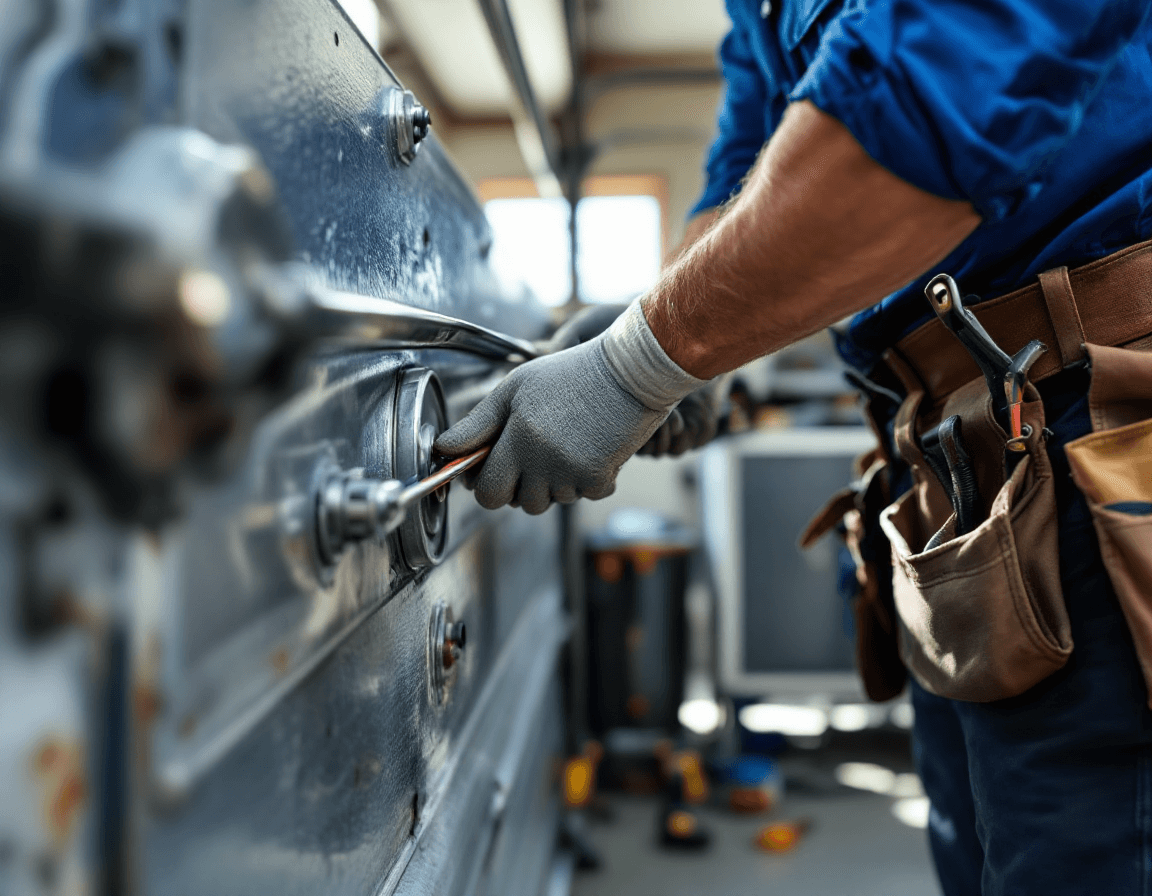
Garage door cable replacement in Mill Creek, WA is one of the most common repairs we see on homes across Snohomish County, and it is also one of the most important to handle correctly. The lift cables are what hold your door's weight as it travels up and down, and when one snaps or slips off its drum, the door can drop, twist, or lock in place. Many homeowners first notice the problem when they hear a sharp bang in the garage or find the door hanging at an odd angle on a damp morning.
Mill Creek homes come with their own mix of garage configurations, from single-car spaces tucked beside narrow driveways to wide double doors that carry more weight than the builder's original hardware might suggest. Whether your home sits near the Mill Creek Town Center or out in one of the quieter pockets toward the Silver Firs area, the same mechanical principles apply. Cable problems develop slowly, then fail suddenly, and the difference between a manageable repair and an emergency often comes down to how early you act on the warning signs.
This page explains how the cable system works, what symptoms point to trouble, why the Pacific Northwest climate accelerates wear, and what a professional cable replacement involves. It also covers realistic pricing, what to expect when you call for service, and how to choose a qualified technician for work that involves high-tension components. Our goal is to give you enough background to make a confident decision, while being clear about the parts of this job that should never be attempted without training.
How the Lift Cables Carry Your Door's Weight
Most residential garage doors use a spring system and a pair of steel lift cables working together. The springs, either torsion springs mounted on a shaft above the door or extension springs running along the tracks, store energy that counterbalances most of the door's weight. The cables connect the bottom corners of the door to the drums at each end of the shaft, and as the shaft turns, the cables wind onto the drums and pull the door upward in a controlled, level motion. Without the cables working evenly, the springs cannot do their job and the door will not travel straight.
Each cable is wrapped around a grooved drum that is fixed to the shaft, and the drum is designed to keep the cable seated in a precise spiral as it winds. Over time, the cable can jump out of its groove, bunch up, or wear through at the point where it meets the drum or the bottom bracket. The drum itself is usually cast or molded and may crack, lose its set screw grip, or develop a worn edge. For this reason, a cable replacement is rarely just a matter of swapping a piece of wire; the drum, the cable termination, and the shaft alignment all need to be checked at the same visit.
Standard residential lift cables are sized for the specific door weight and spring setup, so using a generic cable from a hardware aisle is a poor substitute. The cable must be rated for the load, sized correctly for the drum, and terminated with the correct end fittings. A technician will confirm the door's dimensions and hardware type before ordering parts, which is one reason an accurate diagnosis matters as much as the physical replacement.
Warning Signs That Your Cables Are Failing
Cables rarely fail without warning. Before one snaps, it usually gives off signals that a careful homeowner can spot during routine use. Paying attention to these details can turn a sudden emergency into a scheduled repair. The most common early indicators include:
- Fraying or broken strands visible along the cable, especially near the bottom bracket or where the cable wraps the drum
- Rust-colored staining or flaking metal on the cable, which often shows up on the side of the garage that gets the most splash-back
- The door hanging lower on one side than the other when you pause it halfway open
- A slight grinding or popping sound as the door starts to move, sometimes followed by a brief hesitation
- The door closing unevenly or binding on one track while the other side moves freely
- Visible slack in one cable while the opposite cable looks taut
If you notice any of these, avoid running the opener repeatedly to test the door. Each cycle puts load on a compromised cable and can turn a worn strand into a full break. Instead, note what you saw, take a photo if you can do so safely, and schedule an inspection. A technician can determine whether the cable needs replacing, whether the drum is damaged, or whether an unrelated issue such as a worn roller or bent track is creating the same symptoms.
Why Snohomish County Weather Speeds Up Cable Wear
The Pacific Northwest is known for long stretches of gray, damp weather, and that moisture is hard on steel. Garages in Mill Creek often see humidity levels that stay high through fall and winter, and condensation can form on cold metal surfaces overnight, especially in attached garages where temperatures shift with the outdoor air. Over months and years, that repeated wetting and drying encourages surface rust on the cables and drums, and rust weakens the steel from the outside in. Cables that look fine from a distance may have pitted strands that are already losing strength.
Temperature swings add another layer of stress. Cold mornings make steel stiffer and more brittle, while the warmer afternoons that sometimes arrive in spring cause expansion and contraction across the door hardware. Doors that have been sitting closed through a cold snap may bind a little when first opened, which places sudden strain on the cables and drum. Homeowners often describe the sound as a sharp bang or pop that seems to come out of nowhere, but it is usually the result of a cable that was already weakened by months of moisture exposure.
Garage floors and door bottoms in this region also collect tracked-in rain, mud, and leaf debris. Water that splashes up under the door can reach the lower section of the cables and the bottom bracket, where corrosion tends to start. Keeping the lower part of the door clean and making sure the weather seal is intact can slow this process, but it cannot eliminate it entirely. Scheduling a cable inspection every year or two, especially before the wet season, is one of the most practical ways to stay ahead of weather-driven failures.
When the Cable Snaps and the Door Gets Stuck
A snapped lift cable is one of the more alarming garage door failures. Typically, the sound is a loud crack or whip-like bang, and the door may drop a few inches or tilt sharply to one side. Because the cable that remains is no longer balanced against its partner, the door may lock in place, or the remaining cable may pull the door crooked in its track. In some cases the door will come down to the floor, while in others it will hang partway open and refuse to move in either direction.
If this happens to you, the first priority is safety. Keep children, pets, and anyone else clear of the door and the track area. Do not stand under a partly raised door, and do not try to lift it by hand or force it with the opener. The opener motor is not designed to work against a broken cable, and continued attempts can damage the drive system or the remaining hardware. If the door is partly open and you need to move a vehicle, disconnect the opener by pulling the emergency release cord, but understand that the door will still be heavy and unbalanced.
Once the immediate danger has passed, call a professional for same-visit assessment if possible. A technician will check whether the snapped cable has damaged the drum, the track, the bottom bracket, or the spring assembly. They will also evaluate whether the second cable is still in good condition, since replacing only the broken one can leave the door unbalanced and set up the next failure. In many cases, the cost of replacing both cables together is only modestly higher than replacing one and is far more sensible from a safety standpoint.
Cable Drum Problems: Tangles, Slippage, and Crooked Travel
The drum is a deceptively important part of the cable system, and problems with it often show up as crooked or lopsided movement. When a cable comes off its drum groove, it can wind onto the shaft unevenly, pulling one side of the door higher than the other. Sometimes the cable will bunch or tangle around the drum, creating a knot that prevents smooth winding. Either condition can cause the door to bind, jerk, or stop partway through its travel, and continued operation can damage the track and rollers.
Drum trouble can result from several causes. A set screw that has loosened over time may let the drum slip on the shaft, which changes the cable's position relative to the door. A cracked or worn drum may fail to hold the cable in its groove, especially if the cable has stretched or frayed. In homes where the door has been installed for many years, the drum may also show grooves that were worn by repeated cycles and no longer seat the cable reliably. A technician will check each of these possibilities and recommend replacing the drum if its groove profile or structural integrity is compromised.
Crooked travel is also influenced by the track and roller system. Even with a perfectly good cable, a misaligned track or a roller that has stopped turning can cause one side of the door to lag behind. Because the cable, drum, track, and rollers all interact, a thorough inspection looks at the whole system rather than focusing on one component in isolation. This is why a technician will usually check the track alignment, roller condition, and balance of the door at the same visit as the cable work.
Inspecting Your Cables from a Safe Distance
Homeowners can and should perform a visual check of their garage door hardware, provided they do it from a safe position and without touching any tensioned components. Start by closing the door fully and making sure the opener is disconnected so the door cannot move while you look. Stand to the side of the door rather than directly beneath the drum or the cable path, and use a flashlight to inspect the cables along their length. Look for fraying, kinks, rust, or bright spots where the cable may have been rubbing against a bracket.
Next, check the drums and brackets without attempting to adjust them. You may notice a cable sitting above the drum groove, a loose cable clamp, or a bracket that has shifted out of alignment. Note these conditions, but do not loosen fasteners, reposition cables, or attempt to wind or unwind them by hand. Cables and drums are tied to spring tension, and a mistake during this kind of inspection can release stored energy with serious force. Your observations are still useful, since they help the technician diagnose the problem faster.
Finally, test the door's balance with the opener disconnected. Lift the door about halfway by hand and let go; a properly balanced door will stay in place. If it drifts up or down, the springs or cables may not be sharing the load correctly. This simple test can reveal problems before they become emergencies, and it is an excellent thing to describe when you call for service.
What a Professional Cable Replacement Involves
A professional cable replacement starts with a safety assessment and a full inspection of the spring system. Because the springs store large amounts of energy, a licensed technician will typically use specialized winding bars and safety locks to control tension before any cable is removed. The door is secured so it cannot move, the springs are relieved or held in place according to the system design, and the old cable is detached from the bottom bracket and drum. This sequence is precisely why cable and spring work should be left to trained professionals.
Once the old cable is removed, the technician checks the drum, shaft, bearing plates, and bottom brackets. Any damaged or worn parts are replaced, and the drum is reseated and secured with the correct set screws. The new cable is then threaded through the drum groove, wound with the correct tension, and attached to the bottom bracket using the proper fittings. The technician will verify that both cables wind evenly and that the door moves level through its full range before finishing the job.
After installation, the technician will test the door through several open and close cycles, confirm the balance, and check that the opener engages correctly. They will also review the condition of the rollers, hinges, and tracks, since these parts frequently wear at the same rate as the cables. A good technician explains what was replaced, what was inspected, and what, if anything, you should monitor between visits. That level of transparency is a sign of a careful, professional service.
Typical Cable Repair Costs in the Mill Creek Area
For most residential cable replacements, pricing generally falls within a range of $110 to $300. The final amount depends on several factors, including the type of door, the number of cables that need replacing, the condition of the drum and brackets, and whether the work is being done as an emergency service. A single cable replacement on a standard door will usually land toward the lower end of the range, while a double-cable job or one that includes drum replacement may fall higher.
Several details can affect the total. Heavier insulated doors, wide double doors, and doors with specialty hardware may require longer or higher-rated cables. If the snapped cable has damaged the drum or the bottom bracket, those components may need replacement as well. Emergency calls outside normal scheduling windows can also change the cost. Asking for a clear, itemized estimate before work begins is always a good idea, and a reputable company will explain what is included and what may affect the final price.
It is also worth thinking about the cost of delay. A cable that is frayed but not yet broken can often be replaced on a routine schedule. Once it snaps, the repair may become more complicated, and the door may need additional inspection or repairs to the track, rollers, or springs. Addressing early signs promptly is usually the more economical choice, both for your wallet and for the safety of everyone who uses the garage.
Local Notes for Mill Creek Homeowners
Mill Creek is a community with a mix of housing styles, and many homes have garages that were built with the expectation of regular daily use. Families in the area often juggle multiple vehicles, school schedules, and weekend errands, which means garage doors may cycle many times a day. That frequent use places steady wear on cables, drums, and rollers, so inspecting the system once a year is a practical habit for busy households.
Homeowners living near the Mill Creek Town Center will often pass by a range of shops and services on a daily basis, but the garage door itself rarely gets attention until something goes wrong. Those in the Silver Firs area and surrounding residential pockets may notice that the seasonal shift from wet winters to drier summers changes how the door behaves, with some doors feeling tighter in the cold and smoother in warm weather. Recognizing these patterns helps you describe symptoms accurately when you call for service.
Some Mill Creek properties also have homeowners association guidelines or exterior standards that affect garage door appearance and replacement. If you are considering hardware upgrades or a full door change, check any relevant community requirements before scheduling. A technician who regularly works in the 98012 area can usually point out which upgrades are straightforward and which may require approval.
Keeping Cables Healthy Through the Seasons
Routine maintenance is one of the simplest ways to extend the life of your cables and the rest of your garage door system. Start by keeping the door tracks, rollers, and hinges clean and lightly lubricated with a silicone-based or lithium-based spray designed for garage doors. Avoid heavy grease on tracks, since it can attract dirt. Wipe down the visible length of each cable with a dry cloth to remove grit and early surface rust, and check the cables for fraying at each season change.
Keep an eye on the balance of your door throughout the year. The manual balance test described earlier can be repeated every few months, and a door that starts to drift may be signaling a spring or cable problem before it becomes urgent. Tighten any visible fasteners that have loosened, but leave spring tension, drum set screws, and cable terminations to professionals. The goal of maintenance is to catch small changes early, not to perform repairs that require specialized tools.
Pay attention to the weather seal and the bottom of the door as well. A worn seal allows rain and debris to reach the lower bracket and cable termination, where moisture can accelerate corrosion. Replacing a damaged seal is a modest expense that protects the more expensive components of the system. Combined with an annual professional inspection, these habits can keep your door running smoothly through many wet Pacific Northwest winters.
Choosing a Licensed and Insured Technician
Because cable and spring work carries real safety risks, choosing the right technician is one of the most important decisions you will make. Look for a company that is licensed, bonded, and insured, and ask for confirmation before any work begins. A professional should be willing to explain their credentials, describe what their crew will do, and clarify how they handle safety procedures for spring tension. Avoid anyone who suggests skipping safety steps or who pressures you into immediate decisions without explaining the reasons.
It is also reasonable to ask how the technician plans to inspect the full system, not just the cable that failed. A thorough visit should include the drum, brackets, springs, tracks, rollers, and balance test. Ask whether they recommend replacing both cables together when one has failed, and request a written estimate that lists parts and labor. A clear, professional approach will usually make the process feel straightforward, even when the repair itself is involved.
Finally, trust your instincts about communication. A good technician will show you the damaged parts, answer your questions in plain language, and help you understand what you are paying for. If you are dealing with a broken cable or a door that is hanging crooked, our team at Seattle Garage Door Fix is ready to help homeowners across Mill Creek and the surrounding Snohomish County area. Call (888) 799-3819 to schedule an inspection, describe what you are seeing, and get a clear plan to restore your garage door safely and reliably.