
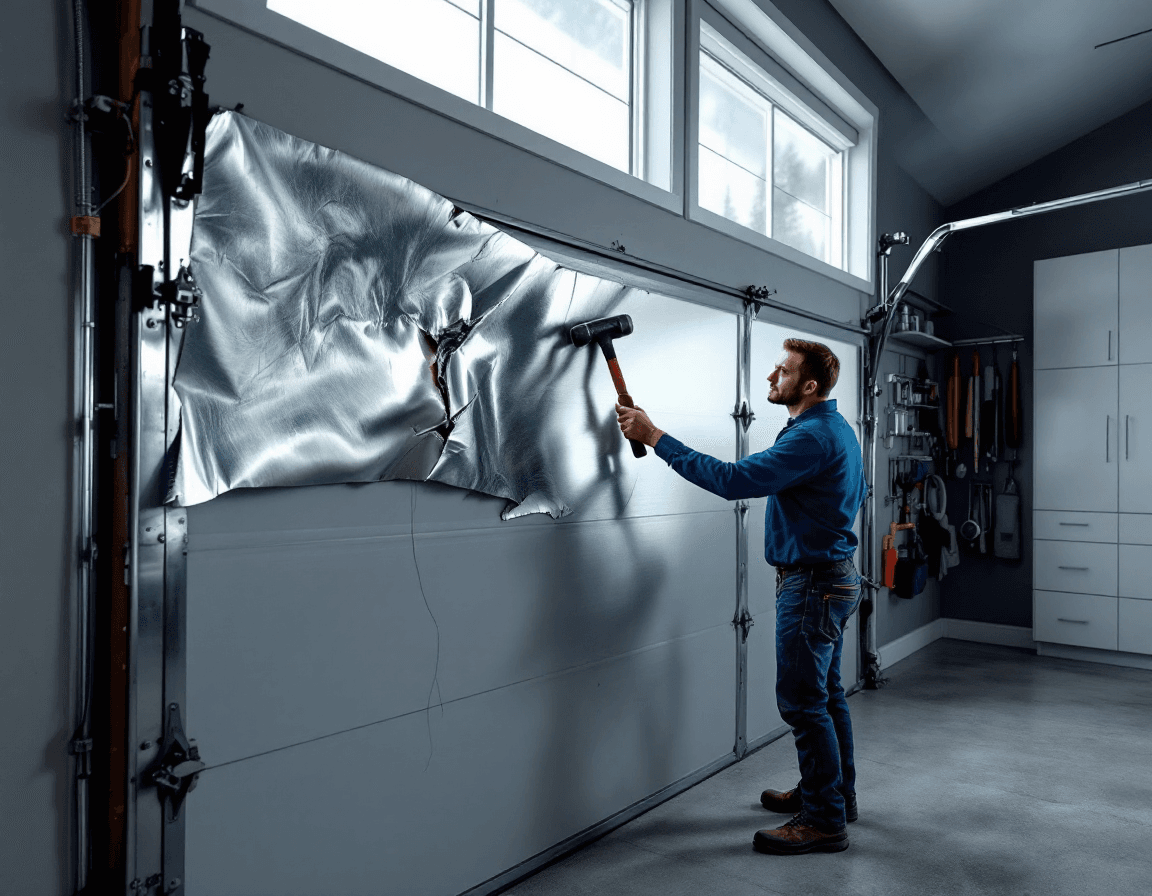
Garage Door Panel Replacement in Mill Creek, WA is often the most practical fix when a single section of your door is damaged but the rest of the system still works well. A dented panel from a backing accident, a cracked bottom section after a wet winter, or a rusted segment near the threshold can make a door look worse than it actually is. Replacing only the affected section usually costs far less than a full door, and it can restore the look and weather seal of your home's most visible entry point. Homeowners across Mill Creek and the surrounding Snohomish County neighborhoods call us for exactly this situation every year.
Panel work sits at the intersection of appearance, weather protection, and safety. The panel itself is only one part of a door that carries serious spring tension and rolls on steel track, so a good repair starts with understanding what is damaged and what is not. Our technicians look at the panel, the hinges and rollers that connect it to its neighbors, the weatherstripping, and the mechanical components that keep the door balanced. This page walks through how we think about panel damage, what affects the cost, and when replacement makes sense compared with other options. It is written for homeowners who want a clear picture before they schedule anything.
If you live near Mill Creek Town Center or in the Silver Firs area, you already know how quickly the weather can change. Wet months, moss on driveways, and the occasional windstorm all leave their mark on garage doors. Whether your door is steel, insulated steel, aluminum, or wood, a damaged panel deserves prompt attention, because small problems tend to spread into larger ones. The sections below will help you decide what to do next and what to expect when you call us at (888) 799-3819.
Reading the Damage Before You Call
Start by walking out to your garage on a dry day and looking at the door from both inside and outside. Dents are easy to spot, but cracks and hairline splits in the factory finish are sometimes easier to see in low, angled light. Run your hand along each section, checking for sharp edges, loose skin, or areas where the panel has pulled away from its ribs. Note exactly which section is affected, counting from the top or bottom, because that detail helps a technician quote the job accurately.
Pay attention to whether the damage is cosmetic, structural, or both. A shallow dent in the middle of a panel may only affect appearance, while a crease near a hinge line can weaken the section and make it harder for the door to track evenly. Cracks in insulated panels deserve special attention because they can let moisture into the foam core, which reduces insulation and can encourage rust on the inside of the skin. If you see daylight through a gap at the seam between panels, the problem may involve the joint as well as the panel itself.
Take a few clear photos before anything is repaired or replaced. Photos help when you talk with a technician, and they also serve as a record if you need to discuss the damage with an insurer or a property manager. Include a wide shot of the full door and a close-up of the affected section with a coin or tape measure for scale. Those images make it much easier to confirm whether a panel can be matched or whether a different approach is needed.
Why Mill Creek Garage Doors Take a Particular Beating
The Pacific Northwest has a climate that is kind to lawns and hard on garage doors. Long stretches of rain, damp mornings that linger well into the afternoon, and humidity that rarely drops far below comfortable levels all put steady pressure on exterior metal and wood. Mill Creek's mix of established neighborhoods and newer homes means you will see a wide range of door ages, from original builder-grade steel doors to recently installed insulated units. Each category reacts differently to moisture, and that difference shapes which panels fail first.
Water tends to collect where the door meets the ground. Puddles pool near the threshold after heavy rain, and spray from passing cars can keep the lower panels damp for hours at a time. Over several wet seasons, that repeated soaking can lead to rust at the bottom edge, softening of wood panels, or corrosion along the seams where two sections overlap. Homes with shaded driveways or narrow side yards often see this more quickly because the lower door never dries out fully between storms.
Moss and algae also play a role, especially on north-facing elevations that rarely see direct sun. Growth that clings to the lower panels holds moisture against the finish and can gradually lift paint or powder coating. When the finish breaks down, the bare metal underneath begins to oxidize, and a panel that looked fine during a dry spell can start to show rust spots by the following winter. Regular rinsing and an occasional look at the bottom section can catch these issues early, before they demand a full replacement.
Dents, Cracks, and the Backing-Up Mishap
Backing accidents are among the most common reasons homeowners need a single panel replaced. A bumper, a trash bin, a child's bicycle, or a moving vehicle can make contact with the door and leave a crease that runs across several ribs. In many cases the door still opens and closes, which is why owners sometimes wait before calling. A panel that has been bent, however, may already be pressing against the tracks or rubbing the roller stems, and that friction can wear parts faster than expected.
Dents that are sharp, deep, or accompanied by paint loss usually cannot be pushed back into shape without leaving visible distortion. Steel skins that have been folded tend to hold a memory of the impact, and attempts to hammer them flat often create additional stress lines. When a panel has been creased, replacement is typically the more reliable path, because a new section restores the original profile and gives the door a uniform look again. Shallow, broad dents on a sound panel may sometimes be improved, but results vary and a technician should inspect the section before promising any outcome.
Cracks deserve careful handling. A crack in a steel panel can start small and then extend along the stiffening ribs under the stress of normal operation. In a wood door, a crack can open along the grain and let water reach the core. Once a crack exists, the panel is no longer doing its job of keeping weather out and holding the structure together, so we generally recommend replacing the section rather than patching it. A patch might look acceptable for a while, but it rarely matches the surrounding finish and can trap moisture underneath.
Bottom Panels, Water Lines, and Rot Near the Threshold
The bottom section of a garage door takes more abuse than any other part. It absorbs the first hit from rolling debris, sits closest to splashing water, and rubs against the threshold seal every time the door closes. Damage here is common in Mill Creek, particularly on driveways that slope toward the garage or on properties where gutters overflow onto the apron. A bottom panel that is cracked, bowed, or rusted through often needs to come out, not just be touched up.
Water lines are a telltale sign. If you notice a horizontal band of discoloration or flaking paint running across the lower panels, water has likely been wicking up from the ground or pooling against the bottom edge for a long time. On wood doors, look for soft spots, swollen edges, or a grayish tint that signals moisture has penetrated the surface. Press gently with a screwdriver in a hidden spot; if the wood feels spongy or the tip sinks in easily, the section may need replacement and the surrounding framing should be inspected as well.
Replacing a bottom section also gives us an opportunity to look at the weatherstripping and the threshold seal. A new panel will not perform well if daylight still slips underneath or if the seal has hardened and split. We check the bottom seal, the astragal where applicable, and the mounting brackets for the lowest section before recommending a replacement. This keeps you from paying for a new panel only to find that drafts, moisture, and pests still get through.
- Look for a horizontal water line or paint bubbling along the lowest two or three panels.
- Check the bottom edge for rust, soft wood, or separation from the end caps.
- Note any gap where light appears when the door is fully closed.
- Inspect the threshold seal for cracks, flattening, or missing sections.
Can a Single Panel Be Swapped, or Does the Whole Door Need Attention?
Most garage doors are built from sections that bolt or clip together, which is why single-panel replacement is possible at all. Many steel and insulated residential doors use panels that can be removed individually after the door is safely supported and the hardware around the damaged section has been loosened. That said, not every door is designed this way. Some older models, certain wood doors, and some custom designs have panels that are integrated into the frame or glued in place, and those can be more difficult or impractical to replace on their own.
Repair-versus-replace decisions depend on several factors. If the damaged section is one of several, and the rest of the door is in good condition, replacing that one section is usually the most economical choice. If multiple panels are damaged, if the tracks are bent, or if the springs are near the end of their service life, a broader conversation makes sense. In those cases, the cost of replacing several panels, plus any necessary hardware work, can approach the price of a new door, and it is worth comparing the options side by side.
It also helps to think about how long you plan to keep the house. If you are preparing to sell, a single well-matched panel may be enough to restore curb appeal. If you expect to stay for many years and the door is aging across the board, you might choose to invest in a complete replacement. There is no single correct answer, and a good technician will walk you through the tradeoffs without pressuring you toward the more expensive path.
Matching Panels That Have Faded Over Time
Matching a replacement panel to an existing door is one of the trickiest parts of the job. Garage doors in the Pacific Northwest receive a lot of UV exposure in summer and a lot of moisture in winter, and over time the finish on the surrounding panels fades or chalks. A brand-new panel, even one from the same manufacturer, can look noticeably different next to a door that is ten or fifteen years old. The color, gloss, and texture may all be slightly off, and the difference becomes obvious in bright daylight.
When we assess a match, we look at the model number, the panel profile, the number of ribs, the thickness of the skin, and the finish. Many manufacturers offer replacement sections in the same color family, but the original product line may have been discontinued or revised. In those situations we talk through options, which may include a panel with a close color match, a different finish that blends well at a distance, or in some cases a strategy of replacing a row of adjacent panels so the transition looks intentional rather than patched.
Honesty about matching is important. A perfect match is not always possible, and we would rather explain the realistic outcome before the work starts than promise something that cannot be delivered. Homeowners often find that a replacement section that differs slightly in color is much less noticeable once the door is closed and viewed from the street. If the difference bothers you, we can discuss whether repainting or refinishing adjacent panels is practical, but we will always be clear about what that involves and whether it is likely to achieve the look you want.
What a Typical Section Replacement Involves
A panel replacement is a focused job, but it still involves several careful steps. The technician first confirms the door's condition and verifies that the spring system is safely balanced for the work. The door is then secured so it cannot move unexpectedly. Next, the hardware connecting the damaged section to its neighbors is removed, the old panel is slid or lifted out, and the new panel is positioned and fastened. Finally, the door is tested through several full cycles to confirm that it tracks evenly, seals properly at the bottom, and does not bind against the frame.
Several things can extend the job beyond a simple swap. Rollers and hinges that were stressed by the damage may need replacement, especially if they show wear or deformation. End caps and brackets sometimes crack during removal, and fresh hardware is inexpensive insurance. If the bottom seal is compromised, we can usually replace it during the same visit, which helps the new panel perform as intended. These add-ons are discussed with you before they are performed so there are no surprises on the invoice.
Timing matters too. Many panel replacements can be completed in a single visit, but matching parts sometimes need to be ordered, and that can add days to the schedule. Ask the technician to explain what is in stock, what must be ordered, and roughly how long the wait will be. If you are using the garage daily, planning around the schedule can make the experience much smoother.
Pricing Per Section and What Shifts the Number
Panel replacement is typically priced per section, and our range for most residential work falls between $250 and $800 per section, depending on the door. The spread is wide because doors differ so much. A basic steel panel on a standard two-car door is generally at the lower end of that range, while insulated panels, decorative glass inserts, wood sections, and designs with unusual profiles can push the cost upward. Matching a discontinued finish may also require additional labor or a different sourcing approach.
Several factors influence where a particular job lands. The material and thickness of the panel is one. The number of ribs, the presence of windows or decorative hardware, and whether the section is insulated all play a role. The accessibility of the damaged panel matters as well; a section near the middle of a tall door may require more careful handling than one at the bottom. Finally, any additional hardware, seal, or track adjustments discovered during the repair will be itemized so you can approve them before they are performed.
We always aim to give you a clear quote before work begins. If the technician finds something unexpected that affects the price, you will be told before any additional work proceeds. Our goal is for you to understand exactly what you are paying for, and to feel comfortable that the repair addresses the real problem rather than just the most visible symptom.
- Material and insulation level of the panel
- Door style, including windows, glass inserts, or wood construction
- Ease of access to the damaged section
- Matching difficulty for faded or discontinued finishes
- Additional hardware, weatherstripping, or track work discovered during the visit
Safety Around Springs, Cables, and Tension
Panel work should never involve attempting to disconnect or adjust the spring system yourself. Garage door springs store a large amount of energy, and even a small mistake during a panel replacement can cause serious injury. Torsion springs and extension springs are under tension whenever the door is closed, and cables and drums can move unexpectedly if the balance of the door is disturbed. Our rule is simple: spring and cable work belongs to a licensed professional who has the proper tools and training.
Homeowners sometimes assume that removing a single panel does not affect the springs, but the door's balance changes as sections are removed and reinstalled. A trained technician will secure the door, confirm that the springs remain properly tensioned, and take steps to prevent the door from shifting while the panel is out. If the job requires any work near the spring assembly, cables, or drums, the technician should handle it directly. If you ever see a frayed cable, a gap in a spring coil, or a door that drops suddenly, keep everyone clear of the door and call for service right away.
Bringing in a licensed, bonded, and insured company is also a matter of protecting your home. If something goes wrong during a repair, the right coverage matters. Ask any company you consider about its licensing and insurance, and make sure the technician you are scheduling can explain the safety steps they follow during panel replacement.
Keeping New Panels Looking Right in a Damp Climate
After a new panel is installed, a little routine care goes a long way in the Pacific Northwest. Rinse the lower panels periodically to remove road grime, mud splashes, and moss spores before they have a chance to hold moisture against the finish. A soft brush and a mild, non-abrasive cleaner are usually enough, and harsh solvents should be avoided because they can damage factory coatings. Pay special attention to the seams between panels, where dirt and water tend to collect.
Check the bottom seal and the weatherstripping at least twice a year, ideally before the wettest months and again in late spring. Look for flattened sections, cracks, or gaps where light shows through. Replacing a worn seal is inexpensive compared with the cost of water damage to a panel or the flooring inside the garage. If you notice a new water line on a panel, address the cause, whether that is a clogged gutter, a low spot in the driveway, or a sprinkler that sprays against the door.
Finally, keep an eye on the panels next to the new one. Because the surrounding finish will continue to age, you may notice a color difference grow over time. Gentle cleaning and periodic inspection can slow that process. If the mismatch becomes more noticeable, a conversation about refinishing or additional section work can help you decide the next step.
Scheduling a Panel Repair Visit in Mill Creek
If you are dealing with a dented, cracked, or water-damaged panel in Mill Creek or nearby ZIP code 98012, the best time to call is soon after you notice the problem. Early attention keeps a small crease from becoming a torn skin, prevents water from spreading into a rotting bottom section, and gives us a better chance of finding a matching panel. Tell the scheduler which section is affected, describe the damage, and share the photos you took. That information helps us arrive prepared and quote the job accurately.
When the technician visits, expect a thorough inspection before any work begins. We will confirm what can be replaced, what should be repaired, and what is best left alone for now. You will receive a clear explanation of the options, the expected timeline, and the price range for your specific door. Our goal is to make sure you understand the decision before anything is removed from the door.
To discuss your garage door panel, request a visit, or ask whether a single section can be replaced on your door, call Seattle Garage Door Fix at (888) 799-3819. Our team serves Mill Creek and the surrounding Snohomish County communities, and we are happy to talk through your options before you commit to any work.