
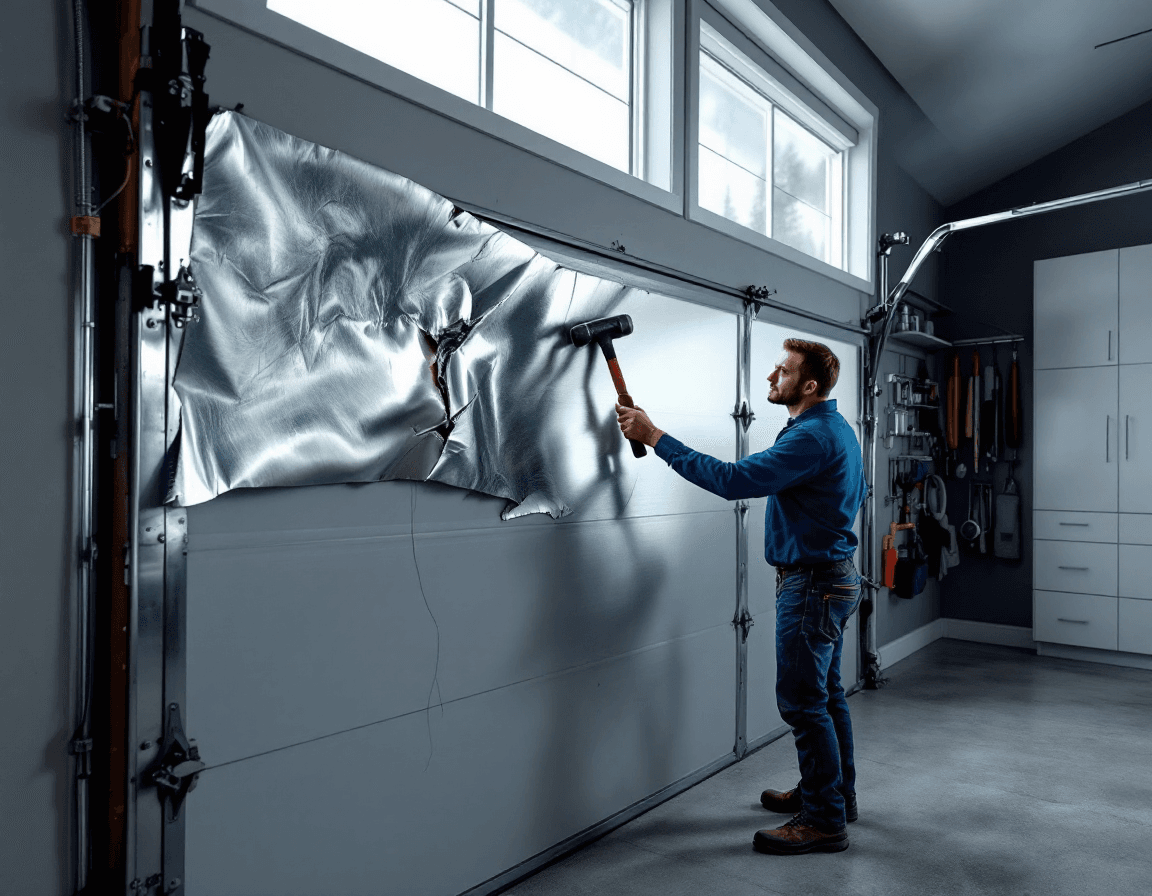
Garage Door Panel Replacement in Bothell, WA is often the most sensible fix when your door still opens and closes properly but one or more sections look battered. A dented panel, a cracked bottom section, or a rusted patch can make an otherwise solid door look neglected, and it can also let water, pests, and drafts into the garage. Replacing only the damaged section usually costs far less than buying a new door, and it keeps the parts that still work.
Bothell homes see their own mix of wear. Winter rain, long stretches of gray damp weather, and the occasional windstorm off Lake Washington can all work on the bottom edge of a door, while driveway traffic in busier pockets near the Bothell Landing shopping area and along the arterials adds the bumps and scrapes. Our technicians see these problems across the city, from older single-family streets to newer developments near Canyon Park and North Creek, and the pattern of damage often tells us a lot about what is happening with the door.
This page explains when a panel swap makes sense, how to tell whether a repair or a full replacement is the smarter move, what affects the cost, and where the safety limits lie. If you are in one of the ZIP codes we serve here, including 98011, 98012, and 98021, the information below should help you decide what to do next.
Why Dents Matter More in a Wet Pacific Northwest Climate
A dent in a steel panel can look like a simple cosmetic issue, but in Western Washington it often starts a longer process. When the metal is deformed, the protective coating (typically a factory primer and paint layer, sometimes with a galvanized base) can crack or chip at the bend. Moisture then gets to bare metal, and in a region that sees a lot of drizzle and cool, humid days, surface rust can spread from that point.
Insulated steel doors have a different weakness. The foam core inside each panel keeps the door rigid and helps with temperature control, but a deep dent can crack the outer skin and compromise the seal between sections. Once that happens, the panel may flex more under wind, and the rubber weatherstripping can no longer sit flat against the threshold. Homeowners often notice a faint draft or a rattle before they notice any real change in appearance.
Wood doors and composite doors face their own issues. Wood swells and checks with moisture cycles, and a dent that breaks the finish lets water soak into the grain. Composite and vinyl-clad options tend to hold up better, but they can still crack at impact points. The practical takeaway is simple: a dent that breaks the surface should be evaluated promptly, even if the door still works fine.
Reading the Damage: Which Panels Need Attention First
Not every mark on a garage door calls for a replacement. Start by looking at what kind of damage you have and where it sits on the door. A shallow ding in the upper section that has not broken the paint may only need a touch-up and a careful look at the rest of the door. A crack that runs through the full depth of a panel, however, usually means that section should be replaced rather than patched.
Location matters just as much as size. The bottom section takes the most abuse from weather, splashing water, road grit, and accidental contact with vehicles, and it is also the section most likely to rot or rust from the inside out. Panels near the tracks sometimes take impact from the rollers or from a misaligned door, which can bend the edges and make the door bind. Damage at the top section near the header is often caused by a wind event or a ladder or item striking the door when it is open.
Here is a quick way to sort the damage before you call:
- Check whether the crack or dent goes all the way through the panel or only through the surface finish.
- Press gently on the affected area; a soft or spongy feel can mean the core or wood is failing.
- Look for rust streaks running down from fasteners or hinges, which often point to moisture trapped inside.
- Note whether the damage is confined to one panel or has spread to adjacent sections.
- Open and close the door slowly and listen for scraping or uneven movement near the damaged area.
If the damage is limited to one or two sections and the rest of the door is in good shape, a targeted panel replacement is usually the right call.
Repair or Replace: A Practical Decision Framework
Deciding between repairing a panel and replacing it comes down to how much of the section is compromised and whether the surrounding hardware is still sound. Small surface dings on steel can sometimes be smoothed and refinished, though a visible repaint rarely matches the factory finish perfectly. For anything that has cracked through, lost its insulation, or started to rot, replacement tends to be the more durable choice.
Think about the door as a whole, too. If the door is more than about fifteen to twenty years old, has several damaged sections, and the springs or opener are showing wear, replacing one panel may just put new parts on an aging system. In that situation, it can make sense to price out a full door alongside the panel swap so you can compare the long-term cost. A technician who services doors regularly can give you a candid view of which direction makes sense for your specific setup.
Use these questions to guide the decision:
- Is the damage limited to one section, or is the door showing corrosion in multiple places?
- Does the panel still hold its shape and insulation, or has it lost structural strength?
- Are the hinges, rollers, and tracks in good condition, or would a repair simply put a new panel on worn hardware?
- Does the door's style still suit the home, or is it time for a change?
The answers will usually point clearly in one direction, and a straightforward on-site assessment can confirm it.
Matching Panels When the Original Model Is Discontinued
Matching a replacement panel is often the trickiest part of the job. Garage door manufacturers update styles, panel profiles, and color options over time, so a door installed fifteen years ago may no longer have a direct counterpart on the shelf. Even when the profile is still available, factory colors can drift slightly, and a new panel next to a weathered original can look noticeably different in afternoon light.
The first step is identifying the door. Manufacturer labels are usually found on the inside edge of a panel or near the bottom bracket, and model numbers, panel width, and insulation thickness all matter. Measurements should be taken carefully, since a panel that is even a fraction of an inch off in height or width can cause alignment problems on the track. When the exact match is unavailable, a technician may recommend a close alternative with a similar rib pattern and then adjust the surrounding sections for a cleaner look.
Color is its own challenge. Bothell homes sit under a lot of overcast light, which makes the color difference between old and new more obvious than it would be in a sunnier climate. Some homeowners choose to accept a slight variation, while others prefer to have an entire door refinished so every section matches. Ask for photos of the options, and look at samples outdoors before committing, because indoor showroom lighting can be misleading.
Water Intrusion and the Bottom Section Problem
The bottom panel is where Bothell weather tends to make its biggest mark. Rain runs down the face of the door and collects at the threshold, while the lower edge is repeatedly exposed to puddles, road spray, and the dampness that rises from the concrete slab. Over time this can cause rust at the base of steel panels, swelling in wood, or deterioration of the weatherstrip that lets moisture seep in.
Water damage often hides until it becomes serious. A bottom section that looks fine from the driveway may have a rusted seam on the inside or a bubble in the paint that points to trapped moisture. Homeowners sometimes notice a musty smell in the garage, a line of dampness along the floor, or stains on stored cardboard before they think to inspect the door itself. If the bottom panel is soft, flaking, or pulling away from its seams, replacement is usually more reliable than attempting a patch.
Prevention is worth a mention. Keeping the threshold seal in good condition, clearing debris from the track area, and rinsing away road salt or grime during dry spells can extend the life of the bottom section. Still, no maintenance routine fully eliminates the effects of a wet winter, so inspecting the lower panel after storm seasons is a sound habit.
Driveway Bumps and Backing Accidents Common Near Bothell Streets
Many panel replacements start with a simple mistake: a vehicle backing out a little too quickly, a bicycle or trash bin rolled into the door, or a basketball hoop or ladder knocked against the bottom section. Driveways in many parts of Bothell are narrow, and garage doors are often close to the edge of the lot, so contact can happen even when drivers are careful. Single-panel damage from these incidents is one of the most common reasons homeowners call for a targeted repair.
When an accident happens, check the door before opening it repeatedly. A bent panel can jump the track, and forcing a damaged door open can warp adjacent sections or stress the springs. If the door is binding, makes grinding noises, or sits crooked in its frame, stop using it and have it inspected. Photographs of the damage are useful for your records and for any insurance questions, although coverage details depend on your own policy.
Taking a moment to protect the door can prevent repeat damage. Bollards, a painted reference line on the floor, or simply slowing down on the final few feet of the driveway can reduce the risk. Some households also find that moving stored items away from the wall inside the garage prevents a second impact when a door swings or a panel shifts.
What a Panel Replacement Looks Like on the Day of the Visit
A typical panel swap follows a clear sequence, though the details vary with door type. The technician first confirms the model and dimensions, then checks the surrounding sections, hinges, rollers, and tracks. Spring tension is never adjusted or released during a panel job, and the door is secured so the weight does not shift unexpectedly while the damaged section is removed.
Once the old panel is out, the new one is fitted, aligned with its neighbors, and attached using the existing hinges and hardware where possible. Weatherstripping is checked and replaced if needed, and the door is cycled several times to confirm it runs smoothly. The technician will look for rubbing, uneven gaps, or any sign that the panel is binding at the track. A good finish matters too, so seams and edges are checked for clean alignment before the job is closed out.
A typical visit includes these steps:
- Inspection of the door, springs, tracks, and opener to confirm the panel is the only problem
- Identification of the model and measurement of the damaged section
- Safe securing of the door while the panel is removed
- Installation of the matched or closest-available replacement panel
- Alignment, weatherstrip check, and several test cycles of the door
- A walkthrough explaining the work and any maintenance you should watch for
Most single-panel jobs are completed in one visit, though special-order panels may require a second appointment.
Understanding the $250 to $800 Price Range Per Section
Panel replacement is priced per section, and the range we commonly see runs from about $250 to $800 depending on the door. The lower end usually applies to standard steel panels on common residential doors where the replacement is readily available. The higher end tends to reflect insulated panels, decorative glass or windowed sections, wood or composite profiles, or doors where the match requires a special order.
Several factors shape the final number. The door's construction, panel size, insulation, and finish all play a role, and so does how difficult it is to find an exact or near match. Access and condition also matter, since a panel that is seized or stuck in its track may take more time to remove safely. A technician will give you a clear estimate after reviewing the door, and that estimate should be written out before any work begins.
Consider these elements when comparing quotes:
- Panel material and insulation (steel, insulated steel, wood, composite, or glass inserts)
- Whether the exact model is available or a close match is recommended
- The number of damaged sections and whether they are adjacent
- Condition of the surrounding hardware and whether any repairs are needed
- Whether a second visit is required for a special-order part
A quote that is far below the range may leave out important details, such as weatherstripping, hardware, or a proper alignment check. Ask what is included so you can compare fairly.
Safety Boundaries: Why Springs and Cables Belong with Licensed Professionals
Panel replacement is a manageable job for a trained technician, but it sits close to parts of the door that can cause serious injury. Torsion springs and extension springs store tremendous energy, and a cable under tension can snap with enough force to cause harm. For that reason, spring adjustment, spring replacement, and cable repair should never be attempted by a homeowner, and they should be performed only by a licensed, bonded, and insured professional with the right tools and training.
Be cautious if a panel replacement reveals other issues. If a cable is frayed, a drum is slipping, or a spring is visibly broken, the door should stay closed and the work should be handled by a qualified technician. Do not try to lift a heavy door by hand to remove a panel, and do not disconnect the opener while the door is partly open. A short, careful assessment can prevent a much larger problem later.
Our technicians follow established safety practices for every panel job, including securing the door and confirming that the springs and cables are under control before any section is removed. If you are unsure whether a problem falls within a simple panel swap, call before attempting anything yourself.
Planning Your Appointment Around Bothell Weather and Daily Life
Timing a panel replacement can make the process smoother. Dry stretches are a good time to schedule the work, since the new panel and its weatherstripping seal more reliably when the surfaces are clean and the temperature is stable. Heavy rain can delay some finishing steps and make it harder to inspect the threshold, so if you can plan around the wettest weeks of winter, you may find the job goes more quickly.
Expect the door to be out of normal use for part of the visit. Many households arrange to park outside or use a side entrance for a few hours. If the garage is your main entry point, let the technician know so they can plan the workflow and avoid leaving the door open longer than necessary. Clearing the area around the door and moving stored items away from the wall also helps the crew work safely and efficiently.
After the job, pay attention to how the door behaves over the next few weeks. A new panel can settle slightly as the weatherstripping compresses, and a brief check of the bottom seal after the first few storms is a good habit. If you notice a new rattle, a gap that was not there before, or a sticky movement, let us know so the issue can be addressed while it is still small.
Garage door panel damage is easier to fix when it is caught early, and a targeted replacement can restore both the look and the protection your door was built to provide. If you are in Bothell or the surrounding neighborhoods, including the areas near Bothell Landing, Canyon Park, and North Creek, call Seattle Garage Door Fix at (888) 799-3819 to schedule an inspection. Our licensed, bonded, and insured team will review the damage, explain your options honestly, and give you a clear estimate before any work begins.