
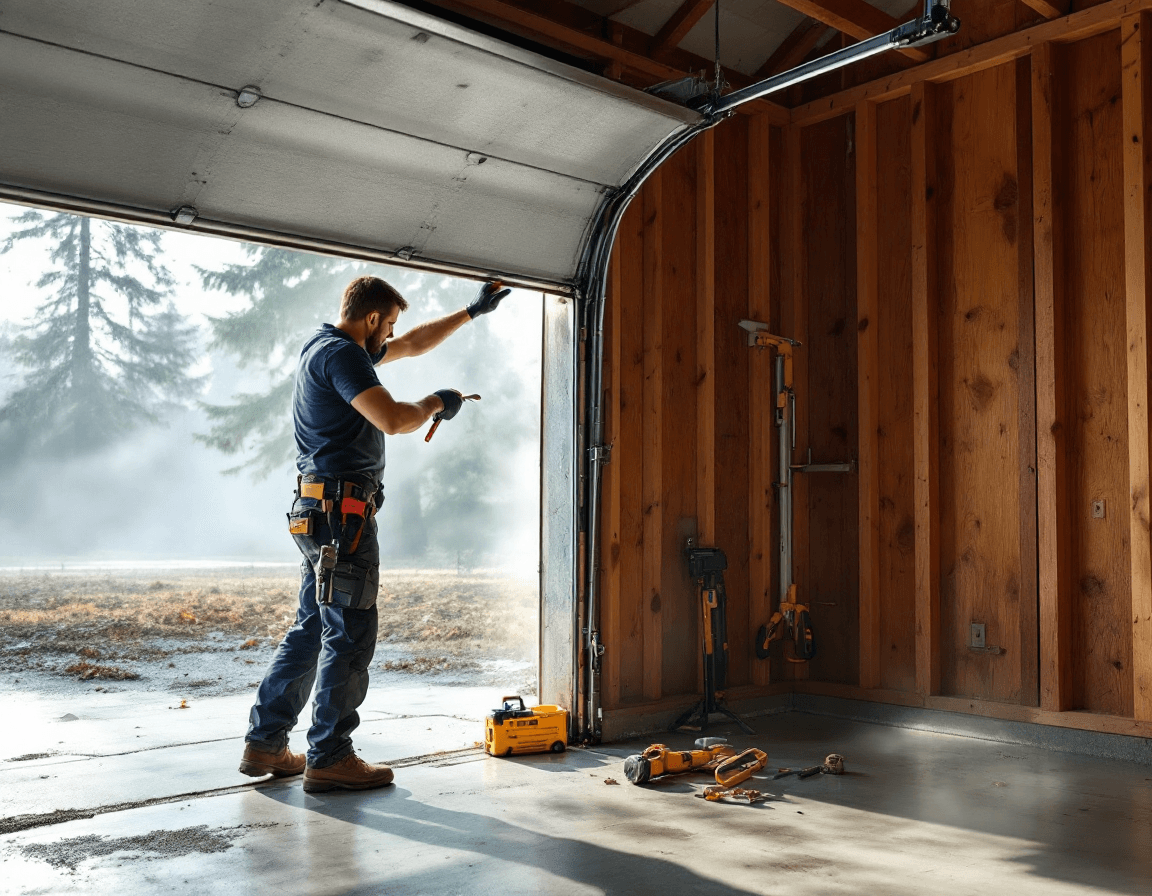
Off-track garage door repair in Bothell, WA is one of the most common calls we handle, and it's rarely an emergency that comes out of nowhere. Most doors leave their tracks gradually, through loose hardware, worn rollers, or a small bump that nobody mentioned. By the time a homeowner notices the door sitting crooked or refusing to close, the problem has usually been building for weeks. Seattle Garage Door Fix works on these repairs across Bothell and the surrounding communities, and this page explains what typically goes wrong, what you can check yourself, and what a proper realignment involves.
Bothell sits in a part of King County where the weather is rarely dry for long. Winter brings steady drizzle and a damp that creeps into everything, while the occasional hard freeze can stiffen lubricants and make steel sections contract. Those temperature swings matter because a garage door is a large, heavy moving assembly that depends on tight tolerances. When the track is even a few millimeters out of alignment, rollers that were fine in July can start skipping in January. Understanding that cycle makes it easier to catch small problems before they turn into a door sitting off its rails.
Our repairs for off-track doors generally fall in the $125 to $400 range, depending on how many components are involved and whether track sections need to be straightened or replaced. A simple roller reseat with a quick alignment costs less than a door that has been partially pulled from both tracks. We give you the number before we start any work, so there are no surprises on the invoice. If you suspect your door has left its tracks, call (888) 799-3819 and we will talk through what you are seeing.
Why Doors Leave the Rails Around Bothell
A garage door stays on its track because every component is supposed to stay in its lane. The rollers ride inside the vertical and horizontal channels, the lift cables pull evenly on both sides, and the springs counterbalance the weight so the panels move smoothly. When one part fails or drifts, the rest of the system has to compensate, and that is often the moment the door starts to walk sideways out of the track. In our experience, the cause is rarely a single dramatic failure. More often it is a chain: a worn roller allows the door to sway, the sway loads the hinge on one side, and eventually a section pops free.
Local conditions contribute to this more than many homeowners expect. Damp Pacific Northwest air encourages surface rust on the track, and rust flakes can build up in the channel and force rollers to grind rather than glide. Wood and composite doors absorb moisture and swell slightly, which adds weight and friction at the edges where the panels meet the track. Homes in newer subdivisions around North Creek and the broader Bothell area often have tighter garage openings, so even a small change in clearance can cause a door to rub or bind more quickly than it would in a larger opening.
Vehicle traffic and daily use also play a role. Families who open and close the door several times a day place constant stress on the rollers and hinges, especially if the door is not balanced correctly. A door that has been slightly out of square for a long time will eventually bend the track brackets or shift the rail, and once that happens the door no longer has a clean path to follow. Catching the early signs keeps the repair small and inexpensive.
Reading the Warning Signs Before a Full Derailment
Most off-track doors give some warning before they leave the rails completely. The first thing many homeowners notice is a new sound, such as a squeal, a grinding noise, or a hollow thump as the door reaches the top of its travel. Another common sign is a door that stops halfway, reverses slightly, or seems to hesitate before continuing. Those behaviors often point to a roller that is catching on a seam in the track or a section that has shifted by a fraction of an inch.
Visual cues are just as useful. Look at the gap between the top panel and the header, and compare the space on the left and right sides of the door when it is closed. If one side has a noticeably wider gap, or if the bottom seal is pressing harder on one end than the other, the door is probably tilting. Take a moment to inspect the vertical tracks as well, since a faint bend or a line of daylight where two track sections meet can indicate a problem that is still easy to correct.
Pay attention to what the door does when you use the opener and when you lift it manually. If the door moves freely by hand but refuses to travel under power, the issue may be in the track rather than the opener. Keep a short mental log of these details, because a technician will ask about them and they help narrow down whether the rollers, the track, or the hinges are the main source of the trouble.
Rollers That Pop Out and Why They Keep Doing It
Rollers are the small wheels, usually nylon or steel, that carry each panel along the track. A roller that pops out of its channel is one of the most frequent off-track complaints we see in Bothell, and it often happens without much warning. The stem may have cracked, the bearing may have worn flat, or the retaining hardware may have loosened after months of vibration. Once a roller leaves the channel, the panel it supports can lift or tilt, and the door follows that angle until someone stops it.
Worn rollers are more likely to pop out during cold mornings or after heavy rain, when friction and tolerances change. Nylon rollers can become brittle with age, and steel rollers with sealed bearings can collect grit that makes them drag. Replacing worn rollers with appropriately rated parts usually solves the problem, but the replacement needs to match the door's track size and load. We recommend upgrading to higher-quality rollers when the original set is clearly past its service life, since cheaper rollers tend to wear out in the same spot again.
Reseating a roller is a simple task for a trained technician, but it should not be attempted without understanding the door's balance. If the springs are under tension, the door can move unexpectedly when a panel is disturbed. A roller that has popped once is a sign that the rest of the set should be inspected, because the wear that caused the first failure is usually present on the others.
Track Damage from Backing Into the Driveway
Bent or dented track is often the result of a vehicle collision, even a minor one. A car backing out of a tight Bothell driveway, a delivery van clipping the frame, or a child's bicycle hitting the lower track can all bend the steel enough to cause problems. The damage may look small from a distance, but a bend of just a few millimeters can throw the rollers off their path and cause the door to bind every time it passes the affected section.
Separated track sections are a related problem. Track is usually assembled from several pieces joined by bolts or rivets, and the joints can loosen over time or shift after an impact. When a joint separates, the roller can catch the gap and jump the track, leaving the door partly off its rails. Look for shiny scrape marks on the track, bolts that appear loose, or a visible seam where two sections no longer line up flush.
Straightening track is a precise job. Technicians use clamps and specialized tools to bring the steel back into line, then check the alignment with a level and a straightedge along the full length of the track. Sometimes a section is too damaged to straighten and needs replacement, which is why we inspect the entire run rather than just the spot that looks bad. If your door was hit by a vehicle, have it checked even if it seems to work, because hidden stress in the track can cause trouble later.
Binding, Gaps, and a Door That Looks Lopsided
Binding is the sensation of a door dragging, squeaking, or resisting as it moves, and it usually signals that something is rubbing where it should glide. A door that binds on one side is often out of square, which means the top section or the hinges have shifted. Over time that imbalance wears the rollers, stresses the opener, and creates the conditions for a full derailment. A crooked door is not just unattractive; it is a warning that the geometry has changed.
Gaps tell a similar story. If there is a visible space between the door and the track on one side, or between the door and the header, the door is probably sitting off center. Check the weatherstripping along the bottom and sides as well. Uneven compression of the seal often reveals that the door is tilting, and it can also let in drafts and moisture, which is a concern during the wet Bothell winters.
When you notice binding or gaps, avoid forcing the door open or closed with the opener repeatedly. Running the opener against a binding door can strip gears, overheat the motor, or bend the track further. Instead, stop using the door and have it inspected. A short delay can be the difference between a simple realignment and a more involved repair.
What a Technician Actually Does on a Realignment Visit
A proper off-track visit begins with a walk around the entire door system. The technician checks the tracks at the floor, at the curves, and at the top, looking for bends, gaps, and loose fasteners. They then examine the rollers, hinges, and brackets, and they assess the springs and cables without adjusting anything under tension. That initial inspection tells us whether the job is a quick reseat or a broader repair that involves straightening track and replacing components.
Next comes the realignment itself. We carefully lift the door panels as needed, reseat each roller in its channel, and bring the track back into plumb and level. Brackets are tightened to the correct torque, and any worn hardware is replaced. The goal is to restore a smooth, even path from bottom to top, so the door travels without rubbing, leaning, or hesitating. We then cycle the door several times to confirm that it tracks correctly under both manual and powered operation.
Finally, we explain what we found and what we recommend. Some homeowners want to fix only the immediate problem, and that is a reasonable choice when the rest of the system is in good condition. Others prefer a full tune-up that addresses wear before it causes another failure. Either way, you should understand the condition of your door, and you should never feel pressured into work you do not need.
Pricing for Off-Track Work in the Bothell Area
Most off-track repairs we perform fall between $125 and $400. The lower end usually covers a single roller reseat or a minor alignment where the track is intact and the hardware is in good shape. The higher end typically reflects multiple rollers, straightening of bent track, replacement of damaged sections, or a combination of repairs that takes more time and parts. Exact costs depend on your door type, its size, and what the inspection reveals, which is why we quote after evaluating the system.
Several factors influence the final number. Commercial-style steel doors and larger custom doors often require more labor than standard residential doors. Track that has been bent in multiple places, or that has separated at more than one joint, takes longer to correct. Parts such as heavy-duty rollers or replacement track sections add to the cost, but they also reduce the chance of repeat failures. We will always explain the difference between an essential repair and an optional upgrade.
- A single roller reseat with a basic alignment check
- Replacement of worn or cracked rollers, often in sets
- Straightening of bent track or resetting of loose joints
- Replacement of a damaged track section
- A full alignment and tune-up after a vehicle impact
The table above is not a price list; it is a guide to the kinds of work involved. Ask for a clear written estimate before any work begins, and make sure it lists the parts and labor separately. Transparency is part of how we earn trust, and we would rather you understand the work than feel uncertain about it.
Protecting Your Track Between Service Visits
Routine care can extend the life of your tracks and rollers considerably. Keep the tracks clean by wiping away dirt, leaves, and debris that gather in the channels, especially during the fall when Bothell's trees drop a lot of material. Use a garage door lubricant on the rollers, hinges, and springs, but avoid spraying lubricant directly onto the track surface, where it can attract grit. A dry lubricant or a lightly oiled cloth usually works best for the channels.
Watch for surface rust on the track and treat it early. A small patch of rust can be cleaned and protected before it spreads and weakens the steel. Check the bolts that hold the track brackets to the wall and ceiling, and tighten them if they have loosened, but do not overtighten, since that can deform the track. Also inspect the weatherstripping and the bottom seal, because a damaged seal can cause the door to sit unevenly.
- Clean tracks and remove debris every few months
- Lubricate rollers, hinges, and bearings with the right product
- Look for rust spots and address them promptly
- Check track bracket bolts for looseness, without overtightening
- Keep an eye on the balance by noting how the door moves over time
Seasonal changes matter too. Before the wettest months, it helps to have someone look over the door for loose hardware and early wear. Doing this in the late summer or early fall gives you time to schedule repairs before cold, damp weather makes problems harder to ignore.
When a Jammed Door Means Stop Right Now
Safety comes first with any garage door problem, and a jammed door is one of the situations where you should take extra care. If the door is partly off its track, do not stand under it, do not try to lift it by hand while it is hanging unevenly, and keep children and pets away from the opening. A door that appears stable can shift suddenly when a roller slips or a cable loosens. Treat any unexpected movement as a reason to step back.
Never attempt to work on the springs or lift cables yourself. These components store significant energy, and a mistake during adjustment or removal can cause serious injury. Spring and cable work must be handled by a licensed professional with the right tools and training. If you suspect a spring has broken, you may notice a loud bang, a door that feels much heavier than usual, or a gap where the spring should be. Disconnect the opener if it is safe to do so, and call for service rather than trying to fix it.
For a door that is simply stuck, the safest step is to stop operating it and call us. Using the opener repeatedly against a jam can damage the motor, bend the track, and turn a manageable realignment into a larger repair. A licensed technician can assess the situation, secure the door, and return it to safe operation.
Serving Bothell and Nearby ZIP Codes
Seattle Garage Door Fix covers Bothell and the neighborhoods that surround it, including the 98011, 98012, and 98021 ZIP codes. Our technicians are familiar with the layouts of many homes and businesses in the area, from older residential streets to newer developments. We are licensed, bonded, and insured, and we bring the equipment needed to handle track straightening, roller replacement, and full alignment on the same visit whenever possible.
Bothell's landmarks give us a sense of the area's character. Bothell Landing, with its waterfront setting along the Sammamish River, reflects the mix of residential and commercial life that defines much of the city. Canyon Park and North Creek bring a concentration of businesses and multi-use buildings, where garage doors may see heavier daily use from delivery vehicles and staff. Whether your door is on a quiet residential street or serves a commercial space nearby, the same principles of alignment and careful inspection apply.
If you are not sure whether your problem is an off-track door, a worn roller, or something else, we are happy to take a look and explain what we find. Our goal is to get your door moving smoothly and safely again, with clear pricing and honest recommendations. Call (888) 799-3819 to schedule an off-track inspection in Bothell, and we will help you decide the next step with confidence.