
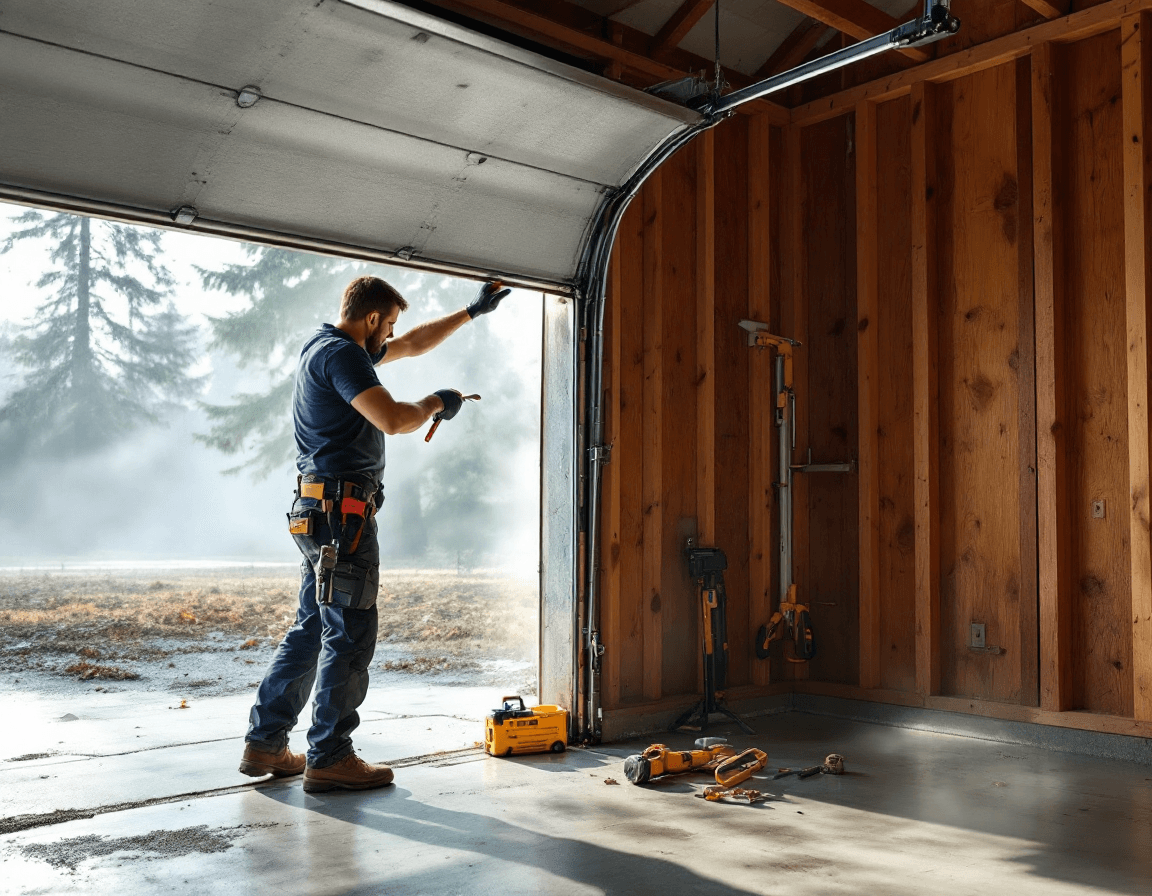
Off-track garage door repair in Woodinville, WA is one of the more common calls we handle, and it is often more manageable than homeowners expect. When a door jumps a track, the cause is usually a roller that has popped loose, a track section that has shifted, or a panel that has been pushed out of alignment. Most of the time the door itself is not ruined. The hardware simply needs to be guided back into its channel, checked for damage, and secured so it stays put. Our technicians work across Woodinville, from the lots near the wine country tasting rooms to the quieter streets on the hillside.
Woodinville's weather and housing mix make off-track problems show up in their own way. Winters bring long stretches of rain and damp air, and summers can be warm and dry in a short burst before the moisture returns. Those swings cause steel track, wood framing, and door panels to expand and contract at different rates. Over several seasons, a small amount of movement can add up to a track that no longer sits perfectly plumb or a roller that starts to work its way out of the groove. Catching that early saves a lot of frustration.
This page explains what off-track problems look like, what causes them in our area, what a professional repair involves, and what you can safely do before a technician arrives. It also covers why the spring and cable side of the system should always be left to licensed professionals. If your door is currently stuck, crooked, or sitting partly out of its track, read the safety sections first and then call us at (888) 799-3819.
Why Woodinville Doors Drift Off the Rails
Garage doors in Woodinville face a combination of conditions that few other regions deal with in quite the same way. The region receives substantial winter rainfall, and that moisture can soak into wooden jamb boards, sweep the bottom of the track with mud and grit, and promote rust on unprotected steel. Many homes in the wider Woodinville area were built with attached garages that sit on concrete slabs, and slab settling or minor foundation shifts can slowly change the angle at which the track is mounted. A track that was perfectly vertical the day it was installed may be a few degrees off years later, which is enough to cause a roller to climb out.
Hillside properties add another layer of complexity. Homes on the slopes near Hollywood Hill often have driveways with a noticeable grade, and the garage floor may not be perfectly level from front to back. When the floor slopes, the door's path of travel can drift to one side as it rises, which places extra load on the rollers nearest the low corner. Over time, that uneven load wears the roller stems and pushes them toward the edge of the track. Owners of these homes often notice the problem only after the door begins to scrape or lean.
Temperature changes also matter here. A cold, damp morning can make steel track contract slightly, while an afternoon sun exposure on a south-facing garage can warm the metal enough to shift its fit. These movements are small, but they are repeated constantly over the life of a door. When combined with aging rollers and worn hinges, they make an off-track event more likely during the wetter months.
Reading the Warning Signs Before the Door Fails
Most off-track failures give some warning before the door actually jumps. Paying attention to these early signs gives you the chance to schedule service on your terms rather than dealing with an emergency at seven in the morning. Look and listen for changes in how the door moves, especially after a wet stretch of weather or a cold snap. A door that once ran quietly but now grinds, pops, or hesitates is often telling you that something in the track has moved.
Here are the signs that most often point to an alignment problem rather than a simple lubrication issue:
- A visible gap between the top or side of the door panel and the weatherstripping along the jamb that was not there before
- Rollers that appear to sit at an angle, or a roller stem that looks bent or pulled sideways within the track
- Scrape marks on the track, the door edges, or the floor where the bottom of the door is rubbing as it moves
- A door that rises unevenly, so one side lags behind the other or the panels look slightly out of square
- A noise like a loud bang or thud when the door reaches the top or bottom of its travel, which can signal a roller that has jumped the track
If you notice one of these signs, avoid running the door repeatedly to "see if it works itself out." Each cycle can push a misaligned roller further out of position. A quick inspection now is far less costly than repairing a panel that has been twisted or a track section that has been bent by repeated binding.
When Rollers Pop Out of the Track
Rollers are the small wheels that ride inside the vertical and horizontal sections of track, and they are the components that most often leave the groove. Each roller has a stem that rotates on a bearing, and that bearing can wear over time, especially if the door has gone years without lubrication. A worn roller can start to wobble, and that wobble allows it to climb the lip of the track. Nylon rollers are common on residential doors because they run quietly, but they can crack or flatten in cold weather, and steel-stem rollers can seize when moisture gets into the bearing.
When a roller pops out, the door panel next to it usually sags or tilts, because the weight it carries is no longer supported by the track. In many cases you will see the roller sitting on the edge of the track or resting against the flange rather than riding inside it. Forcing the door at this point can crack the roller, bend the stem, or damage the hinge where two panels meet. Technicians typically start by inspecting every roller, not just the one that escaped, because a worn roller on one side often indicates similar wear on the other.
Re-seating a roller is usually a straightforward task for a trained technician. We check the roller's condition, replace it if the wheel is cracked or the bearing has failed, and confirm that the stem is straight. The track is then guided back into position so the roller can seat properly without binding. Once the roller is back in place, the technician verifies that the door travels smoothly through its full range before leaving the site.
Crooked Doors, Binding, and the Gap Along the Jamb
A door that looks crooked is one of the most noticeable off-track symptoms, and it can be unsettling to see a panel leaning or a seam that no longer lines up with the frame. Crooked doors often result from one side of the track drifting away from the other, a roller on one side losing grip, or a bracket that has loosened from the wall or ceiling. The door may still move, but it does so at an angle, which places stress on the hinges and the opener. Left alone, that stress can split a panel or bend a section of track.
Binding is a closely related problem. When the door meets resistance partway through its travel, the opener may strain or stop completely, and the door may jerk as it attempts to continue. In our experience, binding in Woodinville homes frequently traces back to a track that has been pushed out of plumb by a small impact or by years of seasonal movement. The door's rollers then squeeze against the track edge rather than rolling freely. Clearing the binding usually requires realigning the track, checking the mounting bolts, and confirming that the rollers and hinges are seated correctly.
The gap between the door and the track is another clue that deserves attention. If daylight shows along the jamb or the top seal no longer contacts the header, the door may be riding slightly off its intended path. That gap also lets rain, wind, and pests into the garage, and it can make your home's heating or cooling work harder. Technicians adjust the track and, where needed, the weatherstripping so the door seals properly once it is back in line.
Vehicle Strikes and Bent Track Sections
A vehicle that clips a garage door can cause sudden, severe damage. Even a slow backing accident can bend a vertical track, pull a bracket out of the wall, or dent a door panel enough to make it jam. This is a common situation on driveways where space is tight, and it can happen to any household, whether the car is backing out in the early morning or pulling in after dark. After an impact, the first priority is safety. Keep people and pets away from the door, and do not attempt to lift or force it open.
Bent or dented track sections are particularly important to catch early. A track that has been pinched even slightly can cause rollers to ride unevenly, and it can gradually loosen the mounting hardware. Technicians inspect each section for kinks, flattened areas, and separated joints. Minor bends can sometimes be straightened in place, but a severely damaged section usually needs to be replaced to keep the door tracking reliably. Replacing a section is a common part of off-track service and is often included in the typical repair range, depending on the extent of the damage.
Panels can also be affected by impacts. A dented section may still function, but it can rub against the track or the frame as it moves. Panel replacement is more involved than a simple realignment, and the cost depends on the door's style and availability of matching parts. When we evaluate an impact, we look at the whole system, including the springs, cables, and drums, because a strike that bends a track can also stress the components that carry the door's weight. That is why any collision should be followed by a professional inspection rather than a quick fix.
What Happens During an Off-Track Service Visit
Knowing what to expect during a service call helps homeowners feel more comfortable with the process. When a technician arrives, the first step is to confirm the door's condition and the symptoms you have noticed. The technician then secures the door, typically by using clamps or supports to prevent movement, and disconnects the opener if it is involved in the problem. This is a critical step, because the door's springs and cables are under significant tension, and a door that is not properly supported can move unexpectedly.
Next, the technician inspects the track, rollers, hinges, brackets, and fasteners. Each component is checked for wear, bending, looseness, and damage. The track is realigned using the proper tools so it is plumb, level, and square with the opening. Rollers are re-seated or replaced, and any loose bolts are tightened to the manufacturer's specifications. The technician then tests the door through several full cycles, watching for smooth movement, even travel on both sides, and proper closure against the floor.
Before leaving, the technician explains what was found, what was repaired, and what maintenance is recommended. If additional work is needed, such as replacing a bent section or addressing a worn spring, the technician will describe the options and the approximate cost. We believe homeowners should understand the work being done on their property, and we aim to keep the explanation clear and practical.
How Off-Track Repair Pricing Works
Most off-track repairs fall in the range of $125 to $400, depending on what the door needs. Simpler jobs, such as re-seating a single roller and confirming the track is secure, usually land toward the lower end of that range. More involved work, such as straightening several track sections, replacing multiple rollers, or addressing hinge damage, tends to fall toward the upper end. The exact price depends on the door's size, its hardware, and how much the track has been affected.
Several factors can push a repair beyond the typical range. A door that has been struck by a vehicle may need panel work or extensive track replacement. A door with a broken spring or cable needs specialized service, because those components store a large amount of energy and must be handled by trained professionals. If the opener's alignment or safety sensors are also affected, that work may add to the total. We will always discuss those possibilities before starting any work beyond the initial repair.
Our goal is to give you a clear picture before any work begins. If you call for an off-track problem, describe what you are seeing, including whether the door is stuck, leaning, or moving unevenly. That information helps us estimate the likely scope and bring the right parts. Homeowners in Woodinville often appreciate knowing the general cost range up front, and we work to honor that expectation.
Safe First Steps for a Door That Has Jumped the Track
When a door comes off its track, the instinct is to fix it right away. The safest approach is to slow down and follow a few simple guidelines. First, keep everyone away from the door, especially children and pets, because a door in an unstable position can fall without warning. Do not stand under the door, and do not try to lift it by hand or push it upward while it is partly off track. Those actions can cause injury or additional damage to the rollers and hinges.
Second, avoid using the opener to force the door through the problem. Running the motor against a derailed panel can bend the track further or strain the opener's drive system. If you need to disconnect the opener, use the emergency release cord, but understand that the door will then be heavier to manage and should be handled only with caution. If you are unsure, leave the door in place and call a professional. Keeping the door closed and secure is usually the safest option until a technician can arrive.
Third, take note of what you observe. A quick description, such as "the left roller is out of the track and the door is leaning toward the driveway," helps the technician plan the visit. Photos can also be useful if the door is hard to describe. These simple steps reduce risk and speed up the repair.
Why Spring and Cable Work Belongs in Licensed Hands
Garage door springs and cables are the parts of the system that carry most of the door's weight, and they are also the parts that can cause serious injury. Torsion springs and extension springs store enormous amounts of energy, and a spring that releases unexpectedly can cause severe harm. Cables can snap under tension and whip across the garage. For these reasons, we always recommend that spring and cable work be performed by a licensed, bonded, and insured professional with proper training and tools.
During an off-track call, the technician may need to check whether the springs or cables have been affected. If a cable has come off a drum, or if a spring appears damaged, the door should not be moved until it has been secured and inspected. Many homeowners are tempted to adjust springs themselves, but that is one of the most dangerous home maintenance tasks. Improper winding or adjustment can lead to injury, and it can also cause the door to fail more quickly.
We encourage homeowners to call a licensed professional for any work that involves tension, cables, or spring replacement. Our technicians are trained to handle these components safely, and they can explain the options when a spring or cable needs attention. Choosing a qualified professional is a practical decision that protects your family and your property.
Protecting Your Door From the Next Derailment
Preventing off-track problems is much easier than repairing them, and a few seasonal habits can make a significant difference in Woodinville's wet climate. Start by keeping the tracks clean. Grit, leaves, and mud can accumulate along the bottom of the track and interfere with roller movement. A gentle wipe with a dry cloth every few months removes debris, and a light application of a garage door lubricant on the rollers and hinges helps them move freely. Avoid greasy products that attract dirt, and stick with lubricants recommended for garage door components.
Inspect the mounting hardware twice a year. Look for loose bolts on the track brackets, the wall and ceiling supports, and the hinges. Tighten anything that has come loose, but do not overtighten, because that can strip threads or crack the track. Pay attention to rust on the track and hardware, and address it early with appropriate cleaning and protection. Rust can weaken steel over time, making it more likely to bend under stress.
Finally, keep an eye on the door's balance and movement. A door that is well balanced should stay roughly in place when you lift it halfway and release it, though this simple test should be performed carefully, and any balance concerns should be referred to a professional. Schedule a periodic inspection with a technician, especially before the wet season begins. Catching small misalignments early keeps the door tracking smoothly and extends the life of every component.
Serving Woodinville, Cottage Lake, and Hollywood Hill
Seattle Garage Door Fix provides off-track repair across Woodinville and the surrounding communities, including the neighborhoods around Cottage Lake and the homes on Hollywood Hill. Our service area covers the 98072 and 98077 ZIP codes, along with many nearby cities across King County and Western Washington. Whether your garage opens onto a quiet lakeside street, a hillside driveway with a steep grade, or a property close to the wine country corridor, our technicians understand how local conditions affect garage doors.
Each service call begins with a clear explanation of the problem and the options for repair. We aim to arrive prepared, with the tools and parts needed to realign tracks, re-seat rollers, and address damage safely. We also understand that a door that will not close can disrupt a household's routine, so we work to schedule visits efficiently. Our team is licensed, bonded, and insured, and we follow safety practices that protect both our technicians and the homeowners we serve.
If your garage door has come off its track, looks crooked, or is binding as it moves, do not wait for the problem to worsen. Keep the area clear, avoid forcing the door, and call a professional as soon as possible. For prompt off-track garage door repair in Woodinville, call Seattle Garage Door Fix at (888) 799-3819, and our team will help you get your door moving smoothly again.