
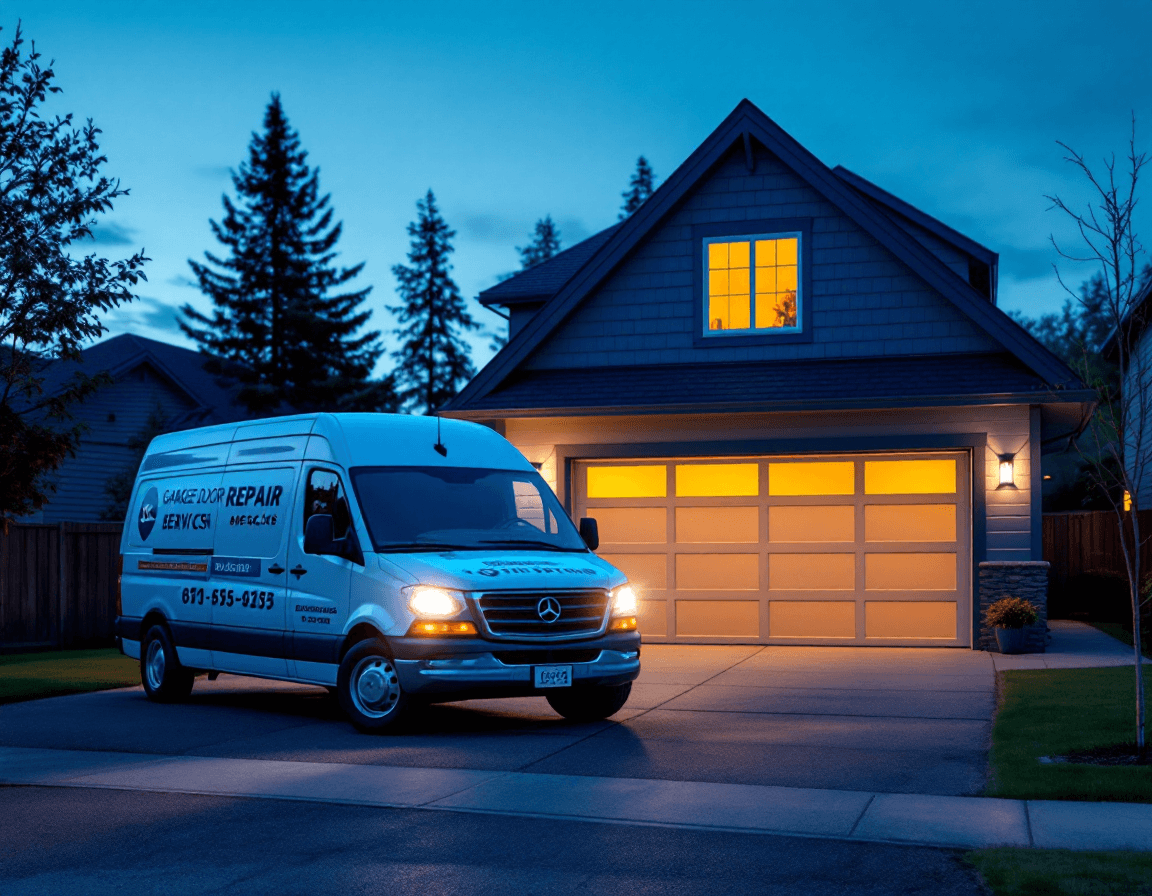
Emergency garage door repair in Woodinville, WA is rarely something homeowners plan for, which is exactly why it catches so many families off guard on a wet February evening or a dark Sunday morning. A door that stops mid-cycle, jams halfway, or refuses to open can leave you stranded inside your own garage, exposed on the driveway, or worried about who can walk through an open bay. Seattle Garage Door Fix dispatches technicians around the clock to homes across Woodinville and the surrounding King County communities, including the 98072 and 98077 ZIP codes. We handle same-day emergencies with upfront pricing, so you know the cost before any work begins.
Western Washington weather adds pressure to every door in the region. Months of drizzle, damp air moving through the Sammamish Valley, and periodic freezing nights can corrode hardware, swell wooden panels, and strain the springs and cables that carry a door's full weight. Many of the emergencies we see are not sudden accidents at all. They are the final failure of a part that has been wearing down through several seasons. Knowing what each failure looks like will help you act calmly and safely when one happens at your house.
This guide walks through the situations our technicians see most often in Woodinville: a car trapped inside, a door left standing open, a broken spring, a snapped cable, a door knocked off its track, and damage from storms or break-ins. For each one, you will find the immediate steps that protect your household, the things you should avoid, and what a licensed technician will typically do next. Please read the safety notes carefully, because garage door springs and cables store enough force to cause serious injury. When you are unsure, step back, keep everyone clear of the door, and call a professional.
How Woodinville's Wet Winters Quietly Set Up Emergency Failures
Woodinville homes sit in a climate where moisture is a constant companion from October through April. Rain soaks into the bottom edges of wooden and steel panels, and the metal hinges, rollers, and track brackets begin to show surface rust long before anyone notices a problem. Rollers that once glided can seize in their track when grit and moisture mix with old lubricant, forcing the opener to work harder until something gives. Those small frictional problems often show up first as a noisy door or a door that stops halfway, and then escalate into a full emergency during the next cold snap or windy night.
The temperature swings that come with a typical Pacific Northwest winter matter more than many homeowners realize. Torsion springs are calibrated to a particular tension, and metal responds to changing temperatures by expanding and contracting slightly over time. A spring that was already fatigued from years of cycling may be pushed past its limit on a particularly cold morning when it has to lift a heavy door against stiffer resistance. This is one reason service calls tend to cluster after sudden cold periods, when a door that worked fine the previous evening suddenly will not budge.
Local vegetation adds another layer of wear. Conifer needles, moss, and fine debris drift into the gaps around door tracks, especially on properties with mature trees or shaded driveways. Debris can collect in the bottom track and interfere with the rollers, while sap and pitch can gum up moving parts during warmer months. Many of the older garages scattered through established neighborhoods were built before modern weather seals and steel track systems became standard, so they tend to show these problems sooner. Newer construction often has better materials, but it still needs seasonal attention to perform well in the rain.
When a Car Is Trapped Inside: Safe First Moves
Being unable to get a vehicle out of the garage is stressful, especially if you have somewhere to be or a child waiting in the car. The first priority is safety, and that means clearing everyone away from the door before you try anything else. Do not stand under the door, reach beneath it, or let anyone crawl through a partly open gap. A door that appears to be stuck can release suddenly when a spring or cable shifts, and the force involved can cause severe injuries.
Many trapped-car situations come from a door that stops working while closed, which means the opener has lost power, the sensor has been obstructed, or the drive mechanism has failed. In some cases, you can use the emergency release cord, the red handle that hangs from the opener's trolley, to disconnect the door from the motor and attempt a manual lift. That step is only appropriate when the door is closed, the path is clear, and the door moves freely and feels balanced. If the door is unusually heavy, jerks, or sags on one side, stop immediately and leave it alone.
- Keep children, pets, and bystanders well clear of the door's travel path at all times.
- Never lift a door by hand if you can see a broken spring or a gap in the spring coils.
- Do not pry the door with a bar, climb on the vehicle, or attempt to reset the opener by repeatedly pressing buttons.
- If the car is inside, exit through the house door rather than trying to move the vehicle out of a tight space under pressure.
- Call a technician and describe whether the door is closed, partly open, or fully stuck, since that detail helps us plan the right tools before arrival.
If you can enter and exit the home through an interior door, that is usually the safest path while you wait. Once you are out of the garage, keep the house door closed and avoid repeatedly testing the opener, which can worsen certain mechanical faults. A licensed technician will assess the cause, whether it is a power interruption, a sensor fault, a damaged cable, or a spring issue, and explain the repair before proceeding. Our crews arrive prepared for same-day emergencies, and they will tell you what is wrong before any work begins.
A Door Left Standing Open: Securing the Home Until Repairs Arrive
A garage door that will not close is one of the most unsettling emergencies a homeowner can face, because it turns the garage into an open invitation. The door may be stuck in the raised position after a failed opener cycle, or it may have jammed partway open after an impact. Either way, the immediate goal is to protect the rest of the house and anything stored in the garage. Start by locking the interior door between the garage and the living space, and confirm that any exterior entry door is secured.
Next, reduce what a passerby can see and reach. Move tools, bicycles, and loose valuables further back inside the garage or into a locked room if you can do so safely, and avoid stacking anything right in front of the opening where it could fall. Outdoor lighting that remains on can help deter opportunistic activity, although it is not a substitute for a secure barrier. If you have a neighbor you trust, letting them know the door is open can help them keep an eye on the property until you arrange service.
Avoid improvised fixes that put strain on the cables, springs, or track. Wedging boards into tracks, tying the door down with rope, or pulling on the cables can cause a sudden drop or a more serious failure. A sturdy temporary measure is sometimes appropriate, but it should be set up by someone who understands the door's mechanics. When our technician arrives, we can often secure the opening with a safe temporary solution while we diagnose the root cause. That approach keeps your home protected without making the underlying problem worse.
Broken Torsion Springs and Doors That Refuse to Lift
Most residential doors in Woodinville use torsion springs mounted on a steel shaft above the opening. These springs carry the majority of the door's weight and store a great deal of energy when wound. When one breaks, the door often becomes extremely difficult to lift, may refuse to rise at all, or can rise unevenly and strain the opener until it reverses or shuts off. Many homeowners describe a loud bang followed by a sudden change in how the door behaves, and that sound is usually the first clue that a spring has failed.
Torsion spring work is dangerous and should only be performed by a licensed, trained technician with the proper winding bars, safety equipment, and experience. Springs hold tension that can cause severe injury if released without control, and improvised attempts with ordinary tools are a common source of serious accidents. Even a spring that looks intact may be under dangerous tension, so never try to adjust, wind, or remove one yourself. If you suspect a spring problem, keep the door closed if possible and keep people away from the area until a professional arrives.
- A loud snap or bang while the door is operating or sitting still.
- A visible gap in the spring coils, or a spring that appears to have pulled apart.
- A door that is heavy, sags, or will not lift more than a foot or two.
- An opener that strains, runs briefly, or reverses direction when the door is raised.
Replacement usually involves matched springs sized for the door's weight, along with an inspection of the cables, drums, and bearings. Technicians generally recommend checking the entire lifting system rather than swapping a single part, because a worn component can accelerate wear on its replacement. A properly balanced door should lift smoothly and stay in place when partially raised, and that balance is part of what we verify before leaving the job. Our emergency team will explain the specific parts and the reason behind each one before any repair begins.
Snapped Cables and a Door Hanging Crooked
Steel lift cables run from the bottom corners of the door up to the drums on the shaft, and they work together with the springs to keep the door balanced. When a cable snaps, the affected side can drop suddenly, leaving the door hanging crooked, sagging at one corner, or jammed at an angle in its tracks. The door may also pull hard toward the damaged side, which can damage rollers, track sections, and the opener in short order. A frayed or kinked cable is a warning sign, and a cable that snaps while the door is operating can cause a sudden fall.
Cable repair is another job that should be left to licensed professionals. A cable under tension can whip or release when it is disconnected, and a door that is partly supported by one side can shift unexpectedly. If the opener is still functional, a technician may recommend disengaging it and keeping the door in place with proper temporary support. Homeowners should keep hands, feet, and tools away from the cables and the drum area, even if the damage looks minor.
Cables tend to age in pairs, so a technician will typically inspect both sides of the door, the drums, and the spring system before recommending a fix. Replacing only the broken cable may leave the other one close to failure, which can lead to another emergency within weeks. Our crews check the balance of the door after replacement and confirm that the panels travel straight in the tracks. Whenever a door has been hanging crooked, we also look for hidden damage to the track and rollers that could have been caused by the uneven load.
Off Track After an Impact or a Hard Slam
A door that jumps off its tracks can happen for many reasons. A vehicle bumping the door at low speed, a strong gust of wind pushing a large panel sideways, a child swinging on the door, or an unusually hard slam can each knock rollers out of their channels. When the door is partially off track, you may hear grinding, see the panels bow or lean, or notice that the door sticks at a specific height. Forcing a door that is off track can bend the track sections, crack panels, or damage the rollers beyond a simple realignment.
If you notice that the door has come off its track, do not try to pound it back into place or pry the panels with a bar. Keep people and pets away from the door, and disconnect the opener if the door is still responding to commands. Look for obvious obstructions, such as a tool, a toy, or a bicycle that may have fallen into the path. If the door will not move freely, leave it where it is and call for service rather than applying more force.
Getting a door back on track requires more than muscle. Technicians check whether the track sections are straight, whether the rollers and hinges are intact, and whether the panels themselves have been damaged. Sometimes a single bent track section can be carefully straightened, and sometimes the entire track assembly needs replacement. Once the door is realigned, we test its travel from closed to open and make sure the rollers seat properly in the tracks before we consider the job finished.
Storm, Windstorm, and Break-In Damage Common to King County
King County experiences periodic windstorms, and those events can push panels out of alignment, dislodge weatherstripping, and send debris against the door. A fallen branch or a tree limb striking the garage can crack a panel, bend a section, or damage the header and surrounding trim. When a storm passes, many homeowners discover damage only after trying to operate the door, and the failure may appear to be purely mechanical when the root cause was impact. Documenting the damage with clear photos as soon as it is safe to do so can help you when you talk with your insurance provider.
Break-in damage presents its own challenges. An intruder may pry at the bottom seal, force the lock mechanism, or attempt to manually lift a door, leaving b