
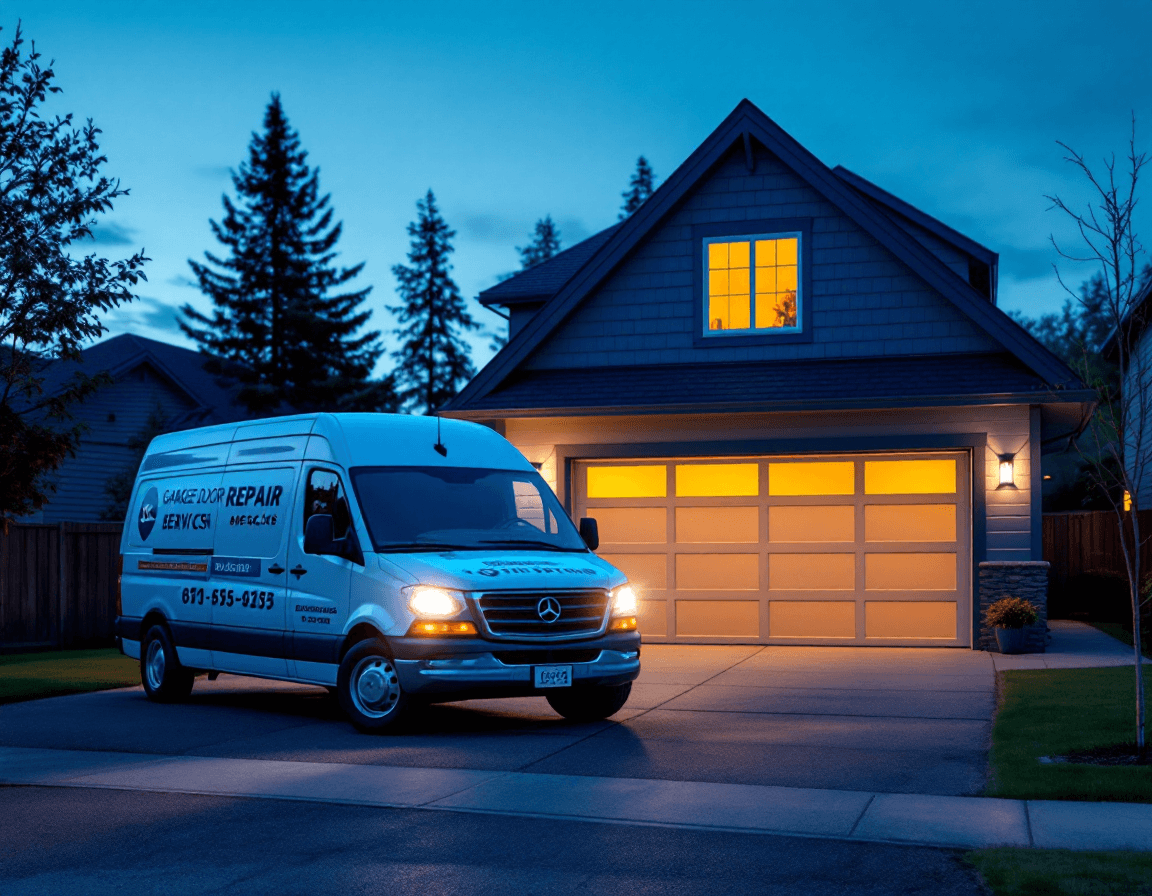
Emergency garage door repair in Kenmore, WA is often needed on the worst possible day: a rainy Tuesday night, a fifteen-minute window before you have to leave for work, or a dark evening when the door has stopped in the middle of its track. Kenmore sits on the northeast shore of Lake Washington, where wet, mild winters and damp summer mornings put steady stress on springs, rollers, and door panels. Our technicians respond to these calls across the 98028 area, and we arrive ready to make the door safe, secure, and usable again the same day.
Many homeowners in Kenmore don't think about their garage door until it fails, and by then the situation feels urgent. Whether your car is boxed in, the door is standing open at the street, or a cable has snapped and left the panel hanging crooked, the first priority is safety. We'll walk you through what to do in the first few minutes, what to avoid, and what a same-day visit typically covers. We also explain our upfront pricing approach so you know what you're agreeing to before any work begins.
This page explains the most common emergencies we see in Kenmore, what causes them, and how we handle each one. You'll find practical guidance on staying safe while you wait, how to tell a quick adjustment from a repair that needs parts, and why certain jobs should never be attempted by a homeowner. If you're dealing with a problem right now, skip ahead to the section that matches your situation, and call (888) 799-3819 at any time.
Trapped Inside or Locked Out: When Your Car Can't Get Out
A car trapped inside a garage is one of the most frustrating emergencies we handle, and it often happens without warning. The opener may have lost power during a windstorm, a sensor may be misaligned after someone bumped it with a bike, or the door may have stopped halfway because the auto-reverse feature detected an obstruction that wasn't really there. In Kenmore, power interruptions during winter storms off the lake are common enough that many homeowners find out their door is manual-only only after the outage ends.
Before you call, try the emergency release. Most residential openers have a red cord hanging from the trolley, and pulling it disconnects the door from the opener so you can lift it by hand. Lift slowly and evenly, and if the door feels unusually heavy, stop. A door that resists may have a broken spring, and forcing it can cause a cable to snap or a panel to bend. Do not stand under the door while lifting, and keep children and pets well clear.
When the emergency release doesn't solve the problem, our technician will diagnose whether the issue is electrical, mechanical, or related to a sensor. Many trapped-car calls turn out to be a tripped breaker, a blown opener fuse, or a sensor alignment that takes only a few minutes to correct. If the spring or cable has failed, the repair will be more involved, and we'll explain the options before we start. Our goal is to get your vehicle out safely and leave you with a door that operates reliably.
Door Stuck Open and Refusing to Close
A door that stays open overnight is more than an inconvenience. It exposes tools, bikes, stored holiday decorations, and any vehicle inside to theft, and it can let rain and wind into the living space above or beside the garage. Homeowners in Kenmore often notice this after a late return from a trip, when the door has been sitting open for hours. Because the door is also a security concern, we treat stuck-open calls as priority dispatches.
Several conditions cause a door to stop in the open position and refuse to close. The most common is a photo-eye sensor problem: the two small sensors near the floor on either side of the opening must face each other and have a clear line of sight. Leaves, spider webs, a dusty lens, or a loose wire can make the opener believe something is blocking the door. Other causes include a damaged limit setting, a worn drive gear, or a torsion spring that has lost enough tension that the opener can no longer manage the weight.
Please do not try to force the door shut by hand. A door that has stopped in the open position may be held by a spring or cable that is no longer balanced, and a sudden drop can injure hands, fingers, or feet. Instead, unplug the opener if it's safe to reach it, keep the area clear, and wait for a technician. We'll check the sensors, the limit settings, the drive system, and the springs before recommending any repair, and we'll secure the door so it can't drop unexpectedly while we work.
Broken Torsion Spring and a Door That Won't Lift
A broken spring is the single most common reason a Kenmore homeowner calls us for emergency service. Most residential doors use one or two torsion springs mounted on a bar above the opening, and they store the energy that makes the heavy panels feel light. When a spring breaks, it often makes a loud bang, and afterward the door may feel impossibly heavy or refuse to rise at all. The opener may strain, hum, or simply stop.
Spring replacement is dangerous work and should always be performed by a licensed professional. Torsion springs carry enormous tension even when they look relaxed, and improperly handled winding bars can cause severe injury. This is why we recommend against any attempt to replace or adjust a spring yourself, even if you've watched a video or own a set of tools. Our technicians use specialized equipment and follow safety protocols designed specifically for this work.
When we arrive, we'll confirm which spring has failed, check the cable drums and bearing plates, and inspect the rest of the hardware for wear that could cause another failure soon. In many cases, replacing both springs at the same time is the smarter choice, because a spring that has been working alongside a failed one is usually near the end of its life. We'll give you a clear explanation of the parts involved and what the repair will cost before any work begins.
Snapped Cable and a Door Hanging Crooked
Lift cables run up each side of the door and wrap around drums at the top. When one cable snaps, the door typically drops unevenly, hangs at an angle, or pulls away from one track. You may notice a gap at the bottom on one side, a panel that looks twisted, or a door that grinds as it moves. Continuing to operate the door in this condition can damage the opener, bend tracks, and make the eventual repair more expensive.
Cable failures are often linked to the springs. When a spring breaks, the cable may lose tension and jump off its drum, or the sudden release of energy can fray or snap the cable. Rust and corrosion matter here as well. Coastal-influenced humidity and frequent rain around Lake Washington can accelerate corrosion on untreated hardware, especially in garages with poor ventilation or doors that sit close to the ground where splashing water collects.
Do not attempt to re-thread or replace a cable yourself. Cables are under tension, and the door's weight depends on a precise balance of springs and drums. A technician needs to secure the door, relieve the tension safely, and install matching components to restore smooth, level operation. We'll check the tracks, rollers, and hinges during the repair, because a crooked door often has several worn parts that were stressed by the imbalance.
Off-Track Doors After an Impact or a Hard Slam
Doors can leave their tracks after a vehicle bumps the bottom panel, after a child swings on the door, or after a gust of wind forces a poorly secured door out of alignment. A door that slams shut hard can also jam the rollers out of their channels. You'll usually see a panel sitting at an odd angle, rollers hanging loose, or a track bent away from the wall. Sometimes the door looks fine from the outside but refuses to move smoothly when operated.
Track damage varies. A rollers-only problem may require a few new rollers and a careful realignment. A bent track, however, needs to be straightened or replaced, and a door that has been forced out of its tracks may also have damaged hinges or panels. Because the track system holds the door's weight as it travels, a bent section can cause the door to bind or fall in the middle of its cycle. We'll inspect the full path of travel before attempting to reseat anything.
If the door has come off its tracks, keep everyone away from the opening and do not try to lift or push it back into place. A door that is partially off its tracks can shift without warning. Our technicians bring the tools and training needed to brace the door, reseat the components safely, and confirm that the door tracks straight before we leave.
Storm Damage, Wind Gusts, and Lake-Driven Weather
Kenmore's weather can be gentle most of the year, but winter windstorms and heavy rain can damage garage doors in ways that aren't always obvious. Wind pressure builds on large panels, especially on single-car doors facing open exposures near the water. Fallen branches from the trees common in our neighborhoods can dent panels or crack the glass in windowed doors. Standing water can seep under the bottom seal and rot the wood frame or rust the lower brackets.
Storm damage often shows up as a combination of problems. A door that was bent by a branch may also have a cable that was stretched by the impact or rollers that were knocked out of their track. Wood doors can swell and warp after long periods of wet weather, which affects how they travel in the track. Metal doors can develop dents that rub against the track, and insulated panels may separate at the seams. A thorough inspection looks at the entire assembly, not just the most visible damage.
After a storm, check the door for obvious bends, gaps at the bottom, or unusual sounds during operation. Take photos for insurance purposes if the damage is significant, and avoid operating a visibly damaged door until it has been inspected. We can document the repairs in a clear written summary, which is useful when you're working with an insurance adjuster after a major event.
Break-In Damage and Securing Your Garage After Forced Entry
A break-in through the garage door is less common than a break-in through a side door, but it happens, and it leaves a door that may no longer lock or close properly. Thieves sometimes pry the bottom panel upward, bend the track, or damage the locking mechanism to gain access. When this occurs, the door may be stuck open, half-closed, or sitting loose in its track, and the homeowner is left with an unsafe, unsecured opening.
Start by contacting the police to file a report if the break-in is recent, and do not touch areas that may need to be documented. Once the scene has been cleared, call us so we can assess the door's structure and secure the opening. Our technicians can install temporary bracing or reinforce the bottom bracket, repair or replace damaged locking hardware, and restore the door to safe operating condition. We can also recommend security upgrades such as a reinforced bottom bracket or an updated opener with rolling code technology, if that fits your situation.
For peace of mind while you wait, avoid leaving valuables visible through a damaged door, and consider a temporary cover over the opening if the weather is wet. Please keep in mind that a temporary fix is not a substitute for a proper repair, and we'll be clear with you about what has been done and what still needs attention.
What Our Same-Day Emergency Visit Covers
When you call us for emergency service, the dispatcher will ask a few targeted questions about the symptoms, the door type, and your location within Kenmore or the surrounding 98028 area. This helps us match the right technician and parts to your call. If the door is trapped, stuck open, or unsafe, we prioritize arrival as quickly as our schedule allows, and we'll confirm the expected timing when we book your visit.
A typical emergency visit includes an initial safety check, a diagnosis of the failure, and a clear explanation of the repair options. Before any work starts, we provide upfront pricing for the specific job, so you know what you're approving. Depending on the problem, the visit may include:
- A safety inspection of the door, springs, cables, and track system
- Testing of the opener, sensors, and limit settings
- Securing the door so it cannot move unexpectedly during repair
- A written estimate covering parts, labor, and any follow-up work
- Confirmation that the door operates smoothly before we leave
If the most urgent problem can be resolved right away, we'll do so. If additional parts are needed, we'll explain what to expect and when the repair can be completed. Our technicians are licensed, bonded, and insured, and they follow safety practices that protect both you and your property.
Preventive Habits That Reduce Future Emergencies
Many emergency calls can be avoided with a few simple habits. Keep the tracks clear of debris and check the sensor lenses every few months, wiping away dust and cobwebs that can confuse the opener. Listen for changes in the way the door moves, such as squeaking, grinding, or a slight hesitation at the start of travel. These early signals often point to worn rollers or a spring that is losing tension, and catching them early is far cheaper than waiting for a failure.
Seasonal care matters in the Pacific Northwest. Damp winters and humid shoulder seasons can accelerate rust on hinges, brackets, and bearing plates, so a light lubricant on moving parts (using a product suited to garage doors) helps. Avoid spraying lubricant onto the springs or cables themselves, since it can attract dirt and does not replace the need for professional inspection. Check the weatherstrip along the bottom of the door for cracks or gaps, which can let water and cold air in.
Have a professional inspect the entire system at least once a year. This is especially valuable if your door is more than a decade old, if you've noticed the door running unevenly, or if you've recently experienced a power outage or storm. A routine inspection can identify worn springs, loose hardware, and aging openers before they fail at an inconvenient time, and it gives you a clear picture of what the door needs.
Choosing a Reliable Emergency Provider in Kenmore
When an emergency strikes, it's tempting to call the first company that answers. A little due diligence goes a long way. Look for a provider that is licensed, bonded, and insured, and ask whether their technicians are trained to handle spring and cable work safely. A legitimate company will be comfortable explaining the repair process, providing upfront pricing, and putting the estimate in writing before work begins.
Be cautious of any provider that refuses to give a price until the job is finished, pressures you to approve expensive work on the spot without explanation, or asks you to pay the full amount in advance for an unknown scope. Clear communication, honest diagnosis, and a willingness to explain alternatives are signs of a trustworthy shop. We'd rather walk you through the options and let you decide than rush a decision that you may regret later.
Seattle Garage Door Fix serves Kenmore and more than 60 cities across the greater Seattle and Western Washington area. Our technicians are licensed, bonded, and insured, and they are available for emergency calls around the clock. If your garage door has trapped your car, stuck open, lost a spring, dropped a cable, jumped its track, or taken storm or break-in damage, call (888) 799-3819 for same-day emergency service with upfront pricing. We'll get your door safe, secure, and working again.