
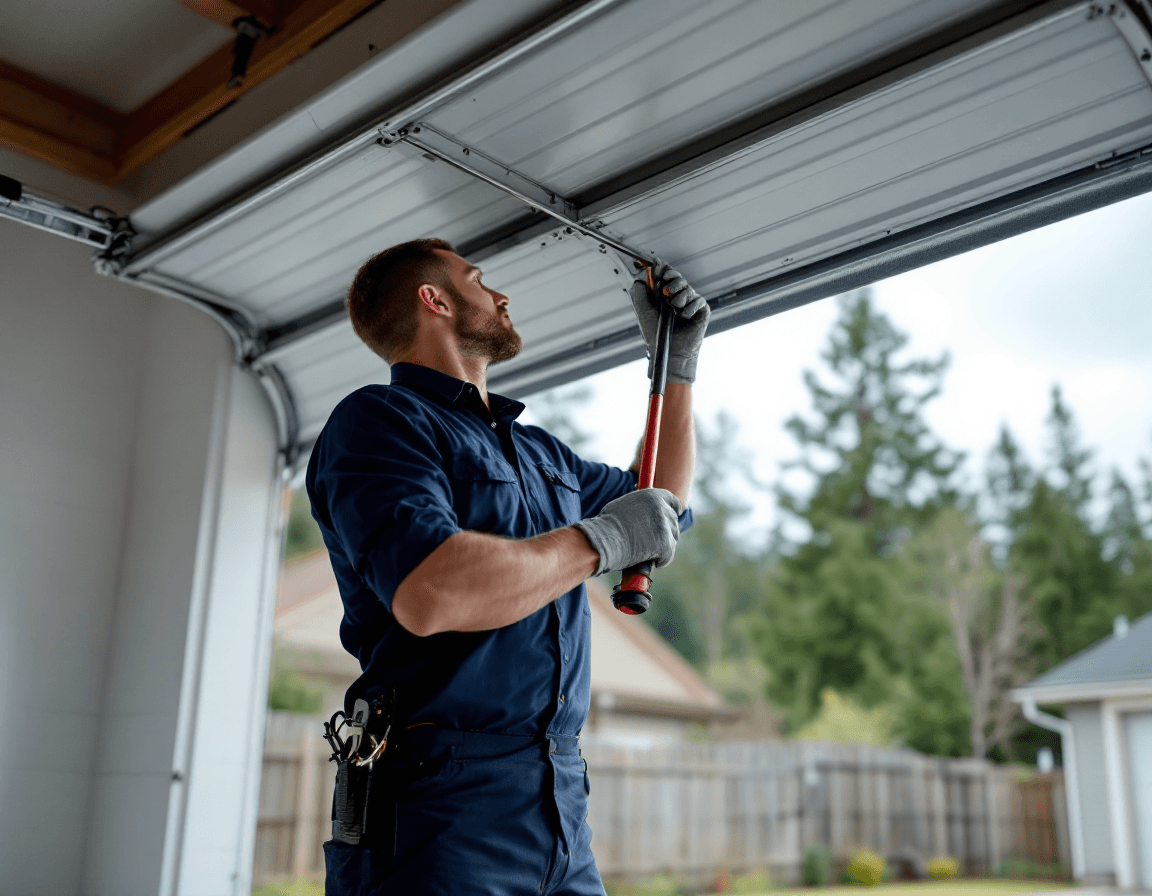
Garage Door Spring Replacement in Kenmore, WA is one of the repairs we see most often on the northeast shore of Lake Washington, and it is also one of the easiest to underestimate. A garage door spring carries the full weight of the door, often well over a hundred pounds, and it works under constant tension every time the door moves. When it fails, the door can go from a smooth, quiet lift to a stuck, sagging panel in a single cycle. Knowing what the spring does and what its failure looks like helps you act before a small problem turns into a damaged opener or a bent track.
Most Kenmore homes we visit have one of two spring systems, and both do the same basic job of counterbalancing the door so the opener does not have to fight its full weight. The springs wear down through repeated cycles, and the metal fatigues faster in some conditions than others. A spring that has been stretched and relaxed thousands of times will eventually lose its ability to hold tension, and the break often comes without much warning. This page explains what homeowners in Kenmore should watch for, how replacement works, what shapes the cost, and why this job belongs in the hands of a licensed technician.
Why Kenmore Garages Wear Springs Faster Than You Expect
The Pacific Northwest has a reputation for rain, but the more important factor for garage hardware is the persistent damp that settles into an attached or detached garage between October and May. Moisture gets into the steel of torsion springs and the galvanized surfaces of extension springs, and over time it encourages surface rust and pitting. Pitting creates tiny stress points, and those points are where cracks start. A spring that looks fine from a distance can have a corroded section hidden inside its coils, which is why age and visible condition are not always reliable guides.
Temperature swings matter too. A cold morning in Kenmore after a damp night can make steel stiffer and less forgiving, and a door that has been sitting closed for hours may lift with a different feel than it does on a warm afternoon. Homeowners often notice that a spring fails on the first chilly morning after a stretch of mild weather, and that timing is not a coincidence. The metal is being asked to hold the same tension it always has, just under conditions that reveal existing weakness.
Many Kenmore properties also have garages that double as workshops, storage rooms, or a second entry point to the house. Doors in these spaces tend to open more often than a typical two-car garage door that only moves when the car leaves or returns. Higher cycle counts shorten spring life, so a household with teenagers, frequent deliveries, or a home business may burn through springs faster than the manufacturer's rating suggests. Recognizing your own usage pattern is the first step toward choosing the right replacement.
Reading the Warning Signs Before a Spring Lets Go
A spring rarely fails in complete silence, although it can feel that way if you are inside the house when it happens. Early warning signs usually show up as changes in how the door moves, and catching them early gives you time to schedule a repair on your terms instead of during a rainy weekday when you need the car out the door. Pay attention to anything that feels different from the way the door operated last season, because small changes are often the first sign of fatigue.
- A loud bang from inside the garage, often compared to a gunshot or a heavy piece of metal dropping, which usually signals a spring snapping under tension
- A visible gap or separation in the torsion spring coil, sometimes with a slight tilt in the spring cone or a shift in the shaft
- The door opens a few inches and then stops, or it stalls partway through its travel
- The door feels extremely heavy when you lift it by hand, or it drops quickly when you release the handle
- The opener strains, hums, or reverses unexpectedly even though the door barely moves
- Lift cables appear loose, frayed, or have slipped off the drum after a spring break
- The door closes too fast, drifts to one side, or seats crookedly in the track
Any of these symptoms can have causes other than a broken spring, including worn rollers, a failed opener, or a damaged track. That is why a diagnosis should involve checking the spring, cables, drums, and balance together. Do not assume the cause based on one symptom alone. A technician who inspects the whole system can tell whether the spring is the root problem or whether another component is making the spring look worse than it is.
Torsion Versus Extension: Which System Your Door Uses
Before any replacement, a technician needs to know which spring system your door uses, because the parts, tools, and safety steps differ. Torsion springs are mounted on a steel shaft above the door opening, usually centered over the header. They wind and unwind as the door rises and falls, and they store energy through twisting. Extension springs run along the horizontal tracks on either side of the door, stretching as the door lowers and pulling it back up as it lifts. Many older Kenmore homes still have extension systems, while many newer or replaced doors use torsion.
Each system has its own failure pattern. Torsion springs often break in the middle of the coil, sometimes with a visible gap that you can see with a flashlight. Extension springs usually fail at the ends or near the hook connections, and they can also lose tension gradually before they actually break. Some extension systems include safety cables that run through the center of the spring, and those cables can hold the spring in place after it breaks, but they do not restore the lift. A good replacement addresses both the spring and the cable hardware so the door is not left with a weak link.
Identifying the system also affects how the door should be balanced after installation. Torsion setups are sensitive to winding, and the balance has to be checked carefully because an improperly wound spring can create uneven lifting. Extension systems require accurate alignment of the tracks and rollers. Both systems should be inspected for wear on cables, drums, and bearings at the same visit, since those parts often show age at the same time as the spring.
What Happens During a Professional Spring Swap in Your Driveway
A professional spring replacement is a controlled procedure that starts with securing the door and ends with testing it through several full cycles. The technician first confirms the spring type, measures the existing hardware, and checks whether the replacement must match a specific wire size, inside diameter, length, and cycle rating. Accurate measurement matters because a spring that is slightly too weak or too strong will cause balance problems even if it fits physically. Verifying the size before the old spring is removed prevents delays and extra trips.
Once the setup is confirmed, the door is clamped or locked so it cannot move unexpectedly, and the tension is released in a controlled sequence. Winding bars are used with specific steps, and the technician should never rely on improvised tools or quick cuts to release tension. The old spring is removed, the cables and drums are inspected, and worn bearings or brackets are replaced if needed. The new spring is installed, tensioned to the correct specification, and secured before the door is unlocked.
After installation, the door should be tested for smooth travel, correct stopping points, and balance. A door that is balanced should stay in place when lifted halfway and released, and it should move evenly without dragging or hopping. The opener should run within its normal load range, and the door should close without slamming. This testing phase is often where a technician catches small problems that would otherwise lead to another breakdown in a few weeks.
Choosing High-Cycle Springs for Busy Household Schedules
Standard springs are rated for a certain number of cycles, which means the number of full open and close movements they are designed to handle. A typical residential spring may be rated for many years of normal use, but a household that opens the door several times a day, especially with shared vehicles or a home office in the garage, can exceed that rating sooner than expected. High-cycle springs are built with heavier wire or different materials and are designed to last longer under frequent use. They are a practical upgrade for families who notice that the door seems to need repairs more often than their neighbors.
Choosing a high-cycle spring is not automatically necessary for every home. A technician should look at how often the door is used, whether the door is insulated and heavier than standard, and what kind of opener is installed. A heavier door paired with a lighter spring may fail early, while a lighter door with a high-cycle spring may be more than the system needs. The right answer depends on the actual load and use pattern, which is why a single universal recommendation does not work well for every Kenmore garage.
Cost is part of the decision as well. High-cycle options typically add to the price, but the added cost can be justified if it prevents repeat failures and the associated labor. We discuss the options during the estimate so homeowners can weigh durability against budget. The goal is a spring that fits the door's weight, the opener's capability, and the household's schedule, rather than a generic part chosen only because it is the least expensive.
Balance Adjustments That Keep the Door Level and Smooth
Spring replacement is not finished until the door is properly balanced. A balanced door rises and falls with minimal effort from the opener and minimal drift when left in the middle of its travel. An unbalanced door places extra strain on the opener, wears out cables and rollers faster, and can cause the door to close too fast or hang crooked. Balance adjustments are made by changing spring tension or cable positioning, and they require a measured approach because small changes can have a large effect.
A common test involves lifting the door manually to about halfway and letting go. If the door rises or drops on its own, the spring tension is off and needs correction. Another check looks at the cables to confirm that both sides are lifting evenly and that the drums are wrapping the cable cleanly without overlap or slack. Crooked closing often points to an imbalance or a track that is out of level, so the track alignment should be checked during the same visit.
Balance also affects how the door behaves in wet weather. Swollen wood sections, changes in track friction, and cold-stiffened rollers can all shift how the door feels on a given morning. Regular balance checks help keep the door predictable through seasonal changes. A quick inspection after spring replacement gives you a baseline, so you know what normal looks like when the weather changes.
Cable Drums, Lift Cables, and the Hidden Damage After a Break
A spring break is rarely limited to the spring itself. The sudden release of tension can stress the lift cables, pull drums out of alignment, and damage the bearings or brackets that hold the shaft. Cables may fray, kink, or come off the drum entirely, and once a cable has been overloaded, it should be replaced rather than reused. Drums that are cracked or stripped will not hold the cable correctly, and that can lead to uneven lifting or another failure within days.
Homeowners sometimes see a cable hanging loose and assume they can simply reattach it. That approach is risky because the cable is under load and can release suddenly when the door is moved. Cable replacement should be done as part of the spring service, with the door secured and the tension released properly. A technician will check the cable length, the drum wrap, the connection hardware, and the safety cable where applicable.
The most useful post-break checklist includes these items for any technician to confirm:
- Both lift cables are intact, seated on the drums, and wrapping evenly without slack
- Drums are free of cracks, stripping, or damaged grooves
- Shaft bearings and end brackets are secure and not worn or bent
- Safety cables are in place where the system uses them
- Rollers and hinges are checked, since a sudden break can loosen or damage them as well
Pricing From $180 to $450 and What Shapes the Final Number
Most spring replacements we perform fall in a range of $180 to $450, depending on the type of spring, the door's size and weight, and the amount of additional hardware involved. A simple extension spring replacement on a lighter door typically sits at the lower end, while a torsion spring replacement on a heavier insulated door, especially one that needs high-cycle parts or cable and drum work, may land higher. These figures are general estimates for most cases, not a fixed quote for every door, and the final price is confirmed after an on-site inspection.
Several factors influence the total. The number of springs on the door matters, since some doors use two torsion springs and others use more. The condition of cables, drums, bearings, and brackets can add labor if they also need replacement. The door's material and insulation level affect the spring rating, and a larger door may require a stronger spring. Access to the work area, such as a tight garage with limited room for the shaft and tools, can also affect time on the job.
Ask for a written estimate that breaks out the spring cost, labor, and any additional parts before work begins. A clear estimate helps you compare options and avoids surprises. If the technician recommends a high-cycle spring or additional hardware, the reason should be explained in plain language so you understand what you are paying for.
Neighborhood Notes: Waterfront Breezes, Park-Side Humidity, and Older Kenmore Homes
Kenmore's position along the northeast edge of Lake Washington means many properties experience steady moisture, wind off the water, and cool evenings, especially in the shoulder seasons. Homes near the Kenmore Waterfront area and the nearby trails can see damp air that lingers in garages and sheds, while homes tucked toward the wooded parts of town may see more leaf debris and moss on exterior surfaces. These conditions do not cause springs to fail on their own, but they do add to corrosion and hardware wear over time.
Older homes in the area often have garage doors that were installed decades ago, sometimes with original extension springs or hardware that has been patched several times. In those cases, a spring replacement is an opportunity to inspect the entire system, not just the broken part. Tracks may have been bent during previous repairs, and mismatched hardware can create balance problems that look like spring issues. A thorough visit helps separate the components that still have life from those that need replacement.
Saint Edward State Park is a short drive from many Kenmore neighborhoods, and its wooded surroundings are a reminder of how much organic debris and humidity the region handles. Garages near heavily shaded lots often collect more moisture on metal parts, and a periodic visual check of springs, cables, and track fasteners can catch early rust. Keeping the garage ventilated and free of standing water helps extend the life of your door system.
Why Do-It-Yourself Spring Work Puts Your Household at Risk
Torsion and extension springs store a large amount of energy, and mishandling them can cause serious injury. Winding bars can slip, springs can release unexpectedly, and cables can whip when they come under sudden load. Many homeowners underestimate how much force is involved, especially when a door seems light in the middle of its travel. Even a seemingly simple task like removing a broken spring can turn dangerous if the door is not secured and the tension is not released in the correct order.
Professional technicians use tools designed for this work, follow established safety steps, and understand how the door behaves under load. Our team is licensed, bonded, and insured, and we recommend that any spring or cable work be handled by a qualified professional rather than attempted as a do-it-yourself project. The cost of a professional visit is far lower than the cost of an injury, a damaged vehicle, or a door that has been further harmed by improper repair.
If you notice a broken spring, keep the door closed, avoid trying to lift it by hand, and keep children and pets away from the garage until a technician arrives. Use the manual release only if the door is closed and the opener is disengaged, and do not attempt to adjust tension yourself. These simple precautions help protect your household while you schedule a safe, professional repair.
Garage Door Spring Replacement in Kenmore, WA is a job where timing, accuracy, and safety all matter, and a loud bang from the garage should never be ignored. If your door is stuck, sagging, closing crooked, or making a sound you have not heard before, call Seattle Garage Door Fix at (888) 799-3819. Our technicians will inspect the spring system, explain your options in plain language, and get your door moving smoothly and safely again.