
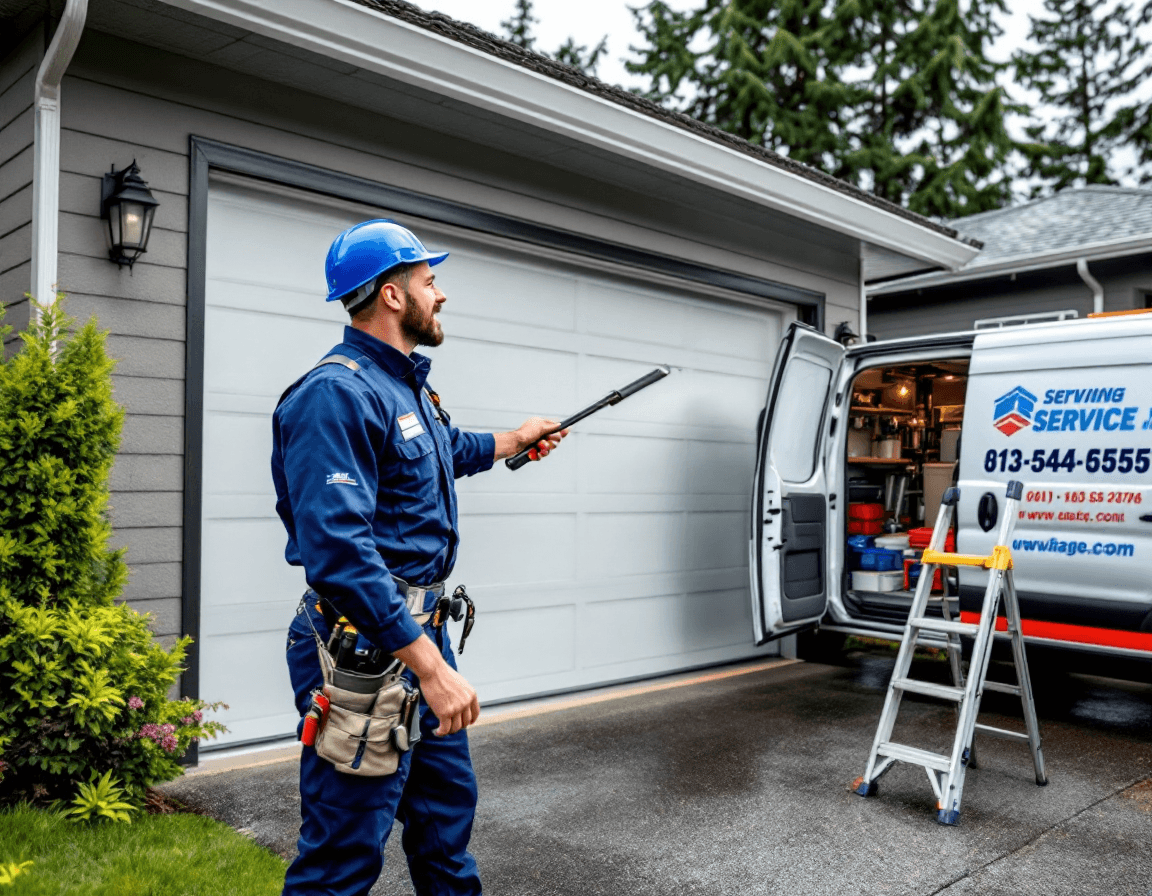
Garage Door Repair in Kenmore, WA is the service our technicians handle most often on the north end of Lake Washington, where a door that stops mid-travel or refuses to close can turn a normal morning into a scramble. Homeowners in ZIP 98028 call us when the opener hums but the door won't budge, when a remote suddenly stops working, or when a door that used to glide now grinds and jerks. Most residential repairs in this area fall between $95 and $450, depending on the part involved and how much diagnosis the problem requires. We keep that range in mind because many of these calls are simpler than people fear, and a clear explanation up front helps you make a good decision.
Kenmore sits in a damp, mild corner of King County where the air off the lake and the steady winter rain work on everything that moves. Garage doors here are exposed to more moisture than the dry-climate doors many manufacturers test against, and the wood, steel, and hardware all respond to that load over time. A door that was adjusted well five years ago may now be pulling unevenly because a roller has seized, a track has shifted, or a cable has begun to fray. Our goal on every visit is to find the actual cause rather than swapping parts and hoping for the best.
This page explains what typically goes wrong with residential doors in Kenmore, what the warning signs look like, which repairs you can reasonably expect, and where the safety lines are drawn. We also cover how local conditions influence the hardware you have, so you can have a more informed conversation with the technician who comes to your driveway. If your door is making a sound you have not heard before, or it has stopped doing something it used to do, the information below should help you narrow things down quickly.
How Lake Washington Moisture Quietly Shapes Your Door Hardware
Anyone who has lived near the water in Kenmore knows that the air stays damp for long stretches, especially from October through April. That moisture settles onto steel tracks, rollers, and hinges, and it works its way into the joints where dirt and grime already sit. Over time, the grease that was supposed to keep a roller turning smoothly becomes a sticky paste that collects grit from the driveway. The result is often a door that starts out fine and then begins to hesitate or squeal once the weather turns.
Steel components are the most vulnerable to this slow change. Surface rust may first appear on the track edges or on the bottom bracket where the door meets the floor, and it can gradually roughen the surface that the rollers ride on. Rollers with nylon wheels can flatten or crack under the strain of a stiff track, while steel-wheeled rollers can develop flat spots that cause a thumping noise on every pass. These are not dramatic failures, but they are the kind of wear that leads to a jammed door on a cold morning.
Routine care helps more than most homeowners expect. Wiping the tracks with a dry cloth every few months, removing debris from the track channels, and applying a lightweight lubricant to the hinges and rollers (not the tracks themselves) can extend the life of the system considerably. Avoid heavy grease on the tracks, since it attracts dirt and makes rollers slip. If you notice rust blooming on any steel surface, bring it up during your next service visit so the affected parts can be cleaned, treated, or replaced before the damage spreads.
Reading the Warning Signs Before a Door Fails Completely
Garage doors rarely stop working without giving some warning. In most Kenmore homes, the first clue is a change in sound: a new squeal when the door starts moving, a rhythmic clicking from the top corners, or a deep bang when the door reaches the top of its travel. Each sound points toward a different part of the system, and paying attention to when the noise occurs can save a great deal of guesswork. A squeal at the start of travel often points to dry hinges or rollers, while a grinding noise in the middle of the cycle may suggest a loose or misaligned track.
Movement changes are just as informative. A door that looks slightly crooked, rises faster on one side, or pauses at a particular height is telling you that the load is no longer balanced. Sometimes this comes from a worn cable drum, a stretched cable, or a spring that has lost tension, and these components are not safe for homeowners to adjust. A door that sags, shows a gap along the bottom, or has pulled partly out of its track has already gone beyond a simple lubrication job and should be inspected promptly.
Keep a simple log of what you observe, even if it is just a note on your phone. Record the date, the time of day, the outdoor temperature if you know it, and what the door was doing. This information is genuinely useful to a technician, because it helps us distinguish between a problem that appears only in cold, damp mornings and one that is steadily getting worse. Clear observations also make the repair estimate more accurate, which keeps the process straightforward.
When the Door Reverses Before Reaching the Floor
One of the most common calls we receive in Kenmore involves a door that goes down, then rises again just short of the concrete. Homeowners often assume the opener has failed, but in most cases the cause is the safety system. Every modern garage door opener is equipped with photo-eye sensors near the bottom of the door frame, and these sensors are designed to reverse the door if they detect an obstruction in the path. If the sensors are misaligned, dirty, or damaged, the door may reverse even when nothing is blocking it.
Photo-eye problems are usually inexpensive to correct. The two sensors need to face each other directly, and their indicator lights should be steady rather than blinking. Spider webs, dust, and rain splatter can block the lens, and a bump from a bicycle or a shifted bracket can knock the sensors out of line. Cleaning the lenses and realigning the brackets often resolves the issue on the first visit, and a technician can confirm the sensor range and wiring at the same time.
Sometimes the reversal is caused by something other than the sensors. A door that is out of balance may reverse because the opener detects excess force when the door reaches the lower part of its travel, and a worn or misadjusted opener force setting can make the problem worse. In those cases, the door itself needs to be checked for binding, a seized roller, or a bent track section before the opener is blamed. Our technicians test the sensors and the door balance together so the fix addresses the real cause rather than masking it.
Noises That Signal Trouble: Grinding, Squealing, and Banging
Garage doors are noisy by nature, but there is a difference between normal operation and a sound that means something is wrong. A light, steady rumble as the door travels is usually acceptable, while a metallic grinding or a sharp squeal deserves attention. Loud banging, especially when the door reaches the top of its travel or drops to the floor, can indicate a loose bracket, a worn track joint, or a roller that has lost its grip on the track.
Grinding often comes from the opener rail or the drive system. An opener that has been running with a loose chain or a worn belt may produce a rough, mechanical sound that gets louder over time. Chain-drive openers in particular benefit from periodic tension checks, since a chain that sags too far can slap against the rail and create a clattering noise. A technician can measure the tension, inspect the drive components, and recommend whether adjustment or replacement makes sense for your specific model.
Squealing is frequently tied to the rollers and hinges. Dry steel or nylon components rub against the track or the hinge pin and produce a high-pitched sound that many homeowners mistake for a motor problem. A proper lubrication with the right product, combined with a check for worn roller bearings, usually silences the noise. If the squealing continues after cleaning and lubrication, the rollers or hinges may need to be replaced rather than treated again.
Door Stuck Halfway: Jams, Off-Track Panels, and Uneven Movement
Few things are more frustrating than a garage door that stops in the middle of its travel and refuses to move in either direction. A jam like this can have many causes, including a derailed roller, a bent track, an obstruction in the path, or a binding hinge. Before anyone attempts to force the door, it is important to disengage the opener and check for visible obstructions such as tools, bikes, or a shifted storage item near the tracks. Never pull on a hanging door or climb on the track to free it, because the door can drop suddenly.
When a panel has popped out of the track, the door often looks crooked or sits higher on one side than the other. Derailed rollers can sometimes be guided back into the track by a trained technician, but the repair frequently involves straightening the track, replacing damaged rollers, and checking the cables and drums for wear. Track alignment is a precise job, and even a small misalignment can cause the door to bind or lift unevenly, so it is worth having the work done carefully rather than rushed.
Uneven movement often signals a balance issue. If one side of the door lifts noticeably faster than the other, the cables may be wound unevenly, a drum may be slipping, or a spring may have lost tension on one side. These components carry significant stored energy, and adjusting them incorrectly can cause serious injury. Our policy is that spring and cable work is performed only by licensed, trained technicians with the proper tools, and homeowners should never attempt it themselves.
Remote and Wall Button Failures in Kenmore Homes
A remote that suddenly does nothing is one of the easiest problems to diagnose, but it still deserves a methodical approach. Start by checking the battery in the remote, since a weak battery can work intermittently before dying completely. Next, try the wall button and the keypad if you have one. If the wall button works but the remote does not, the issue is likely in the remote or its programming. If nothing responds, the problem may be the opener's power supply, the logic board, or a wiring fault at the wall control.
Lake-area humidity can affect electronics in subtle ways, especially in older openers where wiring connections have oxidized or where the wall control has been exposed to moisture through a poorly sealed box. We often find loose terminal screws, corroded connectors, or antennas that have been disconnected during a previous repair. Simple cleaning and tightening can restore full function, but a technician should confirm that the power circuit is safe before working inside the opener housing.
Reprogramming is sometimes necessary after a battery change, a power outage, or the installation of a new remote. Many openers use a learn button on the motor unit, and the steps vary by manufacturer and model year. If you cannot locate the learn button or the instructions are missing, our technicians can handle the reprogramming during a service call. Keep in mind that older openers may use fixed-code technology that is no longer secure, and upgrading to a rolling-code system is a reasonable conversation to have when the opener is due for attention.
Doors That Slam Shut or Close Too Fast
A door that drops quickly or slams against the floor is more than an annoyance. It stresses the bottom seal, the bottom bracket, the springs, and the opener itself, and it can create a real safety concern for children and pets. The most common cause is a spring system that has lost tension or a door that is out of balance, which allows gravity to take over during the closing cycle. In some cases, the opener's close-speed or force settings have been adjusted incorrectly, or the travel limits have been set in a way that allows the door to drop beyond the intended stop point.
Local conditions can contribute to this problem over time. Wood doors in damp climates may swell or warp, adding weight that the springs were not designed to counterbalance. Steel doors can develop dents or hinge fatigue that changes how the panels fold. A technician will examine the door weight, the spring condition, the balance, and the opener settings together, since correcting only one factor often leaves the others to cause the same problem again.
If you notice your door closing faster than it used to, avoid running it repeatedly while you wait for service. Continued operation can accelerate wear on the drive system and the springs. Keep people and pets clear of the door path, and schedule an inspection so the springs and balance can be assessed by someone licensed to work on them safely.
Sagging, Gaps, and Visible Damage Along the Door
Sagging panels and gaps along the top or bottom edges are signs that the door structure is under stress. Steel sections can bend when they are overloaded or when a hinge fails, and wood doors can lose their shape after prolonged exposure to moisture. A visible gap at the bottom may mean the bottom seal has worn out, but a gap along the side or top often points to a track that has shifted or a section that is no longer seated correctly. Each situation calls for a different response, so it is important to identify the pattern before choosing a repair.
Damaged panels can sometimes be replaced individually, which is far more economical than replacing the entire door. Hinges, end caps, and weatherstripping are relatively inexpensive components that make a noticeable difference in how the door looks and performs. However, a panel that has been bent or cracked may also indicate that the door is carrying too much load, which means the springs and cables should be checked as well.
Pay attention to the weatherstripping around the door, especially during the wet months in Kenmore. Gaps that let in water or cold air make the garage less comfortable and can allow moisture to reach stored items and the opener. A technician can recommend the right seal for your door style and check that the bottom bracket and track are aligned well enough for the seal to work properly.
Scheduling Garage Door Service and Knowing Your Safety Limits
Most garage door problems are easier and less expensive to address when they are caught early. A routine inspection can reveal worn rollers, loose hardware, dry hinges, and early rust before they lead to a jam or a broken spring. We recommend a professional check at least once a year, and more often if your door is heavily used or exposed to the wet, salty air that sometimes drifts across the lake. Preventive service also gives you an opportunity to ask questions about the opener, the springs, and the remaining life of the system.
There is a clear line between what homeowners can safely do and what requires a licensed technician. Cleaning the tracks, checking the photo-eye lenses, replacing remote batteries, and applying lubricant to hinges and rollers are generally reasonable tasks for a careful homeowner. Torsion springs, extension springs, cables, drums, and any work that requires holding the door under tension should be left to trained professionals. Stored spring energy can cause severe injury even when the door looks still.
Here are a few practical habits that help keep your door safe and dependable:
- Keep the tracks, rollers, and hinges clean and lightly lubricated, avoiding heavy grease on the tracks.
- Test the auto-reverse feature monthly by placing a flat object in the door path and confirming the door reverses.
- Check the photo-eye lenses for dust or debris, and make sure both indicator lights are steady.
- Never attempt to adjust, repair, or remove springs, cables, or drums yourself.
- Keep remotes out of reach of children, and disconnect the opener power before cleaning the door.
If you ever notice a snapped spring, a cable hanging loose, a door that has come off its track, or a door that will not stay open, stop using it and call a licensed technician right away. Those conditions can be dangerous, and a prompt professional assessment protects your household and your property.
What Our Technicians Check on a Kenmore Service Call
When a technician arrives at a Kenmore home, the first step is usually a conversation about what you have been seeing and hearing. We ask when the problem started, whether it happens every time or only in certain conditions, and whether anything changed recently, such as a storm, a power outage, or a new remote. That context shapes the rest of the visit and often points directly to the likely cause.
From there, the inspection moves through the system in a logical order. We check the power and the wall control, test the photo-eye sensors, examine the tracks and rollers for alignment and wear, and look at the hinges, brackets, and panels for damage. The springs, cables, and drums are inspected visually and tested under the supervision of a licensed technician with the right equipment. Opener settings, travel limits, and force adjustments are verified so the door operates within its intended range.
Once the cause is identified, we explain the options in plain language and give you a clear price before proceeding. Most residential repairs in our service area fall between $95 and $450, and we discuss what drives that range so you understand the work being done. You are never obligated to approve work you do not want, and we will tell you when a simple fix will get you back on track or when a part needs replacing for long-term reliability.
Call (888) 799-3819 for Fast Garage Door Repair in Kenmore
If your garage door in Kenmore will not open or close, reverses before reaching the floor, makes grinding or banging noises, sits crooked, or has slipped off its tracks, we are ready to help. Call (888) 799-3819 to schedule a licensed technician for your home, and describe what you are seeing so we can prepare the right tools and parts. We serve neighborhoods across the greater Seattle and Western Washington area, and we are happy to answer your questions before the visit.