
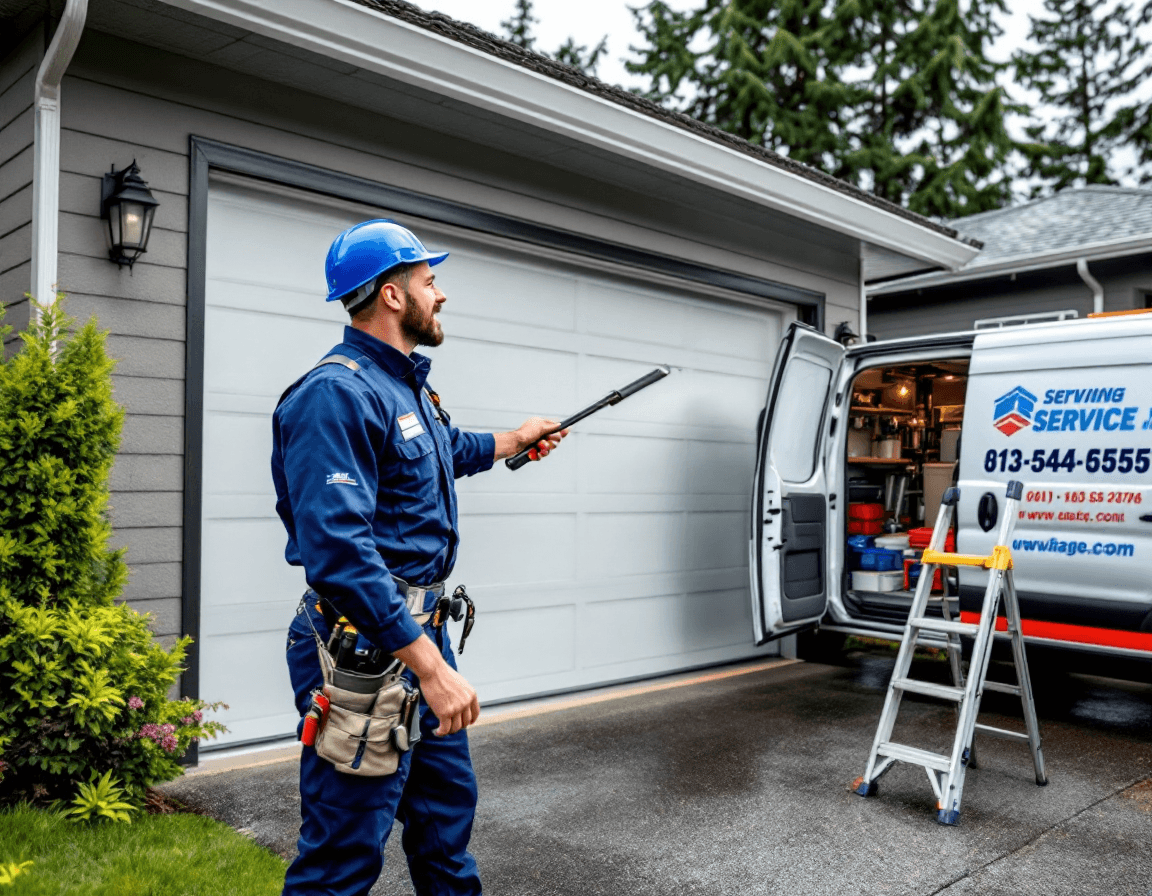
Garage door repair in Lake Forest Park, WA is rarely about one dramatic failure. More often a door starts reversing a little early, groaning on the way up, or stopping a few inches short of the top, and homeowners wait until the problem becomes a full breakdown. Lake Forest Park sits in the wooded northern stretch of King County, where wet winters, tall evergreens, and shifting soil put steady stress on every part of a residential door system. Seattle Garage Door Fix works with homeowners across the city and the surrounding communities, and we see the same early warning signs again and again in local garages. This page explains what those signs mean, what usually causes them in our climate, and when it is time to call a licensed technician.
Most residential repairs in the area fall within a range of $95 to $450, depending on the part involved, the door's size and style, and how much diagnostic work is needed. A simple sensor realignment or a worn roller swap sits at the lower end, while a damaged track section, a failed opener board, or a broken torsion assembly costs more because of the parts and labor involved. The goal of this guide is to help you understand what your door is telling you before you pick up the phone. Knowing the difference between a minor adjustment and a safety hazard can save you time, money, and a stressful morning with the car stuck inside the garage.
Whether your door is stuck halfway, refusing to respond to the remote, or sagging along one side, the sooner it is inspected, the less likely a small fault will spread to other components. Garage doors are heavy, and the hardware that moves them is under constant tension and load. A careful technician can often restore smooth operation in a single visit, and we are always glad to talk through symptoms over the phone at (888) 799-3819 before you decide what to do next.
Why Damp Northwest Winters Wear Down Garage Doors Faster
Lake Forest Park receives a long stretch of gray, wet weather from fall through spring, and that moisture does more to a garage door than most owners realize. Steel tracks and hinges that sit in damp air develop surface rust, and once rust forms on a roller track, the rollers have to work harder to move the panels. Wooden and composite doors absorb humidity, which can cause panels to swell slightly and rub against weatherstripping or the door frame. Over time these small frictional changes make the opener strain, and the strain shows up as slow movement, uneven travel, or unusual sounds.
The surrounding landscape adds its own pressure. Many homes in the area are tucked among mature conifers and deciduous trees, and fallen needles, leaves, and moss collect in the track channels and along the bottom of the door. Debris lodged in a track can cause a roller to bind, and a door that binds on one side will often start to lean or drag. Driveways that slope toward the garage can also trap runoff at the threshold, which corrodes bottom brackets and softens the seal over time. If your garage floor shows standing water after a storm, that is a clue to check both the door seal and the lower bracket hardware.
Cold mornings matter too. When temperatures drop into the low thirties or below during a cold snap, lubricants thicken, and older openers may move sluggishly for the first few cycles of the day. Many owners notice this as a door that seems fine in the afternoon but groans and stalls before work. A good technician will look at lubrication, track alignment, and motor condition together, because in our climate a single cause is rarely the whole story.
When the Door Reverses Before It Hits the Floor
One of the most common complaints we hear from Lake Forest Park homeowners is a door that starts closing, then suddenly reverses and goes back up before it reaches the ground. This behavior is almost always a safety feature doing its job. Modern openers are designed to reverse when they detect an obstruction, and that protection depends on two things: the photo-eye sensors near the floor and the force settings programmed into the opener. When the sensors cannot see each other clearly, the opener assumes something is in the path and reverses.
The photo-eyes are small devices mounted on each side of the door opening, usually about six inches above the floor. A cobweb, a spider, a dusty lens, or a sensor that has been knocked slightly out of alignment by a bicycle, a shovel, or a passing vehicle can interrupt the beam. In the wetter months, condensation on the lenses can also cause intermittent reversals that seem to come and go. Wiring damaged by rodents or by repeated flexing at the bracket is another frequent culprit in older garages, particularly in homes where the cable runs along a damp wall.
Here is what we check first when a door reverses unexpectedly:
- Lens cleanliness and any film, dust, or condensation on both sensor faces
- Alignment of the two sensors, including whether the indicator lights are steady or blinking
- Wire condition at the brackets, staples, and any spot where the cable crosses a sharp edge
- Obstructions in the door path, such as a loose hook, a cord, or a stored item near the threshold
- Opener force and travel settings, which may need recalibration after a power outage or a repair
If the sensors are clean and aligned but the door still reverses, the problem may lie in the door balance or in the track, which we address in a later section. Do not disable the sensors to stop the reversing. Those sensors protect children, pets, and vehicles, and bypassing them removes a safeguard that exists for good reason.
Grinding, Squealing, and Banging: Reading the Noises
A garage door should make a low, consistent sound as it moves, and a noticeable change in that sound is worth paying attention to. Each type of noise points toward different components, which is why an accurate diagnosis matters more than guessing. A high-pitched squeal often comes from dry rollers or hinges that need lubrication, while a grinding sound usually signals metal-on-metal contact somewhere in the travel path. Banging or clunking can mean a loose bracket, a worn bearing, or a track section that has shifted out of its proper position.
In Lake Forest Park, rust is a major source of harsh noise. Steel rollers exposed to damp air can develop flat spots, and once a roller has a flat spot, every rotation produces a thump that can be felt through the floor. Nylon rollers, which many newer doors use, are quieter but can crack or wear unevenly over several years of use. Pulleys and drive chains on belt- or chain-drive openers also accumulate grit and moisture, and a dry chain will rattle and whine as it tensions and releases.
Noise is also a signal that the opener itself is working harder than it should. If your opener seems to strain, hums loudly before the door starts moving, or stops abruptly at the top or bottom of its travel, the motor may be compensating for friction or imbalance elsewhere. Continuing to run a door under those conditions can overheat the motor or wear the drive gear prematurely. A short diagnostic visit can usually pinpoint whether the noise is a simple lubrication issue or a sign that a larger component is failing.
Crooked Travel, Uneven Movement, and Doors Stuck Halfway
When one side of a garage door rises faster than the other, the panels may begin to tilt, and in severe cases the door can bind in the track. This is one of the more concerning symptoms because it can put lateral stress on the panels, hinges, and tracks at the same time. Uneven movement is often traced to a broken or stretched lift cable, a worn spring on one side, or a roller that has jumped out of its track channel. In all of these cases, the door is no longer balanced, and the opener is fighting an uneven load.
A door that stops halfway through its travel is a particularly common complaint. The opener may run, hum, and then shut off, leaving the door suspended several feet above the ground. Sometimes this is caused by a track obstruction, sometimes by a sensor that detects a reversal condition during travel, and sometimes by a balance problem that causes the opener's force limit to trip. Because the door is partially open, it can feel like a security issue, and many homeowners instinctively pull the emergency release cord. That cord disconnects the door from the opener, so the door becomes heavy and should be handled with care.
If your door is stuck or crooked, avoid forcing it manually and keep hands clear of the tracks and springs. Stand to the side rather than underneath, and do not attempt to lift a jammed door by hand, since sudden movement can injure you. Our technicians have the tools to safely reset the door, identify the failed component, and restore balance. For any work that involves cables or springs under tension, the repair belongs with a licensed professional.
When the Remote or Wall Button Does Nothing
A remote or wall button that suddenly stops working is frustrating, but the cause is often simpler than it appears. The first step is to check the easy variables: batteries in the remote, the status of the wall control, and whether the opener's indicator light is on. If the opener itself has no power, the problem may be a tripped breaker, a loose outlet connection, or a power interruption that reset the unit's programming. Some openers require a short reprogramming routine after an outage, and that routine is detailed in the owner's manual.
Radio interference is another consideration in dense residential areas. Garage remotes operate on radio frequencies, and nearby devices, new electronics, or changes to a neighbor's system can occasionally interfere with signal reception. Wall buttons, on the other hand, depend on low-voltage wiring that runs through the wall to the opener. Moisture, rodent activity, or a worn connection at the button can interrupt that circuit, especially in older homes where the wiring has been exposed to temperature swings across many winters.
Keypads and smart-home integrations add their own layers. If you use a keypad or a connected app, a Wi-Fi drop or a changed password can cut off access even when the opener is working perfectly. We recommend testing the wall button first, since it bypasses wireless components entirely. If the wall button works and the remote does not, the issue is almost certainly in the transmitter or the receiver, and reprogramming or replacing the remote is usually a straightforward fix.
Doors That Slam Shut or Drop Too Fast
A door that closes faster than it should, or drops with a heavy thud, is a safety concern that deserves prompt attention. Garage doors are designed to descend at a controlled speed, and that control depends on the balance of the springs, the condition of the cables, and the correct operation of the opener. When the door falls quickly, it can strike the floor hard enough to damage the bottom seal, crack a panel, or stress the bottom bracket. In extreme cases, a sudden drop can injure someone standing nearby.
Several causes are common in this area. A weakened spring may no longer hold the door's weight evenly, letting one side fall faster than the other. A worn drum or cable can slip, which causes a sudden change in tension. In some cases the opener's close-speed or force settings have drifted over time, and a simple recalibration restores proper control. Because the springs and cables carry the weight of the door, any problem at this level requires careful, qualified inspection rather than improvised adjustments.
If your door is slamming shut, keep children and pets away from the opening, and avoid using the door until it has been checked. Do not attempt to adjust spring tension yourself, since torsion springs store enough energy to cause serious injury even when they appear to be at rest. Our technicians can measure balance, inspect the spring system, and recommend the appropriate repair, whether that is a recalibration or a full component replacement.
Gaps, Sags, and a Door Knocked Off Its Track
Visible gaps around the door, a sagging center panel, or a door that has slipped partially off its tracks all point to structural or alignment issues. Gaps at the bottom of the door can let in cold air, rain, leaves, and pests, which is especially noticeable during windy Northwest storms. A sagging panel often indicates that a section has lost structural integrity or that the hinges have loosened, and a door that is off track can jam completely if it is not corrected quickly.
Tracks are the backbone of smooth door movement, and a track that has been bent, loosened, or pulled away from the wall can cause the entire door to lose its path. In Lake Forest Park homes with older framing, minor settling or seasonal movement can gradually shift the track mounting points. Vehicle impacts, even light ones from backing into the door or a delivery vehicle clipping the frame, can knock a track out of position in a single moment. Once a track is misaligned, rollers will ride against the edge of the track rather than through the center channel, which causes binding and noise.
Sag and gap problems also affect insulation and energy efficiency. A door that does not seal evenly around the perimeter lets heat escape from an attached garage into the rest of the home, and it lets moisture in during the rainy season. Replacing worn bottom seals, adjusting the track, and restoring the proper panel alignment can make a noticeable difference in comfort and in the condition of stored items.
Spring and Cable Work Belongs to Licensed Hands
Springs and cables are the most dangerous parts of a garage door system, and they deserve a special word of caution. Torsion springs, which are mounted on a shaft above the door, hold a large amount of tension when the door is closed. Extension springs, found along the horizontal tracks on some door styles, also store significant energy. A broken spring can release that energy suddenly, and the force can cause serious injury. Lift cables carry the door's weight and can snap under strain, which may cause the door to drop unevenly.
Because of these hazards, spring and cable replacement should always be performed by a licensed, bonded, and insured technician with the proper tools and training. Attempting this work without the correct equipment, such as winding bars and safety clamps, is a common cause of serious home injuries. Even experienced homeowners can be caught off guard when a spring that appeared stable releases its tension during removal. We recommend against any do-it-yourself spring work, regardless of how simple a video or guide makes the process appear.
If you are unsure whether a problem involves the springs or cables, the safest course is to schedule an inspection. A licensed technician can identify the failing component, explain the repair options, and complete the work with the appropriate safety measures in place. Our team treats spring and cable jobs as the priority safety work they are, and we will walk you through what is happening before any tension is released.
What a Typical Repair Visit Looks Like and What It Costs
Many homeowners want to know what happens during a service call before they schedule one. A typical visit begins with a conversation about the symptoms: when the problem started, whether it happens every time or only on cold mornings, and whether anyone has tried to adjust the door. The technician then inspects the door panels, hinges, rollers, tracks, springs, cables, opener, sensors, and wiring, and tests the door through several cycles to observe its behavior. Most of the time, the cause becomes clear during that inspection.
Repair costs in the Lake Forest Park area generally fall between $95 and $450 for most residential work. Lower-cost repairs often include sensor realignment, lubrication with appropriate products, roller replacement, remote programming, or a minor track adjustment. Mid-range repairs might involve a replacement opener component, a new bottom seal, a cable replacement, or a more involved track correction. Higher-end repairs can include spring replacement, opener board replacement, or extensive panel and hardware work. The final cost depends on the specific parts required, the size and weight of the door, and how much labor the repair demands.
We believe in clear communication about pricing. Before work begins, the technician should explain what is wrong, what the repair involves, and what it will cost. If an inspection reveals a more significant problem than expected, you should have the opportunity to review your options before any additional work proceeds. Our goal is to restore your door to safe, reliable operation at a price that reflects the actual work involved.
Preventive Habits That Help Doors Last Through Wet Seasons
Preventive care is one of the most effective ways to extend the life of a garage door in the Pacific Northwest. Because moisture, debris, and temperature swings are constant factors in this region, a few simple habits can reduce wear and catch small problems before they become costly. A seasonal check, typically in early fall and again in late winter, gives you a chance to look for changes that might otherwise go unnoticed.
Here are practical steps many Lake Forest Park homeowners find useful:
- Wipe down the tracks and clear out leaves, needles, and moss at least twice a year
- Use a silicone-based or manufacturer-recommended lubricant on hinges, rollers, and springs, and avoid greasy products that attract grit
- Keep sensor lenses clean and check their alignment after storms or yard work
- Inspect the weatherstripping along the bottom and sides for cracks, flattening, or gaps
- Test the auto-reverse feature monthly by placing a board in the door path and confirming the door reverses
- Listen for new noises and note when they occur, since timing can help a technician diagnose the cause
- Keep the area around the door clear of stored items that could interfere with travel
Preventive maintenance should never include adjusting spring tension or working on cables. Those tasks belong to licensed professionals, and attempting them creates serious risk. A regular inspection by a qualified technician can complement your own checks and help identify wear on components you cannot easily see.
If you notice any of the symptoms described on this page, or if your garage door has simply been acting differently lately, reach out to Seattle Garage Door Fix. Our licensed team serves Lake Forest Park and the surrounding communities, and we are ready to help you restore safe, smooth operation. Call (888) 799-3819 today to schedule a repair visit or to describe what your door is doing, and we will help you determine the best next step for your home.