
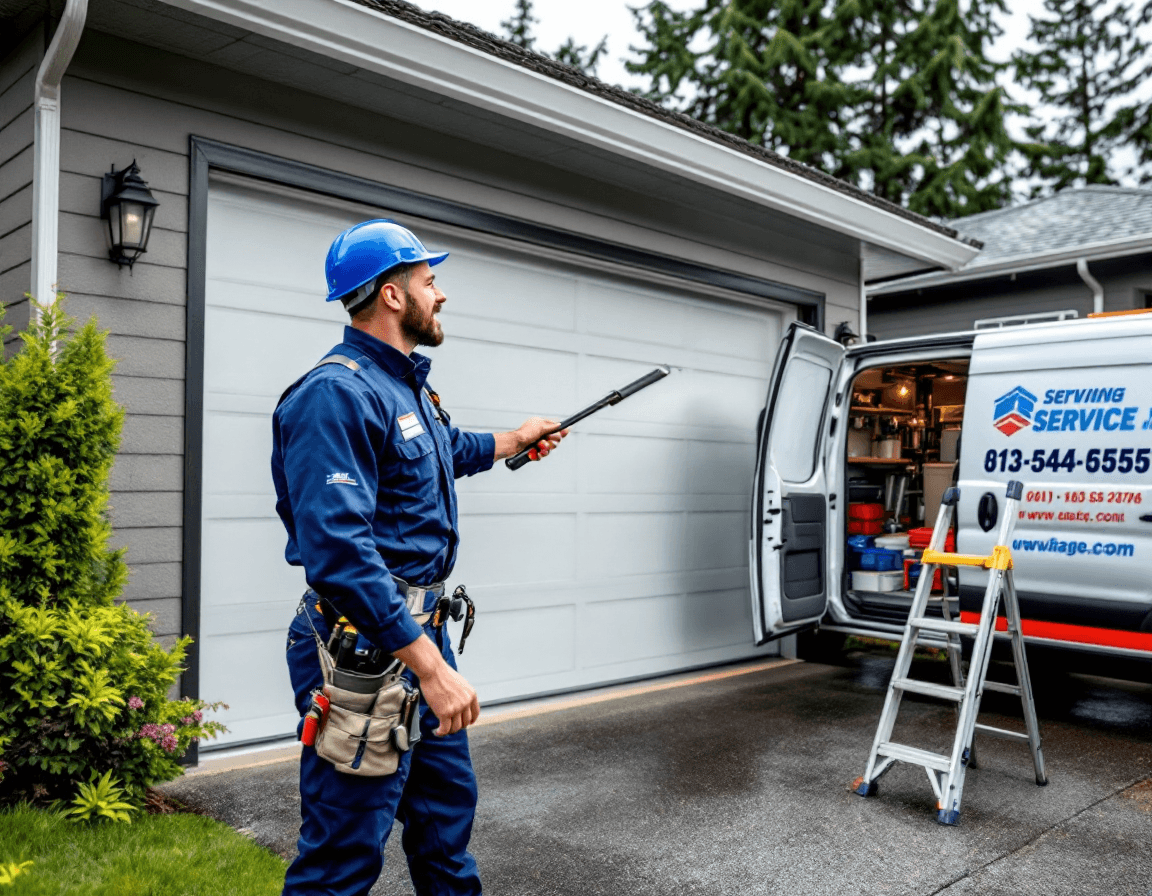
Garage Door Repair in Shoreline, WA is a practical concern for many households here, because a garage door that sticks, stalls, or refuses to respond can leave you locked out of your car, your bikes, or the only entrance you use on a rainy morning. Shoreline sits in north King County between Lake Washington and Puget Sound, and its mix of older mid-century homes and newer builds means garage doors range from decades-old steel sections to modern insulated panels with sophisticated openers. Whatever yours is, a door that is not behaving normally usually has a specific cause that can be identified and corrected.
This page explains the most common problems we see on residential doors in Shoreline and the neighborhoods around it, from Richmond Beach near the water to the Echo Lake area and North City. You will find guidance on what the symptoms usually mean, which fixes are reasonable for a homeowner to check, and which jobs belong in the hands of a licensed technician. We also cover typical pricing, since most residential repairs fall within a range of $95 to $450 depending on the part and the labor involved. The goal is to help you make a clear decision rather than guessing at a problem that may be getting worse.
Our technicians are licensed, bonded, and insured, and they work on all major residential door brands and opener systems. If your door is currently stuck, unbalanced, or making a sound you have not heard before, the safest step is to stop operating it and call for service. The sections below walk through what to look for, so you can describe the problem accurately when you call and understand what the technician is telling you.
How the Pacific Northwest Wears Down Garage Doors
Shoreline's climate is mild by national standards, but it is persistently damp. Winters bring long stretches of drizzle and overcast skies, and the moisture does not always evaporate quickly from the garage floor, the bottom weatherstripping, or the tracks. Over time that dampness encourages surface rust on exposed hardware, swelling in wood panels, and corrosion on roller bearings and hinge pins. Homes closer to Richmond Beach can experience additional salt-laden air on certain winds, which accelerates corrosion on steel components that are not well protected.
Temperature swings matter too. A cold snap can thicken lubricants and make the door drag, while a warm afternoon can soften old weatherstripping and cause it to peel or pull loose. Because many Shoreline garages are attached to homes with older framing, the door opening itself may shift slightly as the house settles through wet and dry seasons. That movement can throw off the alignment of tracks that were perfectly straight when the door was installed.
For these reasons, a routine check every spring and fall is a sensible habit. Look for flaking metal, soft or darkened wood, and a bottom seal that has cracked or separated from the door. Keeping the tracks clean and lightly lubricated with a lithium-based or silicone-based product designed for garage doors can prevent many small problems from becoming large ones. Avoid heavy grease on tracks, because it attracts grit that can gum up the rollers.
Reading the Early Warning Signs Before a Door Fails
Most garage doors do not fail without warning. They tend to give off a series of smaller signals first, such as a slightly slower opening speed, a faint squeak on one side, or a moment of hesitation before the motor engages. Paying attention to these changes gives you time to schedule repair on your terms rather than discovering the problem on the morning you need to leave for work. Homeowners often dismiss these early signs because the door still works, but the underlying wear usually keeps advancing.
Some early signals are easy to describe to a technician. A door that rises unevenly, with one side lagging behind the other, often points to a balance or cable issue. A door that closes with a sharp jolt may have a worn or misadjusted opener limit setting. A panel that looks slightly bowed or a gap that appears between the bottom of the door and the floor can indicate worn rollers, damaged hinges, or a seal that no longer does its job. Each of these deserves attention before the problem spreads.
Keep a short note of what you notice, including when it happens, which side of the door is affected, and whether the weather has been wet or cold recently. This information helps the technician arrive prepared. It also helps you recognize patterns, such as a sound that only appears after rain, which often points toward a moisture-related cause rather than a mechanical failure.
- Opening speed has slowed noticeably over the past few weeks.
- One side of the door appears to rise or lower more slowly than the other.
- A new squeak, rattle, or scraping sound appears during part of the travel.
- The bottom seal is cracked, flattened, or no longer touches the floor evenly.
- The opener light blinks or the motor pauses briefly before starting.
When the Door Reverses Before It Reaches the Floor
A door that starts to close and then immediately reverses is one of the most common complaints we hear from Shoreline homeowners. In most cases this is a safety feature doing its job. Modern openers are equipped with photo-eye sensors near the bottom of the door tracks, and if the beam is interrupted or misaligned, the opener will reverse the door to avoid striking an object. Garage doors built to current safety standards are designed this way intentionally, so the reversal itself is not the problem; it is the symptom of something blocking or confusing the sensors.
Start with the simple checks. Make sure nothing is sitting in the path of the sensors, such as a broom, a bag, a recycling bin, or a pet bowl. Wipe the lenses gently with a soft, dry cloth, because a film of dust, cobweb, or road grime from the garage floor can be enough to interrupt the signal. Confirm that the two sensors face each other and that their indicator lights are steady rather than blinking. If one sensor has been bumped out of alignment, a small adjustment of the bracket may solve the problem.
If the sensors look fine and the door still reverses, the issue may be the closing force setting on the opener or a door that has become unbalanced and binds partway down. A door that suddenly feels heavy on the way down can be fighting a worn spring or a damaged cable. This is a situation where the door should be left alone until a technician can inspect it, because forcing the closing cycle can damage the opener or cause the door to drop unexpectedly.
Grinding, Squealing, and Banging: What the Sounds Mean
Garage doors are noisy by nature, but certain sounds are clear indicators of specific wear. A high-pitched squeal usually comes from dry metal, often at hinges, rollers, or the bearing surfaces of the torsion or extension springs. A grinding sound that becomes louder as the door moves tends to point toward worn rollers or a track that has shifted slightly out of plumb. A deep banging noise, especially at the top or bottom of travel, may indicate a loose bracket, a bent track section, or an opener that is striking its limit position too hard.
Pacific Northwest humidity can intensify these noises. Steel rollers that sit in damp conditions for months can develop a gritty feel, and once that happens, the sound will often return even after lubrication. Nylon rollers, which many newer doors use, tend to stay quieter for longer, but they can crack or flatten with age and begin to rattle as the door passes over track joints. Listening carefully to the timing of each sound helps narrow the cause.
Do not attempt to tighten or adjust high-tension spring hardware yourself to silence a noise. The springs store a great deal of energy, and improper handling is one of the main causes of serious injury during garage door work. Instead, note what you hear and where, then schedule an inspection. A technician can usually identify the source quickly and recommend a repair that addresses the cause rather than masking it.
Doors That Stall Halfway or Jam in the Tracks
A door that stops partway up or down and refuses to move is alarming, particularly when the family needs to leave. Stalling usually comes from one of three areas: the tracks, the drive system, or the balance of the door. A track that has bent, shifted, or collected debris can catch a roller and bring the door to a halt. A broken or slipping drive chain or belt on the opener can produce the same result, sometimes with a clunking sound before it stops. An unbalanced door, where the springs no longer carry the correct share of weight, may hang at an odd height and resist the opener.
Before you call, look at the tracks from inside the garage without touching the springs. Check whether any section appears bent, whether a roller has popped out of its track, or whether a visible gap has opened between the track and the wall bracket. Dirt, leaves tracked in from the yard, or debris that has collected in the curves can also cause a jam, and a careful cleaning with a stiff brush may be enough to restore smooth movement. Never try to force a jammed door upward by hand, because a sudden release can cause serious injury.
If the door is stuck halfway, it is safest to disconnect the opener only if your model has a release cord and you know how to use it safely, and then keep people and pets clear of the door. Calling for service at this stage prevents further damage to the track, rollers, and opener. Many of these repairs are straightforward for an experienced technician, and the cost often remains within the typical $95 to $450 range for a single-component fix.
Dead Remotes and Wall Buttons That Do Nothing
When the remote and the wall button both fail to respond, homeowners often assume the opener has died. Frequently the cause is simpler. Remote batteries lose charge gradually, and a fob that still lights up may not be sending a strong enough signal. Wall buttons can fail when a wire has come loose at the switch, when the button itself is stuck, or when the opener's power supply has tripped. Some Shoreline homes have experienced brief power interruptions during wind events, and a breaker or outlet that was reset may not have fully restored the opener's logic board.
Start with the easy checks. Replace the remote batteries, then test the remote from a few feet away. Make sure the opener's power cord is seated firmly in its outlet, and confirm that no GFCI outlet in the garage has tripped. If your opener has a lock feature, verify that it has not been enabled, because a locked system will ignore both the remote and the wall button. A quick look at the opener's indicator light can also reveal whether it is receiving power.
If these steps do not restore function, the remote receiver may need reprogramming or replacement, or the wall control may require repair. Some older openers use obsolete frequencies, and replacing a remote with a newer model may require updating the receiver. A technician can diagnose which component has failed, which keeps you from buying parts you do not need. Many of these fixes fall within the lower end of our typical pricing range.
- Confirm the opener is receiving power and the indicator light is active.
- Check whether a lock or disable feature has been turned on.
- Replace remote batteries and test from close range.
- Inspect the wall button wiring for loose or pinched connections.
- Note whether the problem began after a power outage or storm.
Slamming Shut and Sagging Panels: Balance and Alignment
A door that slams shut too fast or drops hard onto the floor is usually telling you something about its balance and its hardware. Garage doors rely on a carefully calibrated system of springs and cables to share their weight, so that the opener only has to do light lifting. When a spring weakens or a cable frays, the door can become heavier on one side, and the result is uneven movement, sagging panels, or a sudden drop when the opener releases its grip. Sagging panels can also come from a broken section, damaged hinges, or a track that no longer holds the door in a consistent plane.
Visible gaps are worth noticing. A gap at the top corners, a bowed center panel, or a daylight line along the bottom edge can indicate that the door is out of square. Over time, these conditions can strain the opener, wear out the rollers, and cause the door to bind. Because the door is heavy and under spring tension, any attempt to correct balance on your own can be dangerous, and it is best left to a licensed professional who has the right tools and training.
Homeowners can still help by watching for changes. If the door once closed quietly and now thumps shut, mention that to the technician. If the bottom seal has lost contact with the floor on one side, note that as well. These details help pinpoint whether the problem lies in the springs, the cables, the rollers, or the opener's settings, and they speed up the repair considerably.
Springs and Cables: Why Licensed Technicians Should Handle Them
Torsion springs and extension springs, along with the lift cables that run through the drum assembly, are the most dangerous parts of a garage door system. Torsion springs mounted above the door hold substantial tension, and extension springs can release stored energy suddenly if a cable or safety cord fails. Even experienced homeowners can be seriously hurt by a spring that unwinds unexpectedly. For this reason, any work involving springs, cables, or drums should be performed by a licensed technician who understands the tension involved and carries the proper equipment.
It is common for a homeowner to hear a loud bang and find that a spring has snapped, or to notice that a cable has come off a drum. In either case, the door is no longer safe to operate, and it should not be lifted by hand or forced with the opener. Keep people and vehicles away from the door until a technician arrives. Replacing springs correctly requires measuring the door weight, selecting the correct wind and spring rate, and balancing the system afterward, which goes well beyond a simple parts swap.
Our technicians approach spring and cable work with that caution in mind. The right repair often includes replacing both springs as a pair, checking the drums and cables for wear, and testing the balance before the door returns to regular use. If your door has a broken spring, our guidance is to call a licensed professional rather than attempting to fix it yourself, even if the job appears simple.
Typical Repair Costs in Shoreline and What Influences Them
Pricing for garage door repair depends on what has failed, how accessible the door is, and whether replacement parts must be ordered. For most residential repairs in the Shoreline area, the typical range is $95 to $450. Simple adjustments, sensor realignment, remote programming, and minor hardware replacement generally sit at the lower end of that range. Roller replacement, track repair, opener service, and cable work often fall in the middle. Larger jobs that involve springs, panel replacement, or multiple components can approach the upper end.
Several factors influence the final figure. The age and brand of the door and opener affect part availability. Doors with custom sizes or older discontinued hardware may require special ordering. The number of components involved matters too, because a single broken roller is a different job from a door that needs new rollers, hinges, and a spring pair. Access can also play a role if the garage is cramped, the door is unusually heavy, or the opener is installed in a difficult location.
We recommend asking the technician to explain the repair in plain terms before any work begins. A good estimate describes what is broken, what will be replaced, and what will be tested afterward. If a secondary issue is found during the visit, such as a worn cable or a loose bracket, you should be told about it and given the option to address it now or later. Clear communication keeps the repair predictable and avoids surprises.
Neighborhood Notes: Richmond Beach, Echo Lake, and North City
Shoreline is not a single uniform neighborhood, and the character of each area can shape the kind of garage door problems we encounter. Richmond Beach, on the western edge of the city near the water, often sees more moisture exposure and salt-influenced air, particularly on homes with steel doors or exposed hardware on the seaward side. Corrosion tends to show up sooner on hinges, bottom brackets, and the springs themselves, so a rust check during routine service is especially worthwhile there.
The Echo Lake area, closer to the interior of the city and near major arterials, includes a mix of older single-family homes and newer infill. Doors in these homes may have been replaced at different times, which means a single property can have a newer opener paired with older tracks or springs. Compatibility issues between components are common in mixed-age installations, and a technician who checks the whole system rather than just the failing part can prevent repeat calls.
North City has its own pattern of residential building, with many homes on modest lots and garages that may sit close to driveways and walkways. Space constraints can make it harder to work around a door, and some garages have low ceilings that limit track configuration. Our technicians plan around these conditions, bringing tools and parts suited to tight spaces. Wherever you live in Shoreline, mentioning your neighborhood and garage layout when you call helps us prepare for the visit.
Scheduling Service Across ZIP Codes 98133, 98155, and 98177
Shoreline homes fall within several postal ZIP codes, including 98133, 98155, and 98177, and our scheduling team covers all of them. When you call, it helps to share your ZIP code, a brief description of the symptoms from the earlier sections of this page, and whether the door is currently operable. Knowing whether the door is stuck, reversing, or simply noisy helps us decide how quickly a technician should be dispatched and what tools to bring.
If the door is unsafe, such as one with a broken spring, a cable off its drum, or a panel that is visibly separating from the frame, let the scheduler know right away. We will advise you to keep the area clear and avoid operating the door until a licensed technician can assess it. For non-urgent issues like a slow opener, a noisy roller, or a sensor that needs alignment, you can usually choose a convenient appointment window.
Please keep in mind that garage door repair is most effective when the full system is considered. A quick fix may restore function for the moment, but a complete inspection often reveals related wear that should be addressed while the technician is on site. We will explain your options clearly so that you can decide what fits your budget and your timeline.
Garage doors that stick, stall, reverse, or make unfamiliar noises deserve prompt attention, especially in a climate where moisture and seasonal swings quietly wear on hardware. If your Shoreline door is giving you trouble, call Seattle Garage Door Fix at (888) 799-3819 to describe the symptoms and schedule service with a licensed, bonded, and insured technician. We will look at the door, explain what we find in plain language, and give you a clear price before any work begins.