
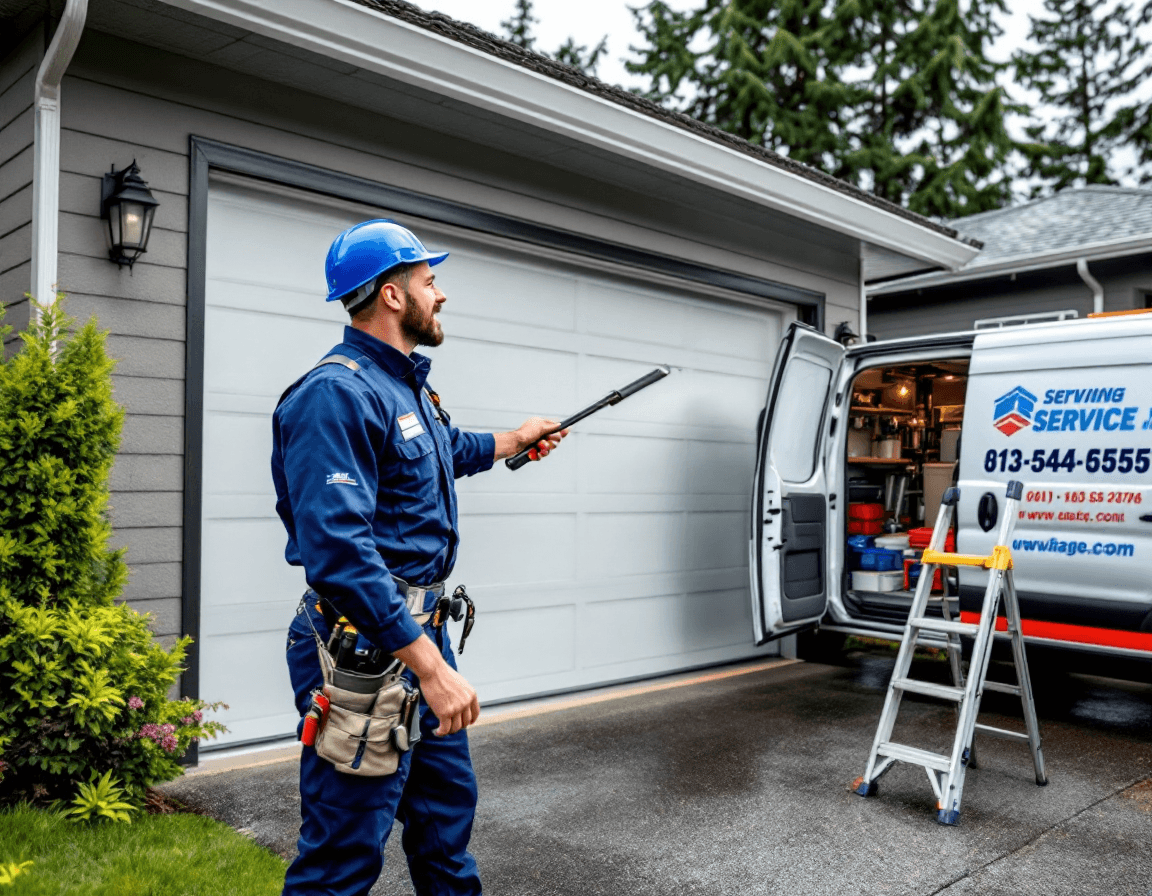
Garage Door Repair in Mountlake Terrace, WA is one of the most common calls we take from homeowners across Snohomish County, and it usually starts with a small problem that feels bigger than it is. A door that hesitates, hums louder than it used to, or refuses to respond to the remote can leave a family stuck in the driveway with groceries in the back seat. Seattle Garage Door Fix sends licensed, bonded, and insured technicians to Mountlake Terrace homes to diagnose the cause and fix it the right way, often on the same day the call comes in. Our goal is to get your door moving safely again without selling you parts you don't need.
Mountlake Terrace sits in a part of Snohomish County where the weather never stays put for long. Wet fall and winter months, damp spring mornings, and summer days that swing warm and then cool again all work on the metal, springs, and wiring that make up a garage door system. Many homes in the 98043 area were built during decades when tract construction was common, so you may have a door that has seen twenty or thirty winters of moisture and temperature swings. The good news is that most repairs are straightforward once a technician understands what the door is trying to tell you. This guide walks through the most common warning signs we see around town, explains what usually causes them, and shows you where a do-it-yourself check ends and a professional visit begins.
Whether your door is stuck halfway up, banging at night, or simply looks a little off, the earlier you act, the cheaper the fix tends to be. A worn roller or a loose bracket is an inexpensive repair when caught early, but the same issue can strain a spring, damage a panel, or burn out an opener motor if it is ignored for months. Residential repairs in our service area typically fall between $95 and $450, depending on the part involved and how much labor the job requires. Read on to see how the most common symptoms break down, and call (888) 799-3819 whenever you would rather have a licensed technician take a look.
Why Mountlake Terrace Garage Doors Respond to Weather Differently
Garage doors are built from steel or aluminum panels, rollers, hinges, tracks, springs, and an opener, and nearly every one of those components reacts to moisture and temperature. In the Pacific Northwest, the air often carries a steady dampness even when it is not raining, and that moisture gets into hinges, track joints, and the bottom seal. Over time, the grease that keeps rollers turning can wash out or pick up grit, and the metal begins to show surface corrosion along the bottom section of the door. When a homeowner notices a squeak after a wet week, the cause is usually moisture-related friction rather than a major mechanical failure.
Temperature swings matter just as much. A cold morning in late autumn can stiffen lubricant and make springs feel heavier, and a sudden warm afternoon can cause metal to expand slightly within tight track tolerances. Doors that worked smoothly through July may start to drag in November simply because the system is responding to a few degrees of change. Technicians in the area often adjust balance and lubrication seasonally for this reason, and it is one of the most cost-effective maintenance steps a homeowner can take.
Mountlake Terrace homes also vary quite a bit in age and construction. Some detached garages sit close to older landscaping or shaded yards where moss, needles, and leaves collect on tracks and door bottoms. Others are attached to newer homes near the town center where the garage sees heavy daily use from multiple vehicles and bikes. Understanding how your particular door is exposed helps a technician predict which parts are likely to wear first and which maintenance steps will give you the most protection.
When the Door Refuses to Open or Close at All
A door that will not open or close at all is one of the most urgent calls we receive, and it often has a simpler explanation than homeowners expect. The first thing to check is whether the opener has power, the outlet is live, and the emergency release cord has been pulled or left in an unlocked position. A tripped breaker, a loose plug on a ceiling-mounted opener, or a dead backup battery in the wall control can all make the door appear broken when the mechanical parts are fine. If the opener's indicator light is blinking, the blink pattern usually points to a specific fault that the owner's manual can help decode.
If the power is on and the motor hums without moving the door, the problem is often mechanical. A broken spring, a snapped cable, or a track obstruction can prevent the door from lifting even though the motor is working hard. Springs under high tension should never be adjusted or replaced by a homeowner, because a released spring can cause serious injury. This is one of the clearest situations where you should stop and call a licensed professional rather than attempting a fix yourself.
Some doors will close partway and then reverse without touching the floor, which we discuss in more detail below. A door that refuses to close at all may have a safety sensor that is misaligned, a photo eye obstructed by dirt or a spider's web, or a wiring fault in the sensor cable. Technicians test each of these in sequence because the fix for a sensor is very different from the fix for a worn opener gear. Clear, methodical troubleshooting saves time and prevents unnecessary parts from being installed.
Reversing Before the Floor: Understanding Safety Sensors
A garage door that reverses just before reaching the ground is doing exactly what it was designed to do, which is protect people and objects in its path. Modern openers use photo-eye sensors mounted about six inches off the floor on either side of the door. These sensors project an infrared beam across the opening, and if the beam is interrupted while the door is closing, the opener reverses immediately. The system is an important safety feature, but it can be triggered by ordinary conditions that have nothing to do with a child or a car.
In our area, the most common culprit is dirt or moisture on the sensor lenses. Road spray during a rainy commute, pollen in spring, and cobwebs in a damp garage can all cloud the lens enough to break the signal. Sensor brackets also loosen over time because the door vibrates a little each time it moves, and a bracket that has drifted even a fraction of an inch will no longer line up with the opposite sensor. Wiring can be another issue, particularly if a stapled cable has been pinched or chewed by a rodent.
Here is a quick way to start the diagnosis without tools beyond a rag and a flashlight:
- Wipe both sensor lenses gently with a soft, dry cloth, and remove any cobwebs or debris.
- Check that both sensor lights are on, and confirm that they are aimed at each other.
- Make sure the sensor wires are secure and have not been pinched by the door or stapled too tightly.
- Clear any object that might be sitting in the door's path, including bikes, bins, or a stray tennis ball.
- Test the door again, and note whether reversing happens every time or only in certain conditions.
If the door still reverses after these steps, the sensor itself may have failed or the opener's control board may need attention. We recommend a professional inspection at that point, because a sensor that is not working correctly is a safety issue, not just an inconvenience.
Decoding Grinding, Squealing, and Banging Noises
Noise is often the first signal that a garage door system needs attention, and each sound tends to point toward a different problem. A high-pitched squeal usually comes from dry rollers or hinges, which can be corrected with the right lubricant applied to the correct parts. A grinding sound that changes as the door moves may mean the opener's gears are worn or that a roller stem is rubbing against the track. A sharp bang at the top or bottom of travel often indicates a loose bracket, a worn bearing, or a track that has shifted slightly out of alignment.
Lubrication is one of the most misunderstood aspects of garage door care. Homeowners sometimes spray penetrating oil onto the tracks, which can attract dust and create a sticky residue that makes the problem worse. Technicians generally use a silicone-based or lithium-based lubricant on rollers, hinges, and the chain or belt, and they avoid getting product on the tracks themselves. The goal is to reduce friction at moving points without creating new debris. A proper lubrication service also gives the technician a chance to check fasteners and identify early wear before it turns into a breakdown.
Banging is one noise that deserves prompt attention, especially if it appears suddenly. A door that thuds loudly when it reaches the top or bottom may have a damaged roller that has flattened on one side, or a bottom bracket that has come loose. Sometimes a cable has started to fray near the drum, and the vibration creates a repeating knock. Because cables and springs are under tension, we encourage homeowners to stop operating the door and schedule service rather than continuing to use it while the sound persists.
Doors That Move Unevenly or Look Crooked
A garage door that looks crooked or travels unevenly is a common complaint, and it can be surprisingly tricky to diagnose. When one side of the door rises faster or sits lower than the other, the cause is often a difference in spring tension, a worn cable on one side, or a roller that has come out of its track. Panels may also shift slightly if a hinge has loosened, which changes the way the door sits within its frame. Some homeowners notice a gap at one corner that wasn't there last year, and that gap is a useful clue about which component has moved.
It is important to understand that spring and cable adjustments are dangerous work. Torsion springs store an enormous amount of energy, and a single mistake can cause serious injury. Even experienced homeowners who feel confident should leave these repairs to licensed professionals. A technician will measure the door's balance, inspect both cables for fraying, check that the drums are seated properly, and then make adjustments with the proper tools and safety procedures in place.
Uneven movement can also be caused by track problems. A track that has been bent by a bumped vehicle or a loose mounting bolt will pull the door out of alignment as it travels. Tracks should be parallel and plumb, and any visible gap between the track and the wall is worth investigating. A technician can realign tracks, tighten mounting hardware, and confirm that the door is traveling freely from bottom to top.
Remotes and Wall Buttons That Stop Responding
When a remote or wall button does nothing, many homeowners assume the whole opener has failed, but the problem is frequently much smaller. Remote batteries are the most obvious place to start, and a weak battery can still light the LED on the fob while failing to send a strong enough signal. Wall control buttons can stop working if their wiring has been damaged, if a low-voltage connection has corroded, or if the opener has lost its programmed memory after a power outage. Homes with a lot of nearby electronics or a neighbor's newer opener sometimes experience signal interference, too.
Start by replacing the remote battery and trying the remote from several spots, including inside the car and near the door. Then test the wall button, checking that the wires are firmly connected and that the button is not stuck. If the opener's learn button has been pressed accidentally, the remote may need to be reprogrammed, and the owner's manual will show the correct sequence for that model. Remember that reprogramming should only be done with a remote you already own, and any unfamiliar remote in a system should be erased for security.
If none of these steps help, the receiver board inside the opener may need repair or replacement. This is a common fix, but it requires care because the board is connected to the motor's power supply and sensors. Our technicians test each component in sequence so that the repair addresses the real fault rather than replacing parts on a guess. Many remote and wall button issues are resolved in a single visit once the cause is clear.
When the Door Slams Down Too Fast
A garage door that drops quickly or slams shut can be unsettling, and it is a sign that something in the system is no longer working as designed. Most modern doors are balanced so that they descend at a controlled speed, and the opener's logic assists that motion. When the door falls faster than normal, the likely causes include a broken or weakened spring that no longer supports the door's weight, a damaged cable that has slipped, or an opener whose force settings have drifted. In some cases the bottom seal has hardened and no longer slows the door as it lands.
This is a situation that calls for immediate caution. A door that slams because it lacks spring support can injure a hand, a vehicle, or a pet, and it places heavy stress on the opener and track. We advise homeowners to keep people and vehicles clear of the opening and to avoid trying to force the door open or closed manually. A licensed technician can inspect the springs, cables, and drums, then recommend whether a spring replacement, cable repair, or opener adjustment is the right path forward.
Bottom seals and weatherstripping also play a role in how the door lands. A seal that is cracked, flattened, or missing may let the door come down harder than it should, and it allows drafts and moisture into the garage. Replacing a bottom seal is a modest expense that improves comfort, reduces noise, and protects the door's lower panel from water damage.
Off-Track Doors, Sagging Panels, and Visible Gaps
Few garage door problems look as alarming as a door that has come off its tracks, but they are more common than many people realize. A roller can jump out of the track if it is worn, if the track is bent, or if the door has been pushed manually while the opener was disengaged. Once a panel leaves the track, the door can tilt, sag, or wedge at an angle, and continued operation can damage the panel, the track, and the opener. If you see a door hanging crooked or a roller sitting outside the track, stop using the door right away.
Sagging panels and visible gaps often develop gradually. A section of the door may start to bow outward if a hinge has worn or if the panel has been struck. Gaps between sections or at the top and sides of the door let in cold air, rain, and pests, and they can make the door feel loose when it moves. Technicians inspect the hinges, end caps, and brackets for wear, and they can tighten or replace components to restore the door's alignment and weather resistance.
Some panel problems are cosmetic, while others point to structural strain. Dents from a backed-up car or a stray basketball can sometimes be repaired with panel replacement, which is often more practical than replacing the entire door. A sagging door that has begun to lean may need its springs and cables checked, since uneven tension can slowly distort the panels over time. Early attention keeps a simple repair from becoming a full door replacement.
What a Typical Repair Visit Looks Like in Mountlake Terrace
Many homeowners want to know what happens after they call for service, so it helps to understand the typical flow of a repair visit. When you contact us at (888) 799-3819, we will ask about the symptoms you are seeing, the age and make of the door if you know it, and whether the opener has power and any indicator lights. We use that information to prepare the right tools and parts for the visit, which often lets us resolve the problem in one trip. Scheduling is flexible, and we work with homeowners across Mountlake Terrace, including neighborhoods near the town center and areas close to Lake Ballinger.
On arrival, the technician will inspect the door, opener, tracks, springs, cables, rollers, hinges, and safety sensors. We will explain what we found in plain language, show you any worn or damaged parts when practical, and give you options before any work begins. Repairs for most residential issues fall between $95 and $450, depending on the parts required and the labor involved. Simple tasks such as sensor realignment or lubrication sit near the lower end, while spring replacement, opener component repair, or panel replacement typically costs more.
Transparency matters to us. A technician should never pressure you into an unnecessary upgrade, and you should always know the cost of a repair before the work proceeds. If a more significant replacement is recommended, we will explain why, what alternatives exist, and what you can expect in terms of longevity. Our goal is a repair that keeps your door safe and reliable for the long term.
Safe Checks You Can Do Yourself, and Where to Stop
Homeowners can take several safe steps between professional visits, and these checks often reveal problems early. Once a month, look at the door from inside the garage with the door closed. Check for light showing around the edges, cracks in the bottom seal, and any panel that appears out of line. Pull the emergency release cord only when the door is closed, and then test the door's movement by lifting it gently by hand. A well-balanced door should feel fairly easy to lift and should stay in place when partially raised.
Here are some reasonable homeowner tasks, along with the points where you should stop:
- Clean the photo-eye sensor lenses and check their alignment and wiring.
- Wipe down tracks with a dry cloth to remove dust, leaves, and grit, without spraying oil onto them.
- Apply a silicone-based lubricant to hinges and rollers, avoiding the track surfaces.
- Tighten visible nuts and bolts on exposed hardware, as long as the door is closed and the opener is disconnected.
- Replace the remote battery and test the wall button and keypad.
Some tasks should always be left to a licensed technician. Do not attempt to adjust, remove, or replace torsion springs, extension springs, or cables. Do not work on the opener's internal wiring or circuit board, and do not force a door that is off its track or hanging unevenly. If the door has fallen or is making a loud, unusual sound, call for service instead of experimenting. Knowing where to stop protects you and your household.
Keeping Your Door Reliable Through Wet Mountlake Terrace Winters
Preventive care is the best way to avoid emergency calls, especially in a climate that tests garage hardware every year. A seasonal inspection before the wettest months is a smart habit, and it can include checking the bottom seal, looking for rust on the lower panel, confirming that the drainage around the garage slab is working, and testing the safety reversal. Keep the garage floor clear of standing water where possible, and make sure gutters and downspouts direct rain away from the foundation and the door opening. Water that pools at the threshold accelerates corrosion and can freeze in colder snaps.
Spring is also a good time for a full tune-up. As the weather warms, check that the door's balance has not drifted, confirm the opener's force settings are appropriate, and lubricate moving parts before the busy summer months. Summer heat can soften some seals and dry out lubricants, so a second look in late summer can prevent squeaks from returning in the fall. Recording what you observe, such as a new noise or a sluggish start, gives your technician useful information at the next visit.
A well-maintained door handles Pacific Northwest weather with far fewer surprises. Many homes in Mountlake Terrace have garages that serve as workshops, storage spaces, and primary entrances, so reliability matters more than many owners realize. If your door has started behaving in any of the ways described above, do not wait for it to fail completely. Call Seattle Garage Door Fix at (888) 799-3819 for prompt, licensed, and insured service throughout Mountlake Terrace and the surrounding Snohomish County communities.