
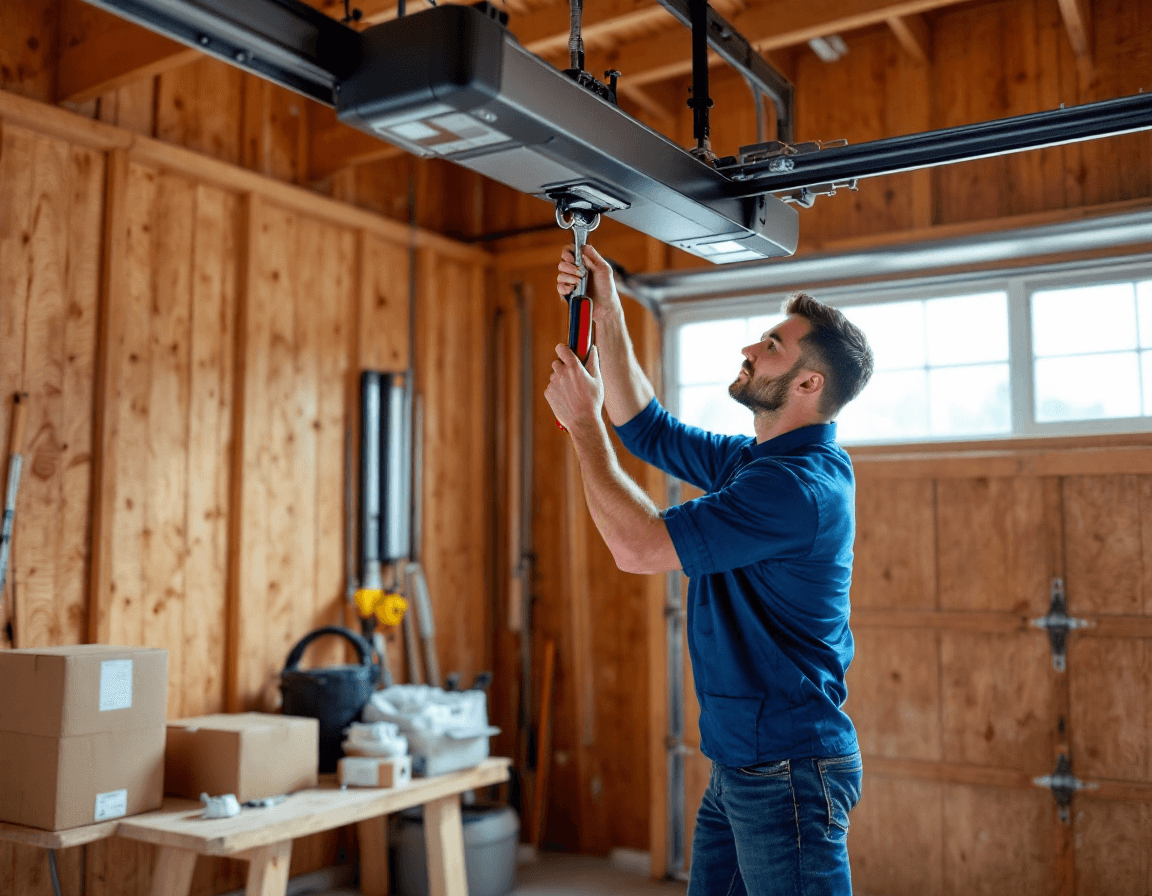
Garage Door Opener Installation & Replacement in Mountlake Terrace, WA is one of the most practical upgrades a homeowner can make to an attached garage, and it often changes how the whole house works day to day. If your current opener groans, stalls halfway up, or quits when you need it most, you are probably dealing with a motor that has simply worn out or no longer matches the way you live. For households in the 98043 ZIP code, where a rainy November can feel like a long, dim season, a reliable opener is less a luxury than a daily convenience.
Seattle Garage Door Fix installs and replaces belt-drive, chain-drive, and wall-mount openers, including smart models that connect to Wi-Fi and myQ-compatible apps. Installed pricing typically falls between $275 and $650, and the final number depends on the opener model you choose, the type of drive system, and whether any accessories such as battery backup are included. We work as a licensed, bonded, and insured company, which matters when a technician is handling wiring, safety sensors, and the mechanical link between the motor and your door. The sections below explain how to tell when replacement makes sense, what to consider before you buy, and what to expect from the job itself.
If you are reading this because your garage door is acting up right now, you do not have to decide everything at once. A good installer will talk through the choices with you, measure the door and track, and explain the tradeoffs in plain language. Our goal here is to give you enough local context that the conversation feels straightforward rather than overwhelming.
Reading the Signs Your Opener Has Reached the End
Most openers do not fail without warning. They tend to announce their decline through small changes that homeowners learn to ignore, such as a louder motor noise, a door that reverses for no clear reason, or a remote that works only when you stand in the driveway. Over time those small problems turn into longer travel times, jerky starts, or a door that stops partway up and refuses to continue. When you notice several of these at once, the cost of repeated service calls often exceeds the price of a modern replacement.
Pay attention to how the motor sounds during a normal cycle. A healthy belt or chain drive produces a steady hum with a predictable rhythm, while a failing unit may clatter, grind, or whine at the top of the travel. Watch the lights and the safety sensors at floor level as well, because intermittent sensor faults are a common reason people assume the opener itself is broken. Many of these issues trace back to alignment or wiring, but if the motor has been running for well over a decade, the gearbox and logic board are often the real culprits.
Here are the most common warning signs we see in Mountlake Terrace homes:
- The door opens slowly or stops short of fully closing, even after the track is clean and lubricated.
- The motor runs but the door barely moves, which can point to a stripped gear or a tired trolley mechanism.
- The remote, keypad, or wall button works only sometimes, suggesting weak receiver components or interference.
- The opener makes a loud metallic noise during every cycle, which is different from the normal sound of a worn belt.
- Repairs have been needed more than once in the past two years for the same general problem.
If any of these sound familiar, it is worth having a technician check whether the opener is still economical to keep. Sometimes a simple adjustment solves the problem. Other times the honest answer is that a replacement unit will be safer, quieter, and more dependable than patching an aging motor.
Why Mountlake Terrace Garages Put Extra Strain on an Opener
Mountlake Terrace sits in the northern part of the Seattle metro, with a landscape that includes older residential blocks, newer infill, and easy access to the lake corridor around Lake Ballinger. Many garages here see a steady mix of wet, cool, and humid conditions, and that combination affects both the door and the motor. Moisture finds its way into steel tracks, rollers, and electrical connections, and over several seasons it can gradually reduce smooth operation. An opener that worked fine in a dry climate may be pushed harder in a place where the door needs more force to break free after a damp morning.
Winter storms in western Washington also bring wind and the occasional power interruption. When a line goes down, the opener loses its supply and your door becomes a manual task, which can be awkward during a cold night or an early commute. Families who depend on a garage for daily access, including those who walk kids to the bus or load a car in the dark, often discover how much they rely on the opener only after it fails during an outage. Thinking about your opener in terms of your actual routine helps you decide how much backup and reliability you need.
Local driveways and garage layouts vary as well, from compact single-car spaces to deeper two-bay setups where the door travels a longer distance. The opener must be sized to the door's weight and height, and a unit that was adequate for a lightweight insulated door may struggle with a heavier wood or steel model. During an installation visit, we measure the door, check the header and ceiling clearance, and confirm that the opener can handle the load safely. Matching the motor to the door is one of the most important steps in getting a quiet, long-lasting result.
Choosing Between Belt-Drive, Chain-Drive, and Wall-Mount Openers
Each drive style has a distinct character, and the right choice depends on how the garage is used and where the motor can be mounted. Belt-drive openers use a reinforced rubber belt rather than a metal chain to pull the trolley along the rail. The result is a noticeably quieter operation, which many homeowners appreciate when the garage shares a wall with a bedroom, a home office, or a neighbor's yard. Belt-drive units usually cost more upfront, but the smoother travel and reduced vibration are often worth the difference in a home where the garage is part of the living space.
Chain-drive openers are the traditional workhorse. They are sturdy, generally more affordable, and well suited to detached garages or spaces where noise is less of a concern. Because the chain runs over metal, it tends to be louder than a belt, but it handles heavy doors and frequent use reliably. If you run a workshop, store equipment, or have a larger door that sees constant traffic, a chain-drive model can be a practical choice that delivers strong performance for the money.
Wall-mount openers attach to the side of the garage rather than hanging from the ceiling, which is a useful solution when ceiling space is limited. They are often a good fit for garages with high-lift tracks, cramped overhead storage, or unusual framing that makes a ceiling mount difficult. Installation requires a solid mounting surface and careful measurement, so it is one of the areas where a professional visit pays off. We recommend discussing all three options with the technician so the choice reflects your garage, not just the brochure.
Rolling-Code Security and the Problem with an Old Remote
Older openers often relied on fixed-code remotes, meaning the signal sent from the transmitter stayed the same every time you pressed the button. That design made it possible for someone with a simple scanning device to capture and reuse the code. Modern openers use rolling-code technology, where each press produces a new, changing signal that the receiver recognizes and the outside world cannot easily predict. If your opener predates this standard, upgrading is one of the most meaningful security improvements you can make without changing your daily habits.
Rolling-code security matters most when your garage door connects to the interior of the home, which is common in our area. A compromised remote can give an intruder a way into the garage, and from there into the house if the entry door is unlocked or weakly secured. Replacing an older unit does not make a home impenetrable, but it removes a known vulnerability and pairs well with other basics like keeping the door closed, changing default passwords on smart devices, and checking that the auto-close timer is set sensibly. We will walk you through what the new system does and how to program remotes and keypads properly.
It is also worth checking whether your existing remotes are still compatible with the replacement. Some families keep an old transmitter in the car for years, and it is easy to forget which buttons control which door. A clean reset during installation lets us set every remote, keypad, and phone connection to the new system at the same time. That way you leave with a clear inventory of what works, rather than a mix of devices that behave differently and cause confusion.
Smart Wi-Fi and myQ Control Without the Gadget Clutter
Smart openers have become popular because they let you check the door's status, open or close it, and receive alerts from a phone. Many models support myQ-compatible apps, which can notify you if the door was left open or let you grant temporary access to a family member or house cleaner. For busy households in Mountlake Terrace, that peace of mind can be genuinely useful, especially when you are away and cannot remember whether the garage was closed before leaving town.
Good smart control should make life simpler, not add more things to troubleshoot. Before you commit to a Wi-Fi model, consider how strong your signal is in the garage, since a weak connection can cause frustrating delays in alerts and commands. Some homeowners prefer to keep the opener on a separate network segment or use a dedicated access point, and we can discuss whether your router setup makes sense for that. Setup is typically straightforward, but we prefer to test the connection during the visit so you are not left with a device that drops off every few days.
Ask yourself which features you will actually use. A basic smart opener with reliable app control may serve a small household better than a feature-heavy model that adds complexity without much benefit. If you want vacation alerts, scheduled closing, or integration with other smart-home tools, those options are worth exploring. If you mainly want a dependable door that works from a remote and keypad, a mid-range model may deliver everything you need at a lower installed price.
Battery Backup for Power Outages and Winter Storms
Battery backup is one of the most practical add-ons for homes that experience occasional power interruptions. When the electricity goes out, a backup battery allows the opener to run for a number of cycles, giving you a way to open or close the door without wrestling a heavy panel by hand. The exact number of cycles depends on the battery and the model, so it is important to ask the technician to confirm specifications for the unit you are considering rather than relying on general claims.
Backup batteries also require maintenance. They need periodic inspection and eventual replacement, and their performance can decline in cold conditions, which are common during Pacific Northwest winters. We recommend noting the battery's age and checking the indicator on the opener every few months, especially before the stormy season begins. A battery that is ignored for years may not provide much protection when you finally need it.
Consider how backup fits into your household plan. If you rely on the garage as your main entry, have a family member who needs step-free access, or work from home and need steady access to your vehicle, battery backup can be a meaningful investment. If the garage is mostly used for storage and you have a reliable side door, the upgrade may be less urgent. Either way, discuss the option during your visit so the final setup matches the way your home actually runs.
What a Professional Installation Visit Involves
A thorough installation starts well before the new opener is mounted. The technician inspects the existing door, track, springs, cables, and hardware to make sure the system is in sound condition, because a new opener cannot compensate for a worn or misaligned door. We check the door's weight, balance, and travel, confirm the header and ceiling clearance, and identify any obstacles that could interfere with the trolley or mounting bracket. This assessment helps prevent surprises once the work begins.
Next comes the mechanical installation, which includes mounting the motor, attaching the rail, connecting the trolley to the door arm, and setting the limit controls so the door opens and closes at the correct points. The safety reverse system is then tested, including the photo-eye sensors near the floor, because these sensors are essential for preventing the door from closing on people, pets, or objects. Wiring is connected and checked, and the wall control and any keypad are programmed to the new system.
Before leaving, the technician should walk you through the basic operation, demonstrate the manual release, explain how to test the safety reverse each month, and review how to program remotes and smart features. A clear handover matters because it helps you spot problems early and avoid unnecessary calls. Ask questions during the visit, and do not hesitate to request a second look at anything that seems unclear.
Understanding Installed Pricing Between $275 and $650
Installed opener pricing in the range of $275 to $650 reflects a wide spread of models and features. At the lower end, you can expect a dependable standard opener without advanced smart features, while the higher end usually covers belt-drive or smart models with battery backup and more robust components. Several factors shape the final figure, including the drive type, the opener's horsepower and features, whether the wall-mount option is needed, and whether any accessories or minor parts are required to complete the job.
It helps to separate the opener itself from the labor and the installation details. A technician must confirm that the new unit matches the door, mount it securely, connect the safety system, and test the entire operation. If the door needs adjustments, such as track alignment or a broken roller replacement, those may be additional items that should be discussed in advance. We would rather explain the costs clearly up front than surprise you with changes after the work begins.
When comparing quotes, look at what is included. Ask whether the price covers the opener, the rail, the battery backup if you choose one, remote controls, and programming. Ask about the warranty terms in writing and whether the technician will test the safety reverse before leaving. A lower number is not always a better deal if key pieces of the job are missing or the installation is rushed.
Why Spring and Cable Work Belongs with a Licensed Professional
An opener replacement is often the moment homeowners notice other parts of the door that look worn, such as springs, cables, drums, and bearing plates. These components store substantial mechanical energy, and they can cause serious injury if handled incorrectly. Torsion springs in particular are under high tension even when the door appears to be at rest, and attempting to adjust or replace them without proper training and tools is genuinely dangerous. For that reason, we recommend leaving spring and cable work to licensed professionals.
When a technician inspects the door during an opener visit, they may find a cable that is fraying, a spring that is losing tension, or a drum that is no longer aligned. These findings are not a sales tactic; they are safety observations that affect whether the new opener can operate the door smoothly. A balanced door puts far less strain on the motor, which reduces wear and extends the life of the new unit. It also means the door is less likely to slam, drop, or stop unexpectedly.
If you notice a broken spring, a hanging cable, or a door that feels heavy and will not stay open on its own, step away from the door and avoid using the opener until a professional has evaluated it. Homeowners sometimes try to save money with a quick DIY fix, but the risk to hands, eyes, and the rest of the household is far greater than the cost of a proper repair. Our licensed, bonded, and insured team can handle these components safely as part of a coordinated visit.
Caring for Your New Opener Through Wet Northwest Seasons
Once your new opener is installed, a little seasonal attention goes a long way in the Pacific Northwest. Moisture, leaf debris, and temperature swings can affect the door's track, rollers, and weatherstripping, and those conditions influence how hard the opener must work. A simple routine helps keep the system quiet and dependable from one winter to the next, without requiring specialized skills or expensive products.
Start with the basics. Wipe the rail and track to remove dirt, check that the door moves freely by hand when the opener is disengaged, and make sure the photo-eye sensors are clean and unobstructed. Test the safety reverse monthly by placing a soft object in the door's path and confirming that the door reverses. Keep the remote, keypad, and smart app updated, and review the list of authorized devices a few times a year so you know exactly what has access to the garage.
Lubrication should be handled carefully. Use a lubricant recommended for garage door hardware, and avoid spraying oil onto the rail or the belt or chain. Excess product can attract grime and create more problems than it solves. If you notice squeaking, grinding, or a change in how the door travels, schedule a check rather than trying to fix it through trial and error. Early attention keeps small issues from becoming costly repairs.
Scheduling Your Visit in Mountlake Terrace
If you are ready to replace an aging opener or add smart and battery backup features, the next step is a simple conversation about your garage and your goals. Tell us what the opener is doing wrong, what features matter most, and how the garage is used day to day. We will help you match the drive type, security level, and accessories to your needs and your budget, then schedule a visit at a time that works for your household.
Mountlake Terrace homeowners, and neighbors across the nearby 98043 area, can count on a technician who will explain each option in plain language and respect the way your home operates. Whether your garage opens onto a busy street near the Town Center or sits quietly along a residential block close to Lake Ballinger, we will focus on a dependable installation that keeps your door safe, quiet, and easy to use. Call Seattle Garage Door Fix at (888) 799-3819 to talk through your opener options, ask about pricing for your specific door, and set up a licensed technician visit in Mountlake Terrace.