
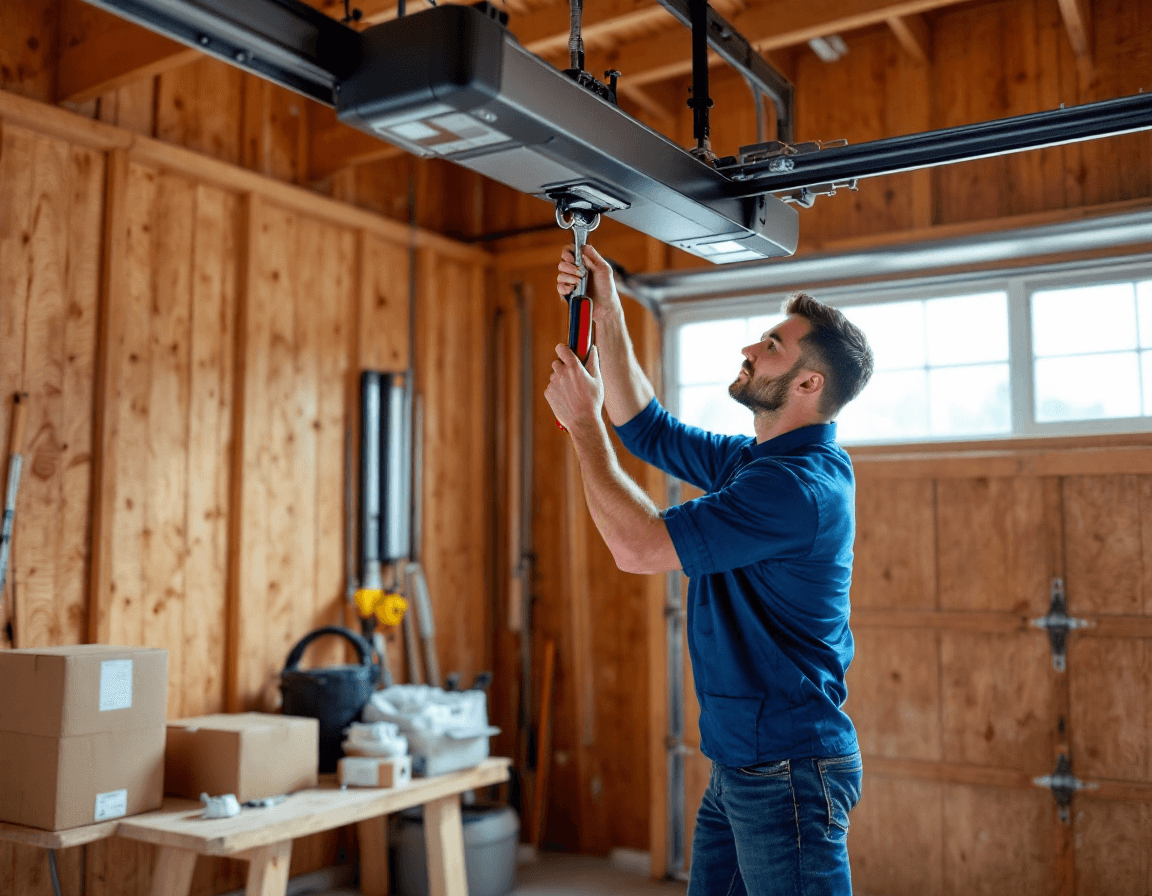
Garage Door Opener Installation & Replacement in Edmonds, WA is one of the most practical upgrades a homeowner can make, especially when the current motor has started to groan, stall, or ignore the remote on a damp morning. Edmonds sits on the Puget Sound shoreline in southwest Snohomish County, and the combination of salt air, long gray stretches, and frequent rain puts more strain on garage door hardware than many people realize. Whether your home is near Downtown Edmonds, out toward the Edmonds Waterfront, or in the residential pockets around Perrinville, a worn-out opener tends to show its age faster here than it would in a drier inland climate.
Replacing the opener is not the same as replacing the door itself, and that distinction matters for your budget and your timeline. The opener is the motorized unit mounted to the ceiling, the rail, the track trolley, and the control panel inside the garage, while the door, springs, cables, and rollers are separate components with their own service needs. Our technicians install and replace belt-drive, chain-drive, and wall-mount smart openers, and we can set up battery backup so the door still works when the power goes out. Installed pricing typically falls between $275 and $650, depending on the opener model, the drive style, and whether any accessories are included.
This page walks through the decisions Edmonds homeowners face when an opener is due for replacement. We cover why local conditions wear equipment down, how to recognize an opener that has reached the end of its useful life, how to choose between drive types, what rolling-code security actually does, and what to expect from smart controls and battery backup. We also explain which tasks belong to a licensed professional, because some garage door work carries serious risk. If you are weighing a repair against a full replacement, the sections below should help you decide with clear information rather than guesswork.
Why Edmonds Garages Wear Openers Out Faster
Western Washington's weather is gentle in temperature but demanding on mechanical equipment. Edmonds gets a large share of its precipitation between late fall and early spring, and the humidity that lingers between storms can work its way into electrical connections, wiring junctions, and the metal brackets that hold an opener in place. Homes closer to the water feel this more acutely, because salt-laden air settles on exposed hardware and speeds up surface corrosion on bolts, rail hangers, and mounting plates. None of this means an opener will fail on a schedule, but it does mean that a unit installed a decade ago in a sheltered Edmonds garage may be working harder than its designers expected.
Garage conditions also vary a great deal from one property to the next. Some Edmonds garages are detached or sit at the back of a sloped lot where drainage is imperfect, while others are attached and share a wall with a heated living space that keeps the temperature stable. Unheated garages see wider swings between cold nights and mild afternoons, and that expansion and contraction can loosen fasteners over time. Dust from yard work, leaf debris tracked in during autumn, and occasional moisture pooling near the threshold add to the load on the opener's gears and sensors.
Because of these factors, we recommend checking the opener's mounting hardware, the rail alignment, and the electrical outlet at least once a year, ideally before the wettest months begin. A quick visual inspection can catch rust on the rail, a cracked outlet cover, or a slack chain before they become expensive problems. If you notice any of these issues during an annual check, a technician can tell you whether the opener is worth keeping or whether replacement makes more financial sense.
Reading the Warning Signs That Your Opener Is Finished
Most openers do not die suddenly. They give off a series of signals over months or even years, and learning to read those signals can help you schedule a replacement before you are stuck with a door that will not close at night. A loud motor is often the first clue, particularly if the noise has changed from a steady hum to a grinding, clattering, or rattling sound. A door that pauses halfway, reverses for no clear reason, or stops short of fully closing may point to worn gears, a failing logic board, or sensor issues that are difficult to correct without replacing the unit.
Common warning signs include:
- The door opens or closes noticeably slower than it did when the opener was new
- The motor hums or strains but the door barely moves, which can indicate a stripped gear or failing motor
- Remote controls work only when you stand close to the door or stop working during damp weather
- The light on the opener flickers, the unit resets randomly, or the control panel shows error codes you cannot clear
- A burning smell or warm housing after normal operation, which requires immediate attention and should prompt a service call
Repair is sometimes the right answer. A bad remote, a misaligned photo eye, or a worn trolley can often be fixed for a modest cost. However, when an opener is more than about a decade old and needs multiple repairs within a short period, the cumulative cost can approach the price of a new installation. A new opener also brings modern safety features, updated motor efficiency, and better security, which means the replacement often delivers more value than a series of patch jobs on an aging unit.
Belt Drive, Chain Drive, or Wall Mount: Matching the Motor to Your Door
Choosing the right drive style is one of the most important decisions in any opener replacement. Chain-drive openers use a metal chain running along the rail to move the trolley. They are typically the most affordable option and are durable under heavy use, but they tend to be louder because metal links strike the rail as they move. Chain drives can be a good fit for a detached garage where noise does not disturb living spaces, or for homeowners who want a dependable, budget-conscious unit.
Belt-drive openers use a reinforced rubber belt instead of a chain, and the difference in operation is immediately noticeable. Belts run quietly, which is why many Edmonds homeowners with attached garages choose them, especially when a bedroom or home office sits on the other side of a shared wall. Belts do not need the same frequent lubrication that chains require, though they should still be inspected for tension and wear. The initial purchase price is usually somewhat higher than a comparable chain-drive model, and that premium is the trade-off for a much calmer door.
Wall-mount openers attach to the side wall of the garage rather than the ceiling, freeing up overhead space for storage, bikes, kayaks, or a ceiling-mounted lift. This layout suits garages with low ceilings, unusual door heights, or a high-clearance design that makes ceiling mounting awkward. Wall-mount units can be installed with either belt or chain drive mechanisms, so the decision between drive type and mounting location are separate. A technician measures the door height, track configuration, and wall structure to confirm which combination will fit safely and reliably in your particular garage.
Rolling-Code Security and Why an Old Keypad Matters
Older openers often used fixed-code systems, in which the remote and the receiver shared the same unchanging code. Anyone with a basic radio scanner could potentially record that code and use it later to open the door. Modern openers use rolling-code technology, which changes the transmitted code every time the remote is pressed. A captured signal becomes useless almost immediately, which substantially reduces the risk of unauthorized entry through the garage. For homes in busy neighborhoods, near parking areas for Downtown Edmonds visitors, or simply in places where you want stronger peace of mind, rolling-code security is one of the most meaningful reasons to replace an older unit.
The security benefit extends beyond remotes. Keypads that use fixed codes or simple numeric sequences can be easier to guess than newer models with encrypted communication and adjustable code lengths. Many current openers also support multiple user codes, so you can give a housekeeper or family member access without sharing your primary remote. We help clients set up these features during installation and explain how to delete old codes that are no longer needed.
Security is also tied to the physical condition of the door. A new opener cannot compensate for a door that is bent, a track that is loose, or a manual release cord that dangles where a passerby could reach it. During installation we check the release mechanism, confirm that the emergency release works as intended, and discuss whether the door's hardware needs attention. Our goal is a system that is secure and easy for household members to operate, because a security feature that frustrates users tends to get disabled.
Smart Control Without the Headaches: Wi-Fi, Apps, and Shared Access
Many homeowners now want to open, close, and monitor their garage door from a phone. Smart openers connect to a home Wi-Fi network and typically work with a companion app, which can send alerts when the door is left open or show whether it is closed while you are away. Brands such as Chamberlain, with its myQ platform, and other manufacturers offer app-based control, but compatibility with your phone, your home network, and any existing smart home system should be confirmed before purchase. Some features also depend on a subscription or a particular hub, so reading the fine print during the consultation helps avoid surprises.
Wi-Fi performance matters more in Edmonds than many people expect. Homes with thick walls, detached garages, or routers at the far end of the house can have weak signal strength in the garage. A smart opener that drops offline does not provide the convenience you paid for, and in some cases it may require a signal extender or a relocated router. We test the connection during installation and let you know if a network upgrade would make the system more reliable before you commit to a particular model.
Shared access is another practical benefit. Smart systems allow you to create guest permissions for family members, service providers, or a neighbor who waters plants while you travel, and many let you revoke access at any time. Activity logs can show when the door was opened and by which account, which is useful for households with teenagers or rental arrangements. Setting up these features thoughtfully takes only a few minutes, and we recommend reviewing the permissions list every few months to keep it current.
Keeping the Door Running Through a Puget Sound Power Outage
Power interruptions are an occasional fact of life in the Pacific Northwest. Winter windstorms can knock out lines for hours, and an unexpected outage can leave you unable to pull into the garage or leave the house through the main door. A battery backup accessory for the opener allows the door to operate for a limited number of cycles when household power is lost. The exact number of cycles depends on the battery size, the opener model, and the weight of the door, so you should ask for a specific estimate rather than assuming full functionality for an extended outage.
Battery backup is most useful for households that rely on the garage as their primary entrance, have an electric vehicle that needs to get out during an emergency, or live where outages tend to be longer. It is also valuable for people with mobility limitations who depend on the opener for easy access. Some battery systems charge continuously from the household supply and switch over automatically, while others require periodic testing to confirm they are holding a charge. We explain which system fits your needs and show you how to check the battery indicator and perform a manual test.
Every installation also includes a review of the manual release. The release cord lets you disconnect the trolley from the opener so the door can be lifted by hand during a power loss. Battery backup complements this feature rather than replacing it, and you should know how to use the release safely. If the door is heavy, sticks, or behaves unevenly when released, that is a sign the springs or hardware may need professional attention, and that work should be handled by a licensed technician.
What a Typical Installation Visit Covers in Edmonds
A replacement visit begins with an inspection of the existing system and the door it serves. The technician confirms the door type, the track configuration, the ceiling or wall clearance, and the condition of the rail, bracket, and electrical outlet. We also check the door's balance and general condition, because an opener cannot compensate for a door that is binding or out of square. Edmonds homes vary widely in age and construction, so the first visit is about understanding your specific garage rather than applying a single template to every job.
Once the layout is confirmed, the old opener is removed and the new unit is mounted according to the manufacturer's specifications. The technician installs the trolley, connects the rail, sets the travel limits, and programs the open and close positions. Safety reversal sensors, commonly called photo eyes, are mounted on opposite sides of the door opening, typically about six inches above the floor, and aligned so they can detect obstructions. The system is then tested with the door at several points in its travel, including a check that the auto-reverse feature engages when the door meets resistance.
Finally, we program the remotes, wall control, keypad, and any smart features you selected. We walk you through the controls, explain the lighting and lock functions, and show you how to replace remote batteries and reset the system if needed. Before we leave, you will know which features to use day to day, which maintenance tasks to watch for, and who to call if something unusual happens. A well-documented installation makes the new opener easier to live with from the first week.
Budgeting Between $275 and $650 Installed
Installed pricing for an opener replacement generally falls between $275 and $650, and the spread reflects real differences in equipment. A basic chain-drive unit sits at the lower end of that range, while a quieter belt-drive or wall-mount model with smart features and battery backup usually lands higher. The price you receive should always be presented as an installed figure that includes the opener, the labor, and standard hardware for your door, so you can compare options without hidden line items. If your garage needs extra parts or unusual mounting work, the technician should explain that before any work begins.
When comparing quotes, consider what you are actually getting. A lower price may not include battery backup, a manufacturer warranty registration, or programming of smart features, while a higher price might bundle those accessories and a more thorough safety check. Ask whether the quote covers removal and disposal of the old unit, whether the photo eyes and reversal system are tested, and whether the remotes and keypad are programmed on site. Clarity on these points prevents frustration later and helps you choose the option that fits your budget and your daily routine.
It is also worth thinking about the total cost of ownership. A quieter, better-built belt-drive opener may cost more at the start but can reduce the wear that comes from vibration and noise over the long term. A battery backup adds to the upfront price but may save the inconvenience and expense of a locked garage during an extended outage. Weighing these factors against your household's habits will help you decide where to spend and where to save.
Safety Checks That Stay With the Opener and What Stays With a Pro
Garage doors are heavy, and the springs that counterbalance them store a great deal of energy. Replacing or adjusting torsion springs, lift cables, drums, or the door's main hardware is dangerous work that should be left to a licensed, insured professional. Spring tension can cause severe injury when mishandled, and cables under load can snap with considerable force. For this reason, a homeowner should never attempt to wind springs or disconnect cables, even if a video or online guide makes the process look simple.
Opener installation and replacement falls into a different category, although it still demands care. Mounting the motor, connecting the rail, setting limits, and testing the safety reversal system are tasks that require proper tools, a good understanding of door dynamics, and a methodical approach to verification. Our technicians follow manufacturer instructions and confirm that the door reverses when it contacts an obstruction and that the photo eyes are aligned and functioning. Those checks protect children, pets, vehicles, and anyone who walks under a closing door.
Homeowners can still play an important role between service visits. Keep the area around the door clear, test the auto-reverse feature monthly by placing a piece of wood on the floor where the door will close, and never walk or drive through a door that is moving. If the door shows signs of imbalance, such as sagging, jerking, or popping sounds, stop using it and call a licensed professional. Clear, consistent habits make the whole system safer and easier to maintain.
Scheduling Your Replacement Before the Wet Season Settles In
Timing an opener replacement can make a noticeable difference in comfort and convenience. Many Edmonds homeowners prefer to schedule work during the drier months of late spring and summer, when the garage is easier to access and any temporary inconvenience is less disruptive to daily life. However, a failing opener should not wait for ideal weather if it has become unreliable or unsafe. If the door will not close fully, stalls partway, or reverses unexpectedly, scheduling sooner rather than later is the wiser choice.
Planning ahead also gives you time to compare options thoughtfully. You can decide on drive type, battery backup, and smart features without rushing, and you can set aside a budget within the $275 to $650 installed range that reflects your needs. If your household includes children, older adults, or anyone who depends on the garage for daily access, consider prioritizing battery backup and a reliable manual release. A calm, informed decision produces a better result than a last-minute purchase made during a cold snap.
Whatever your timeline, the best next step is a conversation about your specific garage. Tell us your ZIP code, the age of your current opener, the type of door you have, and what problems you are experiencing. We will help you understand whether repair or replacement makes sense and which configuration fits your home. For Garage Door Opener Installation & Replacement in Edmonds, WA, call Seattle Garage Door Fix at (888) 799-3819 to schedule a visit with a licensed, bonded, and insured technician who knows how Edmonds weather and local garages affect daily performance.