
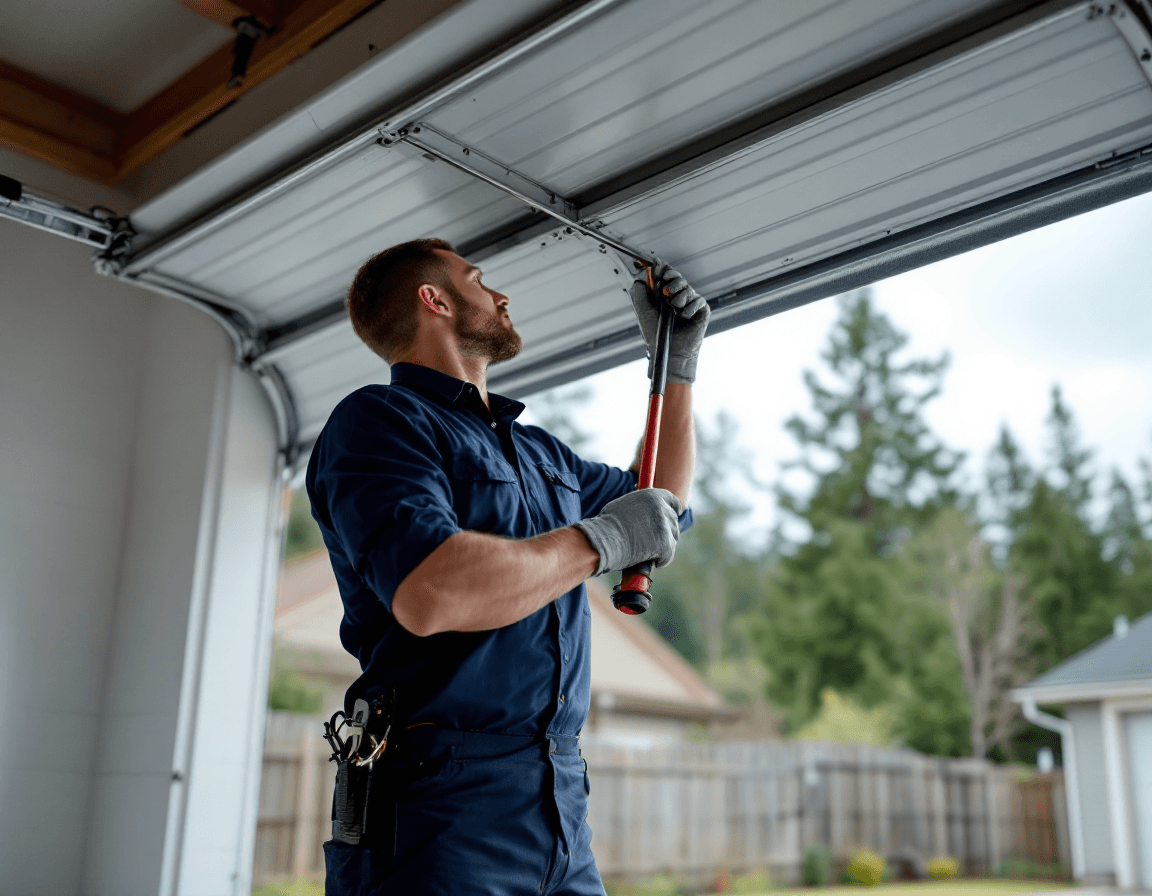
Garage door spring replacement in Edmonds, WA is one of the most common repairs we handle, and it is also one of the most important to get right. A garage door spring carries most of the weight of the door, often well over a hundred pounds, and when it fails it can turn a routine morning into an unsafe situation. Homeowners across Edmonds, from the blocks near Downtown Edmonds to the quieter streets of Perrinville, call us when a door suddenly stops lifting, sags on one side, or lets out a bang that rattles the whole house. This page explains what spring failure looks like, what drives it in our part of Snohomish County, and what a proper repair involves.
Our team at Seattle Garage Door Fix provides broken torsion and extension spring replacement, high-cycle spring options, and precise door balancing for homes in Edmonds (ZIP codes 98020 and 98026) and throughout the surrounding Western Washington area. Spring work is done by licensed, bonded, and insured technicians, and that is not a formality. Springs store enough tension to cause serious injury if they are handled incorrectly, so the job calls for proper tools, training, and a clear plan before anything is unwound. Most standard spring replacements we perform fall in the range of $180 to $450, depending on the spring type, the door size, and what else the door needs.
Read on for a practical walkthrough of the warning signs, the difference between spring types, what happens during a proper replacement, and what you can do to protect your investment. If your door is already stuck or you are unsure whether it is safe to use, skip ahead to the call-to-action at the end and reach out to us directly.
Why Edmonds Garage Springs Wear Out Faster Than You Might Expect
Edmonds sits on the eastern shore of Puget Sound, and that location shapes how garage hardware ages. Salt-laden air drifts inland from the water, especially on breezy days, and it settles on exposed metal surfaces. Over several years, that moisture and salt can work into the steel of a spring, the cable drums, and the bearing plates, creating surface rust that weakens metal and makes the spring more likely to fail under load. Homes closer to the waterfront tend to show this wear sooner than homes farther inland, though no part of the city is fully sheltered from it.
Our wet, mild winters add another layer. Dampness lingers in attached garages for weeks at a time, and garage temperatures in the Pacific Northwest rarely reach the extremes that drier climates experience. That steady moisture is hard on lubricated parts, and many homeowners in Edmonds never think to lubricate their springs at all. Lubrication does not prevent a spring from eventually wearing out, but it does slow the friction that gradually fatigues the coil.
Finally, many Edmonds homes have garage doors that have been in service for a long time, and the spring is usually the original part of the system. A spring is rated for a set number of open-and-close cycles, and a busy household that uses the door several times a day can reach that limit within a relatively short period. Once a spring has passed its rated lifespan, it may look fine from the outside while the metal inside is already fatigued. That hidden fatigue is exactly why a broken spring often seems to arrive without warning.
Reading the Warning Signs Before a Spring Lets Go
Most springs give some indication before they fail, although the signs are easy to overlook if you do not use the door every day. Learning to recognize them can save you from a stranded car, a damaged door panel, or an injury during the failure itself. The most common warning signs we see in Edmonds homes include:
- A door that feels noticeably heavier when lifted by hand, or that seems to lift unevenly from one side to the other
- A visible gap or separation in the coils of a torsion spring above the door
- Rust-colored flakes or a fine orange dust on the floor beneath the spring or along the track
- A door that opens a few inches and then stops, requiring the opener to strain
- An opener that hums, clicks, or seems to run but barely moves the door
If you notice any of these symptoms, avoid using the door until a technician has inspected it. Continuing to operate a door with a weakened spring can put additional stress on the cables, drums, and opener, which turns a single part replacement into a bigger repair. A door that is struggling is also more likely to fail completely at the worst possible moment, such as when you are loading the car or leaving for work.
Pay attention to how the door behaves at different points in its travel. A door that is balanced correctly should feel nearly weightless at mid-height and should stay put if you let go of it partway open. If it drops quickly, climbs on its own, or leans to one side, the spring tension may already be uneven. Those small changes are easy to dismiss, but they often precede a full break by days or weeks.
The Loud Bang: What Happens When a Spring Snaps
Many Edmonds homeowners first learn about a broken spring through a sudden, startling noise, often described as a gunshot or a heavy thud from inside the garage. That sound is the spring breaking under tension, and it is typically loud enough to be heard throughout the house. In many cases, the door will drop a few inches or come to rest at an odd angle, and the opener may continue to run without moving it. Some homeowners discover the break only after noticing a sagging door or a cable hanging loose.
The first step after a loud bang is to keep everyone away from the door. Do not stand under it, do not try to lift it by hand, and do not attempt to pull the broken pieces apart. Disconnect the opener by pulling the emergency release cord if it is safe to reach, then keep the door closed and locked until a licensed technician arrives. A broken spring does not usually cause the door to fall suddenly, but a damaged cable or a shifted drum can allow the door to move unpredictably.
It is also worth checking for secondary damage once the immediate hazard is controlled. A snapped spring can strike nearby components, bend a track, or pull a cable loose from its drum. Look for dents in the track sections, damage to the bottom bracket, and any cable that has come off its pulley. A technician will check these during the repair, but noting them ahead of time helps the service call go more smoothly. If the door panel itself is cracked, lean the door against a wall only if there is no risk of it falling, and never place yourself between the door and a solid surface.
Torsion and Extension Springs: Knowing Which One Your Door Uses
Garage doors in Edmonds use one of two spring systems, and identifying the correct type matters before any repair begins. A torsion spring is mounted on a steel shaft above the door opening, and it twists to store the energy that lifts the door. You can usually spot it as a single long coil, or sometimes a pair of coils, wrapped around a metal bar that runs across the width of the garage. Torsion systems are common on newer and mid-range residential doors because they tend to run more smoothly and distribute weight evenly.
An extension spring is different. These are the long coils mounted parallel to the horizontal tracks on either side of the door, and they stretch as the door is lowered and contract as it is raised. Extension springs are often found on older homes and on some budget doors. Each one usually has a safety cable running through its center, which is designed to keep the spring from flying loose if it breaks. That cable is a critical safety feature, and a technician should always inspect it during replacement.
Choosing between these systems is usually not a homeowner decision. The door's original design determines which type fits, and a technician will confirm the correct spring size, wire gauge, and inside diameter before ordering parts. Mixing components from different systems can create an imbalance that damages the door or the opener. If your door has been modified in the past, or if you inherited a home with a mix of hardware, having a professional identify the system is the safest approach.
High-Cycle Spring Options for Busy Edmonds Households
For households that use the garage every day, a standard spring may wear out sooner than homeowners expect. High-cycle springs are engineered to handle more open-and-close movements over their service life, and they are a practical option for families with teenagers driving, home businesses that operate from the garage, or anyone who simply uses the door heavily. Our technicians can discuss whether a high-cycle upgrade makes sense for your situation, since the answer depends on how often the door moves and how long you plan to stay in the home.
High-cycle springs are typically made from higher-grade steel and are wound to tighter tolerances. They are often rated for a greater cycle count than a standard spring, which is one reason they can be a sound investment for heavily used doors. That said, no spring lasts forever, and even a high-cycle unit benefits from periodic inspection, lubrication, and adjustment. A spring of any type that is not balanced correctly will wear faster than one that is properly set.
It is also worth considering a high-cycle upgrade if you are already replacing a broken spring. Since the labor involved is largely the same, choosing a more durable option at that stage can reduce the chance of another service call in the near future. Ask your technician to explain the difference in cost and cycle rating, and to recommend whether the upgrade suits your door's size, weight, and daily use pattern.
How Spring Replacement Is Priced Across Edmonds
Most standard spring replacements we perform in Edmonds fall between $180 and $450. The range is wide because several factors affect the final price, and an honest estimate depends on what your door actually needs. A single torsion spring on a lightweight single-car door will cost less than a pair of heavy springs on a large double-car door that also needs new cables or drum work. Accurate pricing comes from an on-site inspection rather than a guess over the phone.
The main variables that shape the cost include the spring type, the door's weight and dimensions, whether one or two springs need replacement, and the condition of related parts. If a spring has failed, the cables, drums, and bearing plates should be inspected at the same time, since a broken spring can damage them. Your technician may also recommend lubrication, safety cable replacement, or a balance adjustment as part of the same visit. Each of these affects the total, so it helps to ask for an itemized explanation.
When you compare quotes, look for a company that explains its work clearly and gives you a written breakdown before starting. Be cautious of any provider who offers a suspiciously low price without inspecting the door, or who pressures you into a costly upgrade without explaining why it is necessary. A reputable technician will tell you what is required, what is optional, and what can safely wait.
Balancing the Door After the New Spring Goes In
A new spring is only half of the repair. Once it is installed, the door must be balanced so that it lifts and lowers with minimal effort from the opener. A correctly balanced door should stay in place when released at mid-height and should move smoothly through its full travel without sagging, jerking, or drifting to one side. Balance adjustment is a precise task, and it is one of the reasons we recommend professional service rather than a do-it-yourself attempt.
Balancing begins with checking the tension and the cable alignment. Each cable should wind evenly onto its drum, and the drums should be seated correctly on the shaft. The technician will test the door at several points in its travel, adjusting the spring tension until the weight is distributed properly. On some doors, the opener's force settings and safety reversal sensors also need to be checked after the spring work, because an imbalanced door can trigger false reversals or strain the motor.
Do not attempt to adjust a spring yourself. The winding cones and the spring itself hold enough stored energy to cause serious injury, and a mistake during adjustment can cause the spring to break or the door to fall. If your door is uneven after a repair, or if it has started drifting in the weeks following a spring replacement, call a technician to recheck the balance rather than trying to fix it on your own.
Downtown Edmonds Homes and the Challenges of Older Garages
Downtown Edmonds has a mix of older homes, some with detached garages or narrow driveways that were designed long before modern door systems were common. Many of these garages have been updated over the years, but the original framing, header height, and track layout can limit what hardware fits. When we replace springs in these homes, we pay close attention to clearance, since a high-cycle or heavier spring may not fit into a tight headroom space without modification.
Older garages may also have doors that were installed with a different spring standard or that have been repaired multiple times with mismatched parts. Those inconsistencies can cause uneven tension, premature wear, and cable problems that appear to be spring-related but actually stem from earlier repairs. A technician who inspects the entire system, including the hinges, rollers, and tracks, can identify these issues before they lead to another breakdown.
If you own an older home near the downtown core, consider scheduling a full inspection rather than replacing only the failed spring. This approach often uncovers worn rollers, a bent track section, or a loose bracket that would otherwise shorten the life of the new spring. A thorough check at the outset can prevent repeat service calls and give you a clearer picture of the door's overall condition.
Waterfront Air, Salt, and the Hidden Corrosion Problem
Homes near the Edmonds Waterfront face a steady exposure to salt and moisture, and that exposure changes how garage hardware should be maintained. Salt residue can accelerate corrosion on the spring, the bearing plates, the hinges, and the track brackets. Over time, corrosion can seize moving parts, weaken metal, and make adjustment more difficult. Even homeowners who do not live directly on the water often notice rust on hardware after a few seasons of coastal weather.
Routine maintenance helps slow this process. Wiping down exposed metal parts a few times a year, removing visible salt or grime, and applying a light, manufacturer-approved lubricant to the springs, rollers, and hinges can extend the life of the hardware. Keep the door's weatherstripping in good condition as well, since damaged seals allow more moisture and salt into the garage. Avoid heavy petroleum-based products on springs, because they can attract dirt and gum up over time.
When you inspect your spring during routine checks, look for flaking rust, pitted metal, or dark streaks along the coils. Any visible corrosion is a sign that the spring may be nearing the end of its service life, even if it still appears to function. Bring it to the attention of a technician, who can determine whether replacement is needed now or whether the spring can safely continue in service for a limited time.
Perrinville and Neighborhood Service Across ZIP Codes 98020 and 98026
Our technicians regularly serve homes in the Perrinville neighborhood and across the rest of Edmonds, including the areas covered by ZIP codes 98020 and 98026. Neighborhoods here vary considerably in age, lot size, and garage style. Some homes have newer attached two-car garages with standard torsion systems, while others have older single-car detached structures that may require careful measurement before a replacement spring is ordered.
Because each property is different, we prefer to confirm the door type, spring size, and cable condition before scheduling a repair whenever possible. A short phone conversation can often identify the likely spring type and the parts that will need to be on the truck. That preparation helps reduce the number of return visits and gives you a clearer sense of what the repair will involve and how long it will take.
If your garage is in Perrinville or elsewhere in Edmonds and you are not sure whether a spring problem is an emergency, call us. We can help you determine whether the door is safe to leave closed until service arrives, and we can explain the next steps in plain language. Good communication before the visit makes the repair easier for everyone involved.
Why Spring Work Belongs in the Hands of a Licensed Technician
Garage door springs are one of the few household components that can cause serious injury during repair. The tension stored in a torsion spring or extension spring is substantial, and a single slip during removal or installation can send metal flying or cause the door to drop. Many injuries associated with garage doors happen when homeowners try to fix springs with improvised tools, incomplete knowledge, or no safety equipment. That risk is the main reason spring work is reserved for licensed professionals.
Our technicians are licensed, bonded, and insured, and they follow established procedures for releasing tension, removing damaged components, and installing new springs safely. They also verify that the safety cables, end brackets, and winding equipment are in good condition before starting the job. Insurance and bonding protect you as a homeowner, and licensing confirms that the technician has met the standards required for this kind of work.
If you are tempted to handle a spring replacement yourself to save money, weigh that decision carefully. A failed attempt can lead to a damaged door, an injured person, and a higher final bill than the original repair would have cost. For a problem as potentially dangerous as a broken spring, professional service is the responsible choice.
Schedule Your Edmonds Spring Replacement Today
If your garage door in Edmonds has a broken spring, a sagging panel, or an opener that strains without moving the door, do not wait for the next failure to force the issue. Keep the door closed, avoid using it until it has been inspected, and call Seattle Garage Door Fix at (888) 799-3819. Our licensed, bonded, and insured technicians can diagnose the problem, explain your options for standard or high-cycle springs, and balance the door so it runs smoothly once the repair is complete.