
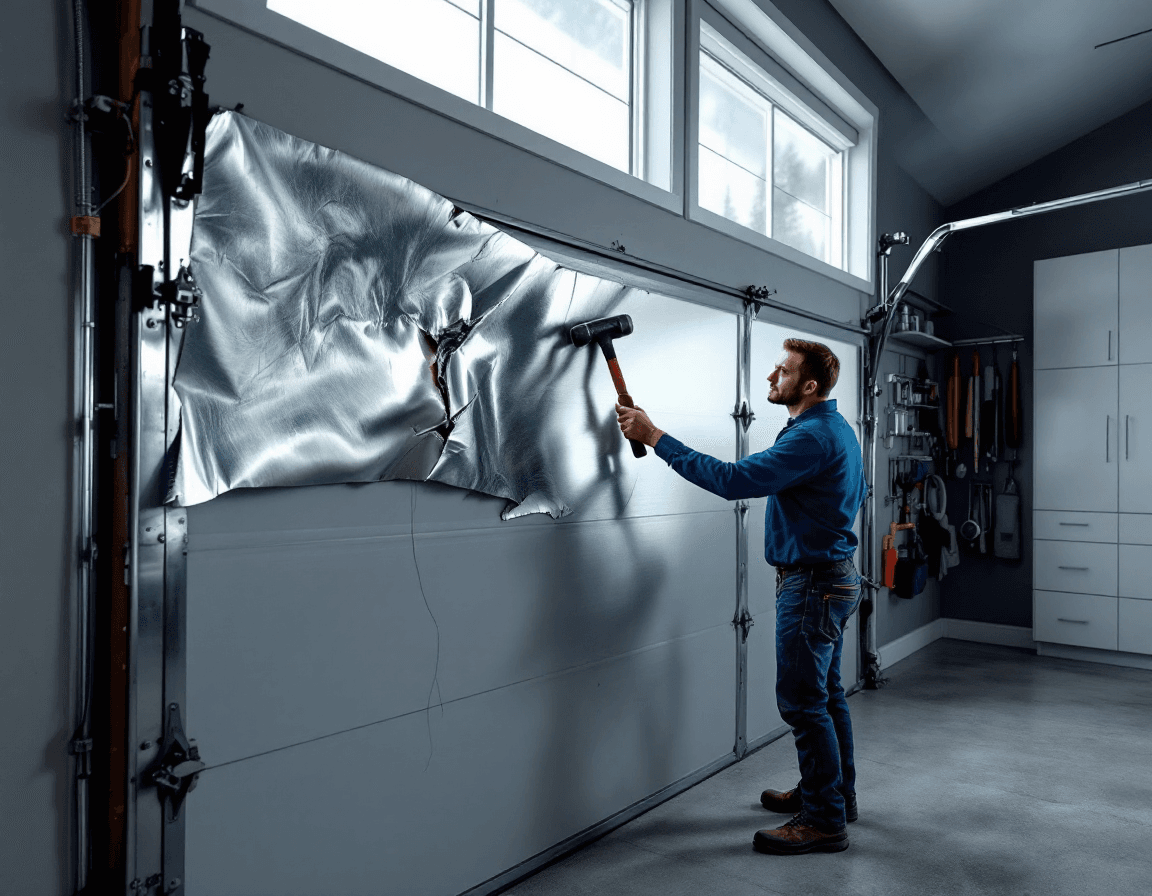
Garage door panel replacement in Edmonds, WA is often the most cost-effective fix when a single section of your door is dented, cracked, rotted, or faded, but the rest of the door still works well. Many Edmonds homeowners assume a damaged panel means buying a whole new door, yet the springs, tracks, opener, and rollers may be in perfectly good shape. Replacing only the affected section can restore the look and weather protection of the door without the expense of a full system change.
Our technicians serve homes across Edmonds, from the blocks near Downtown Edmonds to the quieter streets of Perrinville and the neighborhoods close to the Edmonds Waterfront. We see the same pattern repeatedly: a door that opens and closes normally but shows a crease after a backing mishap, a bottom panel that has soaked up a winter of runoff, or a section that has faded differently than its neighbors. This page explains how we evaluate those panels, what replacement involves, what it typically costs, and how to decide between repairing and replacing. Panel work is generally in the range of $250 to $800 per section, depending on the door style, material, and how difficult the match is to find.
Reading the Damage Before Ordering Anything
A careful look at the door is the first step, and it is worth doing yourself before a technician arrives. Stand inside the garage with the door closed and look for light coming through seams, gaps where a panel has pulled away from its frame, or ripples that catch the light differently from the rest of the surface. Then step outside and view the door at a low angle, because shallow dents often disappear in direct overhead light but show clearly when the sun sits low over the Olympics in the afternoon. Note whether the damage is on the outside skin only or whether the inner layer, insulation, or end caps are also compromised.
Pay attention to edges and corners, since that is where most panel failures begin. A crack that starts at a bolt hole or a hinge point usually indicates stress that will spread if left alone. Surface scratches and chalky oxidation on aluminum or steel are cosmetic at first, but they can signal the early stage of corrosion that eventually perforates the panel. Write down what you see, take a few photographs in daylight, and keep the notes handy when you call. Those details help a technician estimate parts and time before the visit.
Salt Air, Drizzle, and the Slow Rot Along the Waterfront Side
Edmonds sits on the shoreline of Puget Sound, and that proximity matters for garage doors. Salt-laden air drifts inland on the westerly breezes that move through the area, and it settles on exposed metal and wood. Garages closer to the waterfront, and those on streets that catch the breeze coming off the Sound, tend to show corrosion earlier than homes a few miles inland. Even inland, the mild, damp winters common across Snohomish County keep surfaces wet for long stretches, which slows drying and encourages oxidation at the base of panels.
Steel doors with painted finishes are especially vulnerable where the paint has chipped from a bump or a snow-shovel scrape. Once bare metal is exposed to moisture and salt, rust can creep under the surrounding paint and lift it, making a small chip into a much larger patch. Wood and composite doors face their own problems, since prolonged dampness can swell panels, separate joints, and invite rot along the bottom rail. Regular rinsing with fresh water, especially after winter storms or after a stretch of salty spray, goes a long way toward slowing this process. When rust or rot has already penetrated the panel, replacement is usually more practical than trying to sand and patch the damage.
When One Panel Is the Right Call and When It Is Not
Replacing one section makes sense when the damage is localized, the rest of the door is structurally sound, and the remaining panels are still in good condition. A single dented panel on an otherwise clean door is a classic example. The same logic applies to a bottom section that has been damaged by water or a sharp impact, provided the door's frame, track alignment, and hardware are not showing stress. In these cases, swapping one panel is typically far less expensive than replacing the entire door and preserves the rest of the components, which are often the more costly parts.
Replacement is less sensible when damage is spread across several panels, when the door sags or binds on its tracks, or when the panels are so old that finding a match is unrealistic. If the door has multiple dented sections, the cumulative cost of replacing each one can approach the cost of a new door, and the result may look uneven. A door that has been out of alignment for a long time may also have stressed hinges or rollers that will cause new damage to the replacement panel. In those situations, we recommend an inspection of the full door before committing to a single-panel fix.
Matching a Faded or Discontinued Panel
Matching is one of the trickiest parts of panel replacement, and it is where honest expectations matter most. Garage door finishes fade at different rates depending on how much sun and salt exposure each section receives. The panel on the west-facing side of the house, for example, may have lost color years before the rest of the door, leaving an obvious mismatch even when the replacement is brand new. Many door manufacturers have also changed colors, textures, or panel profiles over the years, so an exact match may not be sold anymore.
When we assess a match, we look at the manufacturer and model number, usually printed on a label inside the door or on the bottom bracket, along with the panel width, profile, insulation type, and finish. If an exact match is available, we will source it. If not, we discuss the closest realistic option and be frank about any visible difference. In some cases, refinishing the surrounding panels or replacing a full row can produce a more uniform appearance. Whatever route you choose, we will explain the tradeoffs before any work begins so there are no surprises when the door is finished.
Backing Accidents and the Dents That Hide Behind Hardware
A vehicle backing into a door is one of the most common causes of panel damage we see. The impact often bends a single panel inward, and sometimes it also knocks a section out of its track, distorts the top roller bracket, or cracks the seam where two panels meet. Owners frequently notice only a visible dent and assume the rest of the door is fine. In reality, the force can travel through the panel joints and stress the hardware, which is why we always inspect the track and rollers after a collision.
Pay attention to how the door behaves after an impact. If it rubs, jumps, or makes a new grinding sound, the track or roller assembly may have been affected, and continuing to operate it can make the damage worse. Keep the opener disconnected and avoid forcing the door open or closed until it has been inspected. A quick photo of the damage and a note of the date can also be helpful if you need to document the incident for insurance or a property record. Fast attention after an accident usually limits the cost of repair.
Bottom Sections, Water Lines, and Hidden Moisture
The bottom panel takes more punishment than any other section of a garage door. It sits closest to the driveway, where splashing rain, tire spray, and standing water can wear away the finish over time. In the Pacific Northwest, the damp season can keep this area wet for weeks, and if the seal along the bottom rubber gasket is worn, water can seep behind the panel and soften the core. The bottom section is also where curb impacts, shovel scrapes, and lawn equipment strikes tend to land.
Look for a dark stain or line along the lower edge of the door, a musty odor in the garage, or a panel that feels spongy when pressed. Any of these signs suggest moisture has been getting in. Replacing the bottom panel is often the right move, but we also check the weather seal and the threshold, because a damaged panel will keep failing if water continues to reach it. Addressing the source of moisture is just as important as swapping the panel itself.
What a Typical Panel Replacement Involves
Panel replacement is a controlled process, but it is not a do-it-yourself job for most homeowners because the door is under spring tension and the panels must be removed and reinstalled in exact alignment. Our technicians begin by confirming the panel size, model, and style, then secure the door so it cannot move. The damaged section is detached from its hinges and rollers, and the new panel is fitted and reconnected. Weather seals, end caps, and fasteners are checked and replaced where needed. Finally, the door is cycled several times to confirm smooth movement and proper sealing.
- Verify the door manufacturer, model, and panel dimensions before ordering parts
- Secure the door and confirm that spring tension is not affected by the work
- Detach the damaged panel from hinges and adjacent hardware
- Fit the replacement panel and reconnect hinges, rollers, and fasteners
- Replace worn weather seals or bottom gaskets when they are part of the repair
- Cycle the door multiple times to check tracking, balance, and sealing
Pricing Between $250 and $800 Per Section
Panel pricing generally falls between $250 and $800 per section, and the exact figure depends on several factors. Steel panels with standard insulation are usually at the lower end of that range, while aluminum, glass, wood, or custom-profile panels often cost more. Matching a discontinued design can add to the price, as can insulated panels with high R-values or decorative windows. The condition of the surrounding hardware also matters, since a worn roller or hinge discovered during the visit may require additional parts.
We provide estimates after identifying the door and inspecting the damage. You should expect the quoted price to reflect the specific panel, labor, and any related components that must be replaced to complete the job safely. If the total cost approaches the price of a new door, we will say so plainly and walk through the options. Our goal is to help you spend money where it actually improves the door, not on repairs that will not last.
Repair or Replace: A Practical Decision Guide
Deciding whether to repair a panel or replace the whole door comes down to structure, age, and cost. A panel swap is usually the better choice when the door is relatively young, the rest of the sections are in good shape, and the opener and springs are functioning well. Replacing the entire door may be more sensible when the door is very old, the insulation is failing across many panels, or the track system is badly worn. The following checklist can help you think through the decision.
- The damage is limited to one or two panels with no spreading cracks
- The door tracks smoothly and does not sag, bind, or jump
- The remaining panels match well enough or can be matched affordably
- The springs, cables, and opener were recently serviced and are in good condition
- The door is still an efficient, well-sealed barrier against cold and rain
- The total repair cost stays well below the price of a comparable new door
Why Springs and Cables Stay With Licensed Professionals
Panel replacement sometimes uncovers related problems in the springs, cables, or drums that control the door's weight. These components store a great deal of energy, and working on them without the proper tools and training can cause serious injury. Even a routine panel removal requires a technician to manage the door's balance and keep it from shifting unexpectedly. For that reason, any spring or cable work discovered during a panel visit should be handled only by a licensed, insured professional.
If you notice a broken spring, a frayed cable, or a door that feels unusually heavy or unbalanced, stop using the door and keep children and pets away from it. Do not attempt to wind springs, remove tension, or disconnect cables yourself. Our technicians are licensed, bonded, and insured, and they carry the equipment needed to stabilize the door before any panel work begins. Choosing a qualified professional protects your household and keeps the repair from becoming a larger problem.
Scheduling a Panel Visit Across Edmonds and Nearby ZIPs
We schedule panel replacement visits throughout Edmonds, including homes in the 98020 and 98026 ZIP codes, as well as the Downtown Edmonds core, the Edmonds Waterfront area, and the neighborhoods of Perrinville. When you call, have the approximate location of the damage, the door's brand or model if you know it, and any photos you took ready to share. This helps us bring the right panel or confirm what needs to be ordered. Many panel jobs can be completed in a single visit once parts are on hand.
If you are not sure whether your door can be fixed with a single panel, that is a perfectly reasonable question to ask. We will look at the door, explain what we see, and give you a clear recommendation without pressure. Whether the answer is a simple panel swap or a broader discussion about the door's future, you will leave with a plan you understand.
Garage door panel replacement in Edmonds, WA does not have to mean paying for a brand-new door. If a dent, crack, rusted section, or water-damaged bottom panel is holding back your garage, call Seattle Garage Door Fix at (888) 799-3819 for a clear assessment and an honest estimate. Our licensed, bonded, and insured technicians will inspect the door, explain your options, and help you restore a clean, weather-tight finish that matches the rest of your home.