
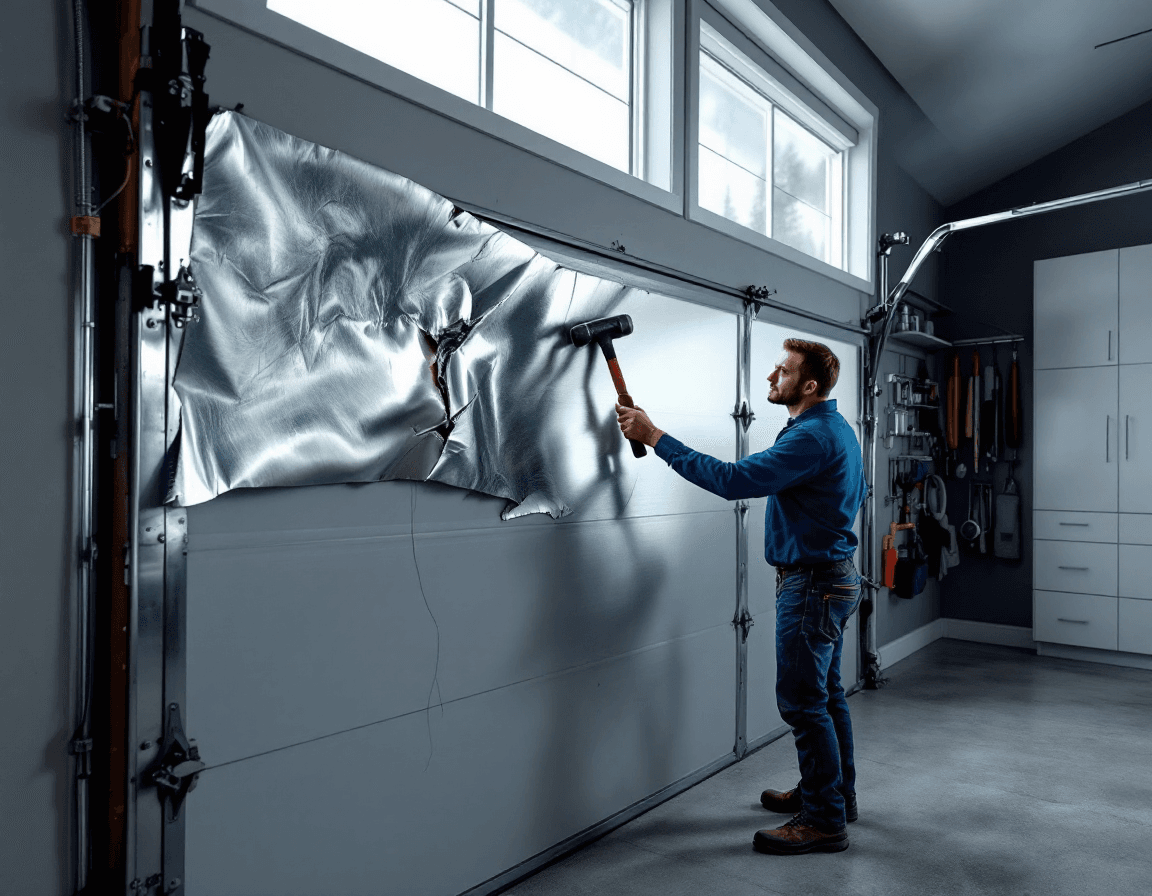
Garage Door Panel Replacement in Mukilteo, WA is often the most practical fix when one section of your door is dented, cracked, or rotting while the rest of the system still runs smoothly. Many homeowners in Mukilteo assume a damaged panel means buying a whole new door, but that is rarely necessary. A well-matched single section can restore the door's appearance, keep weather out, and protect the mechanical parts from further strain. Our technicians handle this work regularly, and we want you to understand what the process involves before you call.
Mukilteo sits right on Possession Sound, and that location shapes how garage doors age here. Salt-laden air drifts inland from the water, the marine layer keeps surfaces damp for long stretches, and winter rain can arrive sideways with real force. Those conditions show up on garage doors as early corrosion at panel seams, paint that chalks and fades, and bottoms that absorb moisture from wet pavement. This guide walks through how to recognize panel damage, decide between repair and replacement, find a matching section when the original manufacturer is no longer around, and understand what the work typically costs. Pricing for a single section generally falls between $250 and $800, depending on the door's size, material, insulation, and finish.
Whether you live near the Mukilteo Waterfront, up the hill in Harbour Pointe, or among the older homes in Old Town, the questions tend to be the same. Is the damage only cosmetic? Will a new panel look right next to the faded ones? Is it safe to keep using the door? We answer those questions below, using the same plain language we would use standing in your driveway with a flashlight and a tape measure. If anything in your door involves springs or cables under tension, we will tell you upfront that a licensed professional should handle that part of the job.
Why a Dented Panel Is More Than a Cosmetic Problem
A dent in a steel or aluminum panel can look like a simple cosmetic issue, but it often changes how the door behaves. Garage door panels are designed to sit flat in their tracks and to lock into adjacent sections as the door rolls up and down. When one panel is pushed out of shape, the rollers on that section can bind, and the door may drag or stop short of fully opening. Over time, that binding puts extra load on the opener, the hinges, and the roller brackets.
Dents also create weak points. A crease can crack paint and expose bare metal, and in our climate that bare metal begins to oxidize quickly. Once moisture gets behind the paint, rust can creep along the inside of the panel where you cannot see it until the surface starts bubbling. Insulated panels present a different problem, because a dent can break the seal on the foam core or the inner skin, reducing the door's thermal performance and allowing condensation to collect inside the section.
Finally, a damaged panel is a security and weather concern. A section that has been pushed inward may not seat tightly against the weatherstripping along the bottom or against its neighbors. Gaps let in wind-driven rain, leaves, and pests, and they can make the door easier to pry at the edges. Replacing the panel restores the door's intended fit, which is why we treat panel work as a structural repair, not just a paint job.
Salt Air, Drizzle, and the Waterfront Wear Pattern
Homes closest to the water in Mukilteo deal with a particular kind of wear. Salt spray and humidity accelerate corrosion on exposed metal, especially along panel edges, hinge areas, and the lower rail where wet grit collects. Even homes a few miles inland notice how quickly a scratch can turn into a rust spot when the marine air stays damp for days at a time. If your door faces the prevailing wind off the Sound, you may see the weathered side show damage earlier than the side protected by the house.
The drizzle season adds its own pattern. Many Pacific Northwest garage doors show the first signs of trouble at the bottom panel, where water splashes up from the driveway and sits against the metal and wood. Gray, chalky paint, lifted seams, and dark staining along the base are all common. These symptoms do not always mean the panel has failed, but they do tell us the finish has lost its protection and needs attention before corrosion spreads.
Neighborhood conditions matter too. Homes with overhanging trees can trap moisture and debris against the door, while homes with sloped driveways may funnel runoff straight toward the lower section. We take these local details into account when we assess a panel, because the cause of the damage affects whether a replacement will last or whether the same problem will return. A new panel installed in a spot where water pools will need the surrounding seals and drainage addressed as well.
Reading the Damage: Dents, Cracks, and Soft Spots
Not every mark on a garage door needs a new panel, so it helps to sort the damage by type. A shallow dent in a steel panel with intact paint may be cosmetic, although it can still affect alignment. A crack, a split seam, or a dent with creasing is more serious, because it usually indicates the panel's structure has been compromised. Soft spots on wooden doors or insulated steel doors often point to rot or a failed core, which typically calls for replacement.
Here are the signs we look for when inspecting a damaged section:
- Creases or dents that run across the panel's ribs or stiffening lines, which usually mean the panel has lost its shape
- Cracks at the seams or along the edges, especially where the panel meets the track rollers
- Soft, spongy, or discolored areas on wood or composite panels, which can indicate rot or water infiltration
- Rust bleeding through paint, particularly along the bottom edge or around hinge points
- Bubbling or separation of the insulation skin on insulated panels, which often shows up as a wavy surface
- Gaps between panels after the door closes, which suggest one section is out of square or has been bent
If you see any of these signs, take a few photos in daylight and note where on the door they appear. Those details help our technicians plan the visit and identify the correct replacement part before arriving. They also help when discussing the damage with an insurance adjuster, which we cover later in this guide.
Bottom Section Damage from Water and Impact
The bottom panel takes more abuse than any other section on most garage doors. It meets the driveway, collects water and road grime, and absorbs bumps from bikes, lawn equipment, and the occasional vehicle that strays too close. When this section is damaged by water, the most common results are rust along the lower edge, delamination of insulated skins, and rot in wood doors where moisture has wicked upward. Impact damage typically shows up as a crease or a split near a corner or along a seam.
Replacing the bottom section is often more involved than swapping a middle panel, because the bottom panel usually carries the bottom seal or astragal and has to fit the door's lower edge exactly. Our technicians check the weatherstripping, the bottom bracket, and the lift cables or springs (the latter should only be handled by a licensed professional) to confirm that the new section will sit correctly. If the water damage has spread into the adjacent section, we will point that out so you can plan for a larger repair instead of a surprise later.
Impact damage on the bottom panel also deserves a closer look at the rollers and track. A hard hit can knock the bottom bracket out of position, which causes the door to rise unevenly or make grinding noises. Adjusting or replacing a bracket is a routine task, but it is still part of a repair that involves tension on the door. We recommend having a qualified technician confirm that the door is balanced and tracking straight after any bottom-section work.
Finding a Match When the Original Door Is Gone
Matching a replacement panel is the part of this job that surprises homeowners most. Garage door manufacturers update their designs, change their finishes, and sometimes discontinue entire lines. A panel that looked identical ten years ago may now have a slightly different rib pattern, window style, or color. Faded paint makes the problem worse, because a fresh panel can look bright and new next to a door that has spent years in the Western Washington sun.
The first step is identifying the door. Most manufacturers place a label or serial plate on the inside of a panel, on the header, or on the operator rail. Recording the manufacturer, model number, panel size, and color code gives us a reliable starting point. Measuring the height and width of the damaged section is equally important, because even a half-inch difference can prevent a panel from seating correctly in the track.
When an exact match is not available, we discuss options that keep the door looking cohesive. Some homeowners choose a panel in a close color and paint the rest of the door to blend. Others opt for a complete refinish of the adjacent sections, which creates a uniform appearance without replacing the entire door. Here is what we typically review during a match assessment:
- The manufacturer name, model series, and any printed serial or date code
- Panel dimensions, including height, width, and rib or groove spacing
- The door's material, such as steel, aluminum, wood, or composite
- Insulation type and thickness, and whether the panel has a window insert
- The current finish, including color, gloss level, and any embossed texture
- Whether the door has been repainted previously, which can change how the new panel should be finished
Repair or Replace: A Practical Decision Path
Deciding whether to repair a panel or replace it depends on how much of the section is compromised and how well the rest of the door is holding up. A small dent in an otherwise sound steel panel can sometimes be straightened and refinished, especially if the paint is intact and the metal is not cracked. Rust that is caught early can be cleaned, treated, and painted. However, once a panel is cracked through, split along a seam, or soft from rot, repair usually fails to restore its strength or appearance.
Cost is part of the decision, but it is not the only factor. A single panel replacement typically runs between $250 and $800 per section, depending on the door. If the damage is spread across several sections, or the door is old enough that replacement parts are scarce, the economics can shift toward a new door. We will always give you an honest comparison rather than pushing a full replacement when a section swap will do the job.
The age and condition of the rest of the door matter as well. If the springs, opener, tracks, and rollers are worn, adding a new panel to a tired system may not be the best use of your budget. On the other hand, if the door is mechanically sound and the only issue is a damaged section, a panel replacement often extends the door's life for years. We ask a few questions before recommending either path:
- How old is the door, and is it still in good mechanical condition?
- Is the damage limited to one section, or is rust or rot spreading to neighboring panels?
- Can a matching panel be sourced reasonably, or would the door look mismatched afterward?
- Are the springs and cables in good shape, and has any previous repair been done on them?
- Does the damage affect the door's insulation, weather seal, or security?
What a Single-Panel Swap Involves on the Job
A single-panel replacement follows a predictable sequence, although every door has its own quirks. The technician begins by confirming the damage, checking the door's balance, and securing the door so it cannot move during the work. Where the damaged section sits in the middle of the door, the surrounding panels may need to be loosened or partially disassembled to free the old panel. Hinges, rollers, and brackets are removed carefully and inspected before the new section goes in.
The new panel is then fitted, aligned with its neighbors, and fastened. Our crew checks that the hinges sit square, the rollers track properly in the channels, and the seals meet the adjacent panels. On insulated doors, we confirm that the new section's core and skins line up with the rest of the door so the thermal performance remains consistent. Finishing touches, such as touching up paint or adjusting weatherstripping, come last.
Some tasks on this job are off-limits to homeowners. Springs and cables are under extreme tension, and a mistake can cause serious injury. If removing the damaged section requires disturbing the torsion springs or lift cables, that work must be handled by a licensed professional with the correct tools and training. We will never recommend that you attempt spring or cable work yourself. If you notice a cable that has frayed, a spring that has visibly stretched or separated, or a panel that has pulled free of the track under load, keep everyone clear of the door and call a licensed technician right away.
Backing Accidents and the Insurance Conversation
A single panel damaged in a backing accident is one of the most common scenarios we see. A car reversing too quickly, a delivery vehicle clipping the door, or a basketball hoop hitting a panel can all cause a dent or crack that is confined to one section. The damage is usually visible immediately, but the full extent may not be clear until the door is opened and closed a few times. Our technicians look for hidden problems such as bent roller brackets or stressed track sections that an impact can leave behind.
If you are considering an insurance claim, begin by photographing the damage from several angles and noting the date and circumstances. Many homeowners policies may cover sudden damage from a vehicle or accidental impact, but coverage depends on the specific policy, deductible, and terms. We cannot guarantee how an insurer will handle a claim, so we recommend contacting your agent directly. We can provide a written description of the repair, the replacement part, and the estimated cost to support your paperwork.
Keep the affected panel and any removed hardware until the claim is resolved if the insurer asks to inspect them. Ask for a receipt that lists the part number, the labor, and the work performed. Those details help the adjuster match the repair to the damage. Whether or not you file a claim, prompt attention to a backing accident prevents minor bending from turning into a bigger alignment problem.
Pricing a Section Swap Around Mukilteo Doors
Pricing for a single-panel replacement generally falls between $250 and $800 per section. The wide range reflects differences in door construction, panel size, material, insulation, and finish. A basic steel panel on a standard residential door will sit near the lower end, while an insulated section with a window insert, a custom color, or a hard-to-find profile will cost more. Labor time also varies depending on how accessible the section is and whether the surrounding panels need adjustment.
Several local factors can influence the final number. Doors on hillside homes in Harbour Pointe, where garages are sometimes set into sloped lots, may need extra care to ensure the door tracks evenly under uneven loading. Older homes near Old Town may have custom or discontinued doors that take longer to match. Homes close to the Waterfront often benefit from marine-grade finishes or additional corrosion protection, which can add to the material cost but extend the life of the repair.
We provide a clear estimate after inspecting the door, and we explain the reasoning behind each line item. If we discover additional problems, such as a worn bearing or a damaged track, we will describe the impact and the cost before proceeding. You should never feel pressured to approve more work than you need. Our goal is to restore the door safely and to a finish that looks right on your home.
Keeping the Replacement Panel Looking Right for Years
Once a new panel is installed, a little routine care helps it blend with the rest of the door and resist the local climate. Rinse the bottom sections periodically to remove salt, grit, and road grime, especially if your home sits near the water. Look for early signs of chalking or fading, and touch up small chips in the paint promptly before moisture reaches the bare metal. A soft cloth and mild soap are usually enough, and harsh solvents should be avoided on painted or insulated surfaces.
Check the weatherstripping and bottom seal at least twice a year. Winter storms and summer sun both wear down rubber and vinyl, and a failing seal allows water to pool against the new panel. Keep the tracks clean and free of debris so the rollers move smoothly, and listen for changes in the door's sound during operation. A grinding or popping noise can signal that a bracket, roller, or hinge is loosening, and it is better to address it early.
If you ever notice a spring that looks stretched, a cable that is fraying, or a door that rises unevenly or falls suddenly, stop using it and call a licensed professional. Those components are part of the door's balance system and must be serviced by trained technicians. Routine checks of the panels, seals, and tracks, combined with timely professional help when needed, will keep your replacement section performing well for years. Our team is glad to walk through a maintenance plan that fits your home and your door.
If a dented, cracked, or water-damaged panel is making your garage door look worn or operate poorly, we can help you sort out whether a single-section replacement makes sense. Our technicians serve Mukilteo and the surrounding Snohomish County communities, including the 98275 area, and we will bring the right panel, the right tools, and an honest recommendation to your driveway. Call (888) 799-3819 to schedule an inspection and get a clear estimate for your door.