
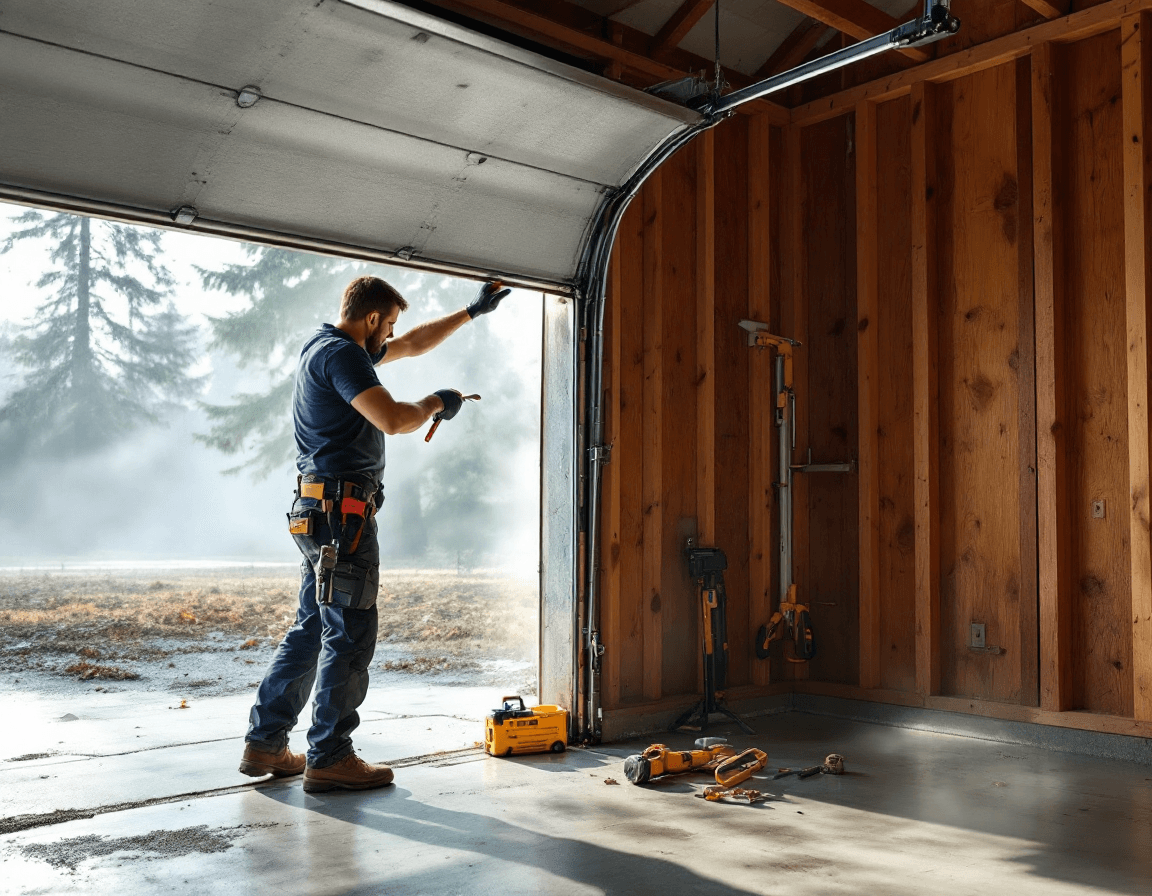
Off-track garage door repair in Mukilteo, WA is one of the more urgent calls we take, because a door that has left its rails can be stuck halfway open, pressing against the opener, or sitting crooked enough to become a hazard. Homes across Mukilteo's residential streets, from the blocks near the waterfront to the newer subdivisions on the bluff, see the same problem: a panel jumps a track, a roller pops out of its channel, or a car bumps the bottom section hard enough to bend steel. Most of these repairs are straightforward when they're caught early, and the typical off-track realignment in our area runs about $125 to $400 depending on how much damage the door and track have taken.
This page is written for homeowners who are standing in the driveway looking at a door that no longer sits right. We'll walk through what usually causes a door to derail, how to recognize the early warning signs before a small wobble turns into a jammed mess, and what a technician does on a site visit. We'll also cover why the Pacific Northwest climate matters so much to the metal, wood, and springs that make your door work, and where the line falls between a job you can safely observe and a job that belongs to a licensed professional.
If your door is off the track right now, the most important step is to stop using it. Do not keep pushing the remote, and do not try to muscle the panel back into the channel by hand. Read on for the details, and call (888) 799-3819 when you're ready for someone to take a look.
How Mukilteo Doors Usually End Up Off Track
Garage doors are simple machines in principle. A set of steel panels rides on rollers inside vertical and horizontal tracks, and the springs counterbalance most of the weight so the opener doesn't have to fight gravity. When any part of that system drifts out of alignment, the door starts to look for an easier path, and that path is usually off the track entirely. In Mukilteo, we see this happen most often when a roller shaft wears, a track bracket loosens, or a section of track gets nudged out of plumb.
Many of the doors we inspect here are on homes that have been sitting for a decade or more. Over time the lag bolts holding the track brackets into framing can back out, especially on older stud walls where the wood has shifted with seasonal moisture. The rollers themselves are often the first component to fail, with the nylon or steel wheel cracking or the bearing going dry. Once a roller starts to wobble, it can climb the track lip on one side, and the panel follows it out of the channel.
Before anyone reaches for a tool, it helps to understand that a derailment is usually a symptom rather than the root problem. A door can come off the track because a roller failed, because a track bent, because the springs became unbalanced, or because a vehicle clipped the bottom section. A competent technician will look at all of these possibilities instead of simply pushing the panel back in and sending you on your way. That diagnostic habit is what keeps a one-hour realignment from becoming a repeat call three weeks later.
Warning Signs That a Door Is Heading Off the Rails
Most derailments don't happen without notice. Usually the door gives off a few signals over days or weeks, and homeowners who learn to spot them can often schedule a repair before the panel jumps. The sounds are often the most useful clue. A grinding or scraping noise on one side, a sharp "tick" each time the door passes a certain point, or a rattle that wasn't there last season all suggest that something has started to drift.
Visual changes matter just as much. Walk outside and look at the gap between the top edge of the door and the header, then compare the left and right sides. If one side sits noticeably lower, or if the panels no longer line up cleanly at the seams, the door is no longer tracking straight. Some homeowners also notice a daylight gap between the weatherstrip and the floor on one side only, which is a sign the door is leaning in its tracks.
- The door makes a grinding, scraping, or popping noise at one specific point in its travel
- One side of the door sits lower than the other, or the top section no longer lines up with the header
- Visible gaps appear between the door and the track, or the weatherstrip is pulling away on one side
- Rollers look flattened, cracked, or have shiny metal flat spots where they rub the track
- The opener strains, reverses unexpectedly, or triggers the auto-reverse safety feature
- The door stops partway through its cycle, then jerks or lurches when you try again
If you notice any of these, the safest move is to stop running the door until someone has inspected it. Continuing to operate a door with a failing roller or a loose bracket can bend the track further and turn a simple realignment into a larger repair involving replacement panels or new track sections.
Why Rollers Pop Out and Tracks Bend
Rollers are the small wheels that let each panel glide through the track, and they are among the most stressed parts of the entire door. On a standard residential door, each roller carries a share of the door's weight every time it moves, and it does this thousands of times a year. Nylon-tired rollers are quieter but can crack or flatten over time, while steel rollers can seize or lose their bearings if they aren't lubricated. When a roller fails, it can pop free of the track lip entirely, and the door follows it out.
Track damage is usually a result of impact or sustained misalignment. A bumped track section, a bracket that has pulled loose from the framing, or a car that backed into the lower panels can all bend the steel just enough to let the rollers escape at the transition points. Once the track is out of plumb, every trip up and down the opening loads the rollers unevenly, which accelerates wear. That's why a technician checking an off-track door should examine both the rollers and the track geometry, rather than fixing only the part that is visibly broken.
Tracks can also separate at their joints, particularly where the curved section meets the vertical run. A separated joint may look like a small gap, but it creates a step the roller has to climb, and that step is often the exact spot where the door first comes off. Straightening or reseating these sections requires the right clamps and a careful eye for alignment, because hammering a track back into shape without measuring can introduce new stress points.
The Salt Air and Damp Season Factor
Mukilteo sits on the shore of Possession Sound, and that location has a real effect on the hardware that keeps your garage door running. Salt-laden air carries a fine mist that settles on metal surfaces, and over time it speeds up corrosion on hinges, roller bearings, track bolts, and spring hardware. Homes closer to the waterfront and the ferry terminal area tend to show surface rust sooner than homes set further inland, although the effect can reach most of the city on windy days.
The wet season adds a second layer of stress. Western Washington's long stretches of rain keep door seals and wood trim damp for months at a time, and wooden door sections can swell and warp when moisture gets into the grain. A warped panel doesn't ride the track evenly, and that uneven load can push rollers toward the edge of the channel. When the weather then turns cold on a clear January morning, metal contracts, lubricant thickens, and springs stiffen, which can make a marginal door suddenly jam or derail.
Good maintenance in this climate is less about one big fix and more about steady attention. Wiping down track surfaces, checking bolt tightness a couple of times a year, and keeping the rollers lightly lubricated with a silicone-based product (not heavy grease, which attracts grit) can slow the damage considerably. A technician can also recommend galvanized or coated hardware during a repair, which is a sensible upgrade for doors that see regular salt exposure.
What Happens During a Realignment Visit
When a homeowner calls about an off-track door, we treat the first visit as a diagnostic appointment rather than a quick push-back-in. The technician will confirm that the opener is disengaged, that the door is stable, and that no one is at risk of the panel shifting while the work is underway. From there, the door is inspected from both the inside and the outside, including the top roller brackets, the bottom seal, the hinges between panels, and the condition of the tracks from the bottom bracket up to the header.
Next comes the actual realignment. Depending on what has failed, the technician may replace a worn roller, tighten or relocate a track bracket, straighten a bent section, or reseat a joint that has separated. Each adjustment is checked by running the door slowly through its full cycle and watching how the panels track. A well-aligned door should travel smoothly without any side-to-side wobble, and the gap between the door and the track should be even on both sides.
Once the door is moving correctly, the technician will usually test the auto-reverse feature and the photo-eye sensors if your opener has them. These safety systems matter most when a door has been off track, because a misaligned door can trigger false reversals or fail to detect an obstacle. Before leaving, the technician should explain what was done, what remains a concern, and whether any parts were replaced, so you understand exactly what you're paying for.
When Spring and Cable Work Belongs in Licensed Hands
Off-track repairs often bring up a question about the springs and cables, and this is where homeowners need to be especially careful. Torsion springs and extension springs store enormous amounts of energy, and when they are under tension, a mistake can cause serious injury. A spring that releases unexpectedly can strike hard enough to break bones, and a cable that snaps can whip through the air with real force. Even a door that looks like it simply needs a nudge may have a cable that has slipped off its drum, which is a job for a licensed professional.
Our rule is simple: if the repair involves adjusting, replacing, or winding any spring, or if a cable has come off its drum or frayed, stop and call a licensed technician. Do not attempt to wind springs with a bar, do not loosen spring set screws, and do not try to rethread a cable yourself. These tasks require specific tools, measured tension, and training that most homeowners don't have. Our technicians are licensed, bonded, and insured, which matters when the work involves stored energy this serious.
Some homeowners ask whether they can at least reseat a roller or lift a panel back into the track before the technician arrives. For a door that has simply popped a roller out of its channel, the answer is to wait. Lifting a heavy panel with a strained or broken cable is dangerous, and forcing a door back into a track can bend the track further. Keeping the area clear, keeping children and pets away, and waiting for a professional is the safest course.
Typical Pricing and What Shapes the Final Bill
Most off-track garage door repairs in our service area fall in the range of $125 to $400. Where a job lands in that range depends on how many components are involved, how far the door has been displaced, and whether any sections of track need to be straightened or replaced. A simple roller swap and realignment on a door with undamaged track will usually sit near the lower end, while a door that has taken a vehicle impact or has multiple bent track sections will sit higher.
Several factors tend to move the price up or down. Doors with heavy steel panels, insulated sections, or unusual track configurations (such as high-lift or low-headroom setups) take more time to work on. Bent track that requires careful straightening takes longer than a simple reseat, and rollers and brackets that need replacing add parts cost. Access also matters: a door that's hard to reach or a garage with limited working space can extend the visit.
We also want to be clear about what is not included in a standard off-track estimate. If the springs, cables, or drums need replacement, that is a separate and typically larger repair, and the technician will explain those costs before proceeding. A good technician will give you a clear breakdown, point out which parts are worn versus which are damaged, and let you decide how far to take the repair today. That transparency matters more than any single number on an estimate.
Vehicle Impacts and the Hidden Damage Behind a Dented Panel
A car that backs into a garage door, or a vehicle that clips the bottom section while pulling in, can cause damage that looks minor from the outside but has serious consequences underneath. The impact can bend a track section, shift a bracket, crack a roller, or push a panel out of its hinges. Sometimes the door continues to open and close for a few days after a crash, which lulls homeowners into thinking nothing is wrong, until it suddenly jams or comes off the track entirely.
After any impact, we recommend a full inspection even if the door still appears to work. Check the bottom panel for creases, look at the hinges for bent or torn brackets, and examine the tracks from top to bottom for any dents, kinks, or gaps at the joints. A door that has been struck may also have a stressed spring or cable, because the sudden load can shift the balance. A technician who only addresses the visible dent may miss the bent bracket that will cause the next derailment.
If your insurance or the at-fault driver's insurance is involved, document the damage with photos before anything is repaired, and keep the old parts if they are removed. Clear documentation helps when the claim is reviewed. Our technicians can describe in writing what was found and what was done, which is useful for both insurance and your own records.
Keeping a Door Tracking True Through Western Washington Winters
Prevention in the Pacific Northwest is mostly about managing moisture, temperature swings, and wear. Before the wet season settles in, it's worth checking that all track bolts and bracket fasteners are snug, that the rollers spin freely, and that the bottom weatherstrip hasn't cracked or pulled away. A short inspection in early fall can catch the small issues that become big ones once the first hard freeze arrives.
Lubrication deserves a thoughtful approach. Use a silicone-based or lithium-based garage door lubricant on the rollers, hinges, and springs (where appropriate), and wipe off the excess so dust and grit don't stick. Avoid spraying lubricant directly onto the track surface, because a slick track can let the rollers slide out of position more easily. Keep the area around the door clear of debris, and sweep out any gravel or leaves that might collect in the track channel.
Finally, pay attention to how the door sounds and moves through the seasons. A door that runs fine in summer but starts to struggle in cold weather may have a lubrication or roller issue that needs attention before it becomes a derailment. Addressing small changes early keeps the repair simple and the cost predictable, and it prevents the frustrating scenario of a door that works fine until the morning you need to leave for work.
Local Notes for Harbour Pointe, Old Town, and Waterfront Homes
Mukilteo is a city of varied housing, and garage door problems can look a bit different depending on the neighborhood. Homes in Harbour Pointe, many of which were built in relatively modern developments, often have standard residential doors with steel panels and wider openings, and their off-track problems are usually tied to worn rollers or loosened brackets after years of regular use. Homeowners in these areas often notice the issue first as a noise, and an early inspection can typically resolve it with a straightforward realignment.
In Old Town and the blocks closer to the waterfront, many homes are older, with detached garages or converted outbuildings whose framing has moved over the decades. Settling foundations and shifting wall studs can change the geometry of the door opening, which puts constant stress on the tracks and brackets. In these situations, a technician may need to recheck the alignment more than once and may recommend reinforcing the bracket mounts, not just resetting the panel. Older doors may also use hardware that is harder to source, so a good technician will be upfront about what's available and what might need custom fabrication.
Homes near the waterfront and the ferry corridor also see more salt exposure and occasional wind-driven debris. Those conditions make corrosion and track contamination a bigger factor than they might be farther inland. If your home sits close to the water, schedule a periodic inspection that includes a close look at the hardware, and ask the technician to note any surface rust or early bracket fatigue before it becomes a problem.
Get Your Mukilteo Door Back on Track
An off-track garage door is frustrating, and it can be unsafe, but it is usually a fixable problem when it's handled promptly and by people who understand how these systems fail. If your door is stuck, crooked, binding, or visibly out of its tracks, stop using it, keep the area clear, and call our team for a licensed inspection. Our technicians serve Mukilteo and the surrounding Snohomish County communities, and we'll give you a clear explanation of what went wrong and what it will take to fix it. Call (888) 799-3819 today to schedule your off-track repair.