
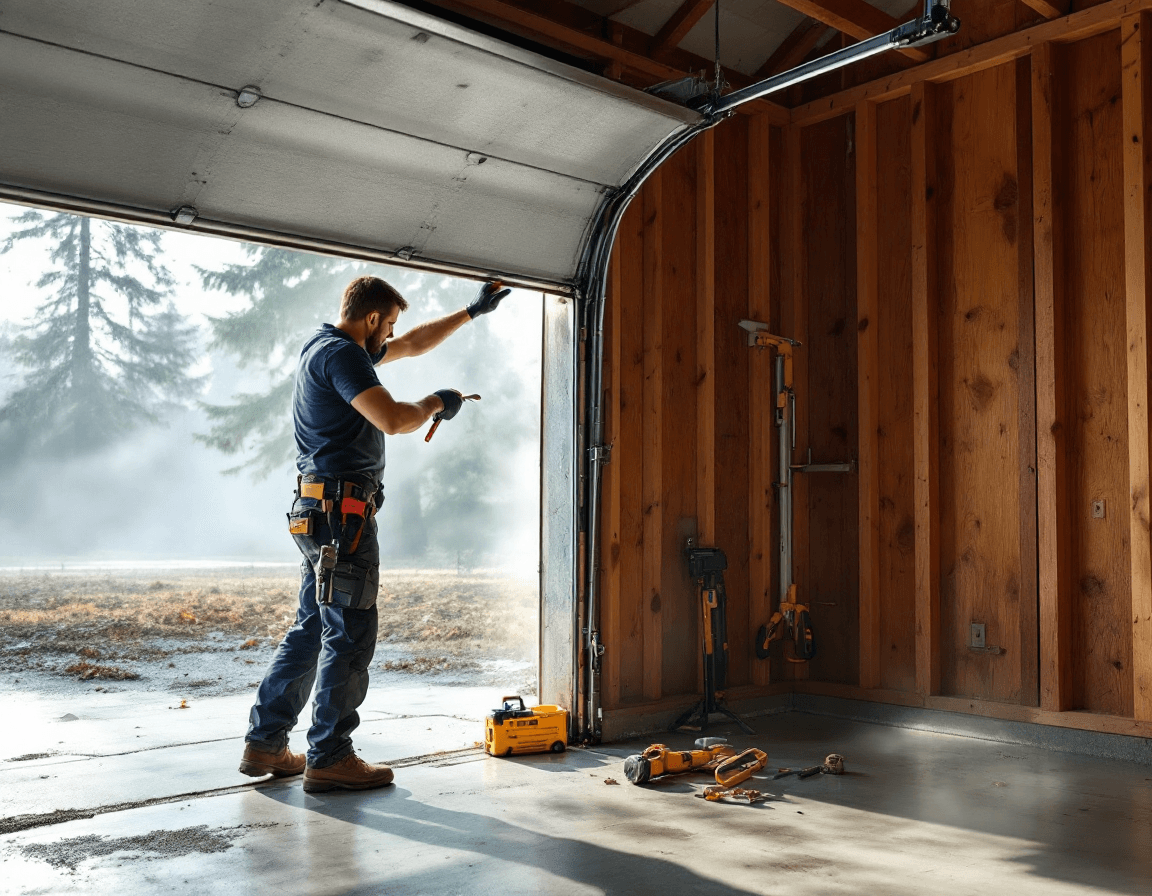
Off-track garage door repair in Edmonds, WA is one of the most common calls we take from homeowners between Downtown Edmonds and the Perrinville neighborhood. When a door slips off one or both tracks, it can look like a minor glitch, but a door that has left its rails is under real strain and can drop or twist without warning. Our technicians realign crooked doors, re-seat popped rollers, and straighten damaged track sections, and most off-track repairs fall in the $125 to $400 range depending on what has been bent or broken.
Edmonds has its own mix of conditions that make track problems more likely. Wet winters, salt-laden air drifting in from Puget Sound, and older homes with garages that have settled over decades all contribute to doors that drift out of alignment. This page explains what causes off-track doors in our area, how to recognize the early signs, what a technician actually does during the repair, and when you should stop and call for help instead of trying to fix it yourself.
If your door is off its track right now, the most important thing you can do is stop operating it. Do not keep pushing the opener button to see whether it will pop back on, and keep children and pets away from the opening. The sections below walk through the details, but the core message is simple: an off-track door is a safety issue first and a repair job second.
Why Garage Doors in Edmonds Drift Off Track More Than Expected
Garage doors do not usually jump their tracks out of nowhere. In most cases, a slow chain of small problems builds up over months or years until one ordinary event, such as a strong gust or an uneven pull on the handle, finally pushes a roller out of its channel. Edmonds homes sit in a climate where that chain tends to start earlier than it would in a drier region. Persistent moisture swells wood door frames and can warp the bottom seal, which changes how the door sits against the track.
Many homes in the older parts of Edmonds have garage floors that have shifted slightly over time. Even a half-inch of settling can cause one side of the door to ride lower than the other, putting extra load on a single set of rollers. Over time, that imbalance pulls the door sideways and stretches the track hangers. Once the door starts to lean, the rollers begin to climb out of the channel at the curve where the vertical and horizontal tracks meet.
Hardware fatigue plays a role too. Rollers, hinges, and track brackets are designed to last years, but they wear faster when they are poorly lubricated or when the door is pushed by hand instead of lifted evenly. Many Edmonds households have garages that double as workshops, storage space, or a second entrance, which means doors get opened and closed more often and sometimes forcefully. Each slightly crooked cycle adds a bit more wear to the system.
Reading the Early Warning Signs Before a Door Fully Derails
The best time to catch a track problem is before the door comes off completely. Early signs are often subtle, and homeowners tend to notice them only after the door has already started binding. Paying attention to how your door sounds and moves during its normal cycle is one of the easiest ways to prevent a full derailment and an emergency service call.
Watch for a door that makes a scraping or grinding noise at one edge while the other side stays quiet. Look for a visible gap between the top section of the door and the vertical track on one side, or a line of daylight along the bottom seal that is wider on one end. A door that stops partway up or hesitates before reaching the top of the opening is also giving you a clear message that something has shifted.
- A roller that looks tilted or sits crooked in its track when the door is closed
- Scuff marks or bright metal streaks along the inside of the track
- A door that rises unevenly, with one side visibly lagging behind
- Panels that look slightly out of line with each other or with the door frame
- The opener straining or the motor running longer than usual before the door moves
- A loud bang or popping sound at the start or end of travel
If you notice any of these signs, avoid the temptation to force the door through its cycle repeatedly. Each forced attempt can push a roller further out of its track. Instead, disconnect the opener if you know how to do it safely and have a technician look at the door as soon as possible.
What Actually Happens Inside the Track When a Roller Pops Out
To understand an off-track repair, it helps to know how the door is supposed to move. The door rides on rollers attached to its hinges, and those rollers travel inside a steel track that runs vertically up each side of the opening, curves into a horizontal section near the ceiling, and typically extends back over the garage. The curve is where most derailments begin. When the rollers reach it, they must change direction smoothly, and any misalignment in the track can send a roller up and out of its channel.
When a roller pops out, the door loses its guidance on that side. The panel attached to that roller can tilt, drop, or wedge against the track, which is why many off-track doors look crooked or jammed. Sometimes only one roller is out; other times the whole side has come loose from the track. In the worst cases, a door may have separated from both tracks, leaving it hanging by its cables or springs in a way that is dangerous to anyone nearby.
Technicians begin by examining how the door sits in the opening. They check whether the track is intact, whether any section is bent or dented, and whether the rollers are damaged or worn. The track is then gently realigned, the rollers are seated back into their channels, and the door is cycled slowly to confirm that it moves evenly. Any cracked rollers, bent hinges, or damaged track segments are replaced or straightened as part of the same visit, which is why the final cost depends so heavily on what was found.
Salt Air, Rain, and Wear Near the Waterfront
Homes closer to the Edmonds Waterfront and the marina area deal with a unique set of environmental factors. Salt spray and humid air can speed up corrosion on steel tracks, bolts, and hinge hardware, especially where protective coatings have worn thin. Corrosion does not always show up as obvious rust; it can make a bracket slightly brittle or cause a bolt to loosen gradually, which lets the track shift out of its proper position over time.
Wet weather matters just as much. Edmonds receives a lot of rain during the colder months, and garages that are not well ventilated can hold moisture for long stretches. Water that finds its way into the track channel can wash away lubricant and leave grit behind, creating friction that makes rollers stick. Once a roller starts sticking, the door may race ahead on one side and lag on the other, which is exactly the kind of imbalance that leads to derailment.
Homeowners near the waterfront can reduce some of this wear by keeping the track clean and lightly lubricated with a silicone-based or lithium-based product, not heavy grease that attracts dirt. Wiping down the tracks once or twice a year, especially after a long wet season, helps prevent grit from building up. A quick visual check of the bolts that hold the track to the wall and ceiling also makes sense, since loose hardware is one of the most common contributors to slow misalignment in damp climates.
When a Vehicle or Accident Knocks the Door Out of Line
Not every off-track door is the result of age or wear. Many of the derailments we see come from impact, usually a car, truck, or delivery vehicle that clipped the door while backing out of the driveway or pulling into a tight space. Driveways in parts of Edmonds can be narrow, and garages that sit close to the street or alley can leave very little clearance for turning, which increases the risk of a sideways strike.
A vehicle strike can do more damage than it first appears. The door panels may look intact while the track is bent inward, the hinge brackets are cracked, or one roller has been knocked completely out of the channel. Because the damage is hidden, some homeowners try to reopen the door and only make the problem worse. If you have had any kind of impact, even a light bump, it is worth having a technician inspect the track before you use the door again.
If the impact involved a car and the door is now separated from the track, treat the area as hazardous. Keep people and pets clear, avoid standing under the door, and do not attempt to lift it by hand. Photos of the damage can be useful for your insurance claim, and a technician can document what was bent or broken so the repair record matches what happened.
Realigning the Door Without Making the Damage Worse
Realignment is the process of bringing a crooked or derailed door back into a straight, balanced position within its tracks. It sounds simple, but it requires careful attention to how the door is supported and how the forces in the system are distributed. A technician usually starts by assessing whether the door can be safely moved at all, and whether the springs are intact, since spring tension is what carries most of the door's weight.
Once the door is stable, the tech will check the vertical and horizontal track sections for alignment with a level and a straightedge. Small adjustments are made to the track brackets so that the rollers enter the curve at the correct angle. In many cases, realignment alone is enough to restore smooth travel, but if a track has been bent beyond a gentle correction, it may need to be straightened or replaced in sections.
There are a few things homeowners should avoid while waiting for a visit. Do not hammer on the track or try to pry a roller back in with a screwdriver or pry bar, because that can crack the roller or bend the track further. Do not operate the opener with the door partially off its rails. Keep the area clear and let a trained technician handle the adjustments, since the wrong pressure in the wrong place can turn a repair that would have cost a few hundred dollars into a much larger job.
Re-Seating Rollers and Straightening Damaged Track Sections
Re-seating rollers is one of the most common parts of an off-track repair. Rollers that have popped out of the channel must be guided back into the track without being forced, and then checked to ensure they turn freely and stay in place through the full range of motion. A roller that is cracked, flattened, or missing its bearing may need to be replaced, and technicians typically keep a range of common roller types on hand because older Edmonds homes often use different hardware than newer builds.
Straightening track is more involved. Steel track can be dented from a bump or bent by repeated binding, and even a slight dent can cause rollers to catch at the joint between sections. A technician will examine each section closely, looking for flat spots, kinks, or separated joints. Minor dents can often be tapped back into shape with care, while severely damaged sections are usually replaced, since a track that is kinked will continue to cause problems no matter how carefully the door is adjusted.
After re-seating and straightening, the door should be cycled several times to confirm that the rollers track smoothly through the curves and that the panels stay level. Gaps between the door and the frame should be even on both sides, and the bottom seal should meet the threshold evenly. If the door still shows uneven movement, the technician may need to recheck spring balance or hinge alignment, because a track problem and a balance problem often feed into each other.
Typical Costs for Off-Track Repairs in Edmonds
Most off-track garage door repairs in Edmonds fall between $125 and $400. Where the job lands within that range depends on what the technician finds during the visit. A door that simply needs a roller re-seated and a track bracket tightened will usually cost less than one with multiple bent track sections, a cracked hinge, and a roller that has to be replaced.
Several factors tend to push costs up. A door that has been separated from both tracks takes longer to stabilize and inspect. Damage from a vehicle strike may involve panels, hinges, or track sections that need replacement rather than simple adjustment. Doors with specialty hardware or heavier insulated panels also require more time to handle safely. Access can matter as well; a track that is hard to reach or a garage with limited working room may add time to the visit.
Costs can also rise if the technician discovers a related problem that was not the original cause. Worn springs, frayed cables, or failing openers sometimes show up during an off-track inspection, and those are separate repairs with their own price ranges. A good technician will explain what is needed and why before starting any additional work, so you can decide how to proceed. If you want an estimate before scheduling, call (888) 799-3819 and describe what you are seeing, including which side of the door is affected and whether the door is still hanging or has been moved manually.
Why Spring and Cable Work Belongs to a Licensed Professional
Spring and cable tension is the single most dangerous part of a garage door system. The torsion springs above the door store enormous energy, and when they are adjusted or released incorrectly, they can cause serious injury. Lifting cables carry the door's weight and can snap under strain, sending the door down suddenly. For these reasons, any repair involving springs, cables, or the drum assembly should be handled by a licensed, bonded, and insured technician with the proper tools and training.
An off-track door often has spring or cable issues mixed in with the track problem. A door that has dropped on one side may have a cable that has slipped off its drum, and a door that has been struck by a vehicle may have a spring that has been stretched or damaged. Attempting to correct these issues without the right equipment can lead to a sudden release of tension. Homeowners should never try to wind or unwind a torsion spring, and should not attempt to re-hang a cable on its own.
Our technicians carry the tools needed to safely secure a door before working on its tracks, and they follow established procedures for releasing or adjusting tension when that is required. If your door has been separated from its cables, or if you can see a frayed or kinked cable, leave the door alone and call a professional. Doing so protects your family, your vehicles, and the rest of your garage system.
Keeping Your Track Aligned Through Edmonds' Wet Seasons
Prevention is the most effective way to avoid another off-track emergency. A short maintenance routine a few times a year can catch small problems before they grow into derailments. Start by wiping down the tracks to remove dirt and debris, then apply a light coat of silicone or lithium lubricant to the rollers and hinges. Avoid petroleum-based products, which can attract grit and break down rubber components.
Check the bolts that secure the tracks to the wall, ceiling, and any support brackets. A loose bolt may not cause immediate trouble, but it can let the track shift slightly each time the door cycles. Look at the bottom weather seal as well. A seal that has torn or pulled away can change how the door sits against the threshold and contribute to uneven movement. Replacing a worn seal is usually a simple, inexpensive fix that helps keep the door balanced.
Pay attention to changes in the garage itself. If you notice new cracks in the floor, a door that suddenly rubs on one side, or a gap that wasn't there before, schedule an inspection. Homes in the Perrinville area and other neighborhoods around Edmonds may see seasonal ground movement, and catching those shifts early can save a lot of trouble. Regular checkups also give a technician a baseline to compare against if problems develop later.
Scheduling an Off-Track Repair Visit in Edmonds and Nearby ZIP Codes
We provide off-track garage door repair across Edmonds, including the Downtown Edmonds core, homes near the Edmonds Waterfront, and neighborhoods such as Perrinville. Service is available for residents in ZIP codes 98020 and 98026, and we are happy to talk through your situation if you are in a nearby area. If you are unsure whether your address is covered, call and we can confirm quickly.
When you call, it helps to have a few details ready. Tell us which door is affected, whether it is still on the tracks or has separated, whether anyone has been hurt or whether there has been a vehicle impact, and whether the opener is still attached. If you have photos of the track or the door, send them along. This information helps us prepare the right tools and set realistic expectations for the visit and cost.
Until a technician arrives, keep the door closed if possible, avoid using the opener, and keep the area clear. If the door is hanging or leaning, stay away from it. Our team is licensed, bonded, and insured, and we will handle the realignment, roller work, and track straightening with the care that a crooked or derailed door requires.
Your garage door should move smoothly and sit squarely in its tracks, and getting it back into that condition does not have to be a long ordeal. If your door has come off its track, is binding, or has a visible gap, call (888) 799-3819 today. A licensed technician can assess the damage, explain your options, and get your Edmonds garage back in working order safely.