
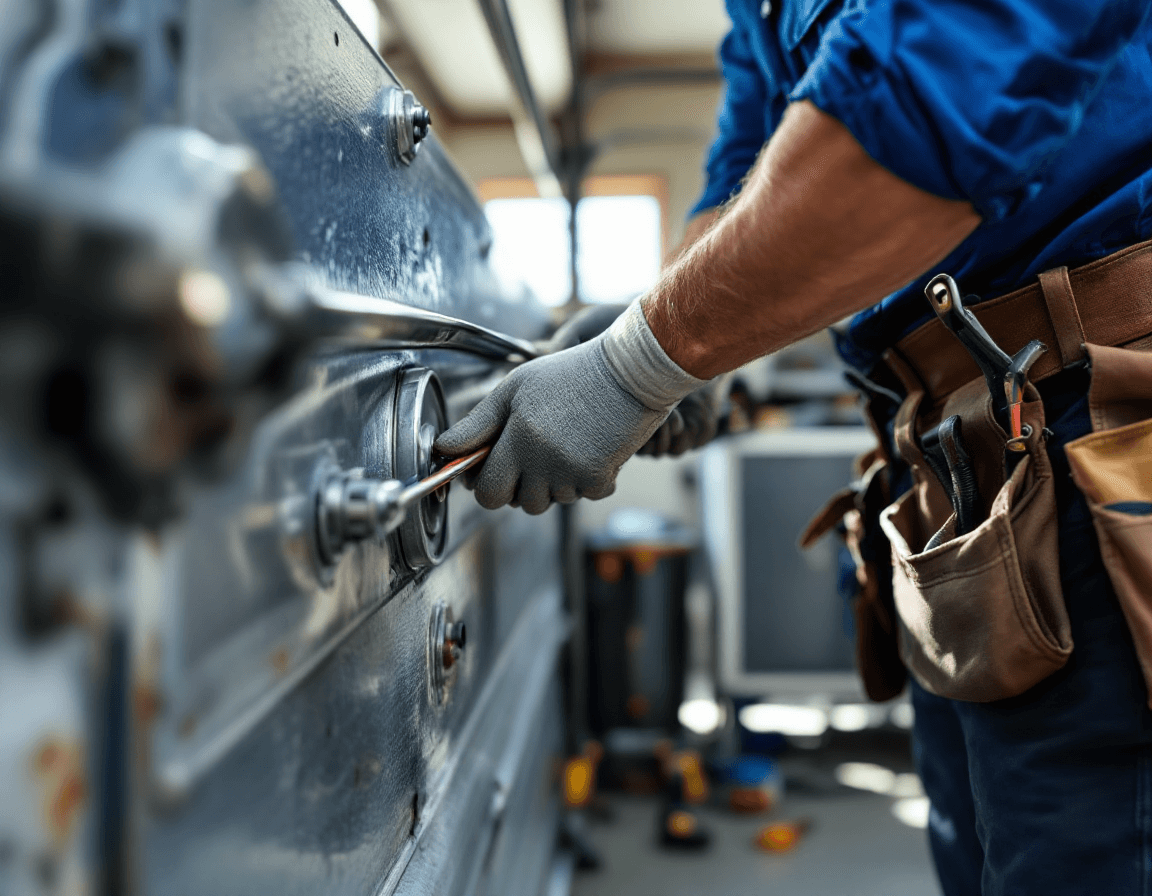
If your garage door has suddenly started hanging at an angle, sitting stubbornly halfway up, or making a sharp bang from the ceiling, a worn or broken lift cable is a likely cause. Garage Door Cable Replacement in Edmonds, WA is one of the most common repairs we handle for homeowners from the downtown core out toward the quieter streets of Perrinville. The cables are the steel lines that carry the weight of the door as it rises, so when one fails, the door loses its balance and can become unsafe to operate.
Edmonds homes have a particular relationship with garage hardware. Many of the houses here are older craftsman and mid-century builds, and many have garages that take a daily beating from damp air, road grit, and temperature swings. Because the cables are under constant tension, even a small weakness in one strand can turn into a full failure over a few seasons. Knowing what to look for lets you catch the problem early, before a routine morning turns into a door stuck open or closed.
This page explains how lift cables work, what the warning signs look like, why the Pacific Northwest climate is hard on steel, and what to expect when a licensed technician replaces a cable or services the drum. We also cover what affects the typical $110–$300 range for most cable replacements and how to keep the system in good shape. If anything here sounds like what your door is doing right now, treat it as a safety issue and call a professional rather than waiting.
Reading the Early Signals Your Lift Cables Are Wearing Thin
Cables rarely fail without warning, even though it often feels that way when a door drops unexpectedly. Most homeowners notice small changes first, such as the door rising a little unevenly, a faint scraping sound near the top of the track, or a slight sag when the door is partway open. These signals usually mean one cable is carrying more load than the other, or that a strand has started to fray and stretch. Paying attention to these details can save you from a more expensive emergency visit later.
Fraying is the most visible clue. Look at the cables along both sides of the door, especially where they wrap around the drum and where they attach to the bottom bracket. If you see loose wire ends, bright spots where the coating has worn away, or small curls of metal, the cable has lost integrity and should be replaced soon. Rust-colored stains or flaking surface corrosion also point to a cable whose internal strength is no longer reliable.
Sound can be just as informative. A cable that is beginning to fail may produce a dull popping or a metallic ticking as it passes over the drum groove. A sharp crack that you hear from inside the house or the driveway usually means a cable has already snapped. Treat any new noise that coincides with the door moving as a reason to have it inspected.
How Edmonds Weather Quietly Works Against Steel Cables
Western Washington's climate is gentle in some ways and tough on metal in others. Winters bring long stretches of drizzle, low clouds, and humidity that rarely drops to the dry levels found in many other regions. Moisture that settles on steel cables and drum surfaces can encourage surface rust, and rust is the enemy of a cable that depends on every strand to carry its share of the load. Over several wet winters, that corrosion can hollow out a cable from the inside while the outside still looks acceptable.
Homes closer to the Edmonds Waterfront face an added factor: salt-laden air carried in from Puget Sound. Even houses a few blocks inland can see salt deposits on exposed hardware, particularly during windy weather when spray and mist travel farther than most people expect. Salt accelerates corrosion, which means cables and drum components in these areas often need closer attention than similar hardware a few miles east. Garage doors facing west or north can also collect more moisture because they receive less sun to dry the surfaces.
Temperature swings matter too. Cold snaps common in the region can make steel brittle and stiffen the lubricant on springs and drums, while the milder spells that follow can cause expansion and contraction that loosens fittings. Over time these cycles add stress to cable ends and fasteners. A cable that has been quietly corroding through the rainy months may finally let go on the first cold morning of the year, which is why many of our calls come in shortly after a seasonal change.
Understanding What Lift Cables and Drums Actually Do
Most residential garage doors use a torsion spring system paired with lift cables. The springs store energy and counterbalance the door's weight, while the lift cables connect the bottom corners of the door to the drums at each end of the torsion shaft. As the door rises, the cables wind onto the drums, and as it closes, they unwind. The drums are sized and grooved so the cable feeds evenly, and the whole arrangement only works when both sides share the load equally.
The main components involved in a cable job include the following:
- Lift cables, the steel lines that run from the bottom bracket up to the drum
- Cable drums, the grooved cones mounted on the shaft that guide and hold the cable
- Bottom brackets and fasteners, which anchor each cable end to the door panel
- Torsion shaft and bearing plates, which hold the drums in position and keep them aligned
- Safety cables, thin backup lines that help limit a spring's movement if it breaks
Understanding these parts helps explain why cable repair is not just a matter of swapping a single piece of wire. The drum must be seated correctly, the cable must sit in the right groove, and the tension of the springs must be handled safely. A technician who understands how these pieces interact will check the whole assembly before closing the job.
When a Snapped Cable Leaves the Door Stuck in Place
A snapped cable is one of the more alarming garage door problems, and it often arrives with a loud crack or bang. When one cable breaks, the door typically tilts or drops on the affected side, and it may stop moving entirely. Many homeowners find the door sitting partially open, slanted, or jammed in the tracks, and they are not sure whether it is safe to touch. The right answer is to leave it alone and keep people and vehicles clear of the area.
The reason for caution is that the door's weight is no longer evenly supported. Attempting to force the door up or down can damage the track, the opener, or the remaining cable, and it can put you in the path of a moving panel. If your opener is still connected, disconnecting the power and avoiding the door's travel path are the most useful steps you can take before a technician arrives. Do not try to wind the cable back onto the drum yourself, because the drum and spring are under significant tension.
Once the door is secured, a licensed technician will usually check the opposite cable, the drum on each side, the track alignment, and the spring condition. It is common for a worn cable to be replaced together with a damaged drum or track section so the new cable has a clean path to run. Asking for this full inspection helps make sure the repair lasts beyond the next few weeks.
Crooked and Lopsided Doors: Why One Side Gives Out First
A door that hangs crooked, closes unevenly, or binds on one side is often the earliest sign of an imbalance in the cable system. The cause might be a single stretched cable, a drum that has slipped on the shaft, or a cable that has jumped out of its groove. Because the cables work in pairs, even a small difference in length or tension can throw the entire door off level. You may notice a gap at the bottom edge on one side, or the panels may appear to lean when the door is halfway open.
Binding is especially frustrating because it can mimic opener problems. The door may stop, reverse, or groan as it moves, and homeowners sometimes assume the opener is failing. In many Edmonds garages, however, the root cause is a cable that has begun to fray or drum that is no longer tracking smoothly. Checking whether the door moves freely by hand when the opener is disconnected can give a useful clue, but it should only be done with the door closed and never while the springs are being adjusted.
Lopsided movement also stresses the tracks, rollers, and hinges. Over time, uneven loading can bend track sections or wear out rollers on the heavier side. This is why we recommend addressing crooked motion promptly rather than letting it continue. A balanced door is quieter, safer, and far more likely to keep its other components healthy.
Drum Problems That Often Get Mistaken for Cable Failure
Not every cable complaint is actually a cable problem. Cable drums can crack, lose their grooves, or slip on the torsion shaft, and any of these conditions can produce symptoms that look like a frayed cable. A cable that is tangled around the drum or sitting partly off the groove may still be intact, but it will not feed correctly. In other cases, the cable has been pulled off the drum by an imbalance that started with a slipping set screw.
Drums deserve careful inspection because a damaged drum can quickly wear out a new cable. Look for chips, cracks, or flat spots on the cone, and check whether the cable seats cleanly in the groove. Set screws that have backed out or lost their grip are another common issue, particularly in homes where the door has been operated heavily or where the shaft has shifted slightly over time. If the drum is compromised, replacing the cable alone will not solve the underlying problem.
A tangled cable is a special case. When a cable jumps off the drum and winds into itself, it can kink or develop sharp bends that weaken the steel. Even if the cable can be untangled, these kinks often mark the beginning of a future break. Replacing the cable and confirming the drum is in good condition is generally the more reliable path.
Why Edmonds Homeowners Should Leave Cable Work to a Licensed Technician
Lift cables and torsion springs store a large amount of force, and that force is what makes garage door repair dangerous. Winding or unwinding a spring without the correct tools, or releasing tension on the wrong component, can cause serious injury. Even experienced do-it-yourselfers can be surprised by how quickly a spring or cable can move when the wrong step is taken. For this reason, cable replacement should always be handled by a licensed professional who understands how to control the system safely.
Many Edmonds homes also have garage configurations that complicate repairs. Some houses have high-lift tracks, vaulted ceilings above the door, or older track layouts that were installed decades ago. Others have openers, weatherstripping, or custom panels that must be handled carefully to avoid damage. A technician familiar with these variations can work efficiently without creating new problems.
Insurance and warranty considerations are worth noting as well. Doing your own spring or cable work may complicate a manufacturer warranty or create liability questions if an accident occurs. Hiring a licensed, bonded, and insured company gives you clear accountability for the work performed. It also means the technician can document what was replaced and recommend any preventive steps.
What a Professional Cable Replacement Visit Typically Includes
A good cable replacement visit begins with a safety check before anything is touched. The technician will confirm that the opener is disconnected, the door is secured, and the spring tension is handled according to standard procedure. They will then inspect both cables, both drums, the bottom brackets, the track alignment, and the condition of the torsion shaft. Documenting these findings helps explain what needs replacement and why.
Once the assessment is complete, the technician will remove the damaged cable and install a new one that matches the door's weight and spring setup. The new cable must sit correctly in the drum groove and attach securely to the bottom bracket. If the drum is worn or the set screws have loosened, these parts will be corrected as well. The door is then carefully balanced and tested through several full cycles to confirm smooth, level movement.
Before leaving, the technician should review what they replaced, explain any additional concerns they noticed, and walk you through how to recognize early warning signs. They should also confirm that the opener and safety sensors are working properly. A thorough visit is about more than fixing the immediate problem; it is about making sure the system is safe to use with confidence.
Understanding the $110–$300 Range for Most Cable Replacements
Most standard lift cable replacements fall within a range of $110 to $300, but the final cost depends on several details. A single cable on a common residential door typically costs less than a job that involves both cables, a damaged drum, or a track alignment. The type of cable, the size and weight of the door, and whether the spring system must be adjusted can also influence the total. Accessibility matters too, because high ceilings or unusual track layouts require more time and care.
Here are some of the factors that commonly shape the price for Edmonds homeowners:
- Whether one cable or both need replacement
- Whether a drum is cracked, worn, or needs its set screw reset
- The door's size, weight, and panel style
- Track alignment or minor hardware repairs discovered during the visit
- Overhead clearance and the complexity of the spring system
Because every garage is different, the best way to understand your specific cost is to have a technician inspect the door in person. A clear estimate should explain what is included, what is recommended, and what is optional. Be cautious of any quote that does not account for the inspection of the drum and opposite cable, since these parts often determine whether the repair will hold.
Protecting Your Cables Through Puget Sound's Wet Seasons
Preventive care is one of the most effective ways to extend the life of lift cables in the Pacific Northwest. Keeping the garage dry, ventilated, and free of standing moisture helps slow corrosion on both cables and drums. Regular visual checks give you a chance to spot fraying, rust, or misalignment before they become emergencies. A few simple habits can make a noticeable difference over time.
Homeowners in Edmonds can focus on a few practical steps:
- Wipe down visible cables and drums after the rainiest stretches to reduce surface moisture
- Check for rust spots, loose wire ends, or unusual gaps along the cable path
- Watch for crooked motion, uneven closing, or new noises during routine use
- Keep the tracks and rollers clean so the door moves without added strain
- Schedule a professional inspection every year, especially after a harsh winter
Lubrication is another topic that deserves careful attention. Silicone-based or garage-door-specific lubricants are generally recommended for rollers and hinges, but cables and drums should be handled according to the manufacturer's guidance. Some products can attract dirt or create buildup, so it is wise to ask a technician what is appropriate for your specific door. A professional can also confirm whether your spring system needs adjustment as the seasons change.
Garage Door Cable Service Across Downtown Edmonds, the Waterfront, and Perrinville
Our team provides cable replacement and drum service across Edmonds and the neighborhoods that surround it. Homes near Downtown Edmonds often have compact driveways and older garages that require careful clearance planning. Properties near the Edmonds Waterfront benefit from extra attention to corrosion, since the salt air can speed up wear on exposed hardware. Residents in Perrinville and the surrounding Snohomish County neighborhoods often have a mix of older and newer garage doors, and each one benefits from a tailored inspection.
We serve homeowners in ZIP codes 98020 and 98026, along with many nearby communities throughout Snohomish County and the greater Seattle area. Whether your door is stuck halfway open, leaning to one side, or making a sharp new noise, a prompt inspection can prevent the damage from spreading to the opener, tracks, or springs. Our technicians are licensed, bonded, and insured, and they approach every cable job with safety as the first priority.
If your garage door is showing any of the warning signs described on this page, do not wait for the next storm or the next cold morning to decide what to do. Stay clear of the door, keep others away from the area, and call for professional help. You can reach Seattle Garage Door Fix at (888) 799-3819 to schedule a cable inspection, replacement, or drum service in Edmonds and nearby communities.