
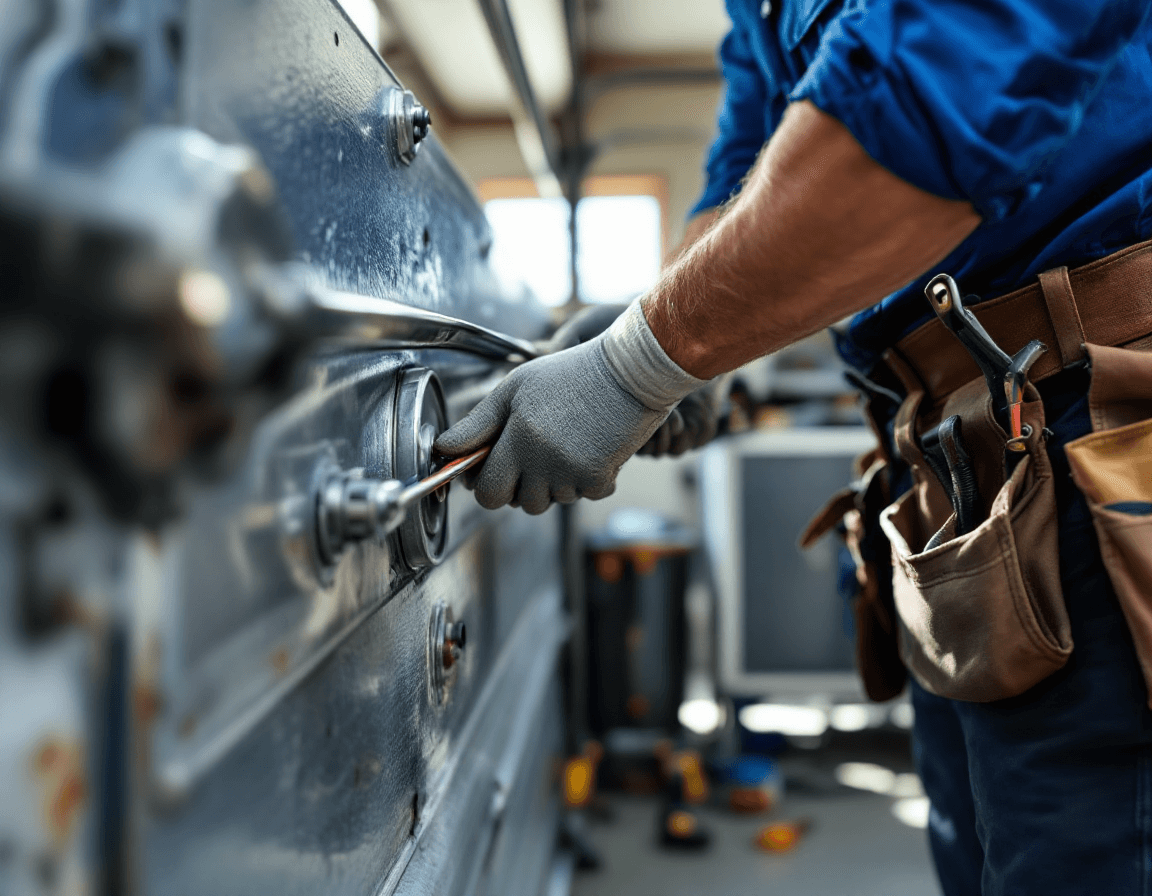
Garage door cable replacement in Brier, WA is one of the most common repairs we handle for homeowners in the Snohomish County area, and it is also one of the most dangerous to attempt on your own. A lift cable carries the weight of a heavy door, and when it snaps or slips off the drum, the door can drop unevenly, bind in the tracks, or stop halfway open. Many Brier households first notice the problem when a loud bang echoes through the garage in the morning and the door refuses to close all the way.
This page explains what cable failure looks like, why our wet Pacific Northwest climate contributes to it, how the cable, drum, and spring work together, and what a licensed technician does during a repair. We also cover typical pricing, how to keep your hardware in better shape between visits, and how to choose a qualified provider. The goal is to give you enough information to recognize a problem early and to make a confident decision about who should fix it.
Our technicians serve homes throughout Brier and the surrounding neighborhoods, including residents who drive past Brier Park on the way to work or who walk their dogs along its trails. Whether your garage is attached to a newer home or a older split-level, the same principles apply to the cables that lift your door. Understanding those basics will help you describe the problem accurately when you call, and it will help you spot a developing issue before it turns into a stuck door on a rainy weekday.
What a Snapped or Slipped Lift Cable Looks and Sounds Like
Most homeowners describe the same sequence when a lift cable fails. The door is moving normally, then there is a sharp crack or a loud thump, and afterward the door sits crooked, sags on one side, or refuses to move at all. Sometimes the sound is more of a metallic twang that echoes off the garage walls. In other cases the door looks fine from the outside but stops with a jolt the moment you press the remote button.
On a typical residential door with torsion springs, there are two lift cables, one on each side, attached to the bottom corners of the door and wound around drums at the top of the door track. When one cable breaks, the drum on that side can no longer lift its share of the weight, so the door tilts. You may also see the lower bottom bracket hanging loose, or a short length of cable dangling from the drum. When the cable comes off the drum entirely, it often wraps itself loosely around the shaft or lodges between the drum and the bracket.
Here are the most common signs that a cable has failed or come out of position:
- The door hangs noticeably lower on one side or appears tilted when it is partly open.
- You hear a sharp snap or bang, followed by the door stopping or jerking.
- A cable is visibly loose, kinked, tangled, or lying on the floor near the track.
- The door opens or closes unevenly, or one side binds in the track while the other side moves freely.
- The opener motor runs but the door barely lifts, which can happen when the weight is no longer balanced.
If you see any of these symptoms, the door should stay closed and the opener should be disconnected from power until a technician has inspected the system. A door that is hanging crooked can damage the tracks, the rollers, the opener, or the panels, and a door that is stuck halfway open can be a security and safety problem for the household.
Why Western Washington Weather Works Against Garage Door Cables
Pacific Northwest weather is gentle in some ways. We rarely see the extreme heat or deep freezes that test garage hardware in other regions. What we do get is long stretches of damp air, frequent rain, and cool nights that keep moisture sitting on metal surfaces for hours at a time. Brier homeowners know the pattern well: a dry week in late summer, then a steady drizzle that lasts from October through spring. That cycle is hard on steel cables.
Moisture is the main enemy. Lift cables are made of braided steel wire, and the tiny gaps between the strands can trap water and road grime. Over time that moisture promotes surface rust, which weakens the wire from the outside in. Rust can be hard to spot because it often hides inside the cable where it bends around the drum. A cable can look fine from a distance and still have several broken strands that will eventually fail under load.
Temperature swings also matter. A cold morning causes metal to contract slightly, and a warm afternoon causes it to expand, and repeated cycles can gradually loosen fittings and fatigue the wire at the points where it wraps around the drum. Garages in the area are often unheated, so the springs and cables experience the full force of seasonal changes. Many homeowners find that a cable which made it through one winter begins to fray noticeably in the following spring, and the failure often happens on a cold, damp morning when the metal is most stressed.
How the Cable, Drum, and Spring Work Together
Understanding the components helps explain why cable work requires training. The torsion spring is mounted on a steel shaft above the door opening, and it stores the energy that counterbalances most of the door's weight. The lift cables are attached to the bottom bracket on each side of the door, run up through the vertical track, and wind onto the cable drums mounted at each end of the spring shaft. As the spring unwinds and the door rises, the drums take up the cables, and the stored energy helps lift the panels.
The drums are precisely sized and fitted to the shaft. Each drum has a groove that guides the cable so it winds in a neat, even layer. When a cable is installed correctly, it seats in that groove and wraps smoothly. When a cable has slipped or been improperly seated, it can bunch up, overlap, or tangle, which puts uneven stress on both the cable and the drum. Drums are typically secured with set screws, and those screws can loosen over time if the shaft moves or if the hardware has not been maintained.
The spring is the most dangerous part of the system. Torsion springs store a large amount of tension, and improper handling can cause serious injury. Cable replacement sometimes requires the technician to release tension from the spring or to temporarily secure the shaft so the drum can be removed safely. This is why we always treat the spring and the cable as one connected system. A repair that looks simple from the outside may involve significant force, specialized winding bars, and an understanding of how the spring and drum interact. Homeowners should never attempt to adjust, wind, or remove a torsion spring on their own.
Recognizing Warning Signs Before a Cable Gives Way
Cables rarely fail without warning, but the warnings are easy to miss if you do not know what to look for. Many homeowners walk past their garage door dozens of times a week without really examining the hardware. A quick visual check every few months can reveal problems while they are still small and inexpensive to fix. Always keep the opener disconnected and the door closed during any inspection, and never put your hands near the springs.
Start by looking at the cables from a safe distance. Check whether each cable is evenly wound on its drum, whether any strands are sticking out, and whether there is visible rust or dark staining along the length. Next, look at the bottom brackets and fittings where the cable attaches to the door. Corrosion or looseness at these points can signal that the cable is under stress. Finally, watch how the door moves through a full cycle, paying attention to whether it rises and falls at the same speed on both sides.
Several changes are worth reporting to a technician promptly:
- Fraying, kinked strands, or small loops that appear along the cable.
- Rust that is orange or brown rather than a light surface film, especially near the drum.
- A cable that appears slack when the door is closed, or tight and straining when the door is open.
- Drums that seem to wobble, shift on the shaft, or sit at an angle.
- Any new rubbing, scraping, or squeaking sound during operation, which may indicate the cable is catching on the drum or track.
If you notice these signs in a door that is still operating, schedule service soon. Replacing a frayed cable before it snaps is far less disruptive than dealing with a stuck door, a damaged track, or a secondary failure that stresses the opener and the spring.
When a Cable Jumps the Drum and Why You Should Step Back
Cables sometimes come off the drum without breaking. This often happens when the door is run manually while the opener is still engaged, when the door hits an obstacle, or when a previous repair left the cable slightly out of its groove. The cable may slip to one side, wrap loosely around the shaft, or fall outside the drum entirely. Homeowners sometimes assume the problem is minor and try to pull the cable back into place by hand, but that approach can be risky.
The tension on a cable connected to a spring system is significant, even when the door looks balanced. If the cable is pulled, bent sharply, or released suddenly, it can whip and cause injury. Pulling on a loose cable may also damage the drum, bend the bottom bracket, or pull the door out of its track. Once a cable has jumped, the door often sits at an uneven height, which makes the entire system harder to control.
The safest first step is to stop operating the door and keep people and pets away from the area. Disconnect the opener from power if you can do so without reaching into the door path. Then call a licensed technician and describe what happened. Giving a precise description, such as which side of the door was affected and whether the door made a sharp noise, helps the technician arrive with the right parts and tools. Many cable jumps can be resolved without replacing the entire system, but only after the spring tension is handled correctly.
What a Professional Cable Replacement Involves
A proper cable replacement follows a sequence designed to protect both the technician and the household. The first step is a full inspection of the door, springs, drums, brackets, tracks, rollers, and opener. Cables rarely fail in isolation, and a worn roller or bent track can cause a new cable to fail prematurely. A thorough technician will check how the door balances, how it tracks through its full range of motion, and whether any other hardware shows signs of fatigue.
Once the inspection is complete, the technician will secure the door and release tension from the spring system as needed. This usually involves specialized winding bars and clamps that hold the shaft in place while the damaged cable is detached. The old cable is removed from the drum and bottom bracket, and the drum is checked for grooves, cracks, or looseness. If the drum is worn or damaged, it can be replaced at the same visit. The new cable is then measured, cut to length, and routed through the track, with particular attention to the correct side and position.
After the cable is installed and seated in the drum groove, the spring tension is restored and the system is balanced. The technician then tests the door through several full cycles, checking that both sides lift evenly, that the door stops at the correct height, and that the safety reversal system responds properly. Lubrication is applied where appropriate, and any loose fasteners are tightened. A quality repair leaves the door level, quiet, and ready for daily use without any sign of binding.
Pricing for Cable Work and What Affects the Final Cost
Most cable replacements we perform fall in the range of $110 to $300, depending on the situation. That range reflects common residential doors and typical parts, but the final number depends on several variables. The size and weight of the door, the type of spring system, whether one or both cables need replacement, and whether the drum or bracket also requires service all affect the quote. Doors that are heavier or built with specialized hardware can require more labor and additional components.
Repairs that involve only a single cable on a standard door tend to be at the lower end of the range. Jobs that include drum replacement, bracket repair, or significant track alignment usually fall toward the higher end. If a cable failure has caused collateral damage, such as a bent track or a damaged roller, the technician may recommend additional repairs. A reputable provider will explain these options clearly and will not pressure you into work you do not need. Ask for an itemized estimate before the job begins so you know exactly what is included.
It is also worth considering timing. A cable that has only begun to fray can often be replaced during a scheduled visit, which avoids the emergency premium that some companies charge for urgent calls. Replacing both cables at the same time, when one is already failing, is sometimes more economical than returning for a second visit later. Your technician can help you weigh those options based on the age of the door and the condition of the other hardware.
Keeping Cables, Drums, and Tracks in Good Condition Between Visits
Routine care will not prevent every cable failure, but it can extend the life of the hardware and catch problems early. Start with a seasonal walk-through. In late summer, before the rainy season begins, inspect the cables, drums, and brackets as described earlier, and wipe away any dust, grime, or light surface rust with a dry cloth. Keep the area around the door free of clutter so you can see the hardware clearly during future checks.
Lubrication is important, but it should be applied to the right parts. Use a lightweight garage door lubricant on the rollers, hinges, and track surfaces, and avoid spraying heavy oil or grease directly onto the cables, since it can attract dirt and grit. Some technicians recommend a light film on the cable, but the product and method should match the manufacturer's guidance. If you are unsure, ask your technician during a routine visit rather than guessing.
Several habits help protect the entire system:
- Keep the door closed and the opener disconnected when you notice a problem, and avoid running the door manually.
- Check the tracks for dents, gaps, or debris that could catch the rollers or the cable.
- Test the auto-reverse feature periodically by placing a flat object in the door path and confirming the door stops and reverses.
- Note any new noises or changes in movement and schedule an inspection before they worsen.
- Schedule a professional tune-up every year or two, especially for doors more than a decade old.
These steps will not replace professional service, but they make it far more likely that you will spot cable trouble early and avoid an unplanned emergency.
Planning Service Visits Around Your Brier Household
Scheduling a cable repair works best when it fits around the rhythms of your household. Many Brier families use their garage daily for commuting, school drop-offs, and weekend projects, so a door that is out of service can disrupt the whole routine. If you have a regular schedule, let your technician know which times are easiest for access. We try to plan visits so that you can keep vehicles and essentials out of the way while the work is underway.
The neighborhood itself also plays a role in planning. Residents who spend time at Brier Park or along nearby walking routes often tell us they appreciate having their garage door fixed quickly so they can keep their cars accessible for family outings. If you are dealing with a stuck door before a weekend trip or a sports event, mention the timing when you call so the scheduling team can prioritize your request. Clear communication helps everyone plan around the repair.
It is also a good idea to prepare the space before the technician arrives. Move bicycles, strollers, and stored items away from the door and the track area. If the opener has been disconnected, note whether there is a manual release cord that should remain in place. Having the garage clear and accessible saves time and helps the technician focus on the repair, which often means a shorter visit and a more thorough result.
Choosing a Licensed and Insured Technician for Cable Work
Because cable replacement involves high spring tension and heavy moving parts, the qualifications of the technician matter a great deal. Look for a company that is licensed, bonded, and insured, and ask to see proof before any work begins. A legitimate provider will be happy to explain its credentials and will not hesitate to answer questions about how it handles spring tension and safety procedures. Be cautious of anyone who offers a rushed, vague estimate or who suggests that spring work can be done without proper tools.
Experience with local conditions is also valuable. A technician who regularly works in Western Washington understands how moisture and seasonal changes affect cables, drums, and brackets. That knowledge can help you decide whether to replace a single cable or both, and whether other components are likely to fail soon. Ask whether the technician will inspect the entire door system during the visit and whether the estimate covers the parts and labor needed to restore balanced, safe operation.
At Seattle Garage Door Fix, our licensed, bonded, and insured technicians handle cable replacement, drum service, and related repairs for homes across Brier and more than 60 communities in the greater Seattle area. We always recommend professional service for spring and cable work because the safety risks are real and the tools required are specialized. If you notice a snapped cable, a crooked door, or a loud bang followed by a stuck door, call (888) 799-3819 for a prompt, straightforward assessment and a clear estimate before any work begins.