
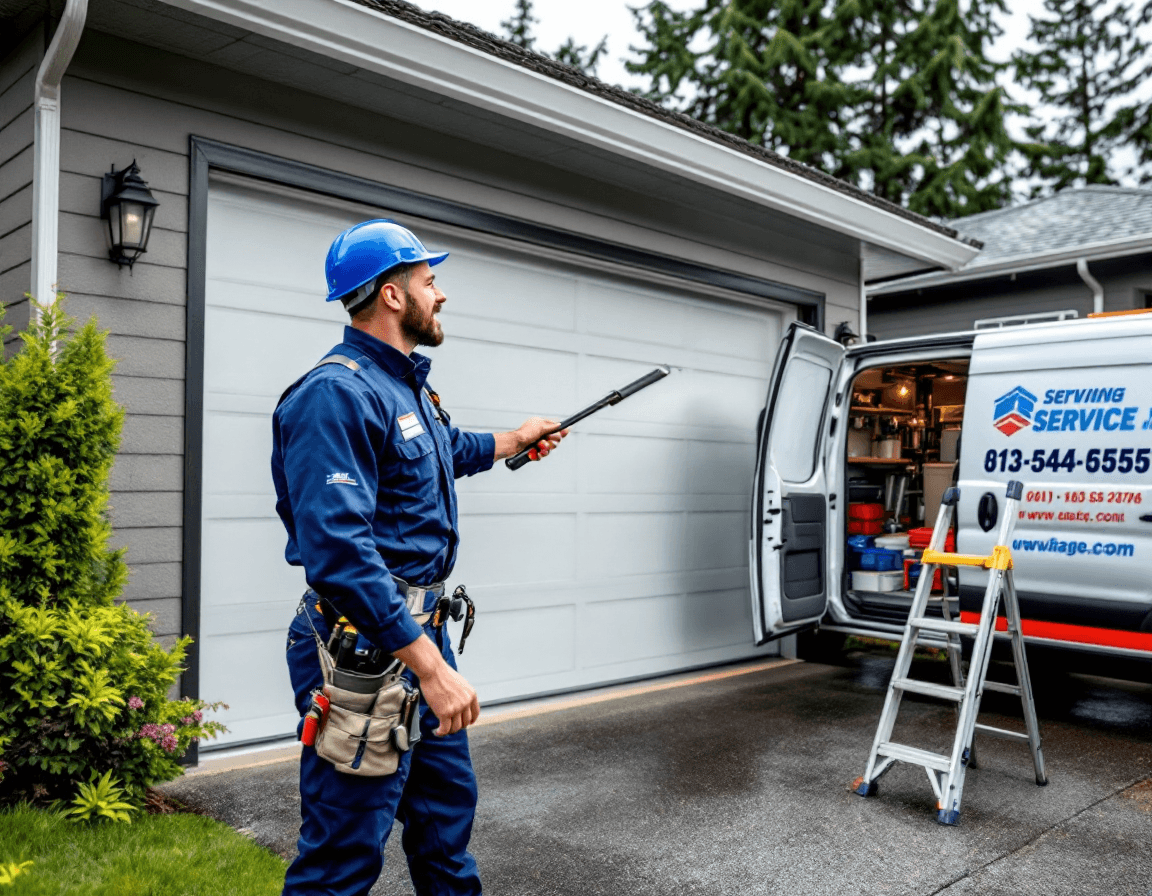
Garage door repair in Brier, WA is often a question of timing. A door that stops halfway up on a wet November morning or refuses to close before the school run is more than an inconvenience, because it leaves your home and your vehicles exposed. Seattle Garage Door Fix sends licensed, bonded, and insured technicians across Brier and the surrounding Snohomish County neighborhoods to diagnose the problem and get the door moving safely again. Our goal is a clear explanation of what failed, a fair repair quote, and a door that runs smoothly afterward.
Brier sits in a part of Snohomish County where the weather works against moving parts all year. Long stretches of drizzle, cool humid nights, and damp mornings can soften lubricant, promote surface rust on tracks, and make wooden or composite panels swell and shift. Many homes in the area have attached garages that have been used for storage, workshops, and overflow parking for decades, so the doors see plenty of daily cycles. When something goes wrong, it usually reflects a combination of age, moisture, and wear rather than one dramatic failure.
This page explains the most common symptoms we see on residential doors in Brier and ZIP 98036, what each one usually means, and what you can safely check before you call. It also covers realistic pricing, why spring and cable work must be left to trained professionals, and simple habits that help your door last longer. If your door is currently stuck, unsafe, or making a loud noise you cannot ignore, call (888) 799-3819 and we will talk through the next step.
Why Brier Garage Doors Feel the Pacific Northwest Climate First
Western Washington winters are mild by national standards, but they are persistently wet, and that moisture is hard on garage door hardware. Metal tracks that sit in damp air for months can develop a thin film of corrosion along the curved sections where the rollers travel. That film increases friction, and the rollers begin to drag rather than glide. Over time, the drag shows up as a door that opens more slowly on one side or stops partway through its travel.
Wood doors and some composite models respond to humidity by expanding and contracting. A panel that absorbs moisture during a long wet season can rub against the door frame or the adjacent section, which creates a squeal or a scraping sound. In the drier weeks of summer, the same panel may shrink back and leave a visible gap at the top or bottom. Homeowners often assume the door is failing, when in reality the materials are simply responding to the local climate.
Older Brier homes also bring their own challenges. Many garages were framed before modern door openers became standard, so the header height, the track alignment, and the wall mounting points may not match what current equipment expects. A technician who has worked on similar houses in the area knows to check whether the tracks have shifted at the wall anchors and whether the opener rail is sagging under its own weight. Those details matter when we decide whether a simple adjustment will hold or whether a component needs replacing.
Reading the Warning Signs Before a Breakdown
Most garage doors give some notice before they fail completely. The earliest signs are usually a change in sound or motion, not a dead opener. A door that used to glide may begin to hesitate, shudder, or lurch at the start of its travel. Paying attention to these small changes can save you from an emergency call and often keeps the repair simpler and less expensive.
Here are the symptoms we hear about most often from homeowners in Brier and nearby neighborhoods:
- The door reverses before it reaches the floor, which often points to a safety sensor issue or an obstruction the system detects.
- Loud grinding, squealing, or banging noises during operation, usually tied to worn rollers, dry hinges, or loose hardware.
- The door moves unevenly, lifts faster on one side, or looks crooked when it is partly open.
- The door stops halfway, jams, or refuses to move after making a grinding sound.
- The opener runs but the door does not budge, which can mean a disconnected trolley or a broken drive component.
If you notice any of these, avoid repeatedly pressing the button. Forcing a stuck door can bend tracks, strain the opener motor, and turn a modest repair into a larger one. Instead, note when the problem started, whether it happens in both directions, and whether the weather has changed recently. Those details help our technicians arrive prepared.
When the Door Jams Halfway or Slides Off Its Track
A door that stops halfway up is one of the most unsettling experiences a homeowner can have. The door may be hanging partially open with a portion of the weight unbalanced, which is both inconvenient and potentially hazardous. In most residential cases, the cause is a track that has been knocked out of alignment, a roller that has popped out of its channel, or a section that has pulled away from the track at its edge. Sometimes a child's bicycle or a shifted storage shelf creates an obstruction that the door catches on.
Off-track doors are especially important to address quickly. When a roller leaves the track, the door can tilt, bind, or drop unevenly, and the panels may bind against the frame. The opener should not be used to force the door back into position, because the stress can damage the spring system, the cables, or the drive. Our technicians secure the door, inspect the track and rollers, realign the hardware, and test the balance before returning the door to regular use.
If your door has come off its track, keep people and pets away from the opening. Do not attempt to climb on the door, lift the panels by hand, or work on the springs yourself. Those tasks carry serious risk of injury, and the correct repair depends on knowing exactly which components are under tension. A quick phone call is safer and usually faster than trying to fix it alone.
When Your Remote or Wall Button Goes Silent
A remote or wall button that does nothing can feel like a complete failure, but the problem is often simpler than it appears. Remote batteries lose charge gradually, and the signal may weaken before the remote stops working entirely. Wall-mounted push buttons can fail from worn contacts, loose wiring, or moisture that gets into the housing during damp weather. Keypads may lose their programming after a power interruption, and receivers sometimes need to be relearned after a storm knocks out electricity.
Start with basic checks. Replace the remote battery and stand close to the opener to see if the signal responds. Confirm that the opener has power by looking for the indicator light on the motor unit. If the wall button works but the remote does not, the issue is likely in the transmitter or receiver rather than the door mechanism. If nothing responds at all, the safety sensors near the floor may be blocked or misaligned, which can prevent the opener from engaging.
Our technicians test each part of the system, including the sensors, the wiring, and the logic board, so we do not replace the wrong component. We also check that the opener's force and travel settings still match the door's weight, since a misadjusted opener can behave unpredictably. If your system is older, we will explain whether a control upgrade makes sense or whether the existing hardware can be repaired reliably.
Doors That Slam Down Too Fast or Crash at the Bottom
A door that drops quickly or slams at the end of its cycle is both alarming and damaging. The door should descend at a controlled pace, and a sudden drop usually means the balance system or the closing force settings are no longer correct. Worn springs can lose tension, the opener's down-force limits may be set too high, or a damaged cable may be allowing the door to fall unevenly. In some cases, the door's bottom seal has deteriorated, so the panel meets the floor with a hard impact instead of gently settling.
Slamming also stresses the rollers, hinges, and bottom bracket, and it can crack older panels over time. If you hear a loud bang every time the door closes, treat it as a warning sign rather than a normal quirk. Reducing the opener's closing speed is not a substitute for diagnosing the cause, and an improperly adjusted opener can fail to reverse when it should.
Here is what we check when a door closes too quickly:
- The opener's force and limit settings, including the down-travel reversal behavior.
- The condition of the springs and whether the balance has shifted.
- The cables, drums, and bottom bracket for wear or uneven tension.
- The bottom weatherstrip and whether the door is making full contact with the floor.
Sagging Panels, Visible Gaps, and Crooked Doors
Sagging sections and visible gaps are a slower kind of problem that often gets ignored until it becomes obvious. A door that looks crooked may have a track that has drifted out of plumb, a bent track section, or a hinge that has loosened. Gaps around the perimeter can let in cold air, water, and pests, which matters during a Washington winter when wind-driven rain pushes into poorly sealed openings. Sagging panels can indicate worn hinges, damaged end caps, or a door that has been carrying more weight than it was designed for.
We inspect the panel alignment, the hinges, the track brackets, and the weatherstripping on every visit. Minor sagging can often be corrected by tightening hardware, replacing a damaged hinge, or adjusting the track. Larger issues, such as a warped panel or a seriously bent section, may call for replacing that section. We will explain what we find and give you options, so you can decide what makes sense for your budget and the age of the door.
Do not try to straighten a bent track or pry a panel back into shape with a bar. Track sections are under tension and can snap, and panel damage can spread quickly once the structure is stressed. Keeping the area clear of clutter and noting when the gap or crookedness first appeared will help us find the cause faster.
What a Typical Repair Visit Looks Like in Brier
When you schedule service with Seattle Garage Door Fix, we start by asking about the symptoms, the age of the door, and any recent changes such as a storm, a move-in, or a new vehicle that may have shifted the load. The technician then performs a visual and functional inspection, testing the door manually when it is safe to do so and running the opener through several cycles. We check the track, rollers, hinges, cables, springs, opener, sensors, and remote system, because a problem in one area often shows up as a symptom in another.
Once the cause is identified, we explain the repair in plain language and present the cost before any work begins. Many residential repairs in the area are completed in a single visit, especially when the needed parts are common and the diagnosis is clear. If a component must be ordered, we will tell you the expected timeline and ensure the door is secured in the meantime. We test the door fully after the repair, confirm the safety reversal works, and review what to watch for in the coming weeks.
Pricing and What Shapes the Final Quote
Most residential garage door repairs in our service area fall between $95 and $450. Where a repair lands within that range depends on the parts involved, the accessibility of the door, the age of the system, and how much diagnostic work is needed. A simple sensor realignment or remote programming job sits at the lower end, while track replacement, panel repair, or opener component work usually costs more. We cannot give an exact figure without seeing the door, but we will always discuss the expected range before starting.
Several factors commonly influence the final number:
- Whether the problem involves a safety-critical component such as sensors, cables, or springs.
- The door's size, weight, and material, since heavier or custom doors require more handling and specialized parts.
- Whether the opener needs repair, reprogramming, or replacement of a control board.
- The condition of the track and whether it can be realigned or must be replaced.
- How quickly the repair is needed and whether it can be scheduled during regular hours.
We believe homeowners should understand what they are paying for. If a repair is not urgent, we will say so, and if a lower-cost fix will hold safely for a while, we will explain the tradeoffs honestly.
Why Spring and Cable Work Belongs With a Licensed Professional
Garage door springs and cables store enormous amounts of mechanical energy. Torsion springs in particular are under high tension even when the door is closed, and mishandling them can cause serious injury. A spring that breaks can release that stored energy suddenly, and cables under load can snap and whip with force. For these reasons, spring and cable work should always be performed by a licensed, trained technician with the right tools and safety procedures.
Homeowners sometimes attempt these repairs to save money, but the risks are real and the results are often poor. Incorrect spring tension can leave the door unbalanced, causing the opener to strain and the door to fail again within weeks. Cables that are replaced without proper drum alignment can slip off, and a door that drops unexpectedly can crush a vehicle or injure someone standing nearby. Our technicians are trained to release tension safely, replace components correctly, and rebalance the door before returning it to service.
If you hear a loud snap, see a gap in a spring coil, or notice a cable hanging loose, keep everyone away from the door and avoid operating it. Call us so the work can be done safely.
Habits That Protect Your Door in a Wet Snohomish County Climate
Routine care does not replace professional service, but it can reduce the wear that leads to emergency calls. Once or twice a year, wipe down the tracks with a clean cloth to remove dirt and debris, and apply a silicone-based or garage-door-specific lubricant to the rollers, hinges, and springs as directed by the manufacturer. Avoid greasy or oil-based products on tracks, because they attract grit and can make the problem worse. Keep the area around the door clear so the sensors and panels have room to operate.
Watch the weatherstripping along the bottom and sides of the door. Cracked or compressed seals let in water and drafts, and they can also cause the door to hit the floor with more force than intended. During heavy rain, check for pooling water near the threshold and make sure the exterior drainage directs runoff away from the garage. Small improvements like these help protect both the door and the opener from moisture damage.
Finally, test your door monthly. Close it, open it, and watch for any hesitation, unusual sound, or change in balance. Test the safety reversal by placing a flat object on the floor in the door's path, which should cause the door to stop and reverse. If anything seems off, schedule service before it turns into a stuck door on a cold morning.
Scheduling Garage Door Repair for Brier and Nearby Neighborhoods
Brier residents often want service that fits around work schedules, school drop-offs, and the realities of a busy household. We aim to make scheduling straightforward, and we will tell you what to expect when you call so you can plan the visit. If your door is stuck closed, avoid parking directly against it or leaving valuables near the opening until a technician can secure it. If it is stuck open, keep the area clear and do not allow children or pets to play in or around the garage.
Our service area includes Brier and surrounding Snohomish County communities, including the neighborhoods near Brier Park and other parts of the 98036 ZIP code. Local familiarity helps us anticipate common issues, from older track installations to the moisture patterns that affect wood and composite doors. We bring the parts and tools most frequently needed for residential repairs, and we will let you know if a special order is required.
Whether your door is making a new noise, refusing to respond to the remote, or sitting crooked on its tracks, a prompt inspection is the best next step. Call (888) 799-3819 to describe what is happening, and our team will help you decide the safest and most practical way forward for your Brier home.