
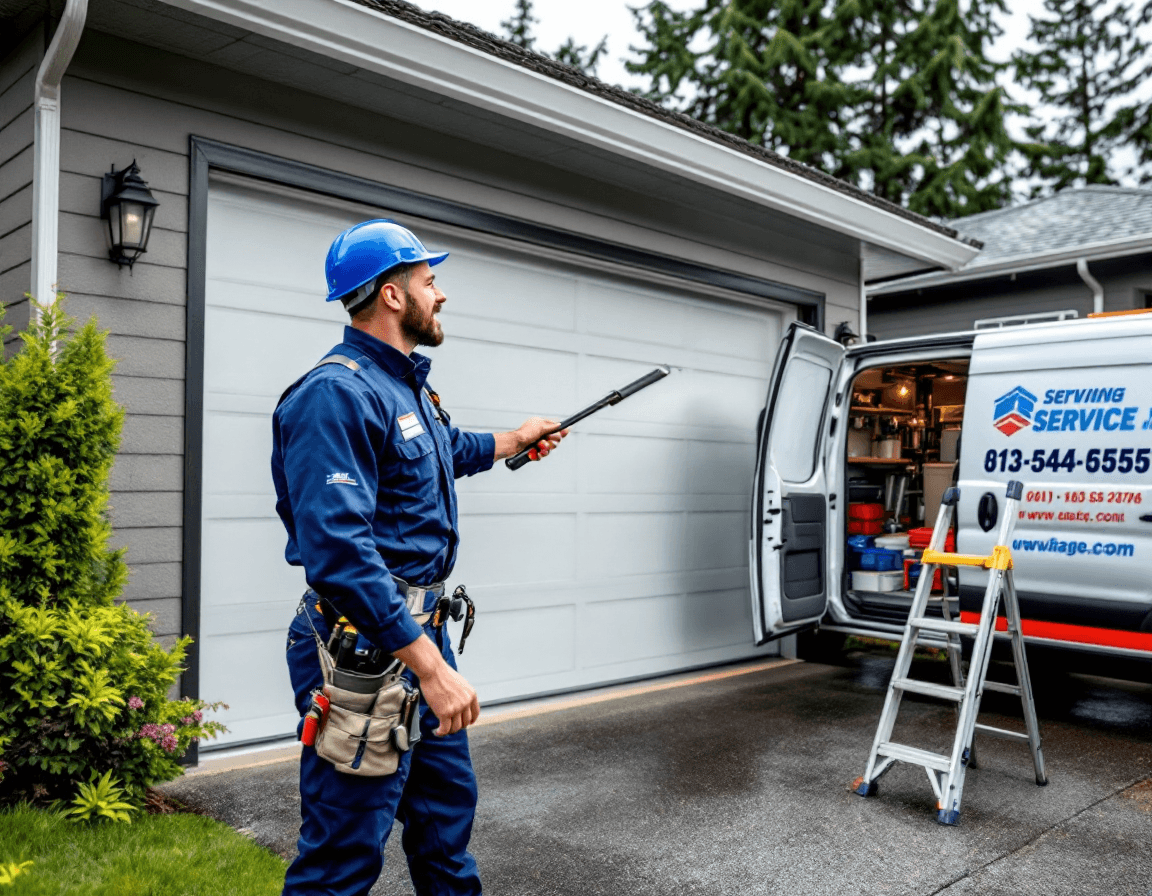
Garage Door Repair in Lynnwood, WA is a need many Snohomish County households face sooner than they expect, especially after a long stretch of wet winter weather. A door that stalls, reverses, or refuses to budge is rarely random, and it usually points to a worn part, a shifted track, or a safety sensor that has lost its line of sight. Our technicians work across Lynnwood, Alderwood, and the surrounding neighborhoods regularly, so we see how local conditions shape what breaks and when. This page walks through the most common problems and what to expect when you call for help.
Lynnwood sits in the mild but damp part of the Pacific Northwest, where the air can hold moisture for weeks at a time. That humidity works into steel hinges, rollers, and the bottom seals of the door, and over time it speeds up surface rust while old lubricant thickens into a sticky residue. Homes near Lynnwood City Center and the newer developments closer to Alderwood include both attached two-car garages and detached structures, and each layout places different demands on the opener and the door panels. Knowing these local patterns makes it easier to notice trouble while it is still small.
Some garage door problems are simple to monitor yourself, while others involve high-tension components that can cause serious injury if handled incorrectly. We want you to understand both categories so you can decide confidently when to pick up the phone. Most residential repairs we handle fall in a range of roughly $95 to $450, depending on the parts and labor involved, and we explain the scope before any work begins. Throughout this guide you will find practical checks you can do safely at home, along with clear signals that the job belongs in the hands of a licensed professional.
Reading the Early Warning Signs Before a Door Fails Outright
Most garage doors do not die without warning. They tend to send a series of small signals over weeks or months, such as a slightly slower close, a faint scrape on one side, or a noise that seems to show up only on cold mornings. Catching these early often means a quick adjustment instead of an emergency visit. Pay attention to changes in how the door feels when you operate it by hand or with the remote, because your daily routine is the best baseline for spotting drift.
In Lynnwood, we often see homeowners dismiss early symptoms as normal wear, only to call after the door stops completely. Watch for these common precursors:
- The door pauses or hesitates for a second before it starts moving.
- One side lifts higher or lower than the other when you open the door.
- The opener runs longer than it used to before the door fully closes.
- A panel shows a gap at the top or bottom that was not there last season.
- The door makes a new rattling sound when it reaches the top of its travel.
If you notice more than one of these at the same time, schedule an inspection instead of waiting for a complete failure. Combined symptoms often point to a system issue rather than a single failed part, and that distinction affects both the repair plan and the final cost.
How Lynnwood's Wet Seasons Quietly Wear Down Garage Doors
Western Washington's long, damp months create conditions that are harder on garage doors than many people realize. Moisture that condenses on metal overnight, followed by cool, humid days, encourages corrosion on hinge plates, track brackets, and the bolts that hold panels together. Lubricants that worked well in summer can wash out or collect grit during repeated rain, which leaves rollers and bearings running dry. Over several seasons, this slow process can turn a quiet door into a noisy, labored one.
Road spray and tree debris add another layer of wear in many Lynnwood neighborhoods. Tires throw fine grit into the air near busy corridors, and leaves and pine needles collect along the bottom weatherstrip and in the track channel. When those materials mix with wet grease, they form a paste that grinds against the rollers every time the door moves. Keeping the tracks clear and using a silicone-based or garage-door-specific lubricant, rather than a heavy oil, can help prevent this buildup between professional visits.
Seasonal temperature swings also matter. Metal contracts in cold snaps and expands during warmer afternoons, which can shift a door's alignment just enough to cause uneven travel. A door that behaves perfectly in August may bind in January, and homeowners often assume the opener is failing when the real issue is a track that has moved by a fraction of an inch. A technician who understands local weather patterns can usually tell the difference in a single visit.
Doors That Reverse Before Reaching the Floor
A door that starts closing and then springs back up is almost always doing its job, which is protecting people and objects in its path. Modern openers are equipped with photo-eye sensors mounted near the bottom of the tracks, and if the beam between them is interrupted or misaligned, the opener assumes something is in the way and reverses. Many Lynnwood homeowners discover this problem after a pressure washing, a bumped sensor from a stored bicycle, or a cobweb that builds up over the winter.
Start with a simple check. Look at the two small sensor units on either side of the door, roughly six inches above the floor. Both should have a steady light, and the lenses should be clean and pointed directly at each other. If one light is blinking or dark, loosen the mounting bracket, gently realign the unit, and tighten it again without forcing the wing nut. Wiring that has been chewed by pests or pinched by a door panel can also cause intermittent reversals, and those cases should be handled by a technician.
Some reversals come from the door itself rather than the sensors. If the bottom seal has become stiff, or if one side of the door sags and drags on the floor, the opener may register the extra resistance as an obstruction. A door that reverses only when it is almost closed, or one that reverses even with nothing in the path, suggests a force or limit setting that has drifted out of range. Adjusting those settings incorrectly can defeat an important safety feature, so we recommend having a licensed technician verify both the sensors and the force limits during any repair.
Grinding, Squealing, and Banging: Finding the Source of the Noise
Every garage door makes some sound, but a sudden change in pitch or rhythm is worth investigating. Noise often tells you where the problem is if you listen closely. A high-pitched squeal usually comes from dry rollers or hinges, while a low grind can indicate worn bearings or debris caught in the track. A sharp bang, especially at the top or bottom of travel, may mean a loose bracket, a damaged roller, or a panel that is no longer seating properly.
Because noise patterns vary, it helps to know what your door is trying to tell you. Use this quick guide to narrow things down before you call:
- Squealing that appears during opening or closing often points to dry or corroded rollers and hinges.
- Grinding that continues through the whole cycle may indicate worn bearings or gritty track channels.
- A single loud bang at the end of travel often means a loose end bracket or a misaligned roller stem.
- A rattling sound at the top of the door can come from loose hardware in the top bracket or a worn torsion bearing plate.
- Vibration that you can feel through the floor sometimes signals that the opener's drive mechanism needs professional inspection.
Clean the tracks with a dry rag and remove visible debris before applying lubricant to the rollers and hinge pivots. Avoid spraying lubricant onto the track surface itself, because it attracts dirt and can make the rollers slip. If the noise persists after basic cleaning, stop operating the door and schedule a repair. Continued grinding can damage rollers, shafts, and the opener's gear set, and a small fix can quickly become a larger bill.
When the Door Runs Crooked or Slides Off Its Tracks
A door that looks lopsided is more than an eyesore. When one side rides higher than the other, the uneven load can stress the cables, drums, and rollers, and it can cause the door to bind or jump out of the track entirely. Crooked movement often begins with a single worn roller, a bent track section, or a cable that has started to fray or slip on its drum. In homes with older doors, a bump from a vehicle or a child's bicycle can also knock a track out of alignment.
Lynnwood's older housing stock includes many single-car and two-car doors installed over a decade ago, and the tracks on those doors may have loosened from years of vibration. Look along the vertical and horizontal tracks for gaps, dents, or spots where the track separates from its mounting brackets. Do not try to force a door back onto its track by pulling or pushing hard on one panel, because that can cause the door to drop suddenly. Keep people and vehicles clear of the area and call for service.
Cables and drums deserve special caution. If a cable is frayed, if it has come loose from a drum, or if you see the door hanging unevenly with visible slack, the door is no longer under safe control. These are professional-only repairs. A licensed technician will secure the door, inspect the cable system, and replace the components that have failed. Attempting this work without training and the right tools is one of the most common ways homeowners get hurt.
Remote Dead, Wall Button Silent: Power, Batteries, and Opener Logic
When the remote and the wall button both fail, the cause is often simpler than it seems. Start with the basics: check the remote batteries, confirm the opener has power, and make sure the outlet or breaker serving the opener has not tripped. Many Lynnwood garages have openers plugged into shared circuits that also run freezers, dehumidifiers, or power tools, and a surge or overload can knock the opener offline without warning. If the opener's light flashes or the motor hums without moving the door, the problem may be a stuck carriage, a disconnected drive, or a faulty limit switch.
Next, consider the safety circuit. Many openers will not respond to commands if the photo-eye sensors are misaligned or wired incorrectly, which is why a sensor problem can look like a complete system failure. If you have a wall button with an indicator light, check whether it glows when pressed. A dark wall button with no response suggests a wiring fault or a failed control board, while a lit button and an unresponsive door points toward the opener itself.
Remote programming problems are also common after a power outage or a change in ownership of the home. If your remote used to work and now does not, try reprogramming it according to the opener's manual, and make sure no other devices nearby are interfering with the signal. For newer systems with smartphone connectivity, check that the home network is working and the opener's app is current. If these steps do not restore function, the control board, receiver, or motor may need professional diagnosis.
Stuck Halfway Up: What a Jammed Door Is Telling You
A door that stops partway through its travel and refuses to move is one of the more alarming symptoms, and it deserves prompt attention. The most frequent causes include a track obstruction, a broken spring or cable, a damaged roller that has jumped the track, or a safety reversal triggered by an object in the path. In many cases, the opener will try to force the door and may emit a grinding or straining sound before shutting itself off. Continuing to operate a jammed door can overload the motor and cause further damage.
Begin by checking for obvious obstructions. Look under the door and along both tracks for tools, toys, or debris, and make sure no one is standing in the path. If the door is halfway up and you can see a gap at the top of the track or a roller sitting outside the channel, stop and do not attempt to pull the door down or lift it manually. A door that is out of balance or missing tension can drop without warning, and the safest move is to keep everyone clear while you call for help.
Springs deserve special mention because they store enormous force. If the door is stuck and you notice a broken spring, a gap in the coil, or a loud snap at the time of the jam, the spring system needs professional replacement. Torsion and extension springs are under high tension even when the door appears still, and attempting to remove or adjust them without the proper winding bars and training can cause severe injury. Please leave spring work to a licensed technician.
Slamming Shut Too Fast: Spring Balance and Why Springs Belong to Professionals
A door that drops quickly or slams at the bottom is not only loud but also hard on the opener, the panels, and the people nearby. This behavior usually indicates that the spring system is no longer balancing the door's weight correctly. When springs weaken with age and cycles, the opener has to work harder to lift the door, and the door may seem to fall the moment the opener releases its hold. The problem can also come from a damaged cable, a loose drum, or a bottom bracket that has lost its connection.
Spring balance is one of the trickiest parts of a garage door system, and many manufacturers recommend that it be checked and adjusted only by trained professionals. A correctly balanced door should stay in place when you lift it partway by hand and then let go, provided the opener is disconnected. If the door drops, rises rapidly, or feels heavier on one side, the springs may be fatigued. Testing this way can be useful for information, but it should be done carefully and only with the opener disengaged and the door fully closed.
Replacement springs must match the door's weight, height, and cycle rating, and installing the wrong ones can make the problem worse. Lynnwood homeowners sometimes try to save money by replacing only one spring on a two-spring system, but mismatched springs create uneven tension and accelerate wear on the other components. A licensed technician will measure the door, select the right springs, and rebalance the entire system so the door moves smoothly and safely.
Gaps, Sagging Panels, and Weatherstripping in Damp Homes
Visible gaps around a garage door are more than a cosmetic concern. They let in drafts, moisture, pests, and cold air, and they can reduce the energy efficiency of an attached garage that shares a wall with living space. In Lynnwood's damp climate, gaps at the bottom of the door can also let water pool on the floor, which encourages mold and speeds up corrosion on nearby metal. Sagging panels, in which the center of the door bows or the sections separate, often accompany these gaps and signal a deeper structural or hardware issue.
Start with the bottom weatherstrip, which is the most exposed part of the door. If it is cracked, flattened, or pulling away from the bottom panel, it may need replacement. Check the side and top seals as well, since they help block wind-driven rain during storms. A simple visual inspection after a wet week will show where light is getting through, and a flashlight held on the inside of the closed door can reveal problem areas quickly.
Sagging is more serious. When a door panel bows, the hinges, rollers, or track may be loose, or one of the springs may be losing tension. Continued sagging can cause panels to crack or separate and can place uneven strain on the opener. Panel replacement, hinge repair, and track realignment are all within the scope of professional service, and in many cases a small adjustment prevents a more expensive repair later.
What a Repair Visit Looks Like Across Lynnwood and Nearby ZIP Codes
Homeowners in Lynnwood and the surrounding areas, including ZIP codes 98036, 98037, and 98087, often want to know what happens after they call. Our process begins with a conversation about the symptoms you have noticed, when they started, and whether anything changed before the problem appeared. That information helps the technician prepare the right parts and plan the visit efficiently. For many common issues, a single appointment is enough to diagnose the problem and complete the repair.
During the visit, the technician will inspect the door, tracks, rollers, hinges, springs, cables, sensors, and opener, and will test the safety features before making any changes. You will receive an explanation of what was found, which repairs are recommended, and what each option costs. Most residential repairs we perform fall in a range of about $95 to $450, and the final price depends on the parts required and the complexity of the work. We will confirm the scope with you before proceeding, so there are no surprises on the invoice.
Our technicians are licensed, bonded, and insured, which matters when work involves springs, cables, and the opener's electrical system. If your door needs spring replacement or cable repair, we will recommend and perform that work safely, and we will explain why it should not be attempted as a do-it-yourself project. Keeping your household protected is always the priority, and a properly completed repair is the best way to ensure your door operates smoothly for seasons to come.
Call Seattle Garage Door Fix at (888) 799-3819 if your Lynnwood garage door won't open or close, reverses before reaching the floor, grinds or bangs, runs crooked, jams halfway up, or slams shut too fast. Our team serves Lynnwood, Alderwood, Lynnwood City Center, and the surrounding neighborhoods, and we are ready to diagnose the problem and get your door moving safely again.