
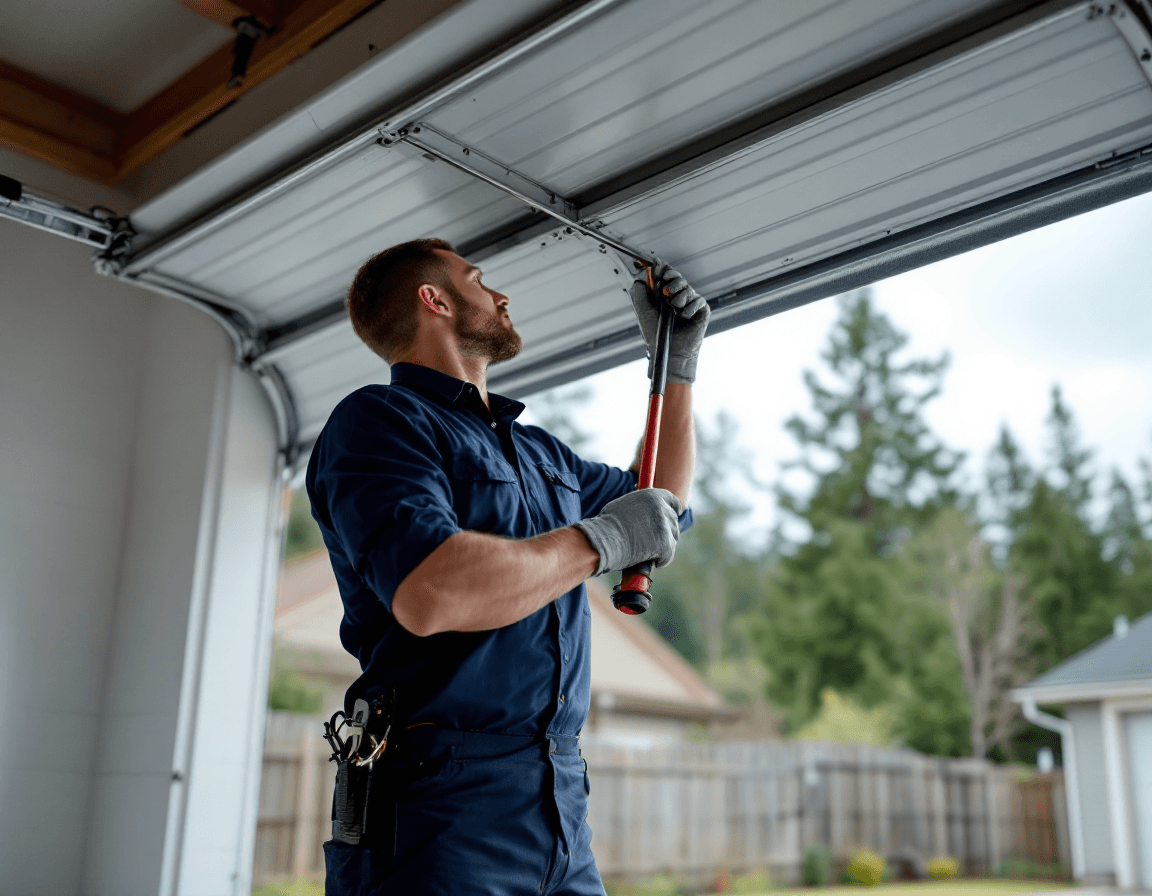
Garage Door Spring Replacement in Lynnwood, WA is often the fix that gets a stuck or noisy door working again, and it is also the repair most likely to go wrong when attempted without training. Homes across Lynnwood, from the older ranch-style houses near the Scriber Creek area to newer builds closer to the Alderwood corridor, rely on garage doors that carry significant spring tension every time they open. When that tension fails, the door can become unsafe to operate in a matter of seconds. This page explains what the failure looks like, how springs are chosen, what replacement involves, and why a licensed technician should handle the work.
Western Washington's weather adds a layer of difficulty that homeowners in drier regions may not face. Lynnwood sits in a marine climate where rain can fall for weeks at a time and humidity lingers well into summer mornings. Metal components in that environment are exposed to moisture that slowly promotes rust and fatigue, especially on steel springs that already work under constant load. The result is a garage door that may function normally for years and then suddenly lose its balance when a worn spring finally gives way. Understanding that pattern helps you act before a minor noise turns into a damaged door.
Our goal here is practical. We want you to recognize the difference between a door that needs adjustment and one that needs a new spring, know which spring type your door uses, and understand what a professional replacement should include. Whether you live near the Lynnwood City Center, closer to the Alderwood retail district, or in one of the surrounding neighborhoods within the 98036, 98037, and 98087 ZIP codes, the same principles apply. The sections below cover each stage of the process in plain language.
Why Lynnwood Garage Doors Carry More Strain Than Expected
A garage door is one of the heaviest moving parts in a typical home, and the springs are what make it manageable. A standard residential door can weigh well over a hundred pounds, and without springs, lifting it by hand would be nearly impossible for most people. The springs store energy when the door closes and release it as the door rises, which means each cycle asks a great deal of the metal. Over thousands of openings, that repeated loading gradually weakens the steel.
In Lynnwood, that wear is compounded by the way families actually use their garages. Many homes here serve as the primary entry point for daily errands, school runs, and commutes toward I-5 or State Route 99, so the door may open several times a day. Garages also double as storage areas, which can add weight in the form of bikes, tools, recycling bins, and seasonal gear. A door that cycles often and carries extra load will reach the end of its spring life sooner than one that is opened only occasionally.
Temperature swings across the year add another factor. Cool, damp winters cause the metal to contract and expand in small increments, while occasional warm spells can bring the door to a noticeably different tension level. None of this is dramatic on its own, but over many seasons it contributes to metal fatigue. That is why a spring that looked fine during a routine glance may still be close to failure.
Reading the Warning Signs Before the Spring Breaks
Most spring failures announce themselves before the actual break, though the warning can be easy to dismiss. Paying attention to small changes in how the door moves gives you the best chance to schedule a repair on your terms instead of during an emergency. Many homeowners in Lynnwood first notice that the door seems slower or heavier, or that the opener sounds more strained than it used to. Those are early indicators that the springs are losing their stored tension.
Some of the more common symptoms that warrant a professional inspection include:
- A loud bang from the garage, often described as a gunshot or a heavy thud, which usually signals a spring snapping
- A door that refuses to lift or feels extremely heavy when pulled manually
- A visible gap or separation in the torsion spring coil when you look at the spring above the door
- A door that opens a few inches and then stops, sometimes accompanied by the opener running longer than normal
- An opener that strains or hums while the door barely moves
- Cables that have come loose or are sitting slack on the drum after a spring break
- A door that closes too quickly, drops unevenly, or sits crooked in the track
Any one of these signs deserves attention, and several together almost always point to a spring problem. Do not try to force the door open or keep running the opener while a spring is damaged, because doing so can strain the opener motor, bend tracks, or pull cables out of position. If you notice a broken spring, keep vehicles and people away from the door and stop using the opener until a technician has evaluated it.
Torsion Versus Extension Springs: Knowing What Your Door Uses
Before any replacement can be quoted accurately, the technician must identify which spring system the door uses. The two main types are torsion springs and extension springs, and they behave very differently when they fail. Torsion springs are mounted horizontally on a steel shaft above the door opening, and they wind and unwind to lift the door. Extension springs run along the horizontal tracks on each side of the door and stretch as the door moves.
Torsion systems are common on newer and higher-end residential doors in the Snohomish County area, and they tend to offer smoother operation and better long-term balance when properly installed. Extension systems are often found on older doors or budget installations, and they may be safer in one specific sense because the spring sits within a safety cable that can restrain it if it breaks. That said, both types can cause injury if handled incorrectly, and neither should be serviced by an untrained owner. A technician will confirm your system type before recommending replacement parts.
Identifying the system also affects the replacement cost and timeline. Torsion spring work usually requires precise winding, specialized bars, and careful measurement of the door's weight and height. Extension spring work may be simpler in some cases but still requires correct tensioning and reliable cable routing. The price range we typically see for most spring replacements is $180 to $450, though the final figure depends on door size, spring type, and the parts needed.
What a Broken Spring Does to the Rest of the Door
A spring failure rarely stays isolated. When one torsion spring breaks, the remaining spring or springs may suddenly carry the full load, which can cause uneven movement and additional stress on the drum, cables, and bearings. In a two-spring setup, a single break can leave the door tilted or stuck partway open. That imbalance can also twist the door panels or bend the track, creating damage that goes beyond the original part.
Cables are particularly vulnerable after a break. Lift cables are wound onto drums at each end of the torsion shaft, and when the spring releases its tension, the cable can slip off the drum or become tangled. A slack cable may look like a minor problem, but it can jump the drum groove and make the door unsafe to operate even after the new spring is installed. For this reason, a technician should inspect the cables, drums, and end bearings at the same visit.
The opener is also affected. Once the door loses its balance, the opener must work harder to lift or lower it, which can overheat the motor or wear the drive gear. Some openers include safety reversal features that will stop or reverse the door when it senses resistance, and a damaged spring can trigger those features repeatedly. Addressing the spring promptly protects the rest of the system and often prevents a second, more expensive repair.
High-Cycle Springs and What the Rating Really Means
Standard residential springs are commonly rated for a specific number of cycles, and many homeowners never check that rating. A cycle is one complete open and close movement of the door. Springs installed as standard replacements often carry a rating in the range of roughly 10,000 cycles, which may last many years for a lightly used door. Households that open the garage several times daily, however, can reach that rating sooner than expected.
High-cycle springs are designed for heavier use and are typically rated for significantly more cycles. They are a good option for families with busy schedules, homes with home businesses operating out of the garage, or properties where the door serves as the main entrance. These springs use the same general installation approach but are manufactured to tighter specifications and often carry a longer warranty from the manufacturer. Your technician should discuss whether high-cycle springs make sense for your particular usage pattern.
It is worth asking for the cycle rating and the warranty terms before approving any replacement. Reputable parts come with clear documentation, and a trustworthy technician will explain the difference without pressure. A higher cycle rating is not automatically necessary for every household, but for doors that see heavy daily traffic, the upgrade can reduce how often you need to schedule another spring service.
Door Balancing: The Step That Makes the Repair Last
Replacing a broken spring is only part of a proper repair. A door that is not balanced will strain the opener, wear the rollers, and may fail to stay open at the halfway point. Balancing means adjusting the spring tension so the door remains stationary when released at roughly half open, and moves smoothly up and down with minimal effort from the opener. A correctly balanced door should feel controlled rather than heavy or abrupt.
Balancing requires careful measurement and attention to the specific door. Factors such as panel material, insulation, hardware, and the presence of windows all affect weight. A solid wood door in the Alderwood area will weigh differently from a lightweight insulated steel door, so tension cannot be guessed. The technician will test the door under load, make small adjustments, and confirm that the springs and cables are seated correctly on the drums before finishing the job.
Homeowners sometimes ask whether they can balance the door themselves by tightening the spring. This is one of the most dangerous tasks in residential garage door service because the spring stores enough energy to cause serious injury if released improperly. Balancing belongs with a licensed professional who has the proper bars, safety equipment, and experience. A properly balanced door also reduces the chance of a second spring failure in the near future.
Safety Rules for Anyone Standing Near a Spring
Garage door springs are under extreme tension even when they look inactive. A torsion spring can release stored energy with enough force to cause fractures, lacerations, or worse, and extension springs can recoil violently if a safety cable fails. These risks are why spring work must be left to trained technicians who understand the forces involved. The guidance below is meant to keep you and your family safe while you wait for a professional visit.
Consider the following safety practices whenever a spring problem is suspected:
- Keep children, pets, and visitors away from the garage door and its track until the repair is complete
- Do not attempt to wind, unwind, or adjust a torsion spring with household tools
- Do not remove or cut any spring, cable, or safety cable on your own
- Disconnect the opener power only if you can do so safely and never while someone is inside the door's path
- Use the manual release only when you are certain the door is not under unusual strain, and never pull the cord while standing beneath the door
Please keep in mind that even a seemingly small gap in a torsion coil can signal a spring under severe stress. If you see one, treat the door as out of service until a technician arrives. Safety in this context is not about being overly cautious; it is about recognizing that the energy stored in a spring cannot be judged by appearance alone.
Protecting Springs Through Wet Puget Sound Seasons
While spring replacement is often reactive, you can reduce the chance of premature failure with simple seasonal habits suited to the Lynnwood climate. The region's rainy months bring moisture into the garage and onto metal hardware, so periodic attention to rust and lubrication makes a real difference. Keeping the door well maintained also helps the entire system work with less friction and less strain on the springs.
A few practical habits can help. Wipe down the tracks and rollers after heavy rain, especially if water enters the garage through the bottom seal. Apply a silicone-based or manufacturer-approved lubricant to hinges, rollers, and the track as recommended, avoiding heavy grease that attracts dirt. Look for signs of surface rust on the spring coils from a safe distance, and schedule a professional inspection if you notice flaking or discoloration.
Avoid overloading the door with heavy objects hung from the ceiling or stacked against the track, since added weight changes the balance the springs were set to provide. Keep the garage door opener's safety sensors clean and aligned, because a balance issue may show up first as sensor trouble. Routine professional inspections, especially before winter, give a technician the chance to catch wear early and recommend parts while they are still in good condition.
Scheduling a Spring Repair Across Lynnwood and Nearby Neighborhoods
When a spring breaks, you want a prompt, clear response and a technician who explains the work before starting. Our service area covers Lynnwood and more than sixty cities across the greater Seattle and Western Washington region, which means we regularly work in neighborhoods throughout the 98036, 98037, and 98087 ZIP codes. Whether your home is near the Alderwood shopping area, close to Lynnwood City Center, or farther out in Snohomish County, the process starts with a phone call so we can understand the symptoms and schedule an appropriate visit.
During a spring replacement visit, the technician should inspect the entire door system before quoting the final repair. That includes checking the spring type, cables, drums, bearings, track alignment, and opener performance. You should receive a clear explanation of what failed, what needs replacement, and what the expected cost range is. Our typical spring replacement pricing falls between $180 and $450, and the final number depends on your door and parts.
If you are dealing with a broken spring, a loud bang, or a door that will not lift, do not wait for the problem to worsen. Call Seattle Garage Door Fix at (888) 799-3819 to schedule a licensed, bonded, and insured technician for your Lynnwood home. We will walk you through the symptoms, keep the area safe while we arrive, and handle the spring replacement and balancing the right way.