
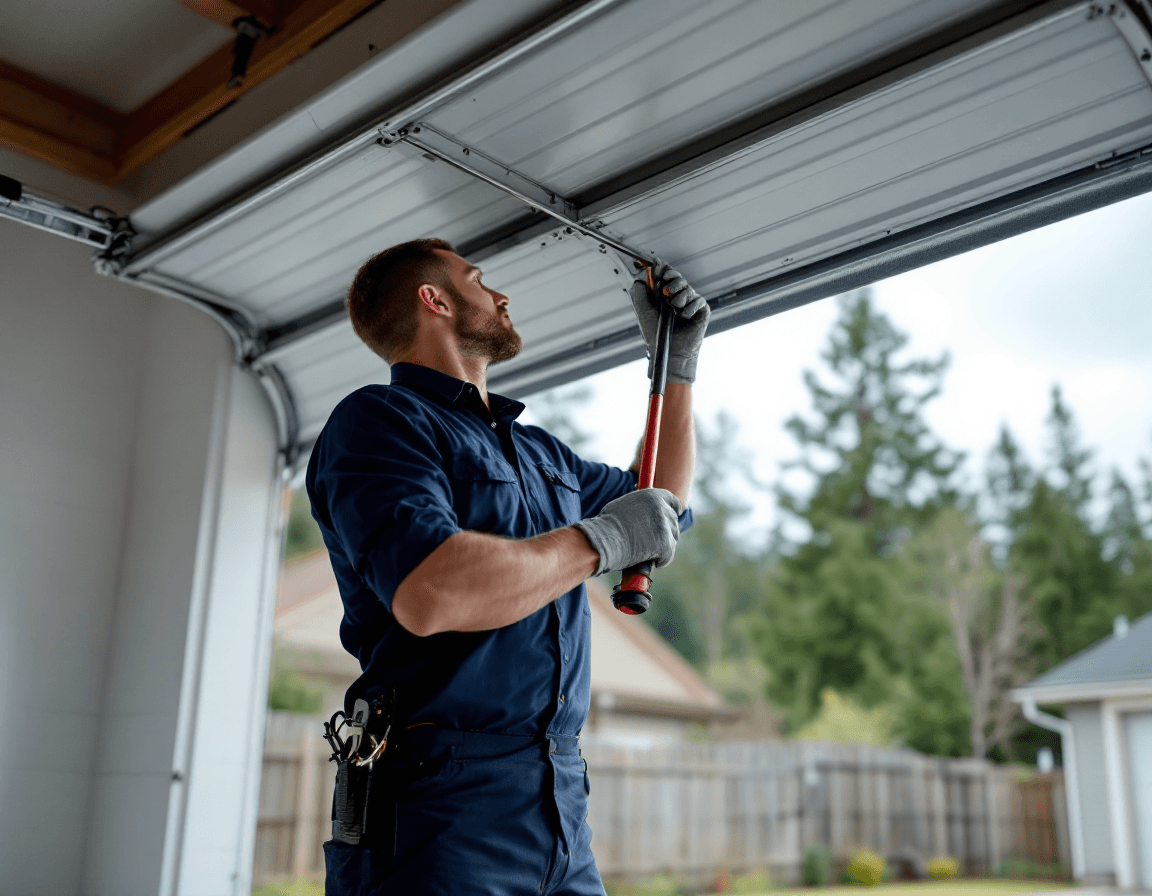
Garage Door Spring Replacement in Bothell, WA is the kind of repair most homeowners don't think about until a sharp crack echoes through the house at 6:30 on a dark morning. Bothell sits where the Sammamish River valley meets the rolling hills north of Lake Washington, and that mix of low-lying neighborhoods and wooded slopes keeps our garage doors working hard in every season. Our technicians serve homes across the 98011, 98012, and 98021 ZIP codes, from the older streets near Bothell Landing to newer subdivisions and townhome clusters closer to North Creek. When a spring fails, the door usually stops working right away, and the sooner it is handled by a trained crew, the less likely it is that a small problem turns into a damaged opener or a bent track.
This page explains what a broken spring looks and sounds like, why the Pacific Northwest climate wears springs down faster than many homeowners expect, and what a professional replacement involves. We also cover the difference between torsion and extension springs, what high-cycle options add to the bill, and why door balancing is just as important as the new hardware itself. Most straightforward spring replacements in our service area fall between $180 and $450, depending on the spring type, door size, and how much related hardware needs attention. Read through the sections below to get a clear picture before you call, or simply reach out and we will walk you through what we find.
Before anything else, a note on safety. Garage door springs store a large amount of tension, even when they look like plain coils of steel, and a torsion spring under load can cause serious injury if it is released incorrectly. Winding bars, cable drums, and spring fittings should only be handled by a licensed, bonded, and insured professional. If you suspect a spring has broken, keep everyone out of the garage, do not attempt to lift the door by hand, and do not try to "tighten" or cut anything yourself. The rest of this page is written to help you understand the problem, not to encourage a do-it-yourself repair.
The Bang in the Garage: What a Snapped Spring Sounds Like
Most homeowners describe a broken spring as a loud bang, similar to a gunshot or a heavy piece of metal dropped on a concrete floor. The sound is sharp and sudden, and it often comes from the garage even when the door itself appears undamaged. In Bothell's quieter residential streets, that noise can be startling enough to wake people several rooms away. Some people hear a ringing or twanging afterward as the remaining coil settles.
Once the noise stops, the door may look normal from the outside, but a quick look inside the garage often tells a different story. You may see the torsion spring above the door with a visible gap in the coil, a spring that has pulled loose from its end bracket, or cables that now hang slack instead of holding tension. Some doors drop unevenly, with one side lower than the other, which is a sign the spring on one side has failed while the other is still intact. Do not assume the door is safe to use just because it closed after the bang.
A snapped spring rarely damages anything else on its own, but the sudden release of tension can stress cables, drums, and bearings. Those parts are usually inexpensive to address during the same visit, so it makes sense to have the whole assembly inspected rather than replacing only the broken coil. Keeping the door closed and leaving it alone until a technician arrives is the safest approach.
Why Our Wet Winters Are Hard on Torsion Springs
The Pacific Northwest is famous for its gray, damp winters, and garage door springs notice the difference. Moisture from rain, morning fog, and the occasional soggy stretch of snow can settle on the steel coils and begin the slow work of surface rust. Rust does not always cause immediate failure, but it can pit the metal and create weak points where the coil eventually fatigues and breaks. Garages with poor ventilation, or ones that stay damp after storms, tend to show this wear sooner.
Temperature swings matter too. On cold mornings the steel contracts slightly, and when the weather warms up it expands again, which adds repeated stress to every coil with each cycle of the door. Many Bothell homes have garages that stay unheated, so springs go through the full range of local temperatures without any buffer. Over years of daily use, that constant flexing wears the metal in ways that are hard to see from the floor.
Our technicians often find that the spring failing today has been weakening for a long time. A coil that looks fine from a distance may show fine orange rust near the winding cone or a slight flattening where it has been repeatedly stressed. Seasonal inspections can catch these signs early, giving you a chance to schedule a replacement on your timeline instead of waiting for the bang.
Torsion or Extension: Knowing Which Spring Your Door Carries
Residential garage doors in our service area typically use one of two spring systems. Torsion springs are mounted on a steel shaft above the door opening, and they wind and unwind to lift the door through a set of cables wrapped around drums at each end of the shaft. Extension springs run alongside the horizontal tracks, stretching and recoiling as the door moves up and down. Each system has its own failure pattern, its own safety considerations, and its own replacement procedure.
Torsion systems are common on newer homes and on many doors installed over the past couple of decades because they are generally quieter and more balanced when properly maintained. A broken torsion spring usually shows up as a visible gap in the coil or a door that refuses to lift at all. Extension springs are more often found on older garages, and a failed extension spring tends to show up as a door that drops suddenly or sags unevenly when opened. Both types can be replaced, but the correct approach depends on the spring style, the wire size, and the door's weight.
Identifying the system is not always obvious to a homeowner, and it is one reason we recommend letting a licensed technician confirm the setup before ordering parts. Mixing up spring sizes or types can lead to a door that lifts unevenly or places excess load on the opener. Getting the diagnosis right the first time saves time and protects the rest of the system.
Warning Signs That Show Up Before the Door Quits
Springs rarely fail without some warning, even if that warning is subtle. Homeowners often notice small changes in how the door behaves weeks or months before a break. Paying attention to these early signs can help you plan a repair during business hours instead of dealing with a stuck door on a rainy night. Common early indicators include:
- The door feels noticeably heavier when lifted by hand, even though it still operates
- A squeal, groan, or popping sound during the first few inches of travel
- Visible rust, flaking, or orange residue on the coils or the shaft
- The door rises unevenly, with one side lagging behind the other
- Cables that look frayed, kinked, or loose on the drum
Any one of these signs can have more than one cause, so a visual inspection is the best way to tell whether the spring is the culprit. A technician can check winding cone condition, coil spacing, and tension settings in a few minutes. If the spring is nearing the end of its useful life, the service call can be planned rather than urgent.
It is also worth watching how the door behaves over time. If you find yourself gripping the door with both hands to lower it, or if it seems to slam down faster than usual, the spring may be losing its ability to counterbalance the door's weight. These changes are gradual, which is why they are easy to ignore until the day the spring finally gives way.
When the Door Opens a Few Inches and Stops
One of the most common calls we hear involves a door that rises a few inches, then stops, sometimes with a jolt that rattles the whole frame. This pattern often means the spring still has some tension but not enough to lift the full weight of the door. The opener is doing its best to push the door along, which places strain on its motor, gears, and mounting hardware. Continuing to run the opener in this state can shorten its life and create additional repair costs.
Sometimes the cause is a spring that has partially failed, with one coil broken but the rest still under load. In other cases, a cable has slipped off the drum or a drum has loosened on the shaft, which lets the door hang unevenly and binds against the track. Both problems can produce the same symptom, so the only reliable way to sort them out is to inspect the entire assembly. Trying to force the door open by pulling on it can make the damage worse.
If your door stops partway, unplug the opener if you can do so safely, close any manual lock, and keep vehicles and people clear of the door. Do not stand under the door or reach into the track. Calling a technician to check the spring and cable system is the right next step, and it is far less expensive than replacing an opener that has been overworked.
Cables, Drums, and the Hidden Damage After a Break
When a torsion spring breaks, the cables attached to the drums may go slack, jump off their grooves, or fray where they wrap around the drum. The drums themselves can crack or shift on the shaft, and the end bearings may be worn from the sudden release of tension. These parts are easy to overlook when homeowners focus only on the coil, but they are essential to safe operation. A replacement spring placed on top of damaged cables or drums will not give you a reliable door.
Cable damage is especially important to catch. Frayed strands or kinked sections can snap under load, causing the door to drop suddenly or the cable to whip across the garage. A professional inspection includes checking each cable's length, seating, and condition, and replacing any that show wear. Drums and shaft components are checked for alignment and secured to the correct position so the door lifts evenly on both sides.
We recommend having the cables and drums evaluated during every spring replacement. The added labor is usually modest compared with the cost of a second service call, and it gives you confidence that the whole system is ready for daily use. Ask your technician to walk you through what they found so you know what was replaced and why.
Why Opener Strain Is Often a Spring Problem in Disguise
Many homeowners assume a struggling door means a failing opener, so they start shopping for a new motor before anyone looks at the springs. In practice, the opener is often working hard because the spring is no longer providing its share of the lift. The opener is designed to guide and assist the door, not to carry its full weight. When the springs are weak or broken, the motor takes on the entire load and begins to hum, strain, or stall.
A humming opener that barely moves the door is a classic sign of this problem. The motor is drawing power and trying to lift, but the door is too heavy to move freely, so it stays nearly stationary. Continuing to run the opener in this condition can burn out gears, wear the trolley, or damage the logic board. Many opener repairs that appear to be motor-related are actually the result of an underlying spring issue.
Before replacing an opener, have the spring and balance checked. A technician can measure the door's weight, confirm the correct spring tension, and test how the opener handles the load once the springs are right. In many cases the opener will work normally after the spring replacement, saving you the cost of a new unit.
High-Cycle Springs and What the Extra Cost Buys You
When a spring is replaced, you typically have a choice between a standard build and a high-cycle option. Standard springs are commonly rated around 10,000 cycles, where one cycle means one full opening and closing of the door. High-cycle springs are manufactured from different wire and heat-treatment processes and are designed to last considerably longer under the same usage. The price difference is real, but the value depends on how often your household uses the garage door.
A busy household that opens the door several times a day, or a home with a teenager who drives in and out frequently, may get more value from a high-cycle spring. Homes where the door is used only occasionally may find that a standard spring meets their needs for many years. Our technicians can talk through your typical daily use and recommend the option that fits your household without pushing unnecessary upgrades. Honesty about what each option delivers is part of doing this work well.
Regardless of the spring you choose, proper installation and balance matter just as much as the wire itself. A high-cycle spring that is set up incorrectly will still wear unevenly and place stress on the opener. The best results come from pairing the right spring with careful setup and a documented balance check.
Balancing the Door: The Step Most Quick Fixes Skip
Door balance refers to how evenly the spring tension holds up the door's weight. A well-balanced door stays put when you lift it halfway and releases it, and it moves smoothly through its full travel without binding or bouncing. An unbalanced door places uneven stress on the opener, the cables, and the track, and it can make the entire system feel rough and unpredictable. Balancing is a precise task that requires the right tools and a careful eye.
Balance checks typically involve disconnecting the opener, lifting the door manually to a midpoint, and observing whether it drifts up or down. Adjustments are made to the spring tension, and the test is repeated until the door holds its position. Doors that close too fast or crooked often need rebalancing even after a new spring is installed. Skipping this step can leave the door hanging at an angle or shuddering as it travels.
A properly balanced door should feel calm and controlled. If you notice the door slamming shut or sagging in the middle of its path after a spring replacement, call your technician for a follow-up check. Good balance protects the investment you have made in the new spring and extends the life of every component connected to it.
What a Spring Visit Looks Like and What It Typically Costs
A standard spring replacement visit begins with a conversation about what happened and what you have observed. The technician will then inspect the door, the springs, cables, drums, bearings, and track, and will confirm the spring type and size before any parts are ordered. Once the diagnosis is clear, the old spring is safely removed, the new spring is installed with the correct tension, and the door is tested and balanced. The technician should walk you through the findings and explain any additional items that need attention.
For most straightforward spring replacements in our area, the cost falls between $180 and $450. The final number depends on the spring style, the door's size and weight, whether a high-cycle option is selected, and whether cables, drums, or bearings also need replacement. We believe you should understand the scope of work before any repair begins, so ask for a clear explanation and a written estimate. If additional work is recommended, you can decide how to proceed.
Service calls in Bothell often happen during busy weekday hours, but broken springs do not wait for convenient timing. Planning a visit after you notice early warning signs can save you from an urgent call later. Whether the repair is routine or urgent, our goal is to get your door safely operating again and leave you with a clear understanding of its condition.
Keeping Springs Healthy Through Our Local Seasons
Preventive care is the best way to extend spring life, and it does not require specialized tools. Wiping down the coils and shaft occasionally, keeping the garage dry, and checking that the door moves smoothly are all simple habits that help. Lubricating moving parts such as rollers and hinges with a garage-door-appropriate lubricant can reduce friction on the system, though springs themselves should be left to professionals. Good lighting in the garage also makes it easier to spot early rust or damage.
Homeowners can perform a quick seasonal check with a few simple steps:
- Look at the torsion spring or extension springs for gaps, rust, or loose fittings, without touching them
- Confirm cables sit in their drum grooves and show no fraying or slack
- Watch the door travel from closed to open and back, listening for grinding, popping, or uneven movement
- Test the auto-reverse feature by placing a safe object in the door's path, and confirm it reverses
- Note any changes in how heavy the door feels or how quickly it closes
If you notice any of these conditions, schedule a professional inspection rather than attempting repairs yourself. Regular checks throughout the year help you spot trouble before it becomes an emergency. Addressing small problems early keeps your door reliable through the wet months and the cold mornings that define life in Bothell.
Your garage door works hard every day, and its springs are the quiet engine behind every smooth opening and closing. If your door is stuck, sagging, humming without moving, or making a loud bang that still echoes in your memory, do not wait for the next storm to decide for you. Call Seattle Garage Door Fix at (888) 799-3819 to schedule a licensed technician for spring replacement and balancing in Bothell, from the Bothell Landing area to Canyon Park and North Creek. We will inspect the full system, explain the options clearly, and get your door back in safe working order.