
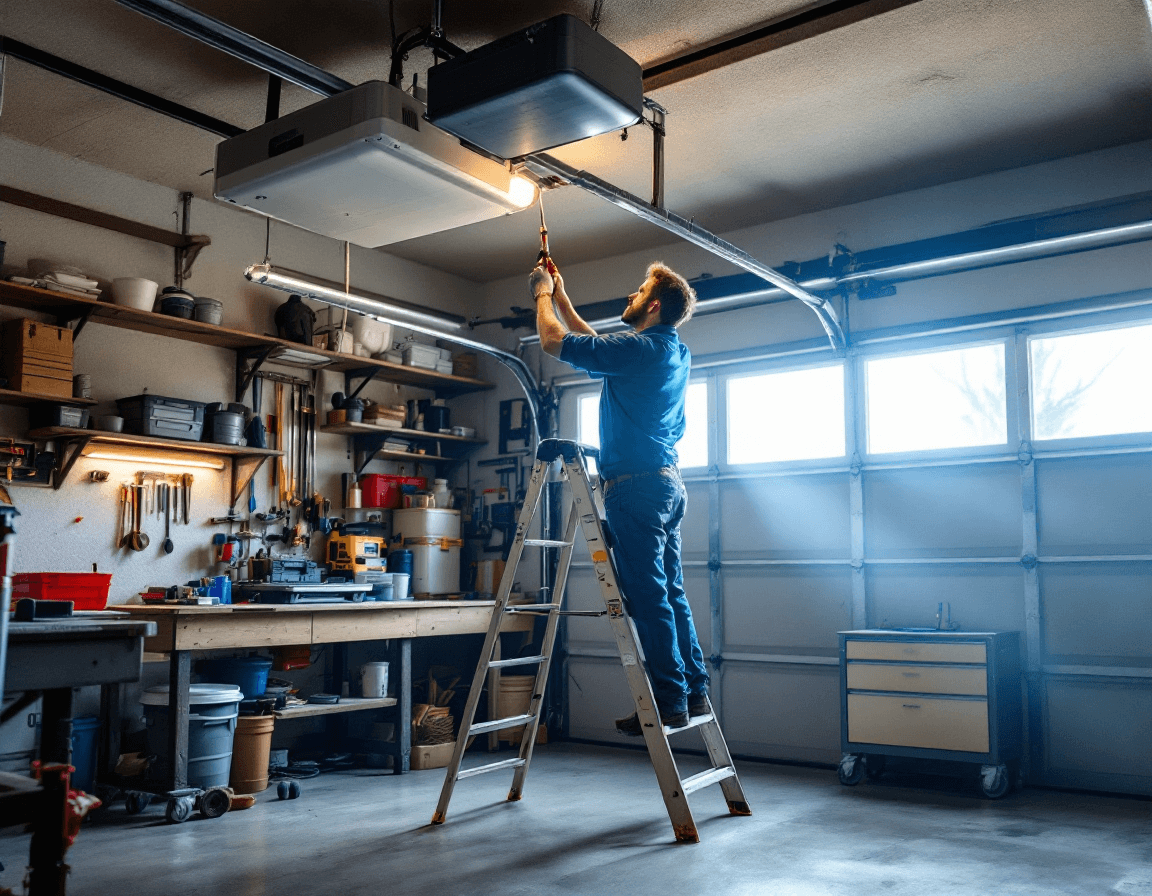
Garage door opener repair in Bothell, WA is one of the most common calls we take from homeowners across the 98011, 98012, and 98021 ZIP codes, and it is often the most frustrating. The door worked fine last week, and now the wall button does nothing, the remote blinks at you, or the motor hums without moving the door at all. Most opener problems come down to a short list of causes: power or signal issues, worn drive components, a misaligned travel limit, or a sensor that has lost its line of sight. Knowing which category you are dealing with can save time and money before a technician arrives.
Bothell's mix of older split-level homes near the older neighborhoods, newer construction in the Canyon Park business and residential corridor, and townhomes close to the North Creek trail system means that openers here face a wide range of installation ages and conditions. Some units are two decades old and still running on original wiring, while others were installed only a few years ago and already have a worn belt or a tangled safety sensor cable. Our technicians work on every major opener brand, from belt drives to chain drives to screw-drive models, and we diagnose each one based on what it is actually doing rather than what the symptom suggests at first glance. For most opener repairs, pricing falls between $95 and $375, and the final figure depends on which part has failed and what it takes to correct it.
This page walks through the most common opener complaints we hear from Bothell homeowners, explains what tends to cause each one, and describes what a practical repair visit usually involves. It also covers the environmental factors that matter in the Pacific Northwest, including the damp winters and sudden cold snaps that test sensors, wiring, and metal components. Where a repair crosses into spring or cable work, which carries serious stored-energy risks, we will say so plainly, because that work belongs with a licensed professional and should never be attempted as a DIY project.
Reading the Blink Pattern Before You Touch Anything
Many openers and garage door systems use the small indicator lights on the motor unit or the wall control to communicate faults. A light that flashes a repeating sequence is usually trying to tell you something specific, such as a safety sensor not detecting the beam, a limit setting that needs adjustment, or an internal fault that the logic board has flagged. The pattern itself varies by manufacturer, so the first useful step is to find the model number on the motor housing and check the owner's manual or the manufacturer's troubleshooting chart. Counting the blinks and noting any pauses between them gives a technician much more to work with than a general description of a blinking light.
In Bothell, we often see flashing lights right after a rainy stretch or a night when temperatures dropped into the low 30s. Moisture can create a thin film on sensor lenses, and a sensor that was aligned perfectly in September may drift slightly after the bracket shifts with seasonal expansion. A flashing light does not automatically mean the opener itself has failed, and many times the cure is as simple as wiping the sensor lenses, checking that nothing is blocking the beam path, and confirming the wires are securely seated. Still, if the pattern continues after basic checks, the problem may be deeper in the control board or a failing safety circuit.
Please avoid repeatedly pressing the wall button or remote while the lights are flashing. Repeated cycling can stress the motor, the gear train, and the door's balance, particularly if the door is already moving unevenly. If the door is stuck partway open or closed, use the emergency release cord only when the door is fully closed, and keep your hands clear of the track. A technician can read the pattern quickly and tell you whether it points to a simple adjustment or a component that needs replacement.
When the Motor Hums but the Door Stays Put
A motor that runs, sometimes with a noticeable hum or a strained tone, but leaves the door unmoved is one of the more puzzling symptoms, and it deserves prompt attention. The cause is often a disconnect between the motor and the door, or a drive component that has stopped transferring force. On many trolley-style openers, the carriage that pulls the door along can slip off the rail, or the trolley release may have been pulled, leaving the motor spinning with nothing to push against. In other cases, the drive chain or belt has jumped a sprocket or pulley, so the motor turns while the carriage stays still.
Power delivery also deserves a look when the motor hums. A failing capacitor, a weak run circuit, or a loose connection can cause a motor to buzz without reaching full torque, particularly in the cold. Bothell homes that have been modified with added outlets in a garage, or that rely on older extension cords for shop equipment, sometimes have voltage drops that surface only on the opener. A dedicated outlet with a proper ground is the safer and more reliable arrangement, and a technician can check voltage under load to confirm the opener is getting what it needs.
If you hear a hum with no motion, shut off power at the breaker before doing anything else, and keep fingers away from the carriage and the door's moving parts. Do not try to force the door open by hand while the motor is still energized. Once power is off, check whether the trolley release handle is still in the engaged position, and look at the rail to see whether the carriage has visibly separated. Report what you found to the technician, because small observations like a loose sprocket or a scraped rail often narrow down the diagnosis considerably.
Remote Silence: Batteries, Antennas, and Wall Button Dead Zones
When a remote stops working but the wall button still responds, the issue is almost always in the transmitter or its signal path rather than the opener itself. Remote batteries are the first suspect, and a coin cell or small battery that has been sitting in a car visor through several hot summer afternoons can lose its charge faster than expected. Replacing the battery with the correct type and checking the contacts for corrosion resolves many complaints. If the remote still fails, the receiver may need to be reprogrammed, which is a manageable task that a technician can handle during a routine visit.
When the wall button also fails, the problem usually lies in the wiring between the wall station and the motor, a blown low-voltage fuse on some models, or a stuck or shorted button. Bothell homes built in the last few decades often run low-voltage control wires through wall plates and conduit that may have been damaged during drywall work or past renovations. Intermittent wall button behavior, where the button works sometimes and not others, is a classic sign of a loose terminal or a wire that has partially pulled free. Those connections are simple to inspect but easy to overlook without someone who checks them systematically.
Signal interference is another factor worth mentioning, because Western Washington has plenty of wireless traffic from nearby homes, businesses, and vehicles. A remote that works at the curb but not inside the garage may have a weak transmitter, or the opener's antenna wire may be hanging in a way that reduces reception. Keep the antenna wire straight and away from metal shelving or the motor housing whenever possible. If you have recently installed a new Wi-Fi-enabled accessory or smart hub, it is worth checking whether it is sending commands that interfere with the opener's control circuit.
Stripped Gears and the Grinding Note from the Opener Head
A grinding, clicking, or whining sound from the opener head is a warning that something inside the gear train is worn or damaged. On many screw-drive and some belt-drive models, the plastic or nylon drive gear can strip teeth after years of use, particularly if the door has been forced by hand or the balance has been off for some time. The sound often starts subtly and grows louder over several weeks, and it may be most noticeable when the door starts or stops. Ignoring it can lead to a complete failure of the drive gear, leaving the door stuck and the motor straining.
Gear problems tend to appear more often in Bothell homes where the door is heavy, such as insulated steel doors on larger two-car garages, or where the door has developed binding due to worn rollers or bent track sections. Lubrication matters too, and a dry gear or a rail that has collected grit can accelerate wear. We recommend a professional inspection of the gear, the drive shaft, and the door balance together, because a stripped gear is often a symptom of an underlying mechanical stress that will damage a replacement part if left uncorrected. Replacing the gear without checking the door's balance may just produce the same failure a few months later.
If you hear grinding, stop using the opener and avoid manually forcing the door. Continued operation can spread metal shavings through the drive assembly and turn a modest repair into a larger one. Note whether the grinding happens at a specific point in the door's travel, such as at the top or near the floor, since that observation helps the technician find whether the problem is in the opener or the door hardware. Do not attempt to adjust or disassemble the spring system yourself, because the torsion or extension springs store significant energy even when they appear idle.
Chains, Belts, and Slack That Walks Off the Track
Chain and belt drives are common on residential openers, and both can develop slack over time. A chain that sags too far can jump off the sprocket, and a belt that stretches can slip, causing the door to stall or move unevenly. You may notice a loose, flapping sound during operation, or the door may stop halfway and then resume after you press the button again. Slack can result from normal wear, but it can also indicate that the carriage or the sprocket mounting has shifted, which needs to be corrected rather than simply tightened.
Bothell's damp winters can speed up corrosion on metal chains and bracket hardware, especially on garages with less ventilation or where the door is left partly open during wet weather. Rust on a chain or a stiff, dirty drive path can make the motor work harder, leading to heat, noise, and premature failure. Belts are less susceptible to rust but can degrade from heat and contamination, particularly in garages where the opener sits near a water heater or a dryer vent. A careful inspection checks tension, alignment, and the condition of the links or teeth, and then corrects whatever is out of specification.
Homeowners sometimes try to tighten a chain or belt on their own, and this can cause more trouble than it solves if the tension is set wrongly or the tensioner is misaligned. Over-tightening stresses the motor and bearings, while under-tightening invites the same jumping problem to return. If you notice the chain has come off the track, disconnect power, keep your hands clear, and wait for a technician. Reinstalling a chain while the door is still under spring tension is a hazardous task that should be left to licensed professionals.
Travel Limits: Why the Door Reverses Partway Down
Travel limits tell the opener where the door should stop when it is fully open and fully closed. When these settings drift, the door may stop short of closing, reverse immediately after it begins to descend, or travel past the floor and bounce. In many modern openers, the limits are set electronically through buttons or a learning cycle, while older models use mechanical screws or cams. Either way, a limit that has been bumped or set incorrectly after a repair can cause the door to behave unpredictably, and it is one of the most frequent adjustments our technicians make.
A door that reverses immediately is often trying to protect itself. The opener may detect an obstruction, a sensor misalignment, or a force reading higher than its programmed threshold, and it reverses as a safety response. Before assuming the limit is wrong, check that the safety sensors are aligned, that nothing is sitting in the path, and that the door tracks are straight and free of debris. Winter weather can also add resistance if the bottom seal has frozen to the floor or if the door has been bent by a vehicle bumping it, which is a surprisingly common issue in tight Bothell driveways.
Adjusting travel limits is safe for a trained technician, but homeowners should take care when experimenting with them. Changing the limit without checking the door balance can leave the door opening or closing too fast, which increases the risk of injury and damage. If you are troubleshooting, start by confirming the door closes fully by hand when the opener is disconnected, and make sure the balance feels consistent. A technician will then program the limits, test the safety reversal, and confirm the door stops reliably at both ends.
Rain, Rust, and Sensor Alignment on Bothell's Wet Winter Days
The Pacific Northwest climate has a strong influence on garage door openers, and the effects show up most clearly during the wet months. Frequent rain, morning fog, and high humidity can corrode exposed wiring, fog sensor lenses, and cause metal brackets to oxidize. Sensors mounted near the floor are especially vulnerable because they collect dirt, splash, and salt tracked in from the street. A sensor that works perfectly in dry summer weather may start intermittently failing in November, and that pattern often leads homeowners to suspect the opener when the sensor is the real issue.
Temperature swings matter as well. A cold morning can contract metal and plastic components enough to shift sensor brackets, and the lenses may fog when warm air meets a cold garage. Some openers have a noticeable change in force or speed when the door is cold, particularly if the rollers or hinges are stiff from accumulated grime. Lubricating the rollers with a silicone-based product, keeping the tracks clean, and checking the sensor bracket at the start of each season can prevent many winter complaints. Avoid heavy petroleum-based lubricants on the chain or gears, because they attract dirt and can make conditions worse.
Garage ventilation also plays a role in how the opener ages. Many Bothell garages are attached to homes with limited airflow, so moisture from laundry, bikes, and wet gear can linger for days. If your opener sits in a damp corner or shares space with a water heater, consider adding a small dehumidifier or improving airflow, and check the motor housing for signs of condensation after heavy rain. These steps will not repair a failed part, but they reduce the chance of recurring electrical and corrosion problems.
Intermittent Faults That Come and Go
Intermittent operation is among the most challenging opener complaints to diagnose, because the failure may not show up during a service call. A door that opens fine on a dry afternoon but refuses to move on a damp morning often points to a loose connection, a cracked solder joint on the logic board, or a sensor wire that flexes when the door moves. Temperature and humidity can make these faults appear and disappear, which is why keeping a short log helps. Note the date, the weather, the time of day, and exactly what the opener did, because patterns often reveal the cause faster than a single observation.
Many intermittent problems trace back to wiring. Wires running along the header, through the track, or near the door's moving hinge can fatigue over time, and the insulation may crack or chafe against metal edges. The safety sensor cable, which runs from the sensor bracket to the opener, is particularly prone to damage if it has been pinched by the door or pulled by a stray tug. A technician will inspect the entire circuit, including terminals, connectors, and ground, and will test each sensor and the control board under realistic conditions rather than relying on a single quick check.
If your opener works intermittently, avoid repeatedly cycling it to try to make the fault appear, because that can mask the problem or cause additional stress. Instead, write down what you observe and contact a technician while the pattern is still fresh. Intermittent faults are rarely solved by replacing parts at random, and a methodical diagnosis is almost always less expensive in the long run.
What a Bothell Repair Visit Typically Covers
A typical opener repair visit in Bothell begins with a conversation about the symptoms and a check of the door's overall condition. The technician then inspects the opener motor, the drive components, the safety sensors, the control wiring, and the travel limits, testing each system as it operates. Because every manufacturer uses different controls and diagnostic methods, the work is tailored to your model rather than following a single script. Most opener repairs are completed in one visit, though some parts may need to be ordered, and the technician will tell you upfront when that is the case.
Our diagnosis and repair work covers motor, gear, circuit board, and travel-limit troubleshooting for every major opener brand, and we explain the findings before any work begins. For most opener repairs, pricing falls between $95 and $375, depending on the part involved and how much labor is required. Costs can be higher for complex control board replacements or for openers that need a full drive assembly. We recommend getting the diagnosis and written pricing before authorizing any work so there are no surprises.
Here are some of the items a technician commonly checks during an opener visit:
- Power supply, outlet condition, and voltage under load
- Safety sensor alignment, lens cleanliness, and wiring continuity
- Travel limit settings for both fully open and fully closed positions
- Drive chain, belt, or screw tension and alignment
- Gear and drive shaft condition, including signs of stripping or wear
- Remote and wall control operation, including batteries and receiver programming
- Door balance observations that may affect opener performance
Keeping Your Opener Healthy Between Service Calls
Routine care can extend the life of your opener and reduce the number of emergency calls you make. Test the auto-reverse feature every month by placing a flat object, such as a piece of wood, in the door's path and confirming the door reverses when it contacts the object. Clean the safety sensor lenses with a soft cloth, check that the brackets are still aligned, and keep the area beneath the sensors free of clutter. These simple habits catch small problems early, when they are cheap and quick to correct.
Lubrication and cleaning matter too, though it is important to use the right products. A silicone or manufacturer-recommended lubricant on the rollers and hinges helps reduce noise and strain, and a light coat on the chain or screw drive, if the manufacturer allows it, keeps things moving smoothly. Avoid spraying lubricant directly into the motor housing or onto sensor lenses. Keep the garage ventilated to limit moisture buildup, and consider scheduling an annual professional inspection so a technician can check tension, alignment, travel limits, and the door's balance before a small issue becomes a breakdown.
Finally, pay attention to changes in sound, speed, or behavior. A door that used to close smoothly but now hesitates, or an opener that takes longer than usual to start, is giving you early warning. Writing these observations down and sharing them with your technician makes diagnosis faster and more accurate. Remember that any work involving the springs, cables, or drums should be left to licensed professionals, since those components store enough energy to cause serious injury.
Booking a Bothell Opener Repair Visit
If your garage door opener is motor-humming without motion, grinding, reversing on its own, flashing a repeating light pattern, or simply refusing to respond to your remote or wall button, Seattle Garage Door Fix can help. Our licensed, bonded, and insured technicians serve Bothell and the surrounding communities in the 98011, 98012, and 98021 ZIP codes, including homes near Bothell Landing, Canyon Park, and North Creek. Call (888) 799-3819 to describe what your opener is doing, and we will help you schedule a visit, outline likely causes, and give you clear pricing before any work begins.