
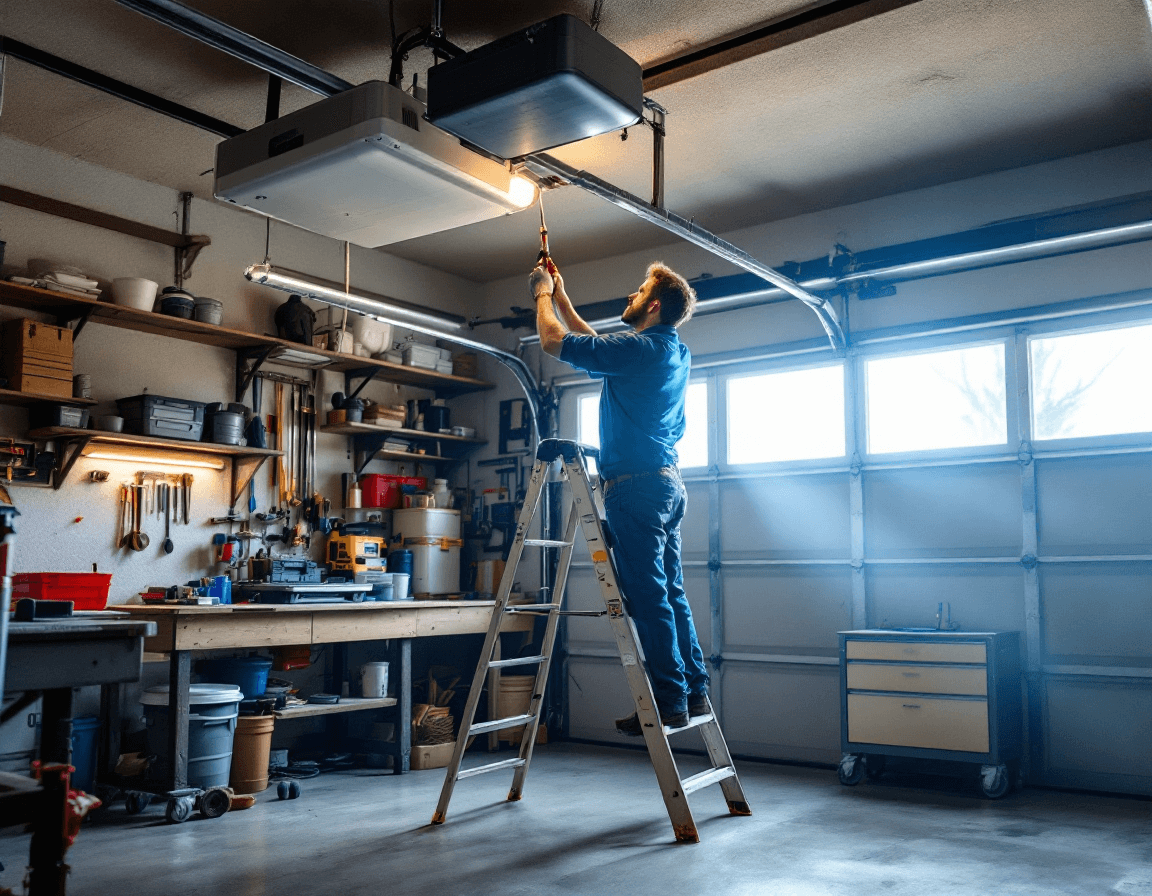
Garage door opener repair in Lynnwood, WA is often a faster and less expensive fix than homeowners expect, but only if the problem is diagnosed correctly the first time. An opener is a combination of a motor, a drive mechanism, a logic board, a set of safety sensors, and a handful of travel limits, and a failure in any one of those can look like a failure of the whole system. Our technicians serve homes across Lynnwood, from the older single-story neighborhoods near the Alderwood area to newer townhome developments closer to Lynnwood City Center, and we see the same patterns repeat across ZIP codes 98036, 98037, and 98087. This guide explains what those patterns usually mean so you can describe the problem accurately when you call.
Most opener repairs we handle fall in a range of $95 to $375, depending on the part involved and the make and model of the unit. Simple jobs such as replacing a worn remote battery system, realigning a safety sensor, or resetting travel limits sit at the low end, while gear assemblies, logic boards, and motor replacements sit higher. We work on every major opener brand, and we will tell you before any work begins if the repair would cost more than the unit is worth. Read on for the symptoms we hear most often and what they usually point to.
Reading the Symptoms Before You Pick Up the Phone
Your opener is constantly communicating with you through sound, light, and movement, and paying attention to those signals can save a lot of guesswork. A motor that runs without moving the door tells a different story than a motor that never starts, and a grinding noise tells a different story than a rattle. Before you call, it helps to note exactly what the door and the opener are doing, when the problem started, and whether it happens every time or only sometimes. Those details let a technician narrow the cause quickly, often before the first tool comes out of the truck.
Start by watching the sequence of events from the moment you press the remote or wall button. Does the light come on? Do you hear a click from the wall unit or the header? Does the trolley or carriage move at all? Each of those steps is a checkpoint, and the first one that fails is usually the clue that matters most. Jot down the answers in a few short phrases, because that record will be far more useful than a general statement that the door is broken.
When the Motor Hums but the Door Refuses to Move
One of the most puzzling problems we see is an opener motor that runs, sometimes with a steady hum, while the door stays in place. This usually means the motor is receiving power and trying to turn, but the force is not reaching the door. The common culprits include a disconnected or slipping drive chain or belt, a broken carriage release that has left the trolley disengaged, or a gear set that has lost its teeth and is spinning without transferring torque. In a few cases, the door itself is binding because of a bent track, a roller that has seized, or a spring that has lost tension, which makes the opener strain against a load it cannot lift.
Because the motor is working, many homeowners assume the opener is fine and the door is at fault, and that assumption can lead to unnecessary expense. Our technicians check the carriage engagement first, then inspect the drive components, and only then evaluate the door hardware. If you notice the motor humming while the trolley stays still, turn off power to the opener at the breaker or unplug it before you do anything else, and keep your hands clear of the track. Spring tension and cable work in particular should be left to a licensed professional, because stored spring energy can cause serious injury.
Remote Silence and Dead Wall Buttons After Winter Storms
Western Washington winter storms bring heavy wind, saturated soil, and the occasional power interruption, and all three can leave an opener unresponsive. When a neighborhood loses power and then regains it, some openers reset their memory or drop out of sync with the remote, and others simply need a moment to recover. Lightning strikes and voltage spikes during storm season can also damage the receiver board inside the head unit, which controls the response to radio signals. The result is a remote that seems dead while the wall button still works, or a wall button that does nothing at all.
Start with the simple checks before assuming a larger failure. Replace the battery in the remote, confirm the wall control has power, and look at the outdoor safety sensors, since many openers will refuse to close if the sensors are misaligned or blocked by a leaf, a spider web, or a cobweb built up over the winter. If the opener has lost its programmed remotes, a relearn procedure on the head unit usually restores them. If none of those steps works, the receiver or logic board may need attention, which is a common repair we handle at the $95 to $375 range for most units.
Grinding Sounds From the Head Unit and Stripped Gears
A grinding or clicking sound coming from the opener head, especially during the first few inches of travel, often points to a stripped gear. The gear set inside the opener converts the motor's rotation into the pulling force that moves the door, and over time the nylon or steel teeth can wear, crack, or shear off. Many Lynnwood homes have openers that have been running for ten years or more, and that long duty cycle is one reason we see worn gears so frequently. The sound may be intermittent at first, then grow louder until the opener stalls or stops responding altogether.
Continuing to run an opener with a grinding gear can damage the motor, the drive shaft, and the trolley, which turns a modest repair into a larger one. If you hear grinding, stop using the opener and schedule service as soon as you can. Gear replacement is usually a manageable repair on most major brands, and it is often the difference between a targeted fix and a full opener replacement. Our technicians will open the head, inspect the gear train, and show you the worn components so you understand exactly what was wrong.
Doors That Close Partway or Reverse the Moment They Touch the Floor
A door that starts down, then stops or immediately reverses, is trying to tell you something about its safety system. Modern openers are required to reverse when they detect an obstruction, and the same logic can trigger a reversal if the photo-eye sensors on either side of the door lose their alignment, if their wiring has been damaged, or if sunlight is striking the receiver at a sharp angle. Lynnwood's low winter sun and frequent overcast skies do not usually cause this, but an early-morning or late-afternoon glare can. Some doors also reverse because the travel limits have drifted and the opener believes the floor is an obstruction, which is a common result after a spring adjustment or a belt replacement.
Before calling, check whether anything is sitting in the door's path, and wipe the sensor lenses with a clean cloth. Look for a sensor light that is solid versus one that is blinking, because the indicator is often the quickest way to identify a misalignment. If the door reverses only when it reaches the floor, the limit settings are the likely cause, and those can usually be adjusted without any spring work. Resetting or correcting travel limits is a routine part of our opener service, and we can usually complete it during the same visit as any other repair.
Blinking Opener Lights and What Repeating Patterns Mean
Most openers use the indicator light on the head unit to communicate faults, and the pattern of flashes often corresponds to a specific code listed in the owner's manual. A steady, repeating blink usually indicates a safety sensor problem, while a rapid or irregular blink can suggest a logic board fault or a memory issue. The exact meaning varies by brand and sometimes by model year, so the best first step is to count the flashes and look up the code in the manual or on the manufacturer's support site. Writing down the pattern before you call saves time and helps the technician confirm the diagnosis.
Some blink patterns clear on their own after a power cycle, but repeated faults should not be ignored. A circuit board that is failing can behave unpredictably, sometimes working perfectly for weeks and then refusing to respond. Our technicians can test the board, the sensors, and the wiring harness to determine whether the fault is in the control system or in an external device. When a board does need replacement, we will explain the reason and the cost before ordering the part.
Loose Chains, Slipping Belts, and Why You Should Step Back
A chain or belt drive that has loosened, slipped off its sprocket, or stretched out of tolerance can produce a clunk, a jerky start, or a door that moves unevenly. Chain drives are common on Lynnwood openers because they are durable and economical, but they can develop slack over time, especially as the door's counterbalance changes. Belt drives are quieter and are popular on newer units, though they can stretch or fray over many seasons of use. Both systems rely on proper tension, and an out-of-spec drive will wear other parts faster than it should.
A slipped or loose drive is a repair you can diagnose safely from a distance, but adjustment should be handled by a professional. Keep the door fully closed and the opener unplugged while you look, and do not attempt to pull the trolley by hand while the door is in motion. Tension adjustments and drive replacements require careful work around the sprocket and the rail, and they are a good fit for a trained technician who can confirm the door's balance at the same time. If the drive has come completely off the rail, do not try to force it back into place.
Here are the warning signs that mean the drive system needs attention soon:
- A clunking or knocking sound at the start or end of travel
- Visible slack in the chain or belt when the door is closed
- The trolley sliding unevenly or stopping midway along the rail
- Fine debris, dust, or shredded rubber on the rail beneath the opener
Intermittent Operation and the Damp Pacific Northwest Effect
Intermittent operation is one of the hardest problems to diagnose, because the opener works fine during some tests and fails during others. In the Pacific Northwest, moisture is often the hidden factor. Humidity that builds in an attached garage during our long, damp months can corrode contacts on the wall control, weaken solder joints on the logic board, and interfere with sensor wiring that runs through the wall or along the ceiling. Temperature swings between a cold, damp morning and a warmer afternoon can also make a marginal connection open and close, which shows up as a door that works on Tuesday and fails on Thursday.
When you suspect moisture, pay attention to whether the failures cluster during or after rain, or in the early morning when the garage is coldest. Check the wall control for green or white residue on its contacts, look for discoloration around the opener's electrical box, and make sure the garage door weather seal and any vent openings are not allowing rain to blow directly onto the head unit. Simple steps like improving ventilation, keeping the floor drain clear, and sealing gaps at the bottom of the door can reduce the problem considerably. A technician can also test voltage at the opener and inspect connections for corrosion, which often reveals the cause that homeowners cannot see.
Travel Limits, Force Settings, and Safe Calibration
Travel limits tell the opener where the door should stop when it opens and when it closes, and force settings tell the opener how much resistance to tolerate before it reverses. When either setting drifts, the door may stop short of fully closing, continue pushing against the floor, or stop and reverse for no apparent reason. Limits can shift after a belt or chain change, after a power loss that resets the memory, or after a door has been manually operated many times. Force settings can be affected by a spring that has lost tension, by a track that has moved slightly out of plumb, or by a seal that has grown stiff in cold weather.
Calibration is an area where we encourage homeowners to be cautious. Most openers have a learn procedure or menu for adjusting limits, and it is reasonable to read the manual and attempt a basic reset. However, force settings that are too high can create a safety hazard, and incorrect calibration can cause a door to close on a person, a pet, or a vehicle. Our technicians test the auto-reverse function after every adjustment and confirm that the door reverses reliably when it contacts a test object. That verification step is one of the most important parts of a responsible repair.
What a Typical Lynnwood Opener Repair Involves
Most of the opener repairs we complete in Lynnwood follow a predictable sequence, which keeps the process transparent and the costs understandable. The technician begins by confirming the symptoms, testing power, and inspecting the opener, the rail, the door hardware, and the safety sensors. Next comes a diagnosis, followed by an honest explanation of the repair options, including what each one costs and how long it is likely to last. Once you approve the work, the technician completes the repair, tests every function including auto-reverse and remote operation, and reviews the results with you before leaving.
Repairs typically range from $95 to $375 for most opener work, though the final price depends on the brand, the part required, and whether the problem involves the opener alone or also includes door hardware. Simple adjustments, sensor realignment, and remote programming sit at the lower end, while gear sets, logic boards, and motor replacements sit higher. If the opener is old enough that repairs are no longer economical, we will say so and walk you through the trade-offs, without any pressure to replace a unit that still has years of life left.
Choosing a Technician You Can Trust Near Lynnwood City Center
Choosing a garage door service provider in Lynnwood should be a deliberate decision, because you are inviting someone into your home and asking them to work around a heavy, powered door. Look for a company that is licensed, bonded, and insured, and ask for proof before the technician begins work. A reputable provider will explain the diagnosis in plain language, provide a written estimate, and recommend a licensed professional for spring or cable work rather than attempting it themselves. Those are the standards we hold ourselves to on every call.
Whether your home sits close to the Alderwood area, near Lynnwood City Center, or somewhere in the surrounding neighborhoods of 98036, 98037, or 98087, we want you to feel informed before any work begins. Our team can schedule opener diagnostics across the Lynnwood area and throughout Snohomish County, and we are happy to answer questions about symptoms, pricing, and what to expect. If your opener is grinding, reversing, blinking, or simply refusing to respond, call (888) 799-3819 to speak with a Seattle Garage Door Fix team member and get your Lynnwood garage door moving safely again.