
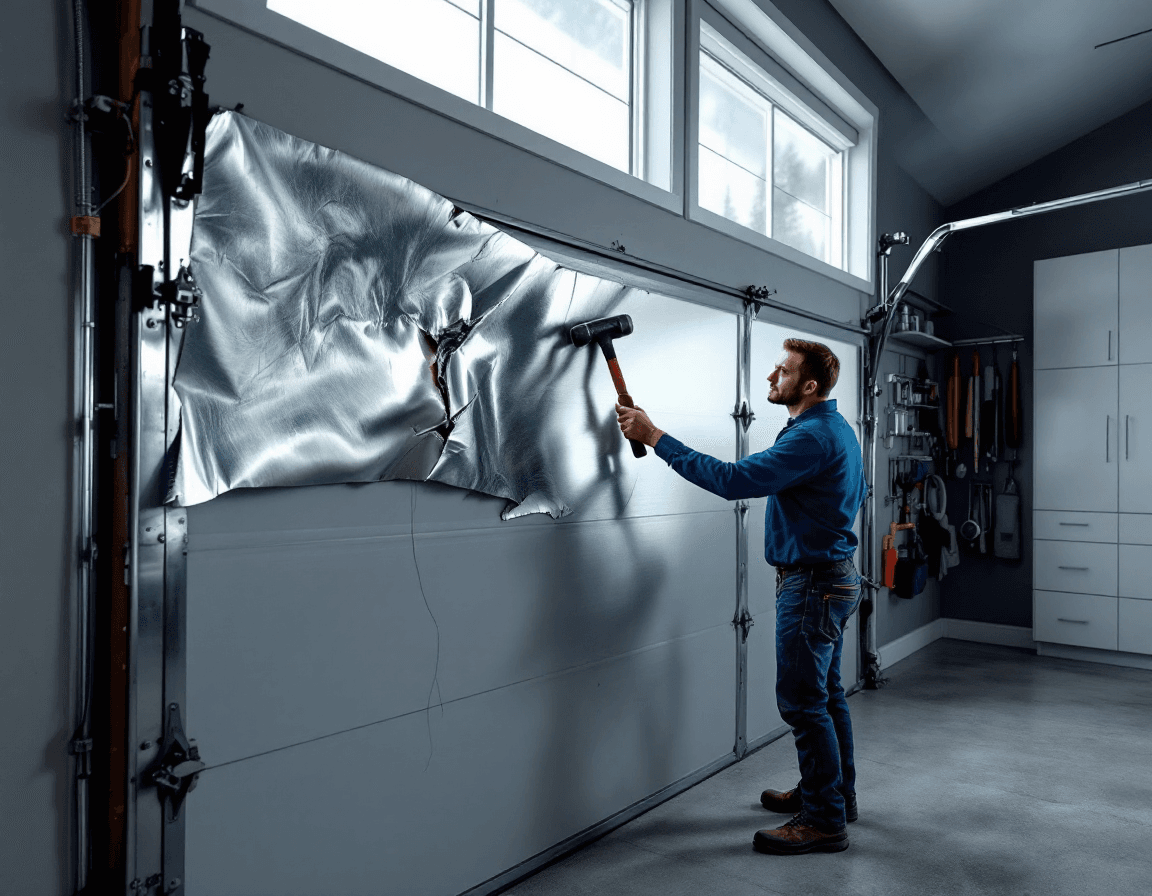
Garage door panel replacement in Lynnwood, WA is often the most sensible fix when one section of an otherwise healthy door has been dented, cracked, rusted, or soaked through. Lynnwood sits in the heart of Snohomish County, where winter rain is steady, humidity stays high for much of the year, and the garage is often the first thing that takes a hit from a backing car or a stray delivery van. Many homeowners assume a damaged panel means buying a whole new door, but that is rarely necessary. A single section can usually be swapped out while the rest of the door, its tracks, and its opener keep working as they should.
This page explains how we approach panel work for homes across Lynnwood and the surrounding neighborhoods in the 98036, 98037, and 98087 ZIP codes. We will cover what damage typically looks like on local doors, how to tell whether a panel can be replaced or whether the whole door makes more sense, and what determines the cost of a section. We will also walk through the practical details that matter when matching an older panel that has faded or changed color over the years. If you are reading this because a dent or soft spot has appeared on your door, the information below should help you decide what to do next.
Panel replacement is also a job where safety has to come first. Sectional doors are held under heavy spring tension, and the hardware that connects panels to each other and to the tracks is more involved than it looks from the outside. Our guidance throughout this page assumes that any work touching springs, cables, or the door's structural hardware will be handled by a licensed, bonded, and insured technician. Read on for the details, and call us at (888) 799-3819 if you would like someone to look at your door in person.
Why Lynnwood Doors Take a Beating From Wet Winters
Western Washington winters are long, gray, and wet, and the garage door is one of the parts of a house that feels that weather most directly. Repeated cycles of rain, damp mornings, and cool evenings allow moisture to work its way into seams, bottom edges, and any spot where the factory finish has been scratched. Over several seasons, that moisture can start to lift paint, swell engineered wood, or corrode the steel edges of a panel from the inside out. Lynnwood homes that sit on lower, shaded lots or near drainage areas may see this happen faster than homes on higher, drier ground.
Road spray and traffic add another layer. Homes near the busy corridors that feed I-5 and Highway 99 tend to collect a fine film of grit, road salt residue during colder months, and general grime that settles onto the lower third of a door. When that grime sits against a damaged edge, it can accelerate rust and undercut paint around dents. We see this most often on the bottom one or two sections, which are closest to the driveway and take the most splash.
Finally, many Lynnwood garages are attached to homes built during a range of decades, which means the doors themselves vary widely in age and construction. Steel doors with polyurethane-insulated panels, older wood-composite designs, and aluminum or glass-accent doors all respond to weather and impact differently. Knowing what your door is made of changes how a panel should be repaired and how easy it will be to find a match.
Recognizing a Damaged Panel Before It Spreads
Most panel problems announce themselves long before the door stops working. A homeowner might notice a crease that catches the light differently, a section that looks slightly out of line with its neighbors, or a seam that has started to gape. Catching these early often means the difference between swapping a single section and dealing with a larger problem later. Walk the door in daylight once a season and look at it the way you would look at a car after a parking lot scrape.
Common warning signs we ask homeowners to watch for include:
- A visible crease, bulge, or flattened area on any panel, especially near the bottom edge
- Hairline cracks in the panel face or in the paint near a dent, which often signal stress
- Bubbling paint, soft spots, or a spongy feel when you press the lower panel with a fingertip
- Orange or brown staining along seams or fasteners, which points to rust forming under the finish
- A section that sits noticeably higher or lower than the rest when the door is closed
- Light visible through a panel edge or a gap that was not there before
If you notice any of these, take a few photos from several angles and note the approximate location and size of the damage. This is useful both for planning a repair and, if the damage came from an impact, for documenting what happened. Avoid trying to pop a dent out yourself with a hammer or suction tool, because that can stretch the metal, crack the finish, and make a clean replacement harder.
Telling a Cosmetic Dent From a Compromised Section
Not every dent calls for a new panel. A shallow dimple in the middle of a flat steel section that does not crack the paint and does not affect how the door closes may be purely cosmetic. Homeowners sometimes live with these for years without any functional issue. The question to ask is whether the damage affects the panel's ability to hold its shape, keep out water, or move properly within the track system.
A compromised section is different. If a dent runs along a rib or stiffening channel, if the panel has torn at a fastener point, or if the metal has creased sharply enough that it no longer lies flat, the section is likely weakened. A creased panel can also rub against the track or against adjacent panels during travel, which causes further wear and sometimes noise. In those cases, replacing the section is usually more reliable than attempting to straighten it.
Insulated steel panels deserve special attention. The foam core inside a double-layer panel can be compressed or separated by a hard impact, and that damage will not always be obvious from outside. If the panel feels hollow, flexes more than its neighbors, or makes a different sound when tapped, the internal structure may be compromised even if the outer skin looks only lightly dented. In these cases a full section replacement is the more dependable route.
When Water and Rot Reach the Bottom Section
The bottom panel is where Lynnwood's wet weather shows its effects most clearly. Water sits against the lower edge after rain, soaks in around the bottom seal, and slowly works into the lowest section. Over time this can cause the bottom panel to swell, delaminate, or rot if it is wood-composite. On steel doors, the same moisture often leads to rust that starts at the bottom rail or at the bottom edge of the panel and climbs upward under the paint.
Rot or deep rust is a situation where replacement is almost always the right answer. Surface rust on a steel panel can sometimes be cleaned and treated, but once the metal has pitted or the core material has softened, the structural integrity is gone. Replacing the section restores a barrier against water, and it prevents the damage from moving upward into the next panel, which is a common and costly pattern on doors that are left alone too long.
When you inspect the bottom section, check the weatherstrip and the bottom seal at the same time. A worn seal lets water in, and water is what damages the panel. Replacing the panel without addressing the seal can produce the same problem within a season or two. A technician can usually replace the seal during the same visit if it is worn, which helps protect the new section.
Matching an Older Panel That Has Faded
Matching is one of the trickier parts of panel work, especially on doors that have been in place for ten years or more. Garage door finishes fade under sun and rain, and the amount of fading depends heavily on exposure. A door that faces south or west in a Lynnwood neighborhood may look noticeably different from the same door on the north side of the house, even though both were installed the same day. When you replace one section, the new panel may look slightly brighter or cooler than the old ones, which is why a good match requires attention to both color and texture.
Several factors affect how close a match can be. The manufacturer's product line may have changed since your door was installed, the paint formula may differ, and the grain pattern on embossed or wood-look panels may not line up perfectly with the original. Some homeowners prefer to replace every section on the same side of the door so the color difference is less noticeable, but that adds to the cost and is not always necessary. We will show you the closest available match before work begins, so you can decide whether the difference is acceptable to you.
If your door is a discontinued model, we will look at what components are still available and discuss realistic options. In some cases, a compatible panel from a related product line is the best available solution. In others, the more practical choice is to plan a full door replacement, particularly if the age of the door means other components are also near the end of their life. We would rather give you an honest answer about matching than promise a perfect color that cannot be delivered.
Deciding Between Repairing a Section and Replacing the Door
Homeowners often ask whether it makes sense to replace one panel or the entire door. The answer depends on several things: the condition of the remaining panels, the age of the door, the state of the springs and tracks, and how much the single panel costs compared with a full installation. A door that is otherwise sound, with straight tracks, a well-maintained opener, and panels that are not rusting, is usually a strong candidate for a single-section replacement.
On the other hand, a door showing rust or rot across several sections, weakened hardware, or repeated damage from multiple impacts may be better served by a full replacement. Replacing many panels one at a time can add up quickly, and at some point the combined cost approaches or exceeds the cost of a new door. A useful rule of thumb is to look at the number of damaged sections, the age of the door, and whether the hardware shows wear. If several of those points are concerning, a conversation about full replacement is worthwhile.
Our technicians will walk the door, check the tracks and rollers, look at the spring system from a safe distance, and evaluate the panels before recommending a path. We do not push replacement when a single section will do the job well, and we will say plainly when a panel swap would be throwing money at an aging door. You should leave the consultation with a clear picture of your options rather than a sales pitch.
What a Panel Swap Involves Behind the Scenes
A panel replacement is more involved than simply unscrewing a damaged section and fitting a new one. On a typical sectional door, the panels are connected to each other by hinges and to the track system by rollers and brackets. To remove a panel, the technician must relieve tension on the springs and disconnect the hardware that holds the section in place. This is why the work must be done by a licensed professional with the proper tools and training. Attempting it without that training can lead to serious injury because spring tension is powerful and unforgiving.
Once the section is free, the technician will check the neighboring panels and the hinge hardware for wear. If the hinges are bent or the hinge pins are loose, they will be replaced at the same time, because a new panel mounted on worn hardware will not sit correctly and will put stress on its neighbors. The new panel is then fitted, the hinges are reattached, the springs are returned to proper tension, and the door is tested through several full cycles. The weatherstrip and bottom seal are inspected again at this stage.
Finally, the door's balance and travel are checked. A properly installed panel should move smoothly through the track without binding, and the door should close flush with the floor. If the door is out of balance after the swap, that is a sign that something in the spring or cable system needs attention, and it should be addressed by a licensed technician before the door is used regularly.
Understanding the $250 to $800 Price Range Per Section
Panel replacement is typically priced per section, and our current range is $250 to $800 per section, depending on the door. Several factors shape where a particular job falls within that range. The material of the door is one of the biggest influences. A standard steel panel is generally less expensive than an insulated panel, a wood-composite section, or a decorative glass-and-aluminum design. The size of the section matters as well, since taller or wider panels cost more to source and handle.
Availability and matching also affect the price. A panel that is still in production and readily available is easier to source than one from a discontinued line, and a closer color match may require ordering from a specific supplier. The condition of the surrounding hardware plays a role too. If hinges, rollers, or brackets need replacement during the same visit, those parts add to the total. Access and the complexity of the door can also influence the labor involved, particularly on doors with tight clearances or additional features like windows and openers that must be worked around.
Here are the main factors that typically move a quote toward the lower or higher end of the range:
- Door material and construction, including whether the panel is insulated
- Panel size and whether the door uses a standard or custom design
- Whether an exact color match is available or a close alternative is needed
- Condition of hinges, rollers, and brackets that may need replacement at the same time
- Whether the bottom seal or weatherstrip also needs attention
- Complexity of access, such as window inserts or unusual track configurations
We provide a clear quote after inspecting the door, and we explain what is included before any work begins. There are no surprises on the invoice for work you did not approve.
Backing Accidents, Impacts, and Checking Your Policy
A single damaged panel very often comes from a backing accident, a child's bicycle, a hockey ball, or a delivery cart that clipped the door. These incidents are common in Lynnwood driveways, many of which are narrow or sloped. When an impact is the cause, it is worth taking photos and noting the date before the damage is repaired. That documentation helps if you decide to talk with your insurance provider about the loss.
Whether a panel repair is covered depends on your specific homeowner's policy, your deductible, and the circumstances of the damage. We are not insurance adjusters, and we cannot tell you what your policy will pay. What we can do is provide a written estimate and describe the work performed, which many homeowners find useful when submitting a claim. Check your policy language or call your agent to understand what applies to your situation before you assume the cost is covered or not covered.
If the impact came from a vehicle, consider also whether the other party's insurance is involved. Keep copies of any police report, photographs, and estimates in one place. Acting promptly after an accident usually makes the paperwork simpler and helps ensure the damage is accurately described.
Neighborhood Notes for Alderwood, City Center, and Nearby Areas
Lynnwood is a mix of older single-family neighborhoods, newer townhome clusters, and areas close to the busy commercial spine. Homes near Alderwood, the large shopping and dining district, often sit in planned developments where garage doors share a similar style, which can make matching a panel easier if the builder used the same product across a block. Homes closer to Lynnwood City Center, where the civic buildings and transit connections are concentrated, may have a mix of door ages and styles depending on when each block was built and remodeled.
Across the 98036, 98037, and 98087 ZIP codes, the most common panel issues we see follow the same pattern: bottom-section moisture, impact dents on driveway-facing doors, and fading on the sunniest exposures. Narrow driveways and tight garage entries in some older areas increase the chance of a backing accident, so panel damage is not unusual even on doors that otherwise look well maintained. Corner lots and houses with limited driveway turnaround can see more frequent contact with the door.
Because every block has its own mix of door age and orientation, the best first step is an in-person look at your specific door. We are happy to meet homeowners anywhere in Lynnwood and the surrounding communities, and we will explain what we see in plain language. Whether your damage is a single scuffed panel or a bottom section that has seen a full winter of soaking, we will help you weigh the options.
Getting Your Lynnwood Garage Door Panel Looked At
If a dented, cracked, or water-damaged panel is making your garage door look worse or feel less secure, the next step is a conversation with a technician who can see the door in person. A single section often can be replaced without touching the rest of the door, but confirming that requires checking the springs, tracks, hinges, and neighboring panels. Our team serves Lynnwood and the surrounding area, and we will give you an honest assessment of whether a panel swap, a seal replacement, or a broader repair makes the most sense.
Call Seattle Garage Door Fix at (888) 799-3819 to schedule a visit. We will look at the damage, explain your repair-versus-replace options, and provide a clear per-section quote before any work begins. Spring and cable work will always be handled by our licensed, bonded, and insured technicians for your safety.