
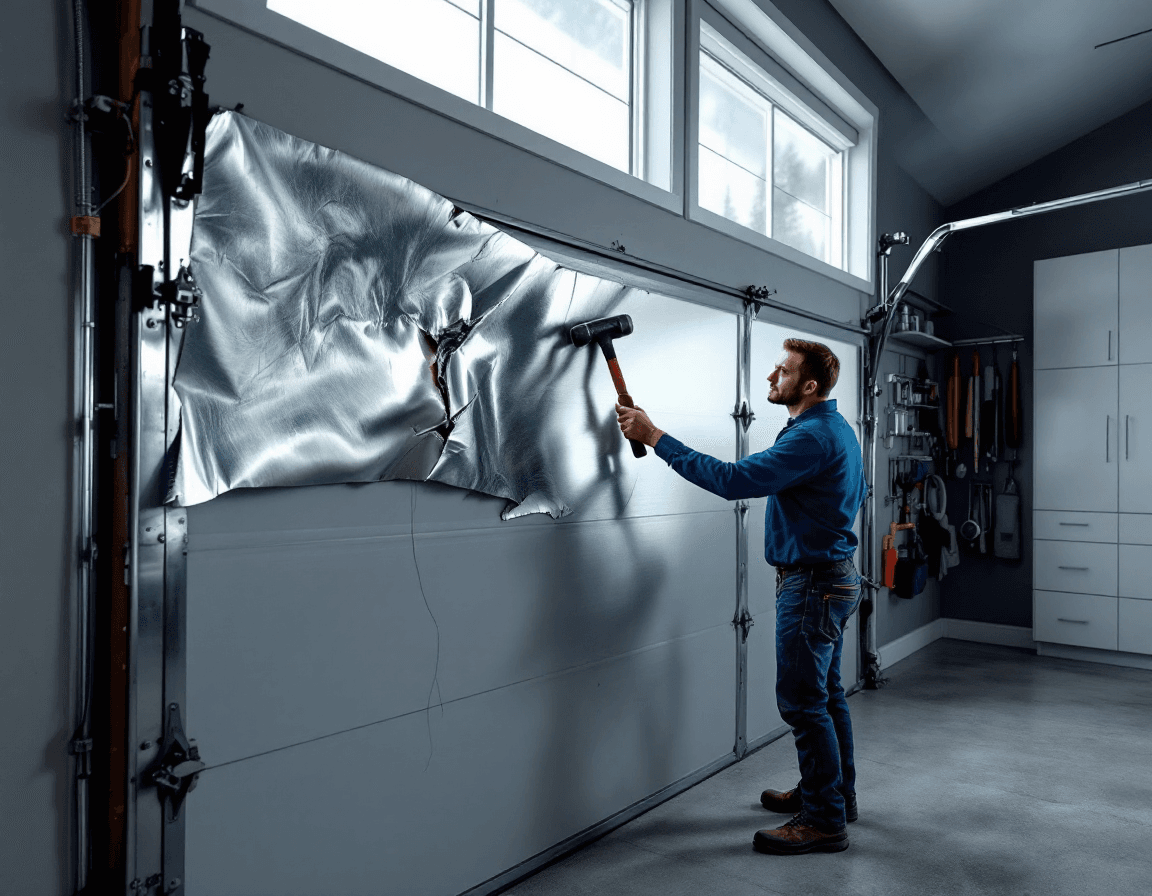
Garage door panels take more abuse than most homeowners realize, and in Mountlake Terrace the damage often shows up as a single dented or cracked section while the rest of the door still operates smoothly. A panel replacement can restore the look and insulation of your door without the cost of a full new door, but only when the damage is limited and the replacement panel matches what you already have. Seattle Garage Door Fix handles panel replacement across Mountlake Terrace and the surrounding Snohomish County neighborhoods, including the 98043 area, and we're glad to walk you through what your particular door needs. This page explains what we see most often on local homes, how to tell whether a panel can be salvaged, and what to expect for pricing and timing.
Many Mountlake Terrace homes were built with attached two-car garages that sit close to driveways, narrow side yards, and the curb cuts that lead toward the main streets near MLT Town Center. Those tight spaces make it easy to clip a door edge with a bumper or a mirror, and the result is often one bent section rather than a broken opener. If your door still runs quietly and reverses properly when it meets an obstacle, the mechanical parts may be fine and the problem may be purely cosmetic or structural in one spot. Our goal here is to help you separate what can be replaced from what needs a broader look.
Whether you own a steel insulated door, an older wood panel door, or a composite model, the principles are similar. The panel is only one component in a larger assembly of hinges, rollers, tracks, and springs, and each of those parts has its own maintenance needs. Understanding how the panel fits into that system helps you make a confident decision about repair or replacement.
How Pacific Northwest Weather Wears Down Panels
Mountlake Terrace sits in a region where winters bring long stretches of damp, cool air and frequent rain, and that moisture finds its way into every seam and edge of a garage door. Steel panels rely on factory coatings and paint to resist corrosion, and when those finishes are scratched or chipped, moisture can work underneath and start rust that spreads slowly. Wood doors are even more sensitive, because prolonged wetness swells the grain, loosens joints, and encourages rot along the bottom rail and the lower panels. Even composite and vinyl-faced doors can develop problems when water pools against the lower edge for months at a time.
The lake influence around Lake Ballinger adds humidity to the mix, and many homes in the area sit on lots where runoff collects during heavy storms. A door that faces a slight downslope or a driveway that channels water toward the garage will take more punishment at the threshold than one on a flat lot. We often find the first signs of trouble along the bottom panel or the lowest inch of a section, where splash and standing water do the most damage. Keeping an eye on that area through the seasons is one of the simplest ways to catch a small problem before it becomes a full replacement.
Freeze and thaw cycles are less severe here than in colder inland regions, but they still matter in the occasional cold snap that brings ice to driveways and hard frost into door seams. Expansion and contraction can crack older foam-core panels or push fasteners loose over time. When you notice a hairline crack or a panel that no longer sits flush with its neighbors, it's worth having it inspected before the next wet season arrives.
Spotting Damage Before It Spreads
Not every dent or scuff calls for a new panel, and some of the most important damage is easy to overlook because it sits along a seam or hides behind weatherstripping. A careful visual check once or twice a year will tell you a great deal about the condition of your door. Look at each section from a few feet back in daylight, then move closer to examine edges, joints, and the bottom rail. Pay attention to any section that catches the light differently, bulges slightly, or shows a change in color.
Here are the warning signs we see most often on local doors:
- A crack or split that runs more than a few inches across the face of a panel
- A dent with a sharp crease, especially one where the paint has cracked or flaked
- Bubbling paint or small rust spots that return after you wipe them clean
- Soft, spongy, or discolored wood along the bottom edge of a section
- A panel that no longer sits level with the sections beside it, or that creates a visible gap at the seam
- Separation in the foam core of an insulated panel, visible as a hollow sound when tapped
Any of these signs deserves attention, but they don't all carry the same urgency. A small surface scratch on a steel panel can often be touched up with the right paint and primer. A crease that has broken the metal, or a split that has opened into the insulation layer, usually means the panel has lost its structural integrity. Catching the difference early keeps the repair simple and the cost predictable.
Water Damage and the Bottom Section
The bottom section of a garage door takes the brunt of rain splash, road grime, and standing moisture, and it's often the first panel to need replacement in a Pacific Northwest garage. Water that collects against the threshold can wick upward into the lowest rail and the lower edge of the panel, causing swelling in wood and corrosion in steel. On insulated doors, moisture can also penetrate the seam between sections and affect the foam, which loses its insulating value once it becomes saturated. If you notice dampness on the garage floor after rain, or a musty odor when the door is closed, it's worth checking the bottom section carefully.
Bottom panels are also vulnerable to impact from snow shovels, lawn equipment, and vehicles that roll into the door during parking. A bottom section that has been struck repeatedly may look only slightly bent from the outside, while the internal bracing or insulation has been compressed or torn. This kind of damage can cause the door to stick, track unevenly, or stop sealing against the floor. Replacing the bottom section sometimes resolves these symptoms completely, and it's often more economical than trying to straighten and reinforce a panel that has already been compromised.
Before you order a replacement, check whether the water problem originates from the door itself or from the surrounding conditions. A cracked threshold seal, a sagging driveway, or a clogged drain can send water toward the door even when the panel is in good shape. Addressing those factors alongside the panel will help the new section last longer and look better.
Backing Accidents and Single-Panel Damage
A single damaged panel after a backing accident is one of the most common reasons homeowners call us, and it's usually the most straightforward to fix. A vehicle that clips the door at low speed often leaves a deep dent, a crushed edge, or a crack in one section while leaving the springs, cables, and tracks untouched. The panel may still move, but it looks wrong and may rattle, catch on the track, or fail to seal properly. Because the damage is confined to one section, replacing that panel is often a practical alternative to replacing the entire door.
After an accident, take a moment to inspect the surrounding hardware before assuming the panel is the only issue. Look for bent track sections, loose bolts on the hinge line, or roller damage that might have come from the same impact. A panel that was hit hard enough to bend can also pull on the hinges beside it, and those hinges may need adjustment or replacement at the same visit. A technician who checks the whole assembly will give you a more complete picture than a quick look at the dent.
If you're waiting on an insurance claim or a homeowner's policy review, document the damage with clear photos before any repairs begin. Keep the damaged panel if it's removed, since the adjuster may want to see it. We're happy to provide a written description of the work performed and the parts replaced so you have records for your file. We don't make claims on your behalf, but we can help you describe the repair accurately.
Matching a Discontinued or Faded Panel
One of the trickiest parts of panel replacement is finding a section that matches the rest of the door. Garage door manufacturers update their designs, change color lines, and discontinue older profiles, and a door that's been in service for fifteen years may have a panel style that's no longer sold in the same form. Sun exposure also fades paint unevenly, particularly on the side of the garage that faces south or west during the long summer afternoons of the region. A new panel that looks bright and fresh beside a weathered neighbor can be more noticeable than the original dent.
The first step in matching is to identify the manufacturer, model, and panel width from the labels on the inside of the door or from the original paperwork. If that information is missing, we'll measure the panel height, the groove pattern, the embossing, and the thickness of the section to find the closest available match. In some cases the best solution is to replace an entire row of panels so the color and texture are uniform, rather than trying to blend a single new section into an older face. That approach costs more, but it avoids the patchwork look that many homeowners find frustrating.
Color matching is equally important, and a paint code from the manufacturer is the most reliable reference. When a factory finish is no longer available, a professional refinishing approach may be an option for certain panel types, though results vary with the age of the door and the condition of the existing paint. We'll always be candid about what's achievable so you can decide whether a near-match or a uniform replacement makes more sense for your home.
Repair or Replace: Making the Call
Deciding whether to repair a damaged panel or replace it comes down to three questions: how deep the damage goes, whether the structure is still sound, and how well the replacement will match. A cosmetic scratch or a shallow dent can often be addressed with filler, touch-up paint, or a light straightening, which keeps costs low and preserves the original factory finish. A crack that runs through the core, a split along a seam, or rot that has reached the internal framing usually calls for replacement because repairs in these areas rarely hold up through a wet Western Washington winter.
Consider the age and overall condition of the door as well. If the rest of the door shows widespread rust, cracked panels, or failing weatherstripping, replacing one section may be a temporary fix that leaves you with another problem in a year or two. In that situation we'll talk through the economics of individual panel replacement compared with a full door, including the energy and security benefits of a newer insulated design. Our aim is to recommend what makes sense for your home, not to push a particular outcome.
Here's a simple way to think through the decision:
- Repair when the damage is limited to the surface, the panel is still rigid, and the finish can be matched
- Replace the panel when the core is cracked, the wood or foam is compromised, or the dent has broken the metal
- Consider replacing a full row when color or profile matching would leave a visible mismatch
- Consider a full door when multiple panels, the frame, or the springs show significant wear
Every door is different, and an in-person inspection gives the most reliable answer.
What a Single Section Typically Costs
Panel replacement pricing in our service area generally falls between $250 and $800 per section, depending on the door. The range reflects several factors, including the material of the panel, whether it's a standard or specialty profile, how difficult the match is, and whether the section includes insulation or decorative windows. A basic steel section on a common door style will sit near the lower end, while a custom wood panel or a window section on a designer door will be at the higher end. Access also plays a role, since a panel located high on the door or in a tight space may take more time to remove and reinstall.
It helps to know what the quoted price usually covers. A typical estimate includes inspection of the surrounding hardware, removal of the damaged section, installation of the replacement, alignment of the panel with its neighbors, and a check of the door's movement after the work is complete. If additional repairs are needed, such as new hinges, rollers, or track alignment, those are quoted separately so you can approve each item. We'll always explain what we found and why it matters before any work begins.
Keep in mind that a price range is only a starting point. The exact cost depends on your specific door, the availability of the matching part, and the condition of the components that connect to the panel. We'll provide a clear estimate on site so you're never surprised by the final figure.
What Happens During a Panel Replacement Visit
A panel replacement visit typically starts with a close inspection of the entire door, not just the damaged section. Our technician checks the springs, cables, drums, rollers, hinges, and tracks to confirm that the rest of the system is safe and balanced. This step matters because a damaged panel can sometimes mask other problems, and replacing a section on a door with a failing spring would only postpone a bigger repair. We'll explain anything we find and show you the condition of each component.
Once the inspection is complete, we'll remove the damaged section using the appropriate method for your door type. This usually involves disconnecting the section from its neighbors, removing the hinges that attach it, and lifting it out of the track system in a controlled way. The replacement panel is then fitted, secured, and aligned so that it sits level with the other sections and moves smoothly through the track. We'll test the door through several full cycles to confirm that it opens, closes, and reverses properly before we finish.
Our technicians are licensed and bonded, and they treat every spring and cable with the caution they deserve. Panel replacement itself is generally a contained task, but any work that involves releasing tension from the springs or handling the torsion system must be performed by a trained professional. We'll never ask you to attempt this kind of work yourself, and we'll always tell you when a job crosses into territory that requires specialized equipment.
Keeping Replacement Panels Looking Right
Once a new panel is installed, a little routine care will help it blend with the rest of the door and last through many Pacific Northwest winters. Wash the door with mild soap and water every few months, paying special attention to the lower panels where road spray and mud collect. Rinse thoroughly and dry the surface, especially around seams and hinge areas where moisture can linger. A soft brush and a gentle hand will protect the finish better than harsh abrasives or pressure washing at close range.
Inspect the seams and weatherstripping at least twice a year, and replace any seal that has cracked, flattened, or pulled away from the bottom edge. A good seal keeps water out of the lower panel and reduces the chance of rust or rot starting underneath. Lubricate the rollers and hinges with a silicone-based product rather than heavy grease, since grease can attract dirt that wears on moving parts. If you notice any new scratches, touch them up promptly with a matching paint pen to keep corrosion from taking hold.
Finally, keep a record of your door's manufacturer, model, and color information. Having that information on hand will make future panel replacement faster and more accurate, whether the work is needed next year or a decade from now. A simple note in your home file or a photo of the label is enough.
When a Panel Repair Reveals a Larger Safety Issue
Sometimes a damaged panel draws attention to a problem that goes beyond the panel itself. A door that has been hit hard may have a bent track, a loosened bracket, or a spring that has shifted under load. These conditions can make a door unpredictable or dangerous, and they should never be ignored in favor of a quick cosmetic fix. If the door is heavy, binds, slams down, or lifts unevenly, stop using it and call for service.
Spring and cable work is among the most hazardous tasks associated with garage doors, because the springs store significant energy even when the door looks still. Attempting to adjust, remove, or replace a torsion spring or a lift cable without proper training and tools can cause serious injury. For that reason, we always recommend that spring and cable repairs be handled by a licensed professional. Our technicians are trained for this work, and we'll explain each step before we begin so you understand what's being done and why.
If we find a safety concern during a panel replacement visit, we'll stop, explain the issue clearly, and give you options for addressing it. You're never obligated to approve work beyond what you requested, but we'll always make sure you know what the door needs to operate safely.
Garage door panel replacement is a practical way to restore a damaged door in Mountlake Terrace, whether the cause was a backing accident, years of winter moisture, or a single careless moment with a mower. With careful inspection, honest guidance on repair versus replacement, and a focus on matching the panel to your home, most homeowners can return their door to a clean, sound appearance without replacing the entire system. If you're seeing dents, cracks, rust, or water damage on one or more sections, we'd be glad to take a look. Call Seattle Garage Door Fix at (888) 799-3819 to schedule an inspection and get a clear estimate for your door.