
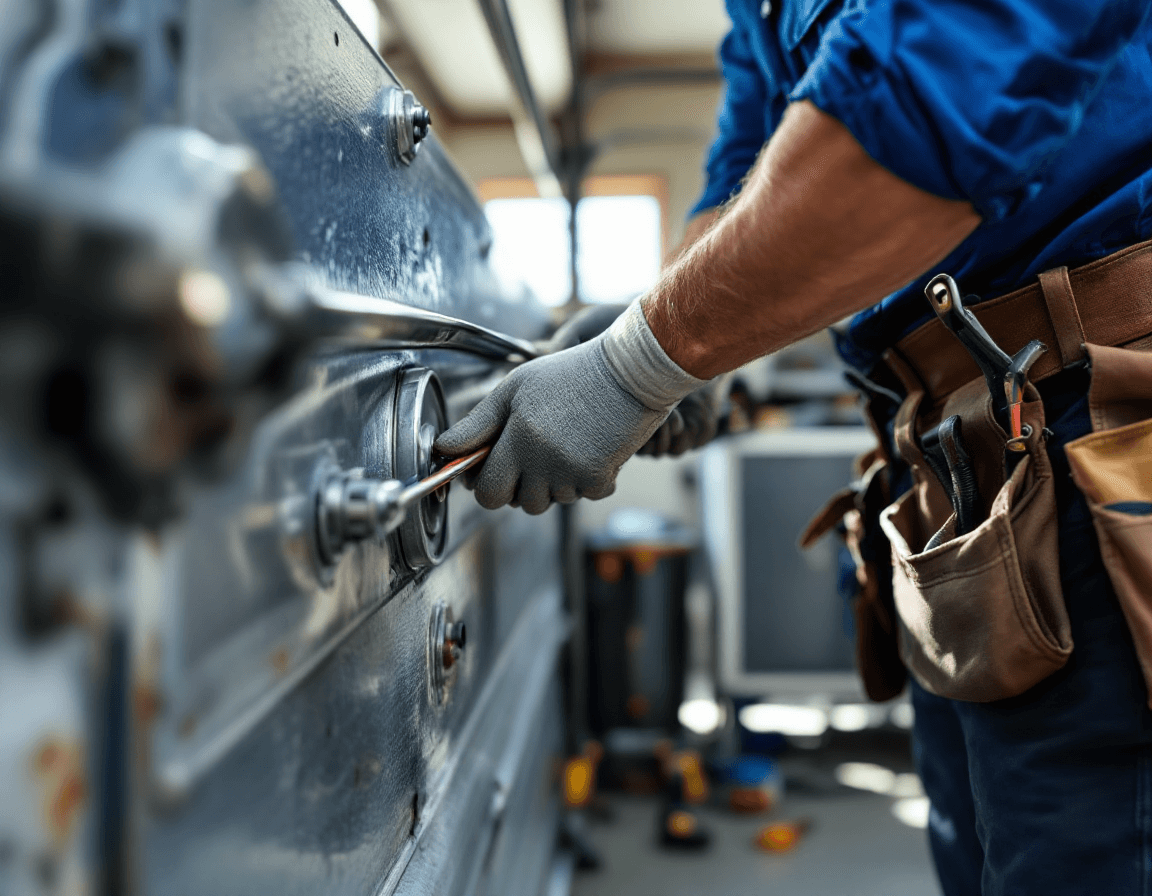
Garage Door Cable Replacement in Mountlake Terrace, WA is one of the more common repairs we handle for homeowners in the city's older neighborhoods and newer subdivisions alike. A lift cable that has snapped, frayed, or jumped off its drum can leave a heavy door hanging crooked or stuck halfway open, which is both inconvenient and potentially dangerous. Many Mountlake Terrace households first notice the problem when a loud bang echoes through the garage or the opener strains without moving the door.
Cables rarely fail without warning, but the warning signs are easy to overlook when you use the door every morning. Small changes in how the door rises, closes, or sits in its track often show up weeks before a cable gives way. Knowing what to look for lets you call for service on your schedule instead of at 6:30 a.m. with a car stuck in the driveway.
This guide explains why cables wear out in our part of Snohomish County, what the warning signs look like, how cable and drum repairs are handled, and what a typical visit costs. It also covers why this work belongs in the hands of a licensed, insured technician. If you are dealing with a door that is stuck right now, the final section explains how to reach our team.
Why Our Damp Winters Put Extra Strain on Lift Cables
Mountlake Terrace sits in a climate that feels mild by national standards but is hard on steel. Long stretches of gray, wet weather from October through April keep moisture sitting on surfaces that were never meant to stay wet. Lift cables are braided steel, and moisture that works its way into the strands can cause surface rust that gradually weakens the wire.
Temperature swings add another layer of stress. A cold morning can make the metal contract and the door's springs stiffen, then a warm afternoon brings everything back to a different state. Over several seasons, those repeated changes encourage fatigue in the cable strands, especially where the cable wraps around the drum and bends sharply.
Many homes in the city were built during decades when garage doors were heavier and used original hardware that has now been in service for a long time. When a door has years of accumulated wear, a cable that looked fine during a routine check can fail under the next load. That is why we tend to recommend inspecting cables whenever a spring or opener service is already scheduled.
Reading the Warning Signs Before a Cable Lets Go
Most cable failures give off some kind of signal. The door may start to look slightly off balance, or you may notice a new sound on the way up or down. The problem is that these signs are easy to dismiss as normal wear. Here are the symptoms we hear about most often from homeowners in the 98043 area:
- The door hangs lower on one side than the other, or the bottom seal sits tilted against the threshold.
- The door closes unevenly, catches, or seems to bind on one track.
- You see visible fraying, kinks, or rust-colored residue on the cable strands.
- The door rises a few inches and then stops or slips, even though the opener is running.
- There is a loud snap or bang, followed by a door that no longer moves smoothly.
If you notice any of these, avoid running the opener repeatedly to test it. Forcing a door that is already unbalanced can turn a cable repair into a bent track, a damaged opener, or a door panel that needs replacement. Simply keep the door closed, use the outside handle only if the door is fully down, and schedule an inspection.
What Happens Inside the Drum When a Cable Jumps
The lift cable does its work by winding around a drum at the end of the torsion shaft above the door. As the spring turns, the drum pulls the cable and lifts the door in a controlled way. When a cable comes off the drum, the drum may keep turning while the cable goes slack, which is why a door can end up sagging or tilting in a way that looks sudden but has been building for a while.
Cable drums are grooved, and the cable is supposed to sit in a specific groove at each rotation. If the cable was frayed, stretched, or uneven, it may have crossed over itself or bunched up, creating a tangle that stops the drum from turning smoothly. Sometimes the drum itself is worn, cracked, or loose on the shaft, and simply replacing the cable without checking the drum leaves the next failure waiting.
For this reason, our technicians inspect the drum surfaces, the set screws, and the cable anchoring points every time a cable is replaced. A drum that looks damaged or no longer seats correctly on the shaft will be addressed as part of the same visit, so the new cable is not placed on a faulty foundation.
Telling Cables, Drums, and Springs Apart
Homeowners often use the word "spring" to describe any part of the door that sits above the opening, but the cable system and the spring system work together without being the same thing. The torsion spring stores the energy that lifts the door, the drum converts that energy into a pulling motion, and the lift cable connects the drum to the bottom bracket of the door. Each part has its own failure pattern.
Lift cables are usually the simplest to identify. They run vertically on each side of the door, and a damaged one is often visible as a loose or frayed section near the bottom bracket. Drums are less visible, since they sit tucked in at the ends of the shaft, but a technician can usually spot wear by looking at the grooves and checking whether the cable seats cleanly.
Torsion springs are a separate and more hazardous component. They are wound under very high tension, and they should only be adjusted or replaced by a trained professional with the proper equipment. If a spring has broken, the door will often refuse to lift at all, and the cables may look slack even though they are intact. Diagnosing the difference correctly is one reason a licensed technician should handle the job.
Why a Snapped Cable Is Not a Do-It-Yourself Job
Garage door cables carry the weight of a heavy panel, and the system around them is held under real tension. A cable that snaps can whip through the air with enough force to cause serious injury. Even a cable that looks slack may still be connected to a spring that is loaded, which means the wrong move can release stored energy at the worst possible moment.
Attempting a repair with a generic cable from a hardware store also creates problems. Cables are sized and rated for specific doors, and an improperly sized cable can stretch, slip off the drum, or fail early. Mismatched hardware, incorrect cable lengths, and unbalanced doors are common results of a quick fix that seemed reasonable at the time.
We want homeowners to understand that our advice is not about protecting a service call. It is about protecting people. Our technicians are licensed, bonded, and insured, and they work with the tools and procedures that make cable and drum service safe. If you are unsure whether a situation is safe to attempt yourself, it is not.
What a Cable Replacement Visit Usually Involves
A typical service visit starts with a full check of the door rather than just the broken part. The technician confirms the door is secured, examines both sides of the cable system, looks at the drum and shaft, and checks the spring and bracket condition. The goal is to find out why the cable failed, because a cable that broke early often points to another issue that needs attention.
Once the diagnosis is clear, the technician replaces the damaged cable and, when needed, the drum. The new cable is routed correctly, seated in the grooves, and secured at both ends. The door is then tested through a full cycle to confirm it lifts evenly, closes squarely, and sits level in the track. Adjustments to tension, track alignment, or the opener limits may follow if the door was affected by the failure.
Homeowners are often surprised by how quickly a well-equipped technician can complete this work. Many visits are finished in a single appointment, though timing depends on how many components need attention and whether any parts must be ordered. Your technician should walk you through what was found and explain what was done before leaving.
Understanding Typical Pricing for Cable Work
Most cable replacements in our service area fall in the range of $110 to $300. The final amount depends on several practical factors rather than a single flat rate. Door size and weight influence the cable specification, and a drum that needs replacement will add to the total compared with a simple cable swap.
Access and condition also matter. A door that has been poorly maintained may need additional adjustments to restore smooth operation, and a cable failure that caused track damage will require more labor. If the inspection reveals a worn torsion spring or other component that should be addressed at the same time, the technician will explain those options separately so you can decide how to proceed.
Before any work begins, you should receive a clear explanation of what is needed and what it will cost. Ask for a breakdown of parts and labor, and do not hesitate to ask questions about why a particular component is being recommended. A reputable technician will be comfortable walking you through the reasoning.
Protecting Cables Through a Wet Snohomish County Winter
Preventive care is not complicated, but it does make a difference in a region with long wet seasons. Keeping the garage reasonably dry and ventilated helps slow rust on steel hardware. Avoid pouring water or cleaning solutions directly onto the cables, since moisture trapped in the braid can accelerate corrosion.
Regular visual checks are also worthwhile. Once or twice a season, look at each cable for fraying, kinks, or discoloration, and make sure the drum sits cleanly on the shaft. Keep the door's tracks and rollers clear of debris so the system is not forced to work harder than it should.
A few additional habits can extend the life of the system:
- Schedule a professional inspection every year, ideally before the rainy season begins in the fall.
- Lubricate rollers, hinges, and the bearing surfaces using a product recommended for garage doors, but keep lubricant off the cables themselves unless your technician advises otherwise.
- Operate the door smoothly and avoid forcing it when it is out of balance.
- Note any new noises or changes in movement and schedule service promptly rather than waiting for a failure.
Neighborhood Notes Around Lake Ballinger and Town Center
Our technicians regularly travel through Mountlake Terrace and the surrounding area, including homes near Lake Ballinger and the blocks around MLT Town Center. Each part of the city has its own mix of housing styles, from older single-story homes with long-standing garage doors to newer properties with more modern hardware. Those differences shape what we see during a cable visit.
Homes near the lake often have garages that experience more humidity during the winter months, which can increase rust on exposed hardware. Properties closer to the commercial corridors may have doors that get heavier daily use, especially when they serve busy households with multiple vehicles. In both cases, a visit is a good opportunity to check the entire system rather than only the component that failed.
Whether you live near the lake, around the Town Center, or in a quieter residential pocket of the 98043 ZIP code, the principles are the same. Look for early warning signs, avoid forcing a damaged door, and have a licensed technician confirm the cause before the repair begins.
Choosing a Technician for Cable and Drum Repairs
Cable work is one area where choosing the right technician matters a great deal. Look for a company that is licensed, bonded, and insured, and ask them to explain the work in plain language. A good technician will describe what failed, what they plan to replace, and what options exist if additional issues are found.
Pay attention to how the technician approaches safety. They should discuss the importance of keeping people clear of the door, explain how spring tension is handled, and avoid pressuring you into unnecessary upgrades. A trustworthy professional will recommend repairs that match the actual condition of your door.
You should also expect a clear estimate before work begins and an opportunity to review the final results. Testing the door through several cycles after the repair is standard practice, and your technician should confirm that the door lifts evenly and closes squarely before leaving.
Scheduling Your Cable Inspection Before the Next Storm Season
If your door is sitting crooked, binding on one side, or hanging with a visibly slack cable, the best next step is to stop operating it and arrange a professional visit. Waiting often turns a manageable cable replacement into a bigger repair involving track damage, opener strain, or a broken spring. Even if the door still works, a routine inspection can catch early wear before it leads to a failure on a cold morning.
Seattle Garage Door Fix serves Mountlake Terrace and more than 60 cities across the greater Seattle and Western Washington region, with licensed, bonded, and insured technicians ready to assess lift cables, cable drums, and related components. Call (888) 799-3819 to describe your symptoms and schedule a visit. We will confirm the cause, explain the options, and give you a clear picture of the work before anything begins.