
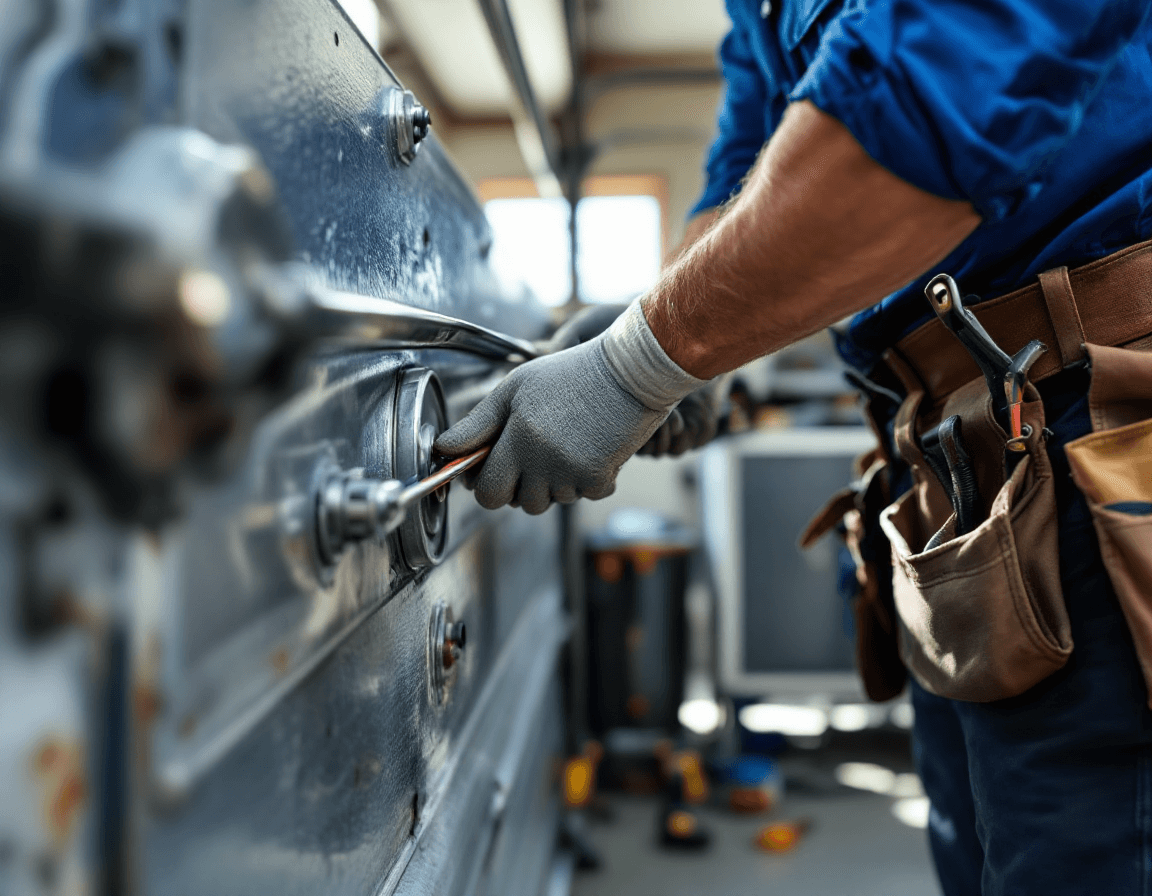
Garage Door Cable Replacement in Shoreline, WA is one of the most common repairs we handle for homeowners across the city, and it is also one of the most dangerous to attempt without training. A garage door is balanced by a system of lift cables, drums, and springs, and when one cable fails, the door can drop unevenly, jam, or fall. Shoreline homeowners deal with this problem in a wide range of houses, from older split-levels near Echo Lake to newer homes on the bluffs above Richmond Beach. This page explains what cable failure looks like, why it happens so often in our part of the Pacific Northwest, what a professional visit involves, and what to expect for cost.
Cable problems rarely arrive without warning, though many people do not notice the early signs until the door is stuck open or half closed. A door that once rose smoothly may start to hesitate, make a grinding sound at the top of its travel, or show a visible gap along one side of the bottom seal. Sometimes the only clue is a slight tilt when you look at the door from the street. Paying attention to these changes gives you time to schedule a repair on your terms instead of waiting for a late-evening emergency. Our technicians see the same pattern repeatedly: small irregularities first, then a full failure on a cold or rainy morning.
If you are unsure whether your door needs attention, you can call (888) 799-3819 and describe what you are seeing. A licensed technician can tell you whether the problem is a cable, a spring, a track, an opener, or something else entirely. Many symptoms overlap, and an accurate diagnosis keeps you from paying for work you do not need. Below, we walk through the details that matter most for homes in Shoreline and nearby neighborhoods.
Reading the Early Warning Signs Before a Cable Lets Go
Most lift cables do not snap without giving some indication that they are wearing out. The most common early sign is fraying along the length of the cable, where thin wires begin to break and stick out like tiny hooks. You may also notice rust-colored staining or a flaky, powdery residue on the cable where it passes over the drum. Running a gloved hand carefully along the cable (with the door fully closed and the opener disconnected) can reveal roughness that the eye misses. Any cable showing broken strands should be replaced before it fails completely.
Door behavior often changes before a cable visibly fails. A door that closes unevenly, with one side reaching the floor first, is often telling you that one cable has stretched or lost tension compared with the other. Some homeowners describe the door "pulling to one side" or binding in its track on one corner while the opposite corner moves freely. When the door hangs noticeably lower on one side, stop using the opener until someone has inspected the system. Continuing to run a door in this condition can damage the opener, twist the door panels, and place extra strain on the remaining cable.
A sudden loud bang from the garage, similar to a gunshot or a heavy object dropping, is the classic sign of a snapped cable. In many cases the door will stop, sag, or drop a few inches and then refuse to move in either direction. You may also see a loose cable hanging from the drum or dangling near the track. If this happens, keep people and pets away from the door, do not try to lift it by hand, and do not attempt to free the cable yourself. Call a professional to secure the door and make a safe repair.
Why Shoreline Garages Wear Cables Faster Than You Might Expect
Our climate plays a larger role in garage door wear than many homeowners realize. Shoreline sits in a region with long, damp winters, frequent overnight condensation, and a steady supply of moisture from the Puget Sound air that drifts inland. Steel cables are galvanized to resist corrosion, but the coating can wear through over years of exposure, especially on garages that are not fully heated or that trap humidity. When moisture sits on the cable between wraps around the drum, rust can form in areas you cannot easily inspect. That hidden corrosion is one reason cables that look acceptable from a distance sometimes fail without much notice.
Homes near the western edge of the city, including those closer to Richmond Beach and the bluff neighborhoods, can experience additional salt and moisture exposure during windy weather. Salt carried in the air does not need to be heavy to accelerate corrosion on exposed metal hardware. Garages with open soffits, older weather seals, or gaps at the bottom of the door can let in more moisture than newer, tightly sealed installations. Even a door that faces away from the prevailing wind can collect damp air if the garage is cold and the house is warm on the other side of the wall. These conditions shorten the working life of cables in ways that a dry-climate homeowner might never see.
Shoreline also has a mix of housing ages, which affects what a technician finds during a visit. Many homes in older neighborhoods, including areas around North City and Echo Lake, have garage doors that have been running for decades. Those systems may have original drums, worn bearings, and hardware that no longer matches modern replacement parts. Newer homes may have lighter doors and different spring arrangements, but the cable principles remain the same. A good technician evaluates the whole assembly, not just the single cable that appears damaged.
What a Snapped or Dislodged Cable Looks Like From Inside the Garage
When a lift cable breaks, it usually does so at the end where it connects to the bottom bracket or near the drum. Breaks at the bottom often appear as a cable that has pulled loose from its fitting, with the end sometimes curled or flattened. Breaks near the drum are less visible and may show up as a loose coil sitting on the drum or a cable that has jumped off its groove. Some cables fray completely through over time, leaving a clean-looking end that appears almost ordinary until you examine the terminal closely. Each failure point requires a slightly different approach during repair.
A cable can also come off the drum without snapping. This often happens when the door has been forced, when one side has become unbalanced, or when the drum has worn and no longer holds the cable in its groove. In that situation, the cable may loop around the drum, wrap over itself, or hang beside the drum at an angle. Attempting to pull the cable back into position by hand is dangerous because the door may still be under spring tension. A trained technician will secure the door, relieve the load in a controlled way, and reseat or replace the cable correctly.
Homeowners sometimes mistake a cable problem for a track problem or an opener problem. A door that grinds or sticks partway up may have a bent track, a worn roller, or a cable that is catching on the track edge. Because many symptoms look alike from the driveway, it helps to note exactly when the problem happens: at the start of travel, midway, near the top, or when the door is closing. Sharing those details with the technician shortens the diagnostic process and helps confirm whether the cable is the true cause.
Cable Drums, Drum Shafts, and Why One Piece Is Rarely Enough
The cable drum is the grooved cylinder that the lift cable winds around as the door opens. Drums are typically mounted on a torsion shaft that also carries the springs, so the drum and spring assembly work together. When a drum is worn, cracked, or slipping on its shaft, replacing only the cable may solve the immediate problem but leave the underlying issue unresolved. A worn drum can pinch a new cable, cause uneven lifting, and wear the replacement cable faster than expected. Inspecting the drum during every cable visit protects the investment you are making.
Drum set screws and bearings also deserve attention. Set screws that have loosened can allow the drum to shift, which changes how the cable feeds and creates uneven tension between the two sides. Bearings that have dried out or corroded may create a squeal or grinding noise that homeowners often blame on the opener. A technician who replaces a cable without checking these components may leave a door that works for a few weeks and then develops new symptoms. Thorough service means checking alignment, shaft condition, and drum fit before the job is considered finished.
It is also worth knowing that drums and cables are often sold as matched pairs for specific door sizes and spring configurations. Mixing parts from different systems can create a door that looks fine at first but is out of balance. Your technician should confirm the door's dimensions, spring type, and drum size before ordering components. This is one reason we recommend scheduling a professional inspection rather than shopping for a cable online and attempting an installation at home.
How a Professional Cable Replacement Visit Usually Unfolds
A professional visit begins with a safety assessment before any tools come out. The technician will check whether the door is still under spring tension, whether the cable is loose or connected, and whether the door can be safely supported during the repair. Many cable failures involve stored energy in the torsion springs, which is why only trained technicians should handle the work. Once the door is secured, the technician removes the damaged cable, inspects the drum and bottom bracket, and measures the replacement needed for the door.
Next comes the installation of the new cable and any related hardware. The technician threads the cable through the drum groove, attaches it to the bottom bracket, and checks that it seats correctly without overlapping or sitting outside the groove. The door is then carefully balanced and tested through its full travel. A properly repaired door should lift and lower smoothly, stop cleanly at the top and bottom, and sit level in its track. Many technicians also check the opener's force settings and safety reversal once the door is running again.
Before leaving, the technician should explain what was replaced, what was inspected, and whether any other components need attention soon. Good service includes a clear written explanation of the work completed and the price. Homeowners should feel comfortable asking questions about the repair and about how to watch for future wear. A thorough visit is not rushed, because cutting corners on cable tension or drum alignment can lead to another failure within months.
- Confirm the door is safely supported and the spring system is controlled before touching the cable.
- Inspect the cable, drum, bottom brackets, and nearby hardware for additional wear.
- Install the correctly sized cable and seat it fully in the drum groove.
- Test the door through full open and close cycles, checking level and balance.
- Review the opener's safety reversal and force settings after the repair.
Typical Pricing and What Shapes the Final Quote
For most lift cable replacements, our typical pricing falls in the range of $110 to $300. That range reflects the common repair scenarios homeowners bring to us, but the exact number depends on several factors. The cable itself is only part of the job, and the amount of labor, the condition of the drum, and the need for additional parts all influence the final total. Doors with heavier panels, unusual sizes, or multiple damaged components may cost more because they require more time and careful balancing. Every quote should be explained before work begins so you know what is included.
Several details can move the price up or down. A single cable replaced on a standard two-car door will generally cost less than a repair that involves both cables, a damaged drum, and a bent bottom bracket. If the cable came off the drum and the drum is cracked, the drum replacement may be a separate line item. Access also matters, because a garage with limited clearance or a complicated track configuration can require additional time. Ask your technician to walk through the estimate so there are no surprises.
We encourage homeowners to focus on the value of a correct repair rather than the lowest possible number. A cheap cable installed without proper drum inspection can fail again quickly and create a second service call. The goal is a door that operates safely, balances correctly, and holds up through the next several seasons of Shoreline weather. Asking about the warranty on parts and labor is a reasonable step, and a reputable company will be direct about what is covered.
Choosing Cable Repair Over Full Door Replacement
Many homeowners wonder whether a cable failure means it is time to replace the entire garage door. In most cases, the answer is no. If the door panels are straight, the tracks are intact, the springs are in good condition, and the opener functions properly, replacing the cable and related hardware often restores full function at a fraction of the cost of a new door. A cable repair is typically a targeted fix that addresses the specific failure while keeping the rest of a sound system in place. The decision should rest on the overall condition of the door rather than on one failed part.
There are situations where replacement makes more sense. Doors with severe panel damage, warped sections, rotted bottom panels, or badly corroded hinges may not justify repeated repairs. If the door is very old and its springs, drums, bearings, and tracks all show heavy wear, investing in a complete system may give better long-term value. A technician who has inspected many doors in the area can help you weigh those trade-offs honestly. Ask for an assessment that considers both the immediate repair and the likely lifespan of the rest of the door.
Insulation and energy considerations can also enter the conversation, especially in homes where the garage is attached to living space. A newer door with better seals may reduce drafts and moisture entry, which benefits both the garage and the house. However, adding a new door should be a deliberate decision, not a reaction to a single failed cable. We are glad to explain the options so you can decide based on your budget, your home, and your long-term plans.
Safety Lines Every Shoreline Homeowner Should Respect
Lift cables and torsion springs store significant energy, and mistakes during repair can cause serious injury. Even a door that appears light or easy to move may be under tension that can release suddenly. For this reason, cable and spring work should always be performed by a licensed, insured professional with the right tools and training. Homeowners who attempt to replace a cable themselves risk being struck by a spring, a cable end, or a falling door. The savings are rarely worth the danger.
Some tasks may seem simple but still present serious hazards. Removing a drum, adjusting spring tension, or prying a cable back onto a drum can all release stored energy without warning. Clamping the door in place with makeshift supports is not a reliable substitute for a professional securing system. Likewise, forcing a door open or closed while a cable is damaged can worsen the failure and endanger anyone nearby. When in doubt, keep your distance and call for service.
- Never attempt to remove, adjust, or re-tension a torsion spring yourself.
- Do not pull a loose cable back onto the drum by hand while the door is under load.
- Keep children and pets clear of the garage door area during any suspected cable failure.
- Disconnect the opener power before inspecting the door, but do not assume that alone makes the door safe to handle.
- Call a licensed technician if the door is stuck, leaning, or hanging unevenly.
Scheduling Repairs Around Shoreline's Weather and Daily Routines
Timing a cable repair can make the process smoother for everyone in the household. Because Shoreline winters are often damp and dark, many homeowners discover garage door problems during the colder months when the door is harder to operate and the cables are stiffer. Scheduling service during milder, drier weeks can make the work more comfortable and reduce the risk of moisture affecting the installation. That said, a broken cable is not something to postpone when the door is stuck, so emergency service should not wait for better weather. Calling early when you first notice symptoms usually costs less and keeps the rest of the door from being damaged.
Think about how you use the garage before the appointment. If the door is your primary entry point for vehicles, arrange for alternate access or parking while the repair is underway. Clear the area around the door so the technician has room to work and can move ladders, tools, and parts safely. Note any sounds, sticking points, or unusual behavior so you can describe them accurately. A few minutes of preparation helps the visit run efficiently and keeps your household routine on track.
Remember that the technician will need to test the door after the repair, so expect the door to operate several times during the visit. This is a normal part of confirming balance and safe reversal behavior. If you have young children or pets who might be startled by the noise, plan to keep them in a separate area. Clear communication about the schedule helps everyone feel more comfortable.
Protecting New Cables Through a Wet Puget Sound Winter
Once a cable has been replaced, a little attention can extend its life considerably. Periodic visual checks are the simplest step, looking for fraying, rust spots, or cables that appear loose on the drum. Keep the garage as dry as practical by addressing leaks, cleaning out damp debris, and ensuring the door's bottom seal is in good condition. Good ventilation helps reduce condensation on metal surfaces, which is especially helpful in tightly sealed or lightly used garages. These habits do not replace professional maintenance, but they help you notice trouble early.
Lubrication is another area where homeowners can make a difference, provided they use the right products and avoid spraying lubricant onto the cable itself. Many technicians recommend keeping the rollers, hinges, and track surfaces lightly lubricated according to the manufacturer's guidance, while leaving the cable clean and free of heavy coatings that attract grit. If you are unsure which product is appropriate, ask your technician during the visit. Over-lubrication can collect dust and create sticky residue that interferes with smooth operation.
Scheduling an annual or semiannual inspection is one of the most effective ways to protect the whole door system. A technician can look at cables, drums, springs, bearings, and balance before a small issue becomes a broken cable on a rainy morning. Regular service also gives you a chance to ask questions and track the condition of the door over time. If you want help setting up a maintenance visit for your Shoreline home, call (888) 799-3819 and our team can talk through the options with you.
If your Shoreline garage door is hanging crooked, binding on one side, or showing frayed cable strands, do not wait for a full failure. Call Seattle Garage Door Fix at (888) 799-3819 to schedule a licensed technician for lift cable replacement, drum service, and a complete safety check. We serve Shoreline and neighborhoods including Richmond Beach, Echo Lake, and North City, with pricing for most cable replacements in the $110 to $300 range. Let us get your door balanced, secure, and running smoothly again.