
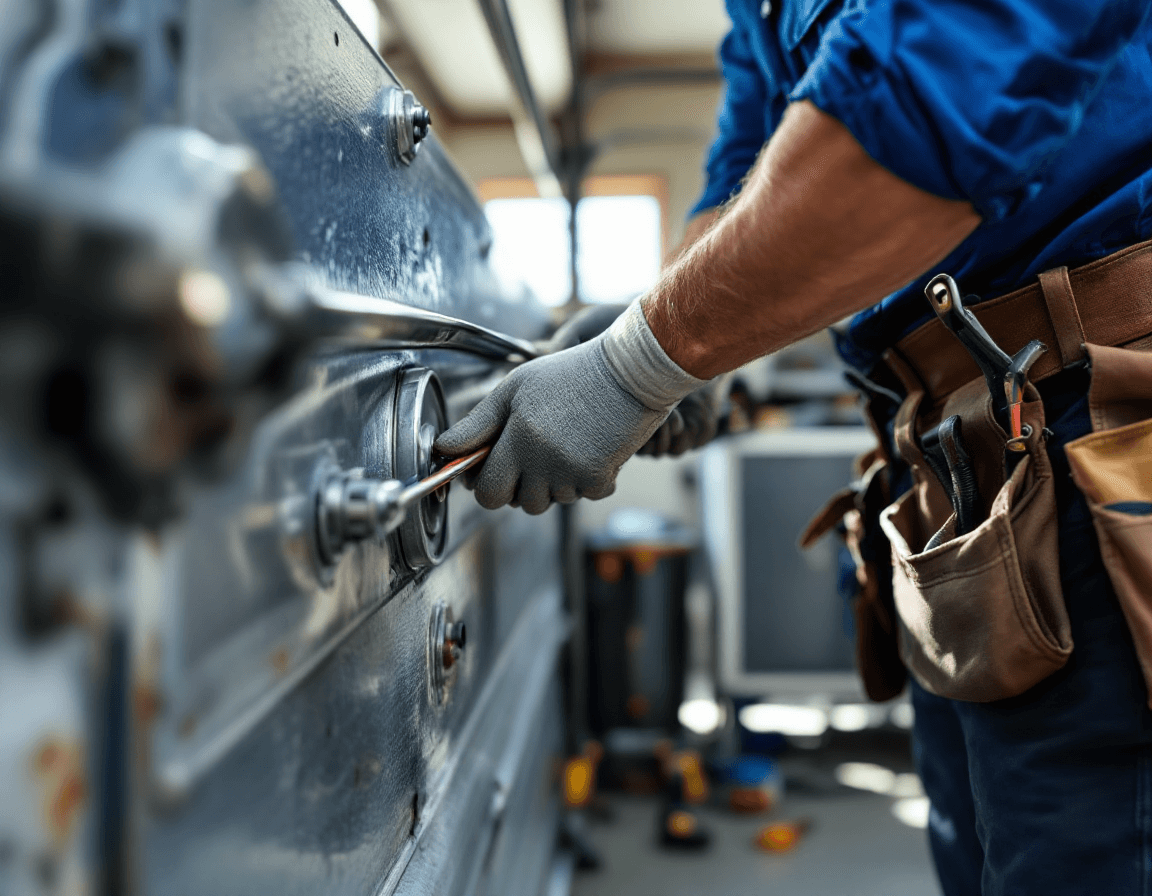
Garage door cable replacement in Kenmore, WA is one of the more common repairs we handle, and it is also one of the most important to get right. The lift cables on a garage door carry the full weight of a heavy panel every time it opens and closes, and when one lets go, the door can drop unevenly, jam in its tracks, or sag in a way that puts people and property at risk. Homeowners in Kenmore often notice the problem first as a loud bang from the garage, a door that suddenly sits crooked, or a cable hanging loose near the drum. Those are all signals that the cable system needs a professional look.
Kenmore sits on the northeast shore of Lake Washington, with neighborhoods that run from the waterfront and the shops near the Kenmore Waterfront up into quieter residential streets and wooded lots close to Saint Edward State Park. The mix of lake humidity, long wet stretches, and occasional hard freezes gives garage door hardware a real workout. Cables, drums, and bearings that look fine in July can show serious wear by the end of a damp January. If your door is making new sounds or behaving differently, it is worth having the cable system inspected before a minor fray becomes a broken line.
Seattle Garage Door Fix serves Kenmore and the surrounding King County communities, including the 98028 ZIP code, with licensed, bonded, and insured technicians. We replace broken and frayed lift cables, retrieve cables that have come off the drum, and service the drums themselves so the new cable seats properly. Whether you have a single-car door on a older street or a wider two-car door in a newer development, the goal is the same: a balanced, safe door that lifts smoothly and stays where you put it. If you are unsure whether your problem is a cable or something else, call us at (888) 799-3819 and we will walk you through what to watch for.
Reading the Early Signs Before a Cable Gives Way
Most lift cables do not fail without warning. Over months and years, the individual steel strands in a cable fatigue, especially where the cable wraps around the drum and bends repeatedly. Before a full break, many homeowners notice a door that feels heavier on one side, a slight slant when it is halfway open, or a faint grinding sound at the drum when the opener starts. These clues are easy to dismiss, but they are the door telling you that one cable is carrying more load than the other.
Visual checks can catch some of these problems early, although you should never tension, adjust, or remove anything yourself. Stand inside the garage with the door closed and look up at the vertical tracks and the cables that run toward the top of the door. Frayed strands that look like tiny hairs or fuzzy spots along the cable are a clear warning, as is any visible rust, flattened sections, or a kink that does not straighten out. Pay attention to the drum on each side as well, since a drum with a cable wound unevenly or sitting loose on the shaft will cause the same lopsided behavior.
- Door drops or sags suddenly when it is partly open
- One side of the door sits lower than the other when closed
- Visible fraying, rust spots, or kinks along the lift cable
- Cable wrapped unevenly, bunched, or overlapping on the drum
- Grinding, clicking, or popping noises during each cycle
- A loud snap from the garage, followed by the door stopping
If you notice two or more of these signs, it is smart to stop using the door until a technician has seen it. Opening a door with a damaged cable can cause the remaining cable to snap under strain, which only makes the repair more involved.
What a Snapped Lift Cable Looks Like on a Kenmore Driveway
When a lift cable breaks, the sound is usually sharp and unmistakable, something like a rifle crack or a heavy metal twang that makes people jump in the house. The door often drops a few inches or stops at an odd angle, and the opener may keep running and straining until it shuts off on its own. Some homeowners see a loose cable end hanging from the bottom bracket or the drum, while others only notice the damage after they try to open the door and it refuses to move evenly.
Because a single cable break leaves the door hanging on the other side alone, the panel can twist or pull out of the track. That is why we recommend keeping people and vehicles clear of the opening and why we do not recommend trying to lift the door by hand to "test" it. A door that has come partly off its track is more dangerous than it looks, and the springs that counterbalance the door are under enormous tension even when the door appears still. Keep kids and pets away from the area until a licensed technician has secured the door.
If your door has come off the drum rather than snapping, the cable may still be intact but no longer wound correctly. This is common when a door is operated while one side is already loose. The cable can slip off the drum groove, bunch up, or wrap in a tangle that prevents smooth travel. In these cases, the drum and cable often need to be reset and inspected together, and any damaged section should be replaced rather than simply repositioned.
Why Cables and Drums Should Be Serviced as a Matched Set
It can be tempting to replace only the cable that broke and assume the rest of the system is fine, especially if the repair quote is lower that way. In practice, the cable and the drum work as a pair. The drum has grooves designed to hold the cable at a specific tension and angle, and years of wear can flatten or distort those grooves. A new cable run onto a worn drum may slip again within weeks, or it may wind unevenly and produce the same crooked door you were trying to fix.
When we service a cable replacement in Kenmore, our technicians typically inspect the drum for wear, check the shaft and set screws, and look at the bearing and cable anchor points. If the drum is cracked, badly worn, or loose on the shaft, replacing it at the same visit is usually more reliable than hoping the old one holds. Matching the cable to the drum's specifications also matters, since the wrong diameter or length can cause the same problems that started the repair. Ask whether the drum was inspected when you schedule, so you know what to expect.
How Pacific Northwest Moisture Wears Down Cables
The Pacific Northwest is not a harsh desert climate, but it is persistently damp, and that dampness is hard on steel. Garage air in Kenmore can carry moisture from the lake and from long periods of rain, and that humidity settles onto cable strands, drum surfaces, and bracket hardware. Rust works its way into the small gaps between strands, and once corrosion starts, the cable loses strength from the inside out in a way that is hard to see from the floor.
Garages attached to older Kenmore homes can be especially prone to condensation, particularly if ventilation is limited or the door is rarely opened in the winter months. Cold snaps add another layer of stress, since steel contracts in low temperatures and the springs and cables take on different loads when the air is frigid. Many of the cable failures we see after a stretch of cold weather are simply the result of a system that was already weakened by moisture and then pushed past its limit.
Protecting your hardware from moisture is less about special products and more about routine care. Keep the garage reasonably dry, wipe down the cables and tracks if they are visibly wet after storms, and avoid leaving the door partly open for long periods in damp weather. A professional inspection once a year, or after any unusually cold or wet season, can catch corrosion before it turns into a break.
Cold Mornings, Stiff Springs, and Sudden Failures
Winter is the season when most homeowners first encounter a cable problem, usually on a chilly morning when the door refuses to open smoothly or makes a noise it never made before. Cold metal is less flexible, lubricant thickens, and any cable that was already fraying can give way when the door is first lifted. This is why we often see calls clustered after a freezing night rather than during a warm summer week.
If your door does not move as it normally does in the cold, do not keep forcing the opener to finish the cycle. Running the motor against a binding door or a cable that is catching on its drum can strip gears, overheat the opener, and turn a cable issue into a larger repair. Turn off power to the opener at the breaker or unplug it, and call a professional to examine the door.
Spring and cable systems are connected, since the springs provide the counterbalance that the cables transfer to the drum. A worn spring can make a cable appear to fail, and a cable that has been overstressed can damage a spring. Because both components are under high tension, they should only be handled by trained technicians with the right tools. This is one of the clearest reasons to call a licensed professional rather than attempting a do-it-yourself fix.
Understanding What the $110 to $300 Range Typically Covers
Homeowners often ask what a cable replacement should cost, and we want to be straightforward about it. For most standard cable replacements, our pricing falls between $110 and $300, depending on the door size, the number of cables involved, the drum condition, and whether additional parts are needed. A single cable replacement on a common residential door typically sits near the lower end of that range, while work involving drum service, multiple cables, or a damaged bracket may land higher.
That range is a guide, not a guarantee, because every door is different. A technician needs to see the door, check the cable routing, inspect the drum and hardware, and confirm the appropriate replacement parts before giving you a final number. We aim to explain the scope of work clearly before starting, so you know what is being replaced and why. If additional repairs are recommended, you should be told about them up front and have the chance to decide how to proceed.
When you call for an estimate, have the door's approximate width and height ready, along with any details about what you have seen or heard. Photos of the cable and drum can also help the technician prepare. A good estimate should describe what is included, so ask about parts, labor, and any follow-up items before the visit.
Crooked Doors and Binding Tracks: Diagnosing the Lopsided Pull
A door that hangs crooked or binds on one side is one of the most frustrating symptoms, because it can look like a track problem, a roller issue, or a cable problem depending on the day. In many Kenmore garages, the cause is actually uneven cable tension or a drum that is no longer aligned, which pulls one edge of the door higher or lower than the other. The result is a door that closes unevenly, scrapes the weatherstripping, or stops against the track partway down.
Rollers, hinges, and track alignment do matter, and a technician will check them. However, if the door has a slanted look when it is open or sits at an angle when closed, the cable system is a likely suspect. A damaged cable can allow the door to drop on one side, and a worn drum can cause one cable to wind more tightly than the other. Correcting these issues requires equalizing the cable system, which is a job for a trained technician who understands how the springs, cables, and drums interact.
Do not attempt to loosen or adjust the cables or spring tension to "straighten" the door yourself. Even small adjustments can release stored energy or produce uneven loads that cause a sudden failure. If the door is crooked, the safe response is to avoid operating it and schedule a professional inspection.
Safety Lines That Should Never Be Crossed at Home
Garage doors are heavy, and the hardware that moves them is under serious tension. Lift cables and torsion or extension springs store energy that can cause injury if released unexpectedly, and that risk is the main reason we insist on professional handling for all cable and spring work. Homeowners who have attempted DIY repairs often underestimate how quickly a cable can whip or a spring can release.
Here are a few clear boundaries to observe while you wait for a technician to arrive:
- Do not stand under or near the door while it is being operated or repaired
- Do not try to lift, tap, or lubricate a cable or drum while the door is still connected
- Do not remove springs, brackets, or drum sections without professional training
- Keep children, pets, and vehicles away from the door area until it is secured
- Disconnect the opener power before any inspection, and do not run the motor against a binding door
These rules protect you even if the door seems to move normally. A cable that appears stable can still fail under sudden stress, and a technician can identify hidden damage that is not visible from the floor. Treat any cable concern as a reason to pause and call for help.
Scheduling a Visit Across Kenmore and the Surrounding Neighborhoods
Our technicians serve Kenmore and many nearby King County communities, including homes close to the waterfront and the residential streets that lead toward Saint Edward State Park. Scheduling a cable repair usually starts with a short phone call, where we confirm the symptoms, ask about the door type, and arrange an appointment window that works for your household. If the door is unsafe to operate, let us know so we can prioritize the visit and give you interim guidance.
When you call, describe what you have observed in plain language. Mention whether the door dropped suddenly, whether you heard a snap, whether one side is lower than the other, and whether the opener is still running. Tell us whether the door is still working or has stopped entirely, and note any recent cold snaps or heavy rain, since those details help the technician plan the right tools and parts.
You can reach our team at (888) 799-3819 to discuss your Kenmore garage door, confirm service availability for ZIP code 98028, and get an estimate for cable replacement or drum service.
Keeping Your Cable System Healthy Between Service Visits
Once a cable repair is complete, a little ongoing attention can extend the life of the system and reduce the chance of a surprise failure. Most of what helps is simple observation and routine care, with professional inspections handling the parts that require special tools. The goal is to catch small changes before they become emergencies, which is especially valuable in a climate where moisture and cold can accelerate wear.
Start by making a habit of watching and listening during each door cycle. Notice if the door lifts at a steady pace, if the sound changes, or if one side seems to hesitate. Keep the garage as dry as practical, and wipe away any visible moisture from cables and tracks after wet weather. Avoid leaving the door partly open for long stretches in damp conditions, since that exposes the hardware to continuous humidity.
- Walk through a full open and close cycle once a month and listen for new sounds
- Look for visible fraying, rust, or kinks on the cables whenever the door is closed
- Check that the door sits level and closes evenly along the bottom edge
- Keep the area around the tracks and drums free of clutter and debris
- Schedule a professional inspection after any cable repair, unusually cold snap, or heavy storm season
- Call a licensed technician at the first sign of imbalance rather than waiting for a break
A well-maintained cable system does not need constant attention, but it does reward honest checking and prompt professional help. If anything in your door has changed, a call early on is almost always simpler and less costly than waiting for a snap. For cable replacement, drum service, or a safety inspection in Kenmore, contact Seattle Garage Door Fix at (888) 799-3819 and let our licensed technicians give your door the careful attention it deserves.