
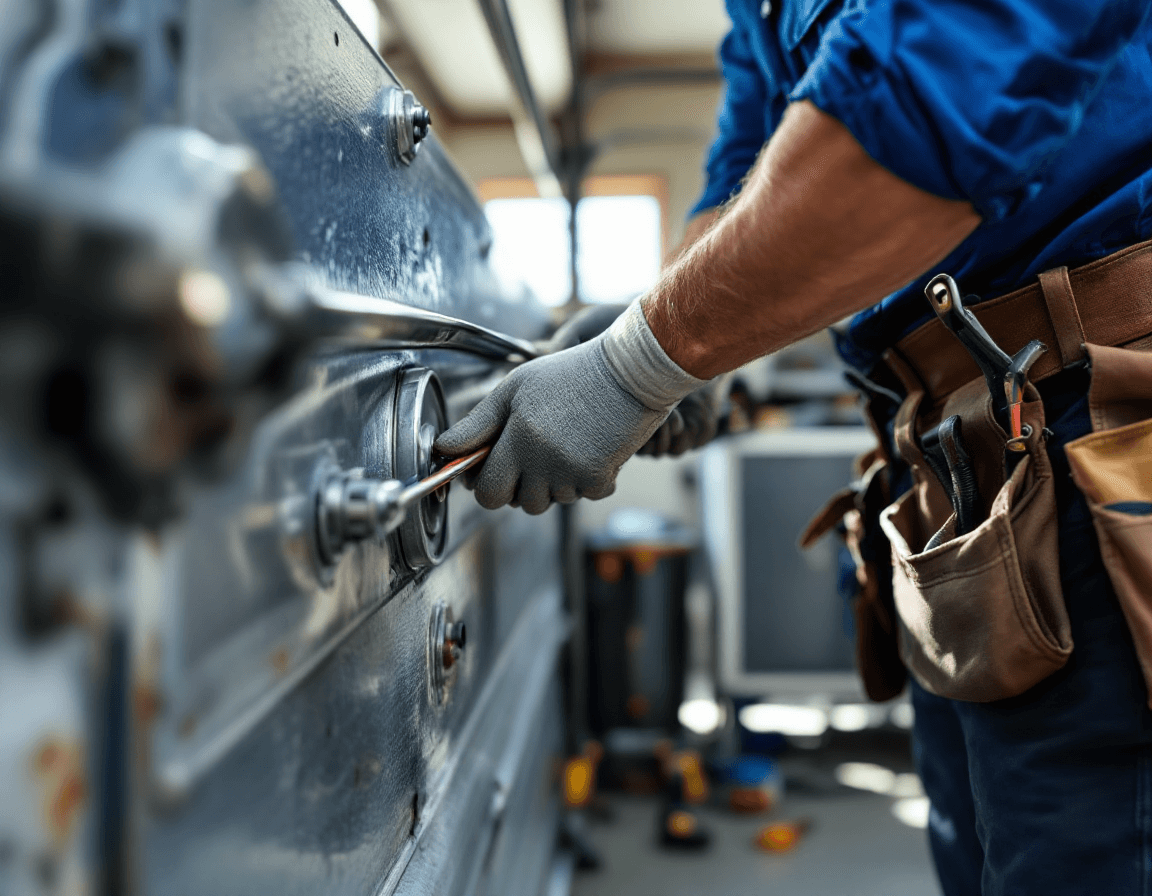
Garage Door Cable Replacement in Kirkland, WA is one of the most common repairs we handle, and it is also one of the most urgent when a cable fails with the door partly open or fully closed. Homes across Kirkland, from the condos near the Downtown Kirkland waterfront to the larger lots in Juanita and the hillside streets above Totem Lake, all rely on the same basic lift system: a pair of steel cables, a set of drums, and a spring assembly that does most of the lifting. When one cable frays, rusts through, or jumps off its drum, the door can tilt, bind, or drop without warning. Getting it fixed quickly protects both the door and the people who walk past it every day.
This page explains what a cable failure looks like, why Pacific Northwest weather accelerates the wear, what the repair involves, and what homeowners in 98033 and 98034 can expect to pay. We write from the perspective of technicians who work on these systems regularly, and we aim to give you enough context to recognize a problem early and understand what a professional should do about it. Cable work involves high spring tension, so this guide is meant to help you make informed decisions, not to walk you through a do-it-yourself repair. Where safety is involved, we point you toward a licensed professional.
If your door has recently made a loud bang, hangs at an angle, or refuses to open past a certain height, you are reading the right page. Each section below covers a different part of the picture, from early warning signs to the steps of a typical service visit. Keep your phone number handy, and if you are unsure whether the problem is a cable, a spring, or an opener issue, call (888) 799-3819 and describe what you are seeing. A short description often tells a technician a great deal before anyone arrives.
Why Kirkland Garage Doors Wear Their Cables Down Faster
Kirkland sits on the eastern shore of Lake Washington, and that location brings a lot of moisture into the air for much of the year. Garage doors here spend long stretches in damp, cool conditions, and the steel lift cables are particularly vulnerable to that environment. Water that collects in the wire strands does not evaporate quickly, so surface rust forms, then works its way inward where you cannot see it. A cable can look acceptable from the floor and still have lost a significant portion of its strength.
Temperature swings add another layer of stress. A winter morning in the 30s followed by a afternoon sun that warms the driveway can cause the door panels, tracks, and cables to expand and contract at different rates. Over hundreds of cycles, that movement fatigues the cable strands, especially at the points where they bend around the drum and the bottom bracket. Many homeowners in older Kirkland neighborhoods notice the cables seem fine in July and then fail in January, which is a pattern we see often.
Finally, the cables in many Kirkland garages are carrying more work than they were designed for. Heavier insulated doors, added windows, and decorative hardware all increase the weight the system must lift. When a door is out of balance because the springs have lost tension or the track is slightly out of square, the cables absorb the extra strain on every cycle. The result is cable fatigue that arrives sooner than the manufacturer's rough expectations suggest.
Reading the Early Signs Before a Cable Gives Way
Cable failures rarely happen in a single moment. More often, the cable shows a sequence of warning signs over weeks or months, and a homeowner who recognizes the first one can often schedule a repair before the door is stuck. The most useful habit is simply to look at the cables occasionally, ideally with the door closed and the opener disconnected by a professional. You are checking for stray wire strands, discoloration, and any spot where the cable appears to have flattened or kinked.
Rust is the signal we see most often in this region. An orange or brown film on the cable, or a dark stain on the drum, usually means moisture has been sitting on the metal for a long time. Surface rust alone may not mean the cable has failed, but it does mean the cable's interior condition should be evaluated, because corrosion often hides below the visible layer. A cable that feels stiff, crusty, or uneven when a technician runs a hand along it is a strong candidate for replacement.
Behavior changes in the door itself are another early indicator. If the door begins to close a bit faster on one side, pauses in a different place, or sits slightly unlevel when fully closed, the cable or drum on that side may be losing its ability to hold tension. Homeowners sometimes assume these symptoms are caused by the opener, but the opener only drives the door. It cannot correct an imbalance in the lift cables, and running the opener harder against a damaged cable can accelerate the damage.
What a Snapped Cable Sounds and Looks Like
A broken lift cable is usually announced by a loud crack or bang that seems to come from the top corner of the door. Some homeowners describe it as a gunshot, others as a heavy metal clang that echoes through the garage. The sound is often followed by an immediate change: the door drops suddenly on one side, stops partway, or refuses to move when the opener is activated. In many cases the opener motor will continue to run and strain, which can damage its gears if left unchecked.
Once the immediate shock passes, a closer look reveals the damage. Common signs of a snapped cable include a loose length of wire hanging near the drum, a door panel that sits visibly lower on one side, and a gap between the bottom bracket and the track. If the cable has come completely off the drum, you may see loose wire coiled on the floor or caught around the drum assembly. Any of these conditions calls for professional attention.
- Door drops or hangs crooked after a loud bang
- A visible gap or slack on one side of the door near the top bracket
- Loose cable coils on the garage floor or wound around the drum
- Opener motor runs but the door barely moves or stops partway
- Door stays stuck open or closed and will not respond to the wall control
If you notice any of these conditions, do not attempt to force the door open or closed by hand, and keep people and vehicles clear of the area. A door that is out of balance can move unpredictably once it is disconnected from the opener.
Lopsided Doors and Drum Trouble in Juanita and Rose Hill
A door that hangs crooked or lopsided is one of the most common complaints we hear from homeowners in Juanita and Rose Hill. These neighborhoods include a mix of older single-story garages and newer two-car designs, and the lift systems in each vary considerably. In many cases a lopsided door is not caused by a broken cable at all but by a cable that has partially unwound from its drum, or a drum that has slipped on its shaft. Either problem changes the tension on each side of the door.
When a drum shifts, the cable may wind unevenly, leaving one side of the door carrying more weight than the other. You may notice that the door rises in a slight slant, that the bottom seal rubs on one side of the track, or that the door binds near the top of its travel. These symptoms look similar to a spring problem, which is why a technician should inspect the cable, drum, and spring together rather than replacing one component in isolation.
Drum service is part of the same picture. A worn drum may have grooves that no longer hold the cable properly, causing it to ride up or slip during operation. Cable tangled around the drum is a sign that the cable has been unwinding without proper guidance, and once that happens the cable often needs full replacement along with the drum inspection. Our technicians check the drum set screws, the shaft, and the bearing surfaces at the same visit so the repair holds.
Torsion Springs, Extension Springs, and How They Affect the Cables
Understanding the spring system helps explain why cable problems can be so disruptive. Most residential garage doors in Kirkland use either torsion springs mounted on a bar above the opening or extension springs running along the horizontal tracks. Torsion systems are common in newer installations and in many remodeled homes, while extension systems appear more often in older homes. Each style interacts with the cables differently, and the cables are what translate the spring force into lifting motion.
In a torsion system, the cables wrap around drums mounted on each end of the spring bar. As the door lowers, the cables unwind from the drums and the springs wind up, storing energy that helps lift the door on the way back. If a cable breaks, the spring on that side can release its energy suddenly, which is one reason cable repair is considered dangerous work. A technician must control the tension before removing or installing any component, and this is a job that belongs in trained hands.
Extension spring systems use cables that run through pulleys and attach to the bottom bracket, with the springs stretched along the track. Cable failure in this style can cause the springs to snap back or the door to drop unevenly. Some homes have a safety cable running through the center of each extension spring, and a failure in that line is also a serious matter. We recommend that homeowners never attempt to replace springs or cables on their own, regardless of which system they have.
Our Cable Replacement Process from Inspection to Final Test
A typical cable replacement visit follows a clear sequence, and knowing what happens can help homeowners feel more confident during the repair. The technician begins with a visual inspection of the door, tracks, rollers, hinges, drums, and springs. This step helps identify whether the cable failure is the root cause or a symptom of another issue. The technician will also note the condition of the other cable and drum, since replacing only one side is rarely the best long-term result.
Once the assessment is complete, the technician secures the door, releases spring tension using proper tools, and removes the damaged cable. The replacement cable is measured and installed to the correct length, threaded through the bottom bracket and around the drum, and secured with the appropriate fittings. Drums and shafts are checked for wear, and any loose hardware is tightened. The spring system is then rebalanced so the door lifts evenly on both sides.
- Visual inspection of cables, drums, springs, tracks, and hardware
- Safe release of spring tension using proper equipment
- Removal of the damaged cable and inspection of the drum surfaces
- Installation of a correctly sized replacement cable with proper fittings
- Balance check and adjustment so the door travels level
- Test cycles with the opener and manual operation to confirm smooth movement
After the work is complete, the technician should walk you through the results, explain any additional recommendations, and confirm the door operates safely. If a related part such as a roller or bearing shows wear, it is reasonable to ask whether it should be addressed during the same visit.
Understanding Cable Replacement Costs in the Kirkland Area
Most cable replacements fall within a range of $110 to $300, depending on the door, the cable type, and the complexity of the repair. A straightforward single-cable job on a standard residential door typically sits near the lower end of that range, while more involved situations land higher. Factors that influence the final figure include whether the drum also needs replacement, whether the spring system requires adjustment, and how many components must be addressed to restore balance.
Homeowners often ask why the cost is not fixed. The honest answer is that every door is different. A lightweight single-car door with a clean track and recently serviced springs will usually need less time than a heavy double door with rusted hardware and an uneven drum. Accessibility also matters, since a garage with limited workspace or a door that requires extra support during the repair can add time to the visit. A reputable technician should explain the pricing before beginning work.
When you request an estimate, provide as much detail as possible about the symptoms you have seen, the age of the door if you know it, and whether the door has been making unusual noises. This information helps the technician arrive prepared with the right parts. Some repairs also reveal that a related component is near the end of its life, and discussing those options upfront can help you plan the budget for future maintenance.
Busy Garages Near Totem Lake and Downtown Kirkland
Homes near Totem Lake and in the core of Downtown Kirkland often have garages that see heavier daily use. Households juggle commutes across the I-405 corridor, school pick-ups, and weekend errands, so the door may open and close several times a day. That frequency accelerates cable fatigue, especially when the door is also exposed to salt-laden road spray in winter and damp conditions year-round. A cable that might last many years in a seldom-used garage can show wear much sooner in a high-traffic household.
Some garages in these areas also share walls with neighboring units or sit close to driveways used by delivery vehicles, which makes door noise more noticeable. Homeowners sometimes mention that a cable snap sounded like a collision in the next driveway. Acting on early signs such as unusual popping, slower movement, or a door that rests unevenly can prevent a sudden failure that would disrupt the entire household routine.
If your garage is used as a workshop or storage area, the door may also carry heavier loads, such as bicycles, shelving, and tools mounted near the track. Overhead storage can increase stress on the lift system if the weight is not evenly distributed. Keeping the door's travel path clear and avoiding hanging items from the track or door panels helps protect the cables and springs over the long term.
Protecting Your New Cables Through Kirkland's Wet Seasons
After a cable replacement, a few simple habits can extend its life significantly. Keep the door's tracks, rollers, and hinges clean and lightly lubricated using a product recommended for garage door components, and avoid petroleum-based sprays that can attract dirt. Wipe down the cables occasionally with a dry cloth to remove grime, and watch for any new rust or fraying. Never spray lubricant directly onto the cable itself unless your technician has specifically recommended it.
Seasonal checks are also valuable. In late fall, before the heaviest rain arrives, look over the door for signs of moisture intrusion around the bottom seal and tracks. Standing water near the door threshold can drip onto the drum area over time and promote corrosion. Make sure the garage floor slopes away from the door where possible, and address any leaks in the roof or gutters that might direct water toward the door hardware.
Schedule a professional maintenance visit periodically, especially if your door is more than several years old or has been repaired before. A technician can check cable tension, drum alignment, spring condition, and hardware torque in a single visit. Catching a small issue such as a loose bracket or a slightly worn roller prevents strain from transferring back to the cables and drums.
Why Licensed Professionals Should Handle Lift Cable Work
Cable and spring work carries real risk, and it is the reason we always recommend a licensed, bonded, and insured technician for this repair. The tension stored in a torsion or extension spring can cause serious injury if released improperly, and a door that has lost its cable can fall unexpectedly. Professionals are trained to control these forces, use the right tools, and follow safe procedures every time. Attempting the job with improvised equipment or without proper training can turn a manageable repair into an emergency.
Licensing and insurance also matter for your own protection. A licensed contractor is accountable for the work performed, and insurance coverage helps protect your home if an accident occurs during the visit. Ask any company you consider to confirm its licensing and coverage before work begins. A reputable provider will answer these questions without hesitation and will explain the scope of the repair in plain language.
If you are unsure whether a problem is a cable, spring, drum, or opener issue, leave the diagnosis to a qualified technician. Guessing wrong can lead to unnecessary expense and can leave a dangerous condition unresolved. The safest approach is to keep the door disconnected from the opener, keep children and pets away, and call a professional as soon as you notice a symptom.
Scheduling Cable Service Across 98033 and 98034
Homes in ZIP codes 98033 and 98034 can request cable replacement service by contacting our team directly. When you call, be ready to describe the symptoms, the make and approximate age of your door if known, and whether the door is currently stuck open, closed, or partly raised. Those details help us determine how urgently the visit should be scheduled and what parts to bring. If the door is stuck, let us know whether anyone is at risk from the door's position so we can advise on immediate safety steps.
Appointments are usually arranged around your schedule, and we will confirm an arrival window when you book. Keeping the garage clear of vehicles and stored items makes the technician's job faster and reduces the chance of damage to other property. If you have a second entry point, such as a side door or a pedestrian door, make sure it is accessible so the technician can enter and exit without delay.
When your door is ready for service, the goal is a quiet, level, safe door that opens and closes smoothly on every cycle. A well-executed cable replacement restores that performance and gives you a clear picture of the remaining health of your lift system. If you have questions before booking, our team is glad to talk through the options and help you decide what makes sense for your home.
Your garage door should move smoothly and quietly, and when a cable fails, the safest step is to call a licensed professional right away. For Garage Door Cable Replacement in Kirkland, WA, including service in ZIP codes 98033 and 98034, reach Seattle Garage Door Fix at (888) 799-3819 to schedule an inspection and get your door balanced and back in service.