
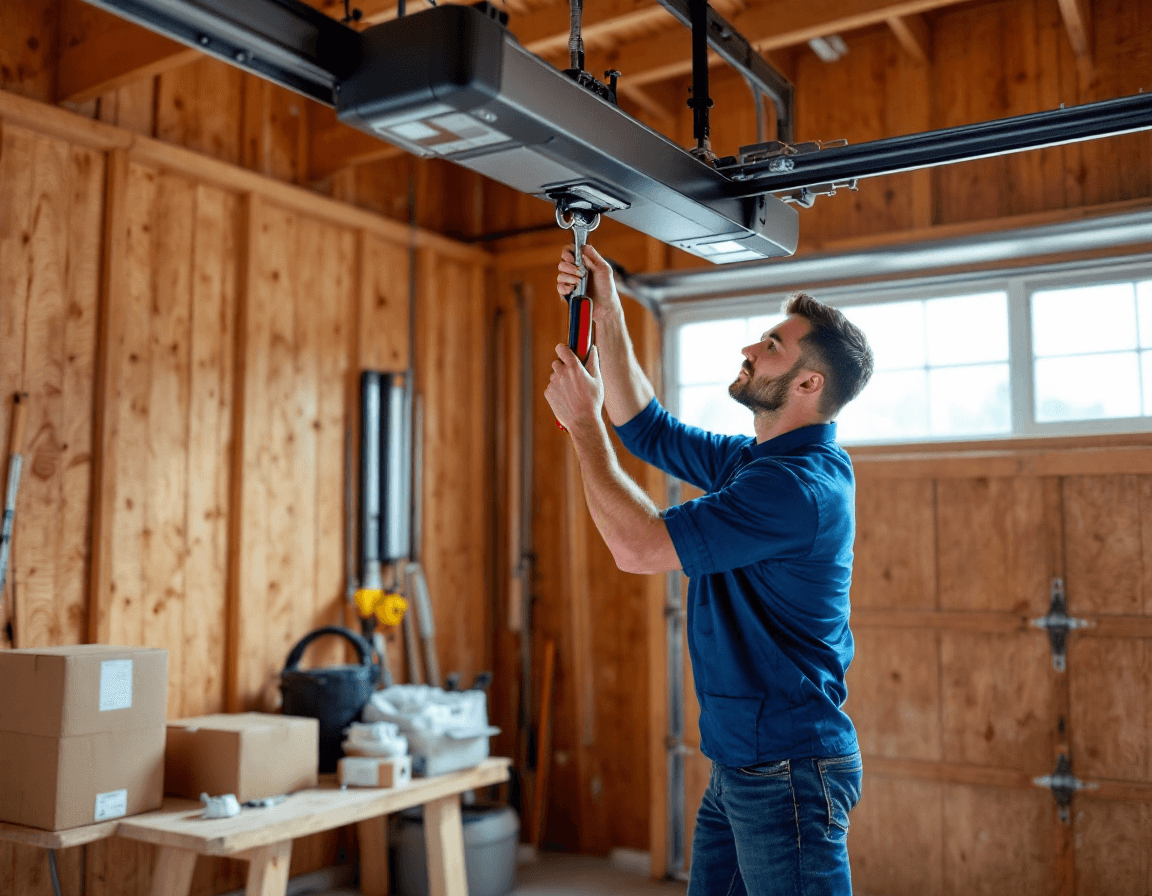
Garage Door Opener Installation & Replacement in Kirkland, WA is one of the most practical upgrades a homeowner can make, and it's often put off until the old unit starts groaning on the way up, stalls halfway through its cycle, or ignores the remote on a rainy morning. Most people in Kirkland live with a worn opener for longer than they should, mainly because it still works most of the time. The trouble is that a failing opener rarely fails all at once. It gives warning signs for months, and those signs are easier to act on before the door is stuck closed with the car inside.
Kirkland's mix of housing makes this decision a little different from one town to the next. Downtown properties often have tighter driveways and older detached garages, while homes in Juanita and Rose Hill tend to be a mix of mid-century builds and newer infill, and the Totem Lake area includes a range of townhomes and single-family houses with very different garage layouts. Those differences affect which opener fits, how it mounts, and whether a ceiling-hung rail or a wall-mounted drive makes more sense. A good replacement starts with a look at the actual door, the headroom, the wiring, and the way you use the garage every day.
This page walks through what to expect when you replace or install a new opener in Kirkland, from choosing a drive style to understanding security features, battery backup, and pricing. Installed costs generally run from $275 to $650, depending on the opener model and the features you choose. If you'd like an honest assessment before you commit to anything, you can reach our team at (888) 799-3819.
How Kirkland's Wet, Mild Winters Affect Your Opener
The Pacific Northwest climate is gentle compared with much of the country, but it is hard on mechanical equipment in its own way. Long stretches of damp air, frequent drizzle, and the occasional hard freeze combine to slow down lubrication, promote corrosion on exposed hardware, and cause track fasteners to loosen as the house settles. A garage door in a shaded Kirkland yard may stay damp for weeks at a time, especially in the months when the sun barely clears the tree line. Those conditions make the motor work harder, and they explain why openers that were installed a decade ago often start sounding strained even though the door itself looks fine.
Many Kirkland garages also sit close to the lake and to older tree-lined lots where moss and needle debris collect on roof edges and drip onto the door tracks. Grit and fine silt get into the carriage and trolley mechanisms, and that grit grinds away at the drive components over time. When a homeowner notices the opener sounding rougher each season, the cause is often a combination of moisture, debris, and years of unlubricated hardware rather than a single broken part. A replacement gives you the chance to address that environment with sealed components, better motor protection, and a fresh track alignment.
Temperature swings matter as well. A cold morning can stiffen the door's springs and make the opener draw more current during the first few cycles of the day. If your unit trips its safety reverse or stops partway during a chilly start, that is worth taking seriously. A technician can check the force settings, examine the door balance, and confirm that the opener is not being asked to lift more than it was designed for. Sometimes the answer is a simple adjustment, but when the motor is already near the end of its life, the cold snap simply reveals a problem that was there all along.
Choosing Between Belt-Drive, Chain-Drive, and Wall-Mount Systems
Selecting the right drive style is the first real decision in any opener replacement. Chain-drive openers are the most common and the most affordable, and they are reliable workhorses for detached garages and single-car doors where noise is not a major concern. The trade-off is that the chain transmits more vibration and sound into the ceiling and framing, which can be noticeable in a bedroom that sits above the garage. For a utility space or a workshop, a chain-drive unit is usually a sensible choice that delivers years of dependable service at a modest price.
Belt-drive openers use a reinforced rubber belt in place of a metal chain. The belt runs quietly, and it stretches less over time than a chain, which means fewer adjustments and a smoother lift. Many Kirkland homeowners choose belt-drive for attached garages that share a wall with a living area or a bedroom, especially in houses where the garage sits beneath an upstairs room. The purchase price is higher, but the difference in operating noise is often the reason people are willing to pay for it.
Wall-mount openers attach to the side of the garage rather than hanging from the ceiling. This design is useful when ceiling height is limited, when the garage has a finished ceiling you want to keep clear, or when the door is a non-standard size that makes a rail mounting awkward. Some older Kirkland garages, particularly those with steeply pitched rafters or limited headroom, are good candidates for a wall-mount installation. A technician will measure the clearance and confirm that the mounting bracket can anchor to solid framing before recommending this option.
- Chain-drive: most economical, strong for heavier doors, slightly louder during operation
- Belt-drive: quieter and smoother, a strong choice for attached garages beneath living space
- Wall-mount: useful for low-clearance ceilings and unusual door configurations
Warning Signs That Your Current Opener Has Reached the End
Some symptoms are obvious, like a door that refuses to close or a motor that hums without moving the door. Others develop slowly and are easy to explain away. A grinding or rattling noise during the lift is one of the most common early signs, and it usually points to worn gears, a loose trolley, or a chain that has stretched beyond its useful range. If the opener used to be quiet and now sounds like it is dragging something heavy, the motor and drive are likely telling you that they are near the end of their working life.
Slow operation is another clue. An opener that takes noticeably longer to complete its cycle than it did a few years ago may be losing power in its motor or struggling with worn bearings. Intermittent behavior is harder to diagnose and more worrying. A door that opens on the first try but fails on the second, or a remote that works from the driveway but not from the car, can indicate a failing receiver board, a weak transmitter battery, or wiring that has degraded in damp conditions. Those problems sometimes come and go, which is exactly why homeowners tend to wait until the door fails completely.
Repair cost is the final factor. When a repair estimate approaches the price of a new opener, especially on a unit that is more than ten years old, replacement is usually the better value. A new opener brings current safety standards, modern motor technology, and warranty coverage that an aging unit cannot offer. A good technician will tell you plainly whether a repair makes sense, and will be honest when it does not.
Rolling-Code Security and Why Older Remotes Put You at Risk
Older garage door openers often used fixed-code remotes, which send the same signal every time you press the button. That design is convenient, but it is also predictable. A fixed code can be captured by someone with the right equipment and replayed later to open the door without permission. Rolling-code technology solves this problem by changing the transmitted code with every use, so a captured signal is useless for the next attempt. If your opener predates rolling-code security, replacing it is one of the most meaningful upgrades you can make for household safety.
Rolling-code systems are standard on virtually all modern openers, and most units sold today include the feature by default. When you replace an older opener, the new receiver will be paired with fresh remotes and keypads, and any old fixed-code transmitters should be erased from memory. Many Kirkland homeowners forget that old remotes stay active until they are cleared, so a complete replacement includes a full reset of the programming. This is a small step that makes a real difference, particularly for homes with frequent visitors, rental arrangements, or former household members who still carry a remote.
Security is not only about the remote. A good installation also checks the door's manual release, the keypad location, and the automatic reversing sensors that stop the door if something passes beneath it. Those sensors are a key safety feature required on modern openers, and they protect children, pets, and property from the force of a closing door. A technician should test each one during installation and show you how to confirm they are working, because a misaligned sensor can fail silently for months.
Smart Control, myQ, and Wi-Fi Setup in Kirkland Homes
Smart garage door control has become one of the most requested upgrades in our service area. A Wi-Fi-enabled opener lets you check whether the door is closed from your phone, open it for a delivery, or receive an alert when it has been left open. Platforms such as myQ work with many compatible openers and allow you to manage access for family members or trusted contacts. For people who travel for work or leave the house during the day, that kind of visibility is often the main reason they upgrade.
Wi-Fi performance is the part that deserves careful planning. The garage is often the farthest point from the router, and many Kirkland homes have wall construction, metal framing, or thick stucco that weakens the signal. Before installation, it is worth checking the signal strength in the garage with your phone. If it is weak, a mesh node or extender placed near the garage can make the difference between a reliable connection and a frustrating one. We can point out where the opener's Wi-Fi module will get the cleanest signal, which sometimes means a different mounting position than the one you originally had in mind.
Smart features are only useful if they are set up correctly. Account creation, device pairing, and notification settings should be configured during the visit so you are not left trying to decode instructions in the driveway. Keep in mind that smart controls add convenience but do not replace the mechanical basics. The opener still needs proper balance, correct travel limits, and working safety sensors, and a Wi-Fi feature cannot compensate for a door that is out of adjustment.
Battery Backup Options for Power Outages
Power outages are a real concern in the Pacific Northwest, particularly during the windstorms that occasionally bring down trees and lines across King County. When the power goes out, a standard opener cannot lift or lower the door, and you are left using the manual release cord to operate the door by hand. For many households that is manageable, but it can be a problem for anyone who needs to get a vehicle out during an emergency, or for families who rely on the garage as their main entry point. Battery backup closes that gap by allowing the opener to run for a limited number of cycles when the grid is down.
Battery backup systems vary in capacity and in how many cycles they provide. Some units offer a basic reserve that covers a few openings, while others are designed to run longer or to maintain charge through extended outages. The battery also needs periodic attention. Its lifespan depends on the model, the ambient temperature, and how often the system is cycled, so a backup battery should be checked and replaced according to the manufacturer's schedule. A technician can help you choose a backup option that matches how your household actually uses the garage, rather than selling you the largest unit on the shelf.
Installing battery backup also requires that the opener be wired and mounted correctly from the start. The backup module needs to connect to the opener's control board and be placed where it stays protected from moisture and extreme temperatures. Keeping the battery in a dry, ventilated spot helps it last longer, and a technician can advise on the best location for your particular garage. If you already have a backup battery from a previous opener, it may not be compatible with a new unit, so it is worth confirming before you assume it will transfer.
What a Professional Installation Visit Includes
A replacement is more than unbolting the old opener and hanging a new one. A thorough visit begins with an inspection of the door itself, including the springs, cables, rollers, hinges, and tracks. Those components determine how much work the opener will have to do, and a mismatched or poorly balanced door will wear out even a high-quality opener quickly. If the door shows signs of serious wear, the technician will explain what needs attention and why, so you can make an informed decision about the next steps.
Once the door is assessed, the installer selects the correct mounting hardware, checks ceiling and wall clearances, and runs the power and control wiring. The new opener is then mounted, the travel limits are set, and the force settings are calibrated to the door's weight. Safety reversal is tested with the door both closing on an obstruction and at the floor, and the manual release is confirmed to work. Remotes, keypads, and any smart modules are paired, and old transmitters are cleared from memory.
Finally, the technician should walk you through how the opener operates day to day. That includes how to use the manual release, how to recognize a sensor fault, how to change the remote battery, and what the backup system does during an outage. A clear handoff is part of a professional job, and it helps you spot problems early instead of waiting for the next failure.
- Full inspection of door hardware, tracks, and balance before mounting
- Calibration of travel limits and force settings for your specific door
- Testing of safety reversal sensors and the manual release
- Pairing of remotes, keypads, and smart controls, with old codes cleared
- Walkthrough of routine use, backup operation, and basic troubleshooting
Pricing From $275 to $650 and What Changes the Final Cost
Installed opener costs in our service area generally fall between $275 and $650. The range reflects the differences between models, the drive style you choose, and any added features. A basic chain-drive opener with standard remotes will sit at the lower end of that range, while a belt-drive unit with Wi-Fi control and battery backup will land toward the upper end. Wall-mount installations and non-standard door configurations can also shift the total, because they may require additional hardware or more labor to fit the opener correctly.
Other factors affect the quote as well. A door that needs a new track section, a rewired control panel, or a replacement safety sensor will add to the cost, as will a keypad or additional remotes beyond the standard set. If the old opener's wiring is damaged by moisture or rodent activity, correcting that is part of doing the job safely. We prefer to explain these variables before work begins, so the final price matches what you agreed to rather than surprising you at the end of the visit.
It is worth asking what is included in any quote. Some estimates cover the unit, installation, and programming, while others leave out backup batteries, smart module setup, or disposal of the old opener. A transparent quote lists each item, so you can compare options accurately. Our goal is to give you a clear number and a clear explanation of what it covers.
Neighborhood Notes for Juanita, Rose Hill, Totem Lake, and Downtown Kirkland
Each part of Kirkland has its own garage character, and that affects how we approach an opener replacement. Downtown Kirkland includes many older homes and compact lots where garage space is limited and access is tight. Installers working in these areas often need to plan around narrow driveways, short turning radii, and garages that were built long before modern door sizes became standard. Careful measurement at the start of the job prevents surprises once the old opener comes down.
In Juanita, many homes sit on sloped or wooded lots, and the garages can be shaded for much of the year. That shade keeps door hardware damp and encourages corrosion, which makes sealed components and regular track cleaning especially valuable. Homes in Rose Hill include a mix of older single-family houses and newer builds, so it is common to see both chain-drive replacements in detached garages and belt-drive upgrades in attached ones. The Totem Lake area includes a variety of residential types, and we often encounter townhome-style garages with shared walls that make a quieter belt-drive opener a practical choice.
Across all these neighborhoods, the main variables are the same: moisture, shade, space, and the way the garage is used. Knowing the local context helps us recommend the right opener from the start, rather than offering a one-size-fits-all package. If you are not sure which category your home falls into, a quick visit will clarify your options.
Keeping a New Opener Running Well Through Kirkland's Seasons
A new opener will perform well for years, but it still benefits from basic seasonal care. Wet winters make it worth checking the track fasteners and the rollers at least once a year, tightening anything that has loosened and clearing away debris that collects where the track meets the header. Lubricating the moving parts with a product recommended by the manufacturer reduces friction and helps the motor run smoothly during damp weather. Avoid heavy grease on the chain or belt unless the manufacturer specifically calls for it, because it can attract grit.
Testing the safety reversal every few months is one of the most important habits you can build. Place a small object in the door's path at the floor and confirm that the door reverses when it closes on it. If the door does not reverse, stop using the opener until a technician can inspect the sensors and the force settings. Keep the sensor lenses clean, especially in the spring when pollen and dust build up, and make sure the sensors are aligned so their beams cross directly.
Battery health deserves attention as well. Remote batteries should be replaced when the transmitter's range drops, and any backup battery should be checked according to its schedule. If you notice the door hesitating, changing direction unexpectedly, or making a new noise, schedule a visit rather than waiting for the next failure. Early attention is far less costly than an emergency repair during a rainy week.
Important Safety Note on Springs and Cables
While opener replacement is a manageable job for a licensed technician, garage door springs and cables are a different matter. Torsion springs and extension springs store a large amount of energy, and working on them improperly can cause serious injury. Cables that have frayed or come off their drums can also release the door unexpectedly. These components should only be serviced by a licensed, trained professional who has the right tools and experience. Homeowners should never attempt to adjust, remove, or replace springs or cables on their own.
If your opener replacement reveals that the springs or cables are damaged, we will recommend a licensed service visit before any further work proceeds. That approach protects you and the people in your household. It also means the new opener will be paired with a door that is properly balanced, which extends the life of both the opener and the door. Safety is the priority in every part of the process.
Keeping your door in good condition also means watching for signs of spring fatigue, such as a door that feels much heavier to lift by hand or sits crooked when partially open. Those symptoms should be inspected by a professional rather than tested with trial-and-error adjustments. A brief inspection can prevent a much more expensive repair later.
Scheduling Your Kirkland Opener Replacement
If your opener is loud, slow, unreliable, outdated in security, or simply past the point of economical repair, a replacement will likely improve daily life in a noticeable way. Whether you want a quiet belt-drive unit for an attached garage, a rugged chain-drive for a detached workshop, a wall-mount for a tight ceiling, or a smart Wi-Fi model with battery backup for outage protection, the right choice depends on your door, your home, and how you use the space. Our technicians will measure, inspect, and explain your options before any work begins, so you can decide with confidence. Installed pricing typically runs from $275 to $650 depending on the model you choose. To schedule an assessment for your Kirkland home, call (888) 799-3819 today.