
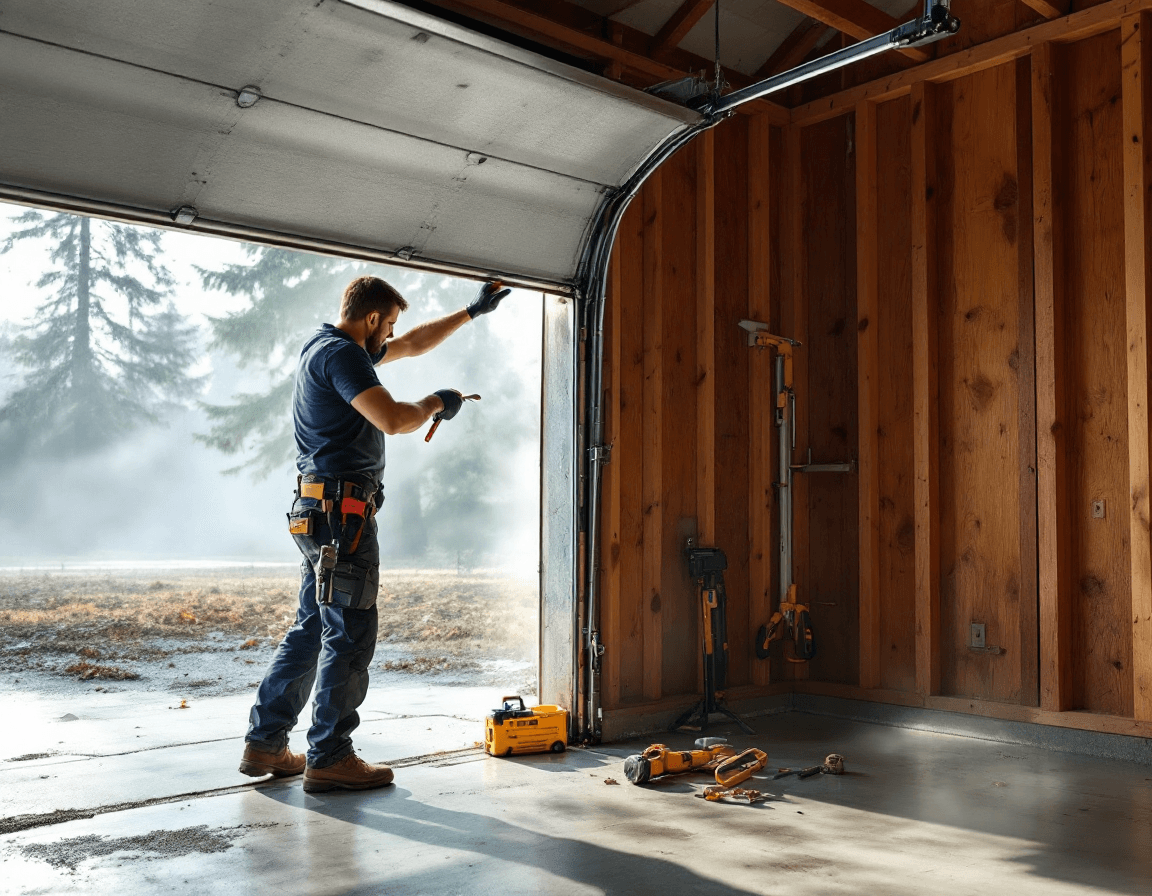
Off-track garage door repair in Kirkland, WA is one of the most common calls we take, and it is rarely a sign that the whole door is finished. When a panel slips out of its track, the cause is usually a single roller, a bent track section, or a hinge that has worked loose over time. Kirkland homeowners, from the condos near Downtown Kirkland to the older split-levels in Juanita and the newer builds off Totem Lake Boulevard, tend to notice the problem the same way: the door grinds, leans, or simply stops halfway up. This page explains what usually goes wrong, how we approach the repair, and what you can safely check before a technician arrives.
Derailments are stressful because they often happen at the worst time, such as when you are late for work, trying to get a car out before school drop-off, or coming home after dark with groceries. The good news is that most off-track doors can be returned to service the same day with a straightforward repair. The less encouraging news is that a door that has been forced, pulled, or left partly open can cause secondary damage, including stripped rollers, cracked brackets, and warped panels. Acting carefully in the first few minutes can keep a simple realignment from turning into a larger job.
Our technicians serve homeowners across the greater Seattle area, including ZIP codes 98033 and 98034, and we understand how the Eastside climate and local housing styles shape the way garage doors wear. If your door is off its track right now, please read the safety section below before you touch anything. When you are ready to talk with someone, call (888) 799-3819 and we will walk you through what to do while we get a technician on the schedule.
What Your Door Is Telling You Before It Comes Off the Track
A garage door rarely jumps its track without warning. In most Kirkland homes, the first sign is a subtle change in how the door moves, such as a slight hitch, a rattle at the top of travel, or a door that seems to sit a little lower on one side. Paying attention to these early clues can help you catch a developing problem before the door comes fully out of its channel. Many homeowners only notice the issue after the door has already jumped, but the signs were often there for weeks.
Several symptoms point directly to an off-track condition. The most obvious is a door that has come off one or both tracks, which usually leaves the bottom panel sitting at an angle or resting against the wall. Rollers that have popped out of the track often leave a visible gap or a roller hanging loose from its hinge. A door that looks crooked, binds on one side, or shows an uneven gap between the door edge and the track is also a strong indicator that something has shifted.
- The door has come off one or both tracks, or one side sits noticeably lower than the other
- One or more rollers have popped out of the track, or a roller is visibly hanging from a hinge
- The door looks crooked, leans to one side, or binds when it moves
- There is a gap between the door panel and the track that was not there before
- The door is jammed and will not move either up or down
- Track sections look bent, dented, or have separated at a joint
- The door was struck by a vehicle or another object recently
If your door is jammed and refuses to move in either direction, do not keep pushing the opener button. Repeated attempts can bend the track further and place strain on the opener's drive mechanism. Note what you saw and heard, because that information helps a technician diagnose the problem faster when they arrive.
Why Kirkland Doors Derail More Often Than Some Homeowners Expect
Kirkland's weather plays a larger role in garage door health than many people realize. Our winters bring long stretches of wet, cool air, and the moisture that settles into wood framing, drywall, and concrete slabs can affect how a door sits in its opening. Wood-framed garage openings in older Juanita and Rose Hill homes can shift slightly as they absorb and release moisture across seasons. When the opening moves, the track that was perfectly level in the fall may no longer sit true by January.
Hillside lots add another layer of complexity. Parts of Rose Hill and the slopes that rise toward Finn Hill include driveways and garage pads that settle unevenly over time, and a garage floor that has moved even a fraction of an inch can change how the door travels. Some homes in these areas were built with the garage set into the grade, which means water drains toward the door in heavy rain. Standing water and mud tracked in from the yard can also get into the tracks, where grit makes rollers stick and bind.
Seasonal temperature swings are a third factor. Metal tracks and steel panels expand slightly during warm afternoons and contract during cold mornings, which is normal, but loose brackets and worn fasteners can tolerate less movement than they once did. A door that was only slightly out of square can quickly come off track when a cold snap makes the metal stiffer and the rollers less forgiving. Many of the derailments we see in late fall and early winter trace back to small alignment problems that were already present.
Safety Steps to Take Before Anything Else
A door that has come off its track is heavy, and it is not stable. Your first priority is keeping everyone clear of the door's path, especially children and pets. Never stand under a door that is hanging or leaning, and never try to hold it up with your body or a stack of boxes. A panel that appears to be resting securely can shift without warning when someone bumps the tracks or touches a roller.
Next, prevent the opener from moving the door further. If the door is partly off the track, locate the emergency release cord, usually a red handle hanging from the trolley on the opener rail, and pull it to disconnect the door from the opener. This lets you keep the door from being driven into the track again by accident, though it does not make the door safe to lift by hand. Once the opener is disengaged, treat the door as a heavy, unbalanced object that should only be moved by a trained professional.
- Keep people, children, and pets away from the door and its tracks
- Do not stand under a door that is off track, leaning, or hanging
- Do not pull or adjust the springs, spring brackets, or cables, which store enormous tension even when the door looks damaged
- Do not force the door up or down by hand, and do not use a ladder or tools to pry it back into the track
- Do not repeatedly press the opener button, since that can bend tracks and strain the opener
- Call a licensed technician if the door is off track, the springs look damaged, or a cable has slipped
The reason we emphasize spring and cable safety so strongly is that torsion and extension springs carry substantial force, and a sudden release can cause serious injury. Realigning a door's track and rollers is a different task from working on springs, and a homeowner who attempts the spring side of the job is taking a real risk. Our recommendation is always to leave spring and cable work to a licensed professional.
How Our Technicians Realign a Door Step by Step
When a technician arrives for an off-track call, the first thing we do is evaluate the whole system rather than just the panel that is visibly out of place. We check the springs, cables, drums, hinges, rollers, and track alignment to understand why the door left its path. A door can come off track for several reasons, and fixing only the visible symptom usually means the problem returns within weeks. Our goal is to find the root cause so the repair holds.
The realignment itself is methodical. We measure the track at the top, middle, and bottom of the door opening to confirm whether the vertical and horizontal sections are square and level, then check the gap between the door edges and the frame. If a roller has popped out, we inspect the roller stem and the track channel for damage before reseating it, because a worn or cracked roller will often jump again under load. Once the door is back in its track, we run it through several full open and close cycles to confirm it travels smoothly and stays seated.
Most off-track repairs in Kirkland are completed in a single visit, and the typical cost for this type of work falls in the $125 to $400 range depending on what the inspection reveals. Jobs that involve bent track sections, damaged hinges, or hardware replacement may cost more, and we always explain the scope before any additional work begins. You will know what is being done, why it is needed, and what the price will be before we proceed.
The Rollers, Hinges, and Brackets That Tend to Fail First
Rollers do most of the daily work of guiding a door, and they are usually the first component to cause trouble when a door comes off track. Nylon rollers are common on residential doors because they run quietly, but they wear down, crack, or flatten over time, especially in damp conditions. Steel rollers hold up longer but can seize when dirt and moisture work into the bearings. A roller that has worn to an uneven shape may ride up on the track lip and pop out during the next cycle.
Hinges and brackets are the second most common culprit. Each panel connects to its neighbors through hinges, and those hinges are fastened to the panels with screws that can loosen as the door flexes. When a hinge pulls away from its panel, the roller attached to it can wander out of the track. Bent or cracked brackets, particularly the ones that hold the track to the wall and ceiling, can allow the track to shift and separate at the joints.
Homeowners often ask whether it is worth replacing every roller when only one has failed. In most cases, if one nylon roller has worn out, the others are close behind, and replacing the full set during the same visit is a practical choice that prevents a second call a few months later. Steel rollers that are still smooth and free of flat spots can often remain in service. We will show you the condition of each roller so you can make an informed decision.
Straightening Bent Track Without Making Things Worse
Bent or dented track is one of the trickier parts of off-track repair. Track is made from thin steel, and it can look only slightly damaged while still being out of tolerance enough to cause a derailment. A small dent in the vertical section can catch a roller every time the door passes it, and a separated joint can open just enough for a roller to slip free. Careful assessment matters more than speed in these cases.
Minor bends can often be corrected by carefully adjusting the track back to true, supported by the mounting brackets and checked with a level. We take care not to overcorrect, since forcing steel past its original shape can crack it or create a new weak point. Badly kinked sections, track with torn mounting holes, or joints that have separated beyond the point of clean reconnection usually need to be replaced. Replacing a single section is generally more reliable than attempting to hammer a deeply bent piece back into shape.
A bent track can also be a sign that the door itself has been struck or is carrying more weight than it should. If the track is bent at the same height repeatedly, the cause may be a stuck panel, a damaged spring, or an opener that has been forcing the door against an obstruction. We look for these patterns so the replacement track does not simply get bent again within weeks.
When a Vehicle Clips the Garage Door
Kirkland driveways are not always generous, and it is common for a car backing out of a tight garage or a delivery truck maneuvering on a narrow street to brush the door. Even a light impact can knock a panel out of its track, bend the tracks, or crack a section of the door itself. Because the damage may not be obvious at first glance, we recommend having the door inspected after any collision, even if it still appears to work.
After a vehicle strike, the most important step is to avoid operating the door until it has been checked. A door that is partly out of its track may seem to function, but each cycle can deform the track or stress the springs further. Take photographs of the damage from several angles, note the time and what happened, and keep any documentation from your insurance provider or the other party involved. These details are useful whether you are filing a claim or simply tracking repairs for your own records.
Our technicians can assess the track, rollers, panels, and springs after an impact and tell you what repairs are needed. In some cases a door can be realigned and returned to service with replacement track and a few hardware parts. In others, one or more panels may be too damaged to restore cleanly, and we will explain the options honestly. We do not recommend making temporary fixes that could fail unexpectedly, since a damaged door that appears stable can still be dangerous.
Neighborhood Notes for Juanita, Rose Hill, Totem Lake, and Downtown Kirkland
Each part of Kirkland has its own rhythm when it comes to garage doors, and our technicians see patterns that reflect local housing and daily habits. In Juanita, many homes are established and the garages are often attached to older framing that has had decades to settle, so track alignment drift is a frequent concern. Homes near the lake can see more humidity, which accelerates corrosion on tracks and hardware if they are not wiped down occasionally.
Rose Hill and the surrounding hillside streets often feature sloped driveways and garages with varying floor levels. Those slopes can change how a door loads its tracks, and many derailments in these areas trace back to uneven garage floors or slightly out-of-plumb openings. Downtown Kirkland has a mix of older homes and newer townhomes, and some attached garages have narrow approaches where the door is more likely to be bumped during parking. Totem Lake has seen a lot of newer residential construction, and while newer doors often hold alignment well, they still need periodic checks to stay true.
Regardless of which neighborhood you call home, the same principles apply. Keep the tracks clear of debris, watch for changes in how the door sounds, and schedule an inspection if you notice any of the warning signs described earlier. A quick professional check can catch small shifts before they become full derailments, which is almost always less expensive than an emergency call.
What Off-Track Repairs Typically Cost in Kirkland
Homeowners understandably want to know what they are signing up for before a technician arrives. For most off-track repairs in the Kirkland area, the typical price falls between $125 and $400. That range generally covers the inspection, reseating rollers, realigning the door and track, and making minor adjustments to hinges or brackets. It reflects the most common scenarios we encounter, though every door is different.
Several factors can push a repair toward the higher end of that range or beyond it. Replacing bent or separated track sections, swapping out a full set of rollers, or repairing damaged hinges adds parts and labor. Spring replacement, cable repair, and drum work are separate services with their own pricing, and they require licensed technicians because of the safety considerations involved. If the inspection reveals that a spring has failed or a cable has frayed, we will explain that clearly and give you a separate estimate for the work.
We believe in transparency, so we will always discuss the scope of the job and any additional costs before proceeding. If you have questions about what your repair might involve, call (888) 799-3819 and describe what you are seeing. Many issues can be narrowed down from a short description, which helps us prepare the right parts and tools for your visit.
Simple Habits That Help Keep Your Door on Track
Preventing a derailment is always easier than recovering from one. A few simple habits can extend the life of your door and reduce the chance of an unexpected jump. Start by keeping the tracks clean, since grit, leaves, and tracked-in mud can cause rollers to stick and bind. A soft brush and a damp cloth will remove most debris, and you should avoid heavy solvents that can degrade rollers or seals.
Watch for early warning signs that suggest the door is drifting out of alignment. A door that begins to sound louder, make new scraping noises, or sit unevenly when closed is giving you information worth acting on. Visually check the gap between the door and the frame every few months, and look for loose hardware, particularly the bolts holding the tracks and brackets to the wall and ceiling. Tightening obvious loose fasteners is safe, but avoid touching springs or cables.
Schedule a professional inspection at least once a year, especially before the rainy months settle in. A technician can measure track alignment, check roller wear, and confirm that the spring system is balanced. Catching a minor issue in the fall often prevents a midwinter emergency when the door is needed most. If your door has ever come off track before, we recommend an inspection even if it seems to work normally, because a previous derailment can leave subtle stress in the track that worsens over time.
If your Kirkland garage door has come off its track, is binding, or has been hit by a vehicle, do not wait for the problem to get worse. Call Seattle Garage Door Fix at (888) 799-3819 and we will get a licensed technician out to evaluate the door, realign the track, and explain your options clearly. We serve homeowners throughout Kirkland, including the Downtown, Juanita, Totem Lake, and Rose Hill areas, and we will respond with the same careful attention whether the door is a simple roller fix or a more involved track repair.