
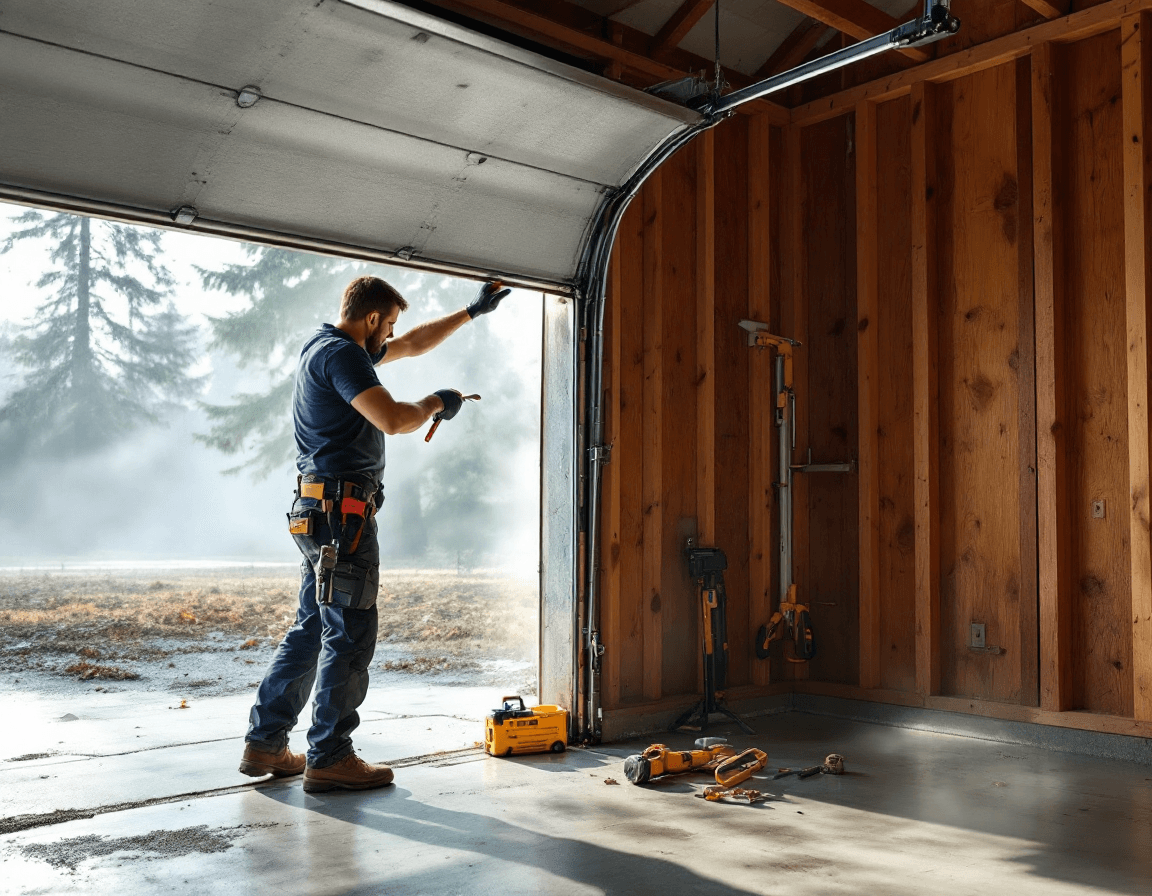
Off-track garage door repair in Kenmore, WA is one of the more common calls we handle on the north shore of Lake Washington, and it's usually more urgent than homeowners expect. When a door slips out of its track, it can stop working entirely, leave you stuck in the garage or locked out of the house, and put pressure on parts that were never meant to carry the load. Most homes in the 98028 area have steel doors on torsion springs, with rollers riding in tracks anchored to framing that has been through decades of rain and seasonal swelling.
The good news is that many off-track problems are repairable in a single visit. A skilled technician can usually re-seat rollers, square up the door, and straighten a track section for a cost that most homeowners find reasonable, typically in the $125 to $400 range for common jobs. Larger damage, such as a bent section after a vehicle impact or a door that has separated from its track on one side, may take more time, but it is still far less expensive than replacing an entire door system that was simply knocked out of alignment.
This page explains what causes doors to come off track in Kenmore, how to recognize the early warning signs, what a professional inspection involves, which tasks are safe for a homeowner to attempt, and when a licensed technician needs to take over. We write it from the perspective of technicians who work in this area every week, so the advice reflects real conditions rather than generic textbook guidance.
Why Kenmore Doors Drift Out of Alignment
Kenmore sits in a part of King County where the weather rarely stays predictable for long. Wet winters, cool damp springs, and occasional dry spells in late summer all put cyclical stress on wood framing, drywall-to-door-jamb connections, and the steel track itself. A track that was perfectly plumb at installation can gradually shift a few millimeters over several seasons, and that small movement is often enough to let a roller ride slightly outside its channel.
Many homes in the area also sit on sloped or filled lots, especially along the hillsides that rise toward the neighborhoods west of the waterfront. Soil movement after heavy rain can push a garage slab or footing just enough to change how the opening is framed. When the header or side jamb settles unevenly, the track mounted to it follows, and the door begins to bind on one side before it fully leaves the track.
Vehicle contact is another frequent cause. Driveways in Kenmore often involve tight turns, sloped approaches, and parking in narrow spaces with limited visibility. A bumper that clips the lower panel or a side track can bend the vertical section or pull a bracket loose, and that damage is sometimes subtle at first. Even a glancing hit can leave a door that looks fine from the street but tracks poorly when you lift it.
Recognizing the Warning Signs Before a Door Fully Derails
Off-track failures rarely appear out of nowhere. Most doors give warnings for days or weeks before a roller pops out completely. The most common early sign is a door that seems to lean slightly when it is partway open, with one side traveling higher or lower than the other. You may also notice a gap between the top weatherstrip and the header, or a panel that no longer sits evenly against the adjacent section.
Sound is another useful clue. A grinding, scraping, or chattering noise often means a roller is dragging on the track lip or a stem roller is worn flat. A sharp pop followed by the door jerking briefly is more serious and usually means a roller has just left its channel. If you hear either of these, it is worth having the door checked before it stops completely.
Here are the symptoms that technicians in the Kenmore area see most often on doors that need realignment:
- One side of the door sits lower than the other when the door is closed or partially open
- Rollers visibly sit outside the track channel, or the track has a visible gap at a joint
- The door binds, stalls, or reverses on the opener, sometimes only at certain heights
- A gap appears between the bottom seal and the floor on one end, or the door looks crooked in its frame
- Track sections show dents, kinks, or pulled-away bolts, especially near the floor or at the curve
- The door will not move in either direction after the opener has been engaged
If any of these show up, avoid running the opener repeatedly. Continued force can bend tracks further, strip gears, and turn a simple realignment into a larger repair.
What a Technician Checks During an Off-Track Visit
A thorough off-track service starts with a full inspection rather than a quick push of the door back into place. The technician will look at the track sections from the floor to the header, checking for bends, dents, and loose mounting brackets. They will measure the gap between the track and the door edge at several points and confirm that the vertical and horizontal runs are plumb and level. This tells them whether the problem is isolated to one roller or reflects a larger misalignment in the opening.
Next, the technician examines the rollers, hinges, and end caps. A roller with a cracked stem, a worn bearing, or a missing retainer can pop out repeatedly even when the track itself is in good shape. The condition of the cables and springs is also checked, since uneven tension can pull one side of the door upward. In Kenmore homes, we often find that years of moisture have loosened lag screws in wood framing, which makes it harder for the track to hold its position under load.
Finally, the technician confirms that the door balances correctly and moves smoothly through its full range. A door that tracks well when lifted by hand but binds under the opener may need adjustment to the opener force setting, the header bracket, or the lift cable. We document what was found and what was corrected so the homeowner understands the work that was done and what, if anything, should be watched in the future.
Rollers, Hinges, and the Small Parts That Cause Big Problems
Rollers are small, but they carry the entire weight of the door as it moves. Nylon rollers are common on many residential doors, and they tend to crack or flatten after years of use, especially in damp conditions where grit and moisture collect inside the bearing. Steel-stem rollers last longer but can still lose their retaining clips, allowing the stem to slip out of the hinge. When a roller comes free, the door section it supports can drop out of the track quickly.
Hinges and end caps deserve just as much attention. Hinges that have been bent or loosened by repeated off-track events can no longer hold the panels in the correct relationship to each other. A panel that sits even slightly out of square can cause the next roller to climb out of its channel. Replacing a single worn hinge or end cap is often inexpensive, but it must be matched correctly to the door model to avoid creating a new alignment problem.
Homeowners sometimes ask whether they can simply replace rollers themselves. For a quick visual check, you can look for obvious cracks, missing clips, or rollers that spin unevenly, but replacing them usually requires working on a door that may be under spring tension. Improper handling can cause the door to drop or the spring to release. A licensed technician can replace rollers quickly and safely while also checking the hinges and track fasteners in the same visit.
Track Damage From Vehicles, Wind, and Everyday Mishaps
Track damage tends to fall into two categories: gradual bending from long-term misalignment, and sudden impact from vehicles or objects. Impact damage is easier to spot because it usually comes with a visible dent, a scraped finish, or a section that no longer lines up with its neighbor. Even a small bend in the vertical run can create enough friction to prevent smooth movement, and a horizontal track bent upward can allow rollers to lift out at the curve.
Wind is a factor too, particularly on exposed lots and in open areas near the water. A strong gust can push a large door against its track, bending the lower section or loosening the bolts that hold the track to the wall. Homes with wide double doors are especially vulnerable because the spans are larger and the leverage on the track is greater. If you notice a sudden change after a windy night, the track deserves a closer look.
Straightening track is delicate work. A technician must bring the steel back into alignment without creating kinks or fatigue points that will fail later. Sections that are severely creased may need replacement rather than straightening. Once the track is corrected, the mounting brackets should be re-fastened into solid framing, not just the surface of drywall or trim, so the repair holds up through the next wet season.
Safe Steps Homeowners Can Take Before the Technician Arrives
There are a few things you can do safely while you wait for service. First, keep everyone, especially children and pets, clear of the door and the track area. A door that is off track can shift suddenly, and tensioned springs can cause serious injury if they are disturbed. Avoid standing under the door or placing hands in the gap between the panels and the track.
Second, stop using the opener until the door has been inspected. Running the motor against a binding door can damage the opener, strip gears, and bend the track further. If the door is partly open and you need to secure the space, you may be able to use the manual release cord to disconnect the opener, but do not attempt to lift a door that is jammed or leaning. Pull the cord only when the door is closed or in a position where it can be controlled.
Third, document the problem. Take photos of the track, the gap, and any visible damage. Note whether the problem started after a storm, a vehicle contact, or a gradual change over time. This information helps the technician arrive prepared and can be useful for insurance purposes if impact damage is involved.
When Spring and Cable Work Must Go to a Licensed Professional
Torsion springs and lift cables store large amounts of energy, and they are the most dangerous components of any garage door system. A door that has come off track may have a cable that has slipped off its drum or a spring that has been stressed by uneven loading. Attempting to adjust, rewind, or replace these parts without proper training and tools can result in serious injury. For this reason, we recommend that all spring and cable work be handled by a licensed, insured professional.
Our technicians use winding bars, safety clamps, and proper lockout procedures for this work, and they will tell you clearly when a spring or cable needs attention. If the inspection reveals a broken spring, a frayed cable, or a drum that has come loose, the repair will be discussed with you before any work begins. Off-track repair often reveals these issues because the same uneven forces that move the door out of its track can also overstress the spring system.
Please do not attempt spring adjustment as a do-it-yourself project, even if you have seen it done. The stored tension is substantial, and mistakes are unforgiving. Calling a licensed technician is the safest and most efficient path, and it protects both your home and the people who live in it.
Typical Pricing for Off-Track Repairs in Kenmore
Most off-track repairs in the Kenmore area fall between $125 and $400, depending on what the inspection reveals. A simple realignment in which the technician re-seats one or two rollers, tightens loose brackets, and squares the door is usually at the lower end of that range. Straightening a bent track section, replacing a damaged roller set, or correcting a hinge problem typically moves the price toward the middle, and repairs involving multiple damaged components or spring-related work may reach the higher end.
Your final cost depends on the door type, the number of damaged parts, the accessibility of the track, and whether the door has been impacted by a vehicle. We provide an itemized explanation of the work before proceeding, so there are no surprises. If additional parts or spring service are needed, the technician will explain the options and the expected cost before starting that work.
It is also worth knowing that a timely realignment often prevents larger bills later. A door that is allowed to bind for months can strain the opener, wear out cables, and bend hardware that would otherwise have lasted for years. Addressing the problem early is usually the most cost-effective approach.
Keeping Tracks True Through Lake Washington Humidity
Preventing future off-track events depends largely on managing moisture and maintaining the hardware. Once or twice a year, inspect the track for loose bolts and tighten them gently, avoiding any force that could distort the steel. Wipe the track channel clean of grit, leaves, and debris that collect in the bottom of the track, since buildup can cause rollers to ride unevenly. Use a silicone-based or garage-door-specific lubricant on the rollers and hinges, and avoid heavy oils that attract dirt.
Humidity is the constant companion of homes near the lake. Check the wood trim and framing around the door opening for soft spots, peeling paint, or signs of rot, since these can allow the track brackets to loosen over time. Seal exposed wood where appropriate, and make sure gutters and downspouts direct water away from the garage foundation. These steps reduce the seasonal movement that often leads to misalignment.
Finally, schedule a professional inspection at least once a year. Technicians can spot early roller wear, hinge fatigue, and track drift long before they cause a derailment. A routine check is a modest investment compared with an emergency call on a cold, rainy evening.
Serving Kenmore Homes Near the Waterfront and Saint Edward Park
Our technicians regularly work across Kenmore, from homes close to the waterfront and the Log Boom area to the wooded neighborhoods that border Saint Edward State Park. Each part of the city presents its own mix of lot grades, garage styles, and exposure to weather, so we tailor our inspection to what we find at your property. Whether you have a single-car garage with an older steel door or a wide two-car opening with a newer insulated panel, we will explain what is happening and what it will take to fix it.
Service in the 98028 area is scheduled to fit your day, and we aim to arrive with the parts most commonly needed for off-track repairs. If your door is stuck, leaning, or making a loud noise, please do not wait for it to get worse. Call us, describe what you are seeing, and we will help you decide whether same-day attention or a scheduled visit makes the most sense.
If your garage door has come off track, is binding, or shows visible track damage, call Seattle Garage Door Fix today at (888) 799-3819. Our licensed, bonded, and insured technicians serve Kenmore and surrounding Western Washington communities, and we will give you a clear explanation of the problem and the repair options before any work begins.