
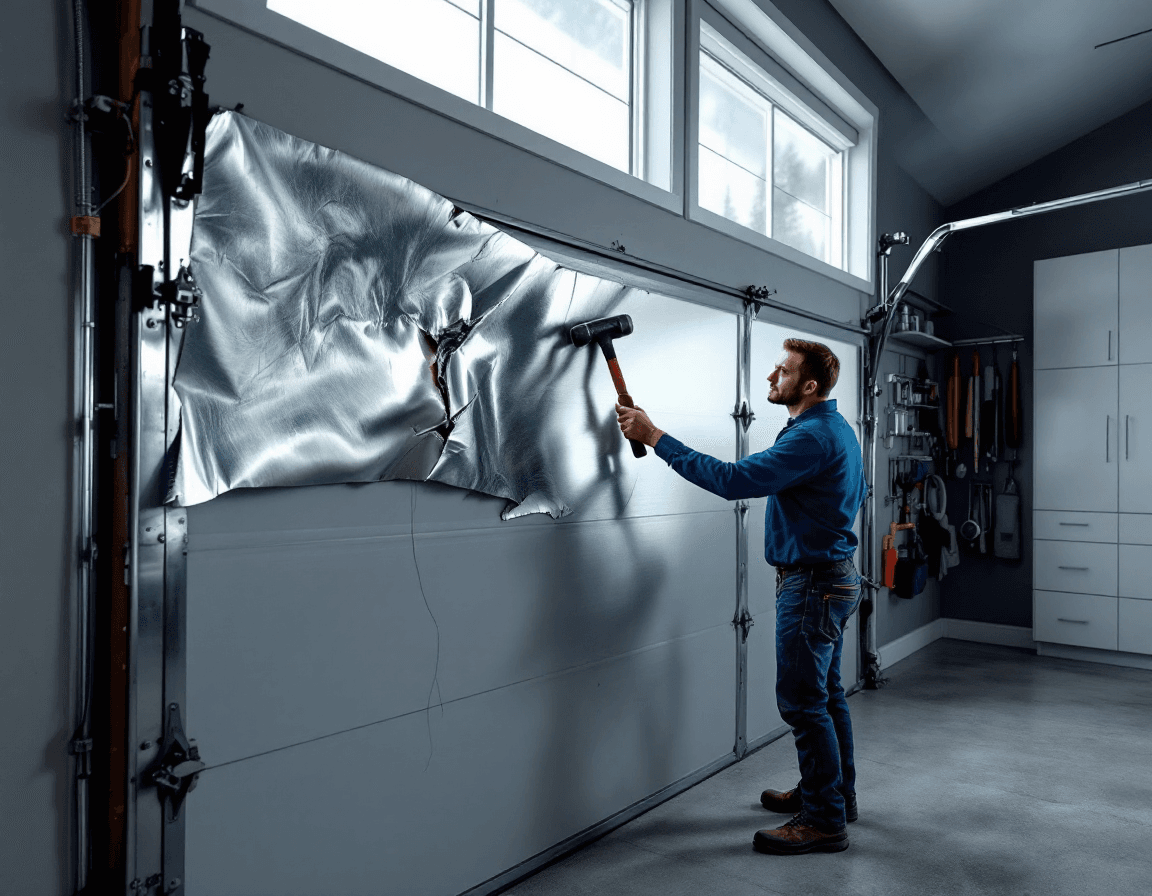
Garage door panel replacement in Kenmore, WA is often the most practical fix for a door that still runs smoothly but looks worn, dented, or water-damaged. Kenmore sits on the northeast shore of Lake Washington in King County, where homes range from older ranch houses near the waterfront to newer builds on the slopes above Juanita Drive and the Simonds Road corridor. Many of these garages take daily abuse from tight turns, delivery vans, kids on bikes, and the constant moisture that comes with Pacific Northwest winters. When one section is damaged and the rest of the door is sound, you usually don't need a new door at all.
Our technicians see the same pattern across the north end of King County: a single panel gets bent in a backing mishap, a bottom section rots after months of standing water, or a cracked panel lets in drafts and rain that slowly work into the frame. Replacing just the damaged section, often in the range of $250 to $800 per section depending on the door, can restore the look and weather seal without the expense of a full replacement. The sections below explain how we evaluate damage, when swapping a panel makes sense, how matching works on older or faded doors, and where homeowners should draw the line on safety.
Why Dents Around Kenmore Driveways Deserve Attention Right Away
A dent in a garage door panel can look like a cosmetic issue, but in most cases it is a structural one. Steel and aluminum panels rely on their ribbing and the way each section locks into the next to distribute weight and resist flex. When a panel is pushed inward, the metal can stretch or crease along the ribs, leaving a weak point that may crack later after repeated opening and closing. Kenmore driveways are often tight, sloped, or shared with neighbors, which means a slow reverse or a turned wheel can apply sudden force to the lowest panels.
Waiting also tends to make the repair more involved. A minor crease caught early may only require replacing one section, while a panel that has been bent for a season can pull the adjacent sections out of alignment and stress the track rollers. Once that happens, a technician may need to re-square the door, check the hinges, and inspect the bottom seal before the new panel will sit properly. Acting quickly keeps the job focused on one piece rather than a chain of related repairs.
Dents also change how the door responds to wind. Lake-adjacent neighborhoods in Kenmore can see gusty afternoons, and a panel with a deep dent may flex more than its neighbors when the wind picks up. That flex can bind the rollers in the track, causing the door to stick partway up or to close unevenly. If you notice any new noise or hesitation alongside the visible damage, have it checked before continuing to operate the door.
Reading the Damage: Dents, Cracks, and Hidden Water Lines
Not every mark on a garage door panel means the same thing, so a careful inspection matters. Shallow surface dents with smooth metal and no sharp creasing are often repairable in place by a skilled tech, though many homeowners prefer full replacement for appearance. Deep dents with creases, sharp fold lines, or paint that has split along the bend usually call for swapping the section. Cracks in insulated composite or fiberglass panels typically travel along the grain or along the seam where two layers meet, and they often let moisture reach the foam core.
Water damage is trickier because it may start below the paint line. The lowest section of a door is the most exposed to puddling, splash from the driveway, and the damp air that settles in covered garages during the wet months. We look for bubbling paint, a chalky or crumbly bottom edge, or a faint dark line that runs across the panel at the level where water sits. On wood doors, soft spots near the bottom rail can indicate rot that extends further into the panel than it first appears.
Impact damage from a backing accident often shows up as a combination of problems. A corner of one panel may be dented, the hinge that joins it to its neighbor may be bent, and the weatherstrip may be torn away from the bottom edge. Each of these needs to be addressed, which is why we inspect the full door before recommending a panel swap. Documenting the damage with a few clear photos can also help if you need to speak with an insurance adjuster.
When One Panel Is Worth Swapping and When the Whole Door Makes More Sense
Replacing a single section is the right call in many situations, but it is not always the most economical one. The question is whether the rest of the door is in good condition and whether the damaged panel can be sourced in a matching style. A door that is structurally sound, has smooth tracks, and uses a panel design that is still manufactured is usually a strong candidate for a section replacement. A door that is sagging, has worn springs, or uses a discontinued panel profile may be better served by a broader conversation about replacement.
Our technicians typically weigh several factors when giving repair-versus-replace guidance:
- The age of the door and the condition of its springs, cables, and hardware
- Whether the damage is limited to one section or has spread across multiple panels
- Whether the manufacturer still produces a matching panel for your model
- How much the door has faded, and whether a new panel will visibly stand out
- Whether recurring water intrusion or drafts are affecting the living space above or beside the garage
- The overall cost of a section replacement compared with a new door
If three or more panels are compromised, or if the door is more than a couple of decades old with significant rust or rot, replacement may give you better value and a more uniform appearance. For a single dented panel on a solid door, a section swap usually makes the most sense. Our estimate will always explain which path we recommend and why.
Matching a Panel on a Door That Has Already Faded
Matching is the part of panel replacement that surprises many homeowners. Garage doors in the Pacific Northwest face years of UV exposure, especially on the south and west facing sides, and the color can shift noticeably even when the door looks clean. A new panel that comes straight from the factory may appear brighter, a different shade of white, or a slightly different texture from the surrounding sections. This is especially noticeable on doors that were installed a decade or more ago.
Matching begins with identifying the door manufacturer, model, panel profile, and original color code if it can be found. Many doors carry a label on the inside of a section or near the bottom track. When the exact product is no longer available, we discuss options such as ordering the closest available profile, having the new section painted to blend with the existing door, or recommending a refinished full door if the color mismatch would be too apparent. Honest expectations matter here, because a perfect match is not always possible on older doors.
Insulated doors add another layer of complexity. The panel may include a foam core, a steel skin, and a decorative window or hardware insert that must line up with the rest of the door. Our technicians check how the new section will seat against the adjacent panels, including the groove and tongue that create the weather seal. Getting that fit right is what keeps the door quiet and keeps drafts from creeping in along the new section.
What a Panel Replacement Visit Typically Involves
A panel replacement visit usually follows a clear sequence, though the details depend on the door design. The technician begins by confirming that the door is safe to work on, checking the spring tension status, and verifying that the door can be held in place during the swap. Panels are typically connected to one another through hinges and fasteners that run along the edges, so the damaged section must be separated carefully. Our crews also check the track, rollers, and hinges for wear that could affect the new panel.
Once the damaged section is removed, the replacement is fitted into the same position, aligned with the adjacent sections, and fastened securely. The technician then tests the door through several full cycles, watching for binding, uneven movement, or any gap at the bottom seal. Weatherstripping is adjusted or replaced if needed. Before leaving, we walk through the work with the homeowner so they know what was changed and what to watch for in the weeks ahead.
Most section replacements can be completed in a single visit once the parts are on hand. Ordering can take several days depending on the manufacturer, so we confirm lead times during the estimate. If a panel is custom or special order, we will tell you upfront rather than leaving you with a partially repaired door.
Price Expectations Between $250 and $800 Per Section
Panel replacement pricing in Kenmore generally falls between $250 and $800 per section, and the final number depends on several variables. The most significant is the door itself: a standard steel panel from a common manufacturer costs less than an insulated composite section with a decorative window, a wood panel, or a custom-sized part. The availability of a matching profile also affects cost, since a discontinued panel may require sourcing from a secondary supplier or an alternative design.
Labor complexity adds to the total as well. A section near the middle of a door is often straightforward, while a bottom section that requires removing the opener connection, adjusting the track, or replacing a seal may take longer. Doors with additional damage to hinges, rollers, or bottom brackets may need those parts addressed in the same visit, which affects the overall invoice. We itemize each component so you can see what you are paying for.
We recommend asking for a written estimate before work begins. A reliable estimate should identify the door model, the section being replaced, the parts required, and any additional repairs the technician believes are necessary. If the door shows signs of broader wear, we will explain the tradeoffs rather than pushing a larger job without context.
Bottom Sections, Standing Water, and Kenmore's Damp Ground
The bottom section of a garage door carries the most daily stress and water exposure, which makes it the most common panel we replace in the Kenmore area. Rain runs off roofs and driveways, and in lower-lying parts of the neighborhood, water can sit against the threshold for hours during a wet stretch. Even a well-sealed door can take on moisture from the ground, especially if the garage floor slopes toward the door or if the seal has worn thin.
Over time, that moisture can work into the bottom edge of the panel, lifting paint, softening wood, or causing steel to rust from the inside out. Insulated panels are particularly vulnerable when water reaches the foam core, because the damage is hidden until the panel begins to sag or separate. Homeowners often notice the problem first as a musty smell or a crumbling edge at the base of the door.
Preventing recurrence matters as much as the replacement itself. We typically inspect the bottom seal, the threshold, and the drainage around the garage entry. Replacing a worn seal and correcting a low spot at the threshold can extend the life of the new section considerably. Some homeowners also find that a simple change in how they park or where they store items near the door reduces the amount of moisture reaching the lower panels.
Impact Damage and Backing Accidents in Tight Kenmore Driveways
Backing accidents are a frequent source of panel damage, particularly on properties where the driveway is narrow, the garage sits close to a property line, or the approach includes a slope. A vehicle that clips a single panel can leave a crease, a split seam, or a deep dent that changes how the section fits within the door. Because the force is usually concentrated on one area, the damage is often limited to one or two sections, which is good news for repair costs.
After an impact, check the door's movement before using it again. Watch for the door dropping unevenly, a noise when the door reaches the top or bottom, or a panel that seems to sit slightly out of line. Do not attempt to force the door open or closed if it is binding. A door that has been struck can have hidden damage to the track, rollers, or spring system that makes continued operation risky.
We recommend documenting the impact as soon as it happens. Photographs of the panel, the surrounding area, and any vehicle contact marks can support insurance claims if the damage is covered. Our technicians can provide a written description of the repair and the parts replaced, which many homeowners find helpful when working with their insurance carrier.
Safety Boundaries: What Homeowners Should Leave to a Licensed Technician
Garage door panels may look like simple sheet metal, but the door system is a high-tension mechanical assembly. Torsion springs and extension springs store significant energy, and mishandling them can cause serious injury. Cables, drums, and lift hardware also carry load that can shift suddenly if a component is released incorrectly. For these reasons, we always recommend that any spring, cable, or drum work be handled by a licensed, bonded, and insured professional.
Panel replacement itself involves removing sections from a door that is under tension and balanced by springs. If the door is not properly supported, a section can drop or the entire door can move unexpectedly. Homeowners should not attempt to remove a damaged panel without first confirming that the door is secured and that the spring system is safe to work around. The risks are not worth the savings of a DIY attempt.
If you are unsure whether a repair is within your comfort level, the safest course is to call a professional. Our technicians are trained to assess the door's condition, secure it during the work, and explain what they are doing at each step. Calling early also prevents a minor panel issue from turning into a more serious problem if a spring or cable has been compromised in the process.
Choosing a Technician Who Understands Local Doors and Local Weather
Selecting the right company for panel replacement comes down to experience, transparency, and communication. Ask whether the technician can identify your door model, whether they stock or can source matching panels, and whether they explain repair-versus-replace options before proceeding. A good technician will show you the damage, describe the parts involved, and give you a clear estimate that separates the panel cost from any related repairs.
Local knowledge also matters. A technician who regularly works in Kenmore and the surrounding King County communities will be familiar with the humidity that comes off Lake Washington, the wet winters that test seals and bottom sections, and the mix of older and newer homes in the area. That familiarity helps with diagnosing water damage, choosing materials suited to the climate, and anticipating how a section will perform over the seasons.
Seattle Garage Door Fix is a licensed, bonded, and insured company serving Kenmore and more than 60 cities across the greater Seattle and Western Washington area. We approach every panel job with the same goal: restoring the look, function, and weather protection of your door without unnecessary work. If a dented or damaged section is affecting your garage, call us at (888) 799-3819 to schedule an inspection and get a clear, itemized estimate. We will walk you through your options, explain what the repair involves, and help you decide the most practical next step for your home.