
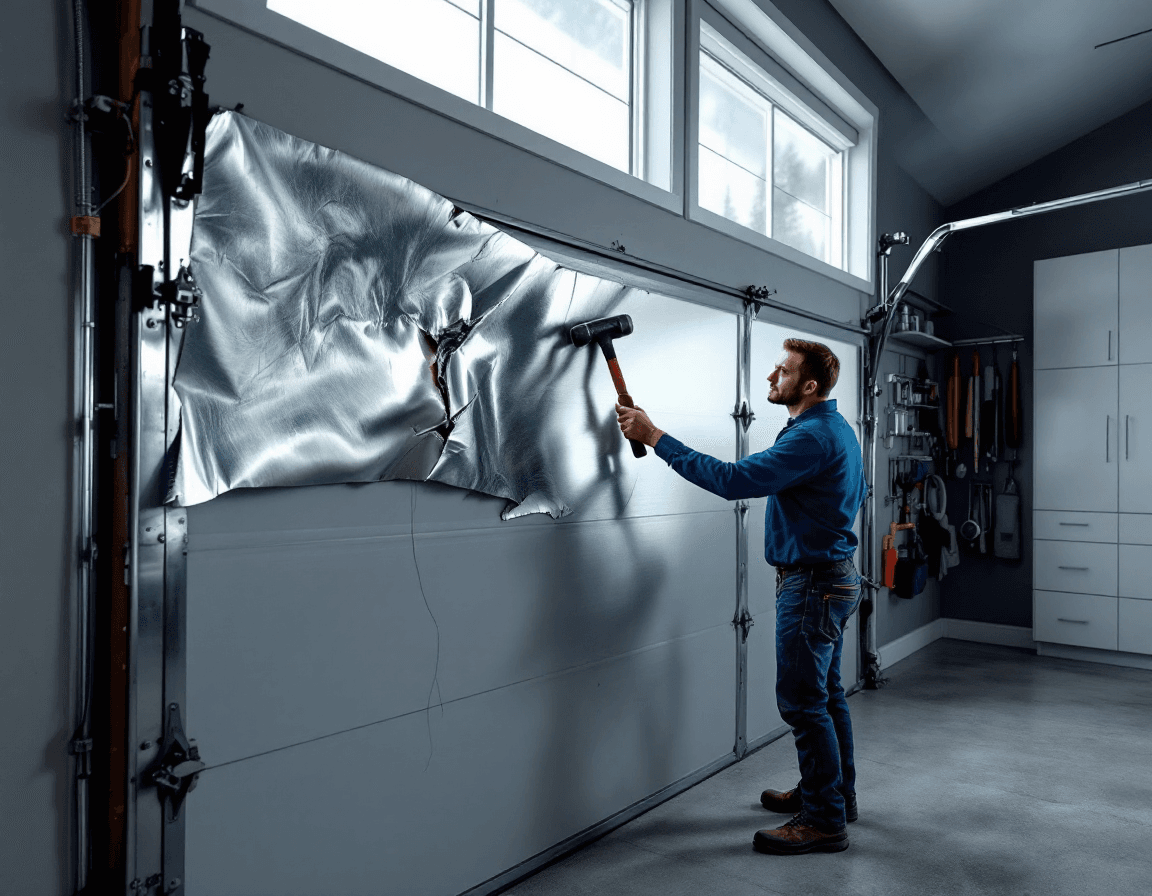
Garage Door Panel Replacement in Woodinville, WA is often the most practical fix for a door that still runs smoothly but looks rough. A single dented or cracked section can make an otherwise sound door look neglected, and it can let water, cold air, and pests into the garage. Homes across Woodinville, from the older subdivisions near the Sammamish River to newer builds on the slopes above downtown, see this problem regularly. Because most residential doors are built from modular sections, replacing one panel is usually far less expensive than replacing the whole door.
Many homeowners assume that any visible damage means the door has to go. In reality, the tracks, rollers, springs, and opener on most doors can keep working for years after a panel is damaged. The challenge is deciding whether the damaged section can be swapped for a matching one, whether the color and profile can still be found, and whether the damage points to a deeper problem like moisture behind the panel or a structural weakness in the frame. A licensed technician can sort those questions out in a single visit, and that clarity usually saves money.
This page explains how panel damage happens in our part of King County, what a realistic replacement involves, how pricing typically works, and when repair makes more sense than replacement. It also covers why spring and cable work should always be left to a licensed professional. If you have a dent, a crack, a rotted bottom section, or a panel that no longer matches the rest of the door, the sections below will help you decide your next step.
Reading the Damage Before You Pick Up the Phone
Start by looking at the door in daylight and noting exactly where the damage sits. A dent in the middle of a panel often comes from a lawn mower, a basketball, or a hard-thrown bag of recycling, and it may only affect the surface. A crack that runs along a seam, or a panel that bows outward when you press on it, usually means the internal stiffening or the joint between sections has failed. Take a few photos from the inside and outside, and measure the height and width of the affected section if you can. Those details help a technician arrive with the right replacement part on the first visit.
Pay attention to the bottom edge of the door as well. The lowest section takes the most abuse from splashing water, road grime, and the occasional bump from a car or cart. If you see swelling, soft wood, or a strip of rust bleeding down from a single spot, the damage may extend beyond what you can see from the outside. Run your fingers along the inside of the panel and note any flaking paint or soft spots. Tapping lightly with a knuckle can also reveal hollow areas where moisture has collected in insulation or in the core of a wood or composite panel.
It helps to note when the damage appeared, too. If a dent showed up right after a windstorm or a neighbor's tree branch came down, it may be a single event. If the door has gradually gone from clean to stained over several wet seasons, the problem is more likely environmental and may affect neighboring sections soon. Jot down whatever you remember, because a technician will ask, and the answer affects whether replacement alone will solve the issue or whether the door needs a broader look.
How Western Washington Weather Wears on Garage Door Panels
Our climate is mild by national standards, but it is persistently damp. Woodinville gets long stretches of gray, drizzly weather from October through April, and the humidity rarely drops far below comfortable levels for much of the year. That moisture finds its way into every seam, hinge pocket, and bottom edge that isn't sealed well. Over time, it can soften wood panels, lift paint on steel, and encourage corrosion at the points where metal skins are crimped together. Garages that sit under mature Douglas firs or cedars also collect needles, sap, and moss on the top sections, and those materials hold water against the surface.
Steel doors, which are the most common type in our neighborhoods, handle moisture reasonably well when the factory finish is intact. The trouble starts when a chip or scratch exposes bare metal, especially along the lower sections where water pools after rain. Surface rust can spread under the paint and eventually perforate a thin skin, and that is when a panel needs replacing rather than touching up. Wood and wood-composite doors are more sensitive, since prolonged dampness can cause swelling, delamination, and rot in the lower rails and panel edges.
Wind is the other local factor. Storms that roll through the Sammamish Valley can push debris against the door and flex the panels repeatedly, which can fatigue a joint or crack a brittle section. Gusts also make it more likely that a loose strut or an unsecured wind bar will rub or strike a panel. If your door has shown new dents after a blustery week, a technician can check the wind bars, the bottom seal, and the panel fasteners while assessing the damage. That kind of check often prevents the next panel from being damaged in the same way.
The Sections That Take the Hardest Hits
Not every panel faces the same risks. Based on what technicians typically see on residential doors in our region, a few sections account for most of the replacement requests. Knowing which ones are most exposed helps you watch for early warning signs and decide whether a quick fix is enough. The list below covers the most common patterns we encounter.
- The bottom section, which takes splash-back from driveways, road spray, and the occasional impact from a vehicle or cart.
- The panel directly above the bottom section, which often shows the first signs of trapped moisture when the bottom seal has worn.
- Panels at the height of a side mirror or a bumper, where a backing accident leaves a clear, localized dent.
- Sections near the garage door opener's header bracket or near a light fixture, where stray tools or ladders tend to make contact.
- The top section on doors shaded by overhanging trees, where needles and moss hold moisture against the metal or wood.
When you see damage in one of these locations, consider whether the cause is still active. A cracked bottom panel that keeps taking hits from a parked car, or a rusting top section beneath a dripping gutter, will keep deteriorating if nothing changes. Replacing the panel without addressing the source is a common reason homeowners end up calling back within a year or two. A short conversation with your technician about the cause can save you from repeating the repair.
Repair or Replace: Deciding on a Damaged Section
Repair makes sense when the damage is limited to a surface dent, a light scratch, or minor rust that has not perforated the skin. In those cases, a technician may be able to straighten a shallow dent, treat rust, and refinish the area without removing the section. This is usually the least expensive path and works well when the door's color is still available and the panel still lies flat. Repair is less reliable when the dent has creased the metal or when the paint has faded so much that a patch would stand out.
Replacement is the better choice when a panel is cracked through, rotted, bowed, or badly corroded. It also makes sense when the damage has reached the internal insulation or the core, since trapped moisture will continue to degrade the section from the inside. If the door is more than about twenty years old and the other panels show similar wear, it may be worth comparing the cost of panel replacement against a full door replacement. A technician can usually give you a clear recommendation after inspecting the door's springs, rollers, and tracks alongside the panel.
Some homeowners ask whether it is worth replacing a panel that is only cosmetically damaged. The answer depends on how visible the damage is and how much it matters to you. A dent on the rear of a door that faces an alley is a different decision from a dent on the street-facing front of a home near Woodinville Wine Country, where curb appeal is part of how a property presents. Weigh the cost against the value of having the door look right, and ask your technician for an honest opinion about whether a repair will hold.
Matching a Panel When the Original Door Is Hard to Find
Matching is one of the trickiest parts of panel replacement, and it is where many homeowners feel frustrated. Garage door manufacturers update their styles, change their color palettes, and discontinue lines over time. A door installed fifteen years ago may have a profile, texture, or paint code that is no longer in production. Even when the same manufacturer still exists, a fresh panel can look slightly different because of UV exposure on the older sections, which fades the finish over years of Pacific Northwest sun.
Start by identifying the manufacturer and model, which are usually printed on a label on the inside of the door or on the top section. If the label is worn or missing, a technician can often identify the door by its panel profile, the spacing of the grooves, and the style of the window inserts. Once the product line is known, the technician can check whether an exact match is still available or whether a close alternative will work. In some cases, a full panel swap is not practical, and the best option is to replace the whole row of panels so the door looks uniform.
Color matching requires some patience. Faded finishes rarely match new paint exactly, so a technician may recommend replacing an adjacent section too, or adjusting the approach to blend the transition. If the door has a woodgrain or textured finish, the match becomes even harder, and a clear conversation about expectations is important. Be honest with yourself about how much mismatch you can live with, and ask your technician to show you samples or photos of comparable panels before the work begins.
What a Panel Replacement Involves, Step by Step
A typical panel replacement begins with an inspection to confirm the damage, the door's model, and the condition of the hardware around the affected section. The technician will check whether the damage is limited to one panel or whether neighboring sections have been stressed. Because modern doors are assembled with hinges and rollers that connect the sections, the technician may need to loosen certain fasteners and carefully separate the damaged panel from its neighbors. This is where safety matters most, because doors are under significant tension and the work must be done with the proper equipment.
Spring and cable systems are not a DIY task. The torsion springs or extension springs that counterbalance a garage door store a large amount of energy, and improper handling can cause serious injury. Panel replacement sometimes requires temporarily releasing or relieving tension in the system, and that step should always be performed by a licensed, insured professional. If you are a homeowner who enjoys hands-on projects, you can still help by clearing the area, moving vehicles, and taking photos of the door before work begins, but leave any work near the springs, cables, or drums to the experts.
Once the damaged panel is removed, the technician will check the new section for fit, align it with the adjacent panels, and reattach the hinges and fasteners. The door will then be tested through its full range of motion to confirm smooth travel, proper balance, and clean closure at the bottom seal. A good technician will also check that the new panel does not rub the tracks or the wind bars and will adjust hardware if needed. Expect the job to be completed in a single visit for most standard residential doors, though unusual models or matching challenges can extend the timeline.
Understanding the $250 to $800 Range per Section
Panel replacement pricing typically falls between $250 and $800 per section, and the number depends on several factors. The biggest variable is the door itself. Standard steel panels from common product lines are generally less expensive than insulated, wood, or custom-finished sections, which can carry higher material costs and sometimes require special ordering. The size and weight of the section also matter, since larger or heavier panels take more time to handle safely.
Other cost drivers include how difficult the match is, whether the job involves fixing rust or water damage underneath, and whether the door needs additional hardware work, such as replacing worn hinges or rollers at the same time. If a technician finds that the damage has spread to a neighboring section, the price will reflect the additional work. Access also plays a role, especially on older homes where the garage is tight or the door is unusually tall. Some homeowners in hillside neighborhoods find that their doors need a little extra attention because of how the driveway slopes and how the door sits in relation to the floor.
When you request an estimate, ask the technician to explain what is included. A clear quote should cover the panel itself, labor, disposal of the old section, and a functional test of the door. It should also note any possible additional costs, such as finish matching or hardware replacement, so you can make an informed decision. Avoid decisions based only on the lowest number, since a poorly matched or poorly fitted panel can cost more in the long run through callbacks and uneven operation.
Cottage Lake and Hollywood Hill: Older Homes and Sloped Driveways
Neighborhoods around Cottage Lake and up on Hollywood Hill have a character all their own. Many homes in these areas were built over several decades, which means garage doors range from original steel units with decades of weathering to newer insulated doors installed during remodels. Older doors often have thinner panels and simpler hardware, and their finishes may have faded unevenly. Those differences can make matching more difficult, and they also mean that worn components elsewhere on the door may be nearing the end of their service life.
Sloped driveways present their own challenges. Water runs downhill, so a garage on a grade may see more runoff across the threshold during heavy rain, and the bottom panel can take a steady dose of moisture. Vehicles parked on an incline can also roll slightly or bump the door when someone is backing out in a hurry. Technicians working in these neighborhoods often pay closer attention to the bottom seal and the bottom panel, since those areas are under the most stress. A quick check of the threshold and the drainage around the driveway can help protect a new panel once it is installed.
Homes near the lake and on the hill also tend to have mature landscaping. Overhanging branches, leaf litter, and moss can hold moisture against the upper panels, and bark or sap can stain finishes. If your property is surrounded by trees, consider trimming branches that brush the door and clearing debris from the top edge regularly. A little maintenance can extend the life of a replacement panel considerably, and it keeps the door looking its best between service visits.
When a Backing Accident Leaves More Than a Dent
A backing accident is one of the most common causes of single-panel damage, and it is also one of the most misleading. A vehicle that taps the door at low speed may leave a neat, localized dent that looks easy to fix, but the impact can also shift the section out of alignment with its neighbors. It can loosen fasteners, bend a roller bracket, or stress the track where the door rides. If you see a dent after a backing incident, check the door's operation before assuming the damage is cosmetic.
Start by opening and closing the door slowly while watching for binding, uneven movement, or unusual noises. Look for gaps between panels, a bottom seal that no longer meets the floor evenly, or a track that looks bent or out of line. If the door hesitates or jerks, stop using it and call a technician, since continued operation can damage the opener or the springs. Note the time of the accident and any photos you took, since those details help document the event if you need to involve your insurance provider.
Insurance questions are common after accidents, and the right coverage depends on your policy and the circumstances. We can describe the repair work and provide a written estimate, but you should contact your insurer to understand what your policy covers. Keep all invoices and photos, and ask the technician to note any hidden damage in writing so the claim reflects the full scope of the repair.
Keeping Replacement Panels Sound Through Wet Seasons
Once a new panel is installed, a few simple habits can help it last. Wash the door periodically with a mild soap and water to remove salt, road grime, and pollen, especially along the lower sections. Rinse the surface thoroughly, and dry any seams or hinge areas that stay wet. Avoid harsh abrasives or solvents that can strip the factory finish. A light coat of appropriate touch-up paint on small chips, applied promptly, can prevent rust from taking hold.
Check the bottom weather seal every few months. A seal that has cracked, flattened, or pulled away lets water and cold air under the door, and that moisture can settle directly onto the bottom panel. Replacing the seal is typically inexpensive and can make a noticeable difference in how dry the garage stays. Keep an eye on drainage at the threshold as well, and clear any leaves or debris that collect in front of the door so water flows away from the garage.
Finally, keep the rest of the door in good condition. Lubricate the rollers, hinges, and tracks according to the manufacturer's guidance, and tighten loose fasteners during routine checks. If you notice new dents, cracks, or any change in how the door operates, schedule an inspection rather than waiting for the problem to grow. A proactive approach keeps repairs small, and it keeps your door working quietly and reliably through the damp Woodinville winters.
If a dented, cracked, or water-damaged panel is making your garage door look worse than it runs, call Seattle Garage Door Fix at (888) 799-3819. Our licensed and insured technicians can inspect the damaged section, explain whether repair or replacement makes the most sense for your door, and handle panel matching, installation, and a full operational check. Reach out today for clear pricing and a straightforward plan for getting your door back in shape.