
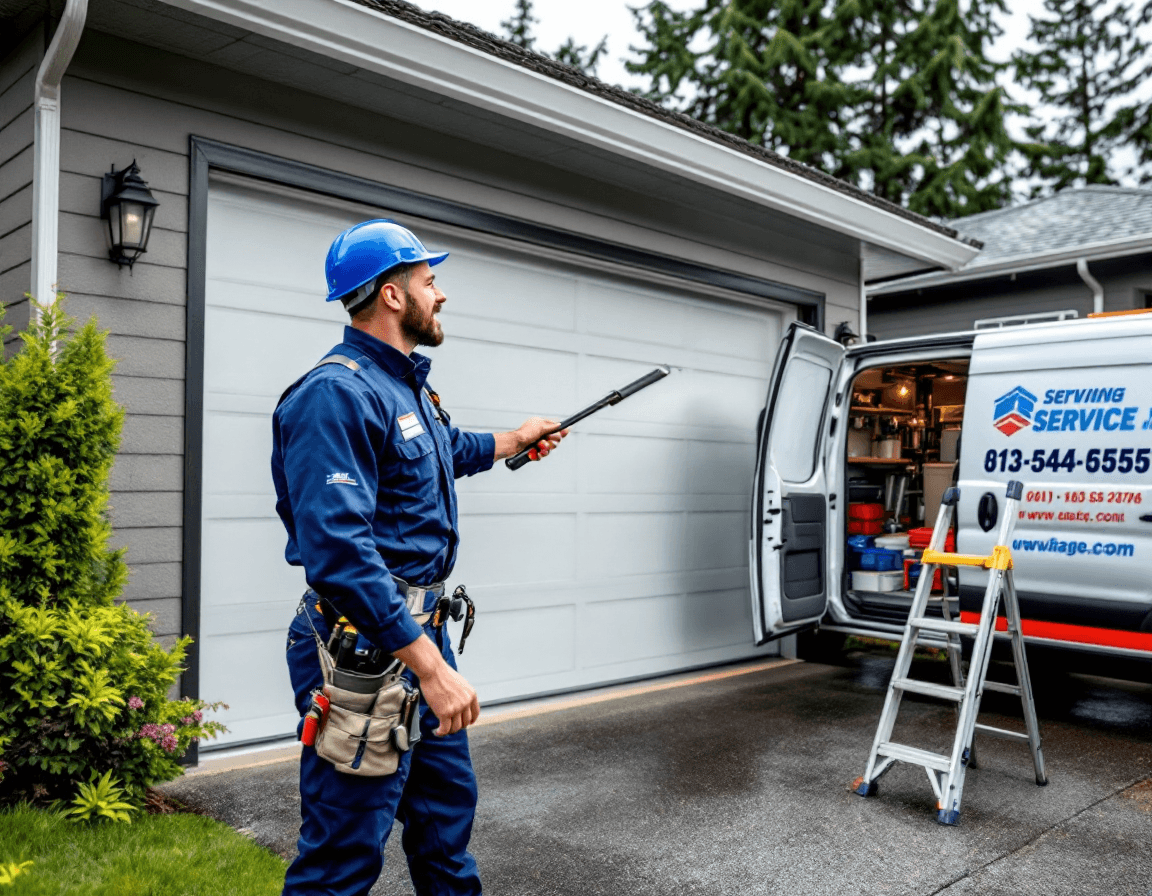
Garage door repair in Woodinville, WA is a common need for homeowners across the valley, from the older neighborhoods near the town center to newer subdivisions off the main arterials. A door that stops halfway, reverses for no clear reason, or refuses to answer the remote can turn an ordinary morning into a scramble, especially when you have kids to get to school or a car that needs to get out. Our technicians handle these calls every week, and most of the problems we find come down to a handful of familiar causes. This page explains what we see most often, what you can safely check yourself, and when it's time to bring in a licensed professional.
Woodinville sits in a part of King County where the weather rarely stays put for long. Wet fall and winter months are followed by cool, damp mornings that linger well into spring, and that combination works its way into every moving part of a garage door. Whether your home is near the Woodinville Wine Country corridor, out toward Cottage Lake, or up on the slopes of Hollywood Hill, the same basic mechanics apply, and so do the same warning signs. Knowing what those signs look like can help you describe the problem accurately when you call, and it can often prevent a small adjustment from becoming a larger repair.
Our service area includes the 98072 and 98077 ZIP codes, along with the surrounding communities we cover across greater Seattle and Western Washington. Every repair we perform is handled by licensed, bonded, and insured technicians, and we always explain what we found and what it will take to fix it before any work begins. If your door is currently stuck, please keep people and pets clear of the opening and avoid forcing it. For anything involving tension or cables, the safest course is to call (888) 799-3819 and let a trained crew take it from there.
Why Damp Northwest Air Tests Woodinville Garage Doors
Moisture is the quiet troublemaker behind many door complaints in this part of King County. Steel panels that have been sitting in cool, humid air for months can develop surface rust at the bottom sections and along the hinge points, and that corrosion slowly stiffens the joints. Wood doors, which still appear on many older Woodinville homes, absorb water through the panels and edges, then swell in wet weather and shrink when the air dries out. A door that fit perfectly in August may rub against the header or the floor by January.
Humidity also affects the lubricants that keep rollers and hinges moving freely. Grease that was adequate a few years ago can turn gummy or wash away after repeated rain, leaving metal-on-metal contact where there should be a smooth glide. Rollers feel this too, particularly the older steel-wheeled types that lack the sealed bearings found on some newer models. When a roller binds in its track, the door may travel unevenly, and the opener motor works harder to compensate.
Temperature swings matter as well. A cold snap can make the door's springs and metal components contract, and a warm afternoon can reverse that change within hours. Over time, this repeated movement loosens fasteners and wears down the weather seal along the bottom. Regular attention in the fall, before the heaviest rain arrives, goes a long way toward preventing the sticking and grinding that many Woodinville homeowners notice in late winter.
Early Warning Signs That Your Door Needs Attention
Most garage door failures do not appear out of nowhere. They usually announce themselves through small changes that are easy to overlook when you are rushing out the door. A door that takes an extra second to start moving, a faint squeal on the way down, or a slight tilt at the top of the track is often the first step toward a bigger problem. Paying attention to these changes gives you time to schedule a convenient visit instead of waiting for a dead door on a rainy Monday.
Visible physical changes deserve just as much attention. Look for gaps between the bottom seal and the concrete that were not there last year, sections of the door that appear to sag or bow when it is partly open, and hinges with bent or missing hardware. Check whether the top roller sits neatly in the track or has popped out of its channel. Any of these signs can point toward a door that is under more strain than it should be.
Here are the early signs we most often see before a full failure:
- The door takes noticeably longer to open or close than it used to
- A gap of more than a small amount appears under the door when it is closed
- The door looks uneven, with one side sitting lower than the other
- Rollers or hinges show visible rust, flaking paint, or bent metal
- The opener strains, hums, or stops briefly during travel
If you notice more than one of these at once, it is worth having the door inspected soon rather than waiting for it to stop completely.
Photo Eyes and Auto-Reverse Problems You Can Often Check Yourself
A door that goes down, then reverses just before it reaches the floor is one of the most frustrating symptoms we hear about. In many cases, the cause is not the door at all but the safety sensors mounted on either side of the opening, usually a few inches above the floor. These photo eyes send an invisible beam across the doorway, and if that beam is interrupted, the opener is designed to stop and reverse. Anything that breaks the beam, from a dusty lens to a shifted bracket to direct sunlight, can trigger the reversal.
You can perform a few simple checks without special tools. Start by wiping both sensor lenses with a soft, dry cloth, since cobwebs and road grime collect quickly in a garage. Confirm that the two sensors face each other and that their indicator lights are steady rather than blinking. Clear any object that may be sitting in the path, including a stray bike, a recycling bin, or a leaf that has blown in during a windstorm. If the lights are still off or the door continues to reverse after cleaning and alignment, the sensor wiring or the sensor itself may need replacement.
Sensors are not the only cause of reversal. The opener's force setting can be too sensitive if the door has become heavier from moisture or from worn components, which causes the motor to read normal resistance as an obstruction. A technician can test the auto-reverse feature to confirm it is working correctly, and that test is important for safety. A door that reverses on contact should reverse on contact, and adjusting the force settings should never mean disabling that protection.
When a Door Slams Shut or Lurches During Travel
A door that drops too quickly can be alarming, and it is often a sign that the balance system is no longer doing its job. Garage doors are designed to be nearly weightless at the handle, with the springs carrying most of the load. When tension weakens or becomes uneven, the door can fall faster than the opener intends, sometimes slamming onto the floor with enough force to damage the bottom panel or the weather seal. A door that jerks, hesitates, or lurches while moving is also showing signs of imbalance.
Uneven movement often shows up as a door that rises on one side before the other. Homeowners sometimes assume the track is bent, and while that can happen after a bump from a vehicle, a cable that has slipped on its drum or a spring that has begun to wear is just as likely. Some hillside driveways in the Hollywood Hill area sit at a slope that adds stress to the opener and the track alignment, which can make a minor imbalance more noticeable over time. Whatever the cause, a door that moves crookedly should not be left to continue operating under strain.
Because these symptoms involve the lifting system, they should be assessed in person. Do not attempt to adjust tension, tighten cable drums, or release a spring yourself. The forces stored in a torsion spring are substantial, and a mistake during adjustment can cause serious injury. A licensed technician can measure the balance, inspect the cables and drums, and determine whether the door needs a simple alignment or a component replacement.
Remote and Wall Button Failures That Are Not Always the Opener
When the remote does nothing, most people immediately suspect the opener. Before calling for service, check the simple things first. Replace the remote's battery, since many common fobs use coin cells that lose strength over time. Confirm that the remote is paired to the correct opener, and make sure you are standing within a reasonable range of the door. If the door responds to the wall button but not the remote, the issue is often in the transmitter or receiver rather than the motor itself.
Wall button trouble has its own set of causes. A stuck or damaged button, a loose wire at the control panel, or a tripped circuit can all prevent the opener from responding. Older wall panels may have worn contacts that work intermittently, especially in a garage that experiences temperature and humidity swings. If the button lights up but the door does not move, the problem may lie in the logic board or in the connection between the panel and the opener head.
Some remote issues are caused by interference rather than failure. Newer wireless devices, including certain home networks and smart-home hubs, can occasionally crowd the frequencies a garage opener uses. Relocating the receiver, replacing an aging remote, or reprogramming the system can resolve these conflicts. A technician can test each component in sequence, which usually reveals the failed part without guesswork.
Doors Stuck Halfway or Jammed in the Track
A door that stops partway open or closed is among the most common calls we receive, and it is also one of the most important to handle carefully. The door may be sitting at an odd angle, with one end higher than the other, or it may have stopped with a visible gap at the top. In many cases, the cause is a roller that has jumped out of the track, a track section that has shifted, or a cable that has come loose from its drum. Forcing the door up or down can make the damage worse and can put strain on the opener.
Check for obvious obstructions first. Look along the tracks for objects, debris, or a crushed roller, and make sure nothing is caught between the door panels or under the bottom seal. If the door has been bumped by a vehicle, a bent track may be the culprit, and that requires professional realignment. Avoid pulling the emergency release cord repeatedly while the door is partly raised, because that can leave the door unsupported and heavy enough to fall unexpectedly.
If the door is jammed and you cannot clear it safely, keep the area clear and call for service. Jammed doors often involve cables or springs under tension, and those components should only be handled by trained technicians. We carry the tools needed to inspect the full lifting system, and we can explain exactly what caused the jam before we recommend a repair. Quick, careful attention usually costs less than a door that continues to operate under damage.
Rattles, Squeals, and Grinding Noises Decoded
Noise is one of the best diagnostic clues a garage door can give you, provided you know how to interpret it. A high-pitched squeal usually points to dry or worn rollers, hinges, or bearings that need lubrication or replacement. A grinding sound often suggests the opener's gear train is under strain, or that a track has a bend or obstruction that the rollers are catching on. A sharp bang, especially at the top or bottom of travel, can mean the door is hitting a stop, a worn track, or a loose bracket.
Rattling tends to come from loose hardware. Over time, vibration from normal operation can loosen bolts that secure the track, the brackets, or the opener rail. Tightening these fasteners is a reasonable task for a homeowner who is comfortable with basic tools, but it should be done with the door fully closed and the opener disconnected from power. Anything that involves the springs, the drums, or the cable tension should be left to a professional.
Keep a simple record of when the noise occurs. If it appears only in the morning when the air is damp, moisture may be the culprit. If it appears after a storm, a loose or damaged component may have been jarred. Sharing these details with your technician can shorten the diagnosis and help us target the right repair the first time.
Springs and Cables: Why These Belong to a Licensed Technician
Springs and cables are the heart of a garage door's lifting system, and they are also the parts that cause the most serious injuries when handled incorrectly. Torsion springs, which mount on a shaft above the door, store enormous amounts of energy when wound. Extension springs run along the sides of the track and can snap with force if they fail. Lift cables run from the bottom bracket up to the drums and can unravel or snap when they are worn or improperly tensioned. None of these components should be adjusted, removed, or replaced by an untrained person.
A spring or cable problem often shows up as a door that is noticeably heavier than normal, one that sags when partly open, or one that drops unevenly. You may also see a gap between the coils of a torsion spring or a cable that appears frayed or loose. These are signs that the balance system needs professional attention, and continuing to use the door in this condition can cause further damage to the opener and the tracks.
We treat all spring and cable work as a licensed trade task. Our technicians use proper winding bars, safety equipment, and specialized measurements to restore correct balance. We will always explain what we found and why the part needs replacing, and we will never recommend unnecessary spring work to pad a bill. If you suspect a spring or cable has failed, keep everyone away from the door and call (888) 799-3819 for a visit.
What Typical Repairs Cost Around Woodinville
Pricing for garage door repair depends on what is wrong, how accessible the components are, and whether the job involves parts that need to be ordered. For most residential repairs in our service area, we see a typical range of $95 to $450. Simple adjustments and sensor realignment usually fall at the lower end of that range, while roller replacement, track realignment, or opener troubleshooting may fall in the middle. Repairs involving springs, cables, or significant track work may reach the higher end, depending on the parts involved.
Several factors influence the final figure. A door with a standard size and common hardware is generally quicker to service than a custom or oversized door, and a two-car door may require more time than a single. Older homes may have obsolete parts that take longer to source. Access can also play a role, particularly in detached garages or structures where the opener is installed at an unusual height. We will provide a clear explanation of the repair and its cost before we begin, so you can make an informed decision.
Keep in mind that a small repair caught early often costs less than a major failure later. A roller that is replaced before it cracks may prevent damage to the track, the bracket, and the cable. Taking a few minutes to note the symptoms and schedule service promptly is usually the most economical choice a homeowner can make.
Preparing Your Garage Door for Wet Winters and Windy Storms
A garage door that is prepared for the season is far less likely to fail when the weather turns. Each autumn, before the heaviest rains arrive in Woodinville, it is worth inspecting the weather seal along the bottom, the seals along the sides and top, and the condition of the rollers and hinges. Cleaning the tracks of leaves, dirt, and grit helps the rollers move freely, and applying a silicone-based lubricant to the moving parts can reduce friction without attracting as much dust as heavier greases.
Windstorms present a different kind of threat. Strong gusts can push against a large, flat door and stress the tracks, brackets, and hinges, and in some cases they can cause panels to flex or separate. Keep the opener's manual release accessible, and know how to use it safely in case of a power outage. If your door shows new dents, gaps, or misalignment after a storm, have it inspected before using it heavily, since a compromised door can fail without much warning.
Routine maintenance also includes testing the auto-reverse function and the photo eyes every few months. Lay a flat object, such as a piece of wood, on the floor in the door's path and confirm that the door reverses when it contacts the object. A door that fails this test should be serviced immediately, because the safety features are there to protect people and property.
Choosing a Technician Who Knows the Neighborhood
Finding a repair service you can trust is about more than a fast response. You want a company that is licensed, bonded, and insured, that explains the problem in plain language, and that stands behind its work. Ask whether the technicians will walk you through the issue before starting, and whether they will show you any worn parts they replace. A reputable service will be comfortable answering questions and will not pressure you into work you do not need.
Local familiarity matters too. Technicians who regularly serve Woodinville understand the moisture patterns, the mix of older and newer homes, and the way hillside driveways and detached garages affect door performance. We serve the 98072 and 98077 ZIP codes and the surrounding communities across King County and Western Washington, and that regular presence means our technicians have seen how local conditions wear on garage doors over time.
Before you book, have a few details ready: the make and approximate age of your door, the type of opener, a description of the symptoms, and whether any noises or warning lights appear. Those details help us prepare the right parts and arrive ready to work. When you are ready to schedule, call Seattle Garage Door Fix at (888) 799-3819, and we will help you get your Woodinville garage door moving smoothly again.