
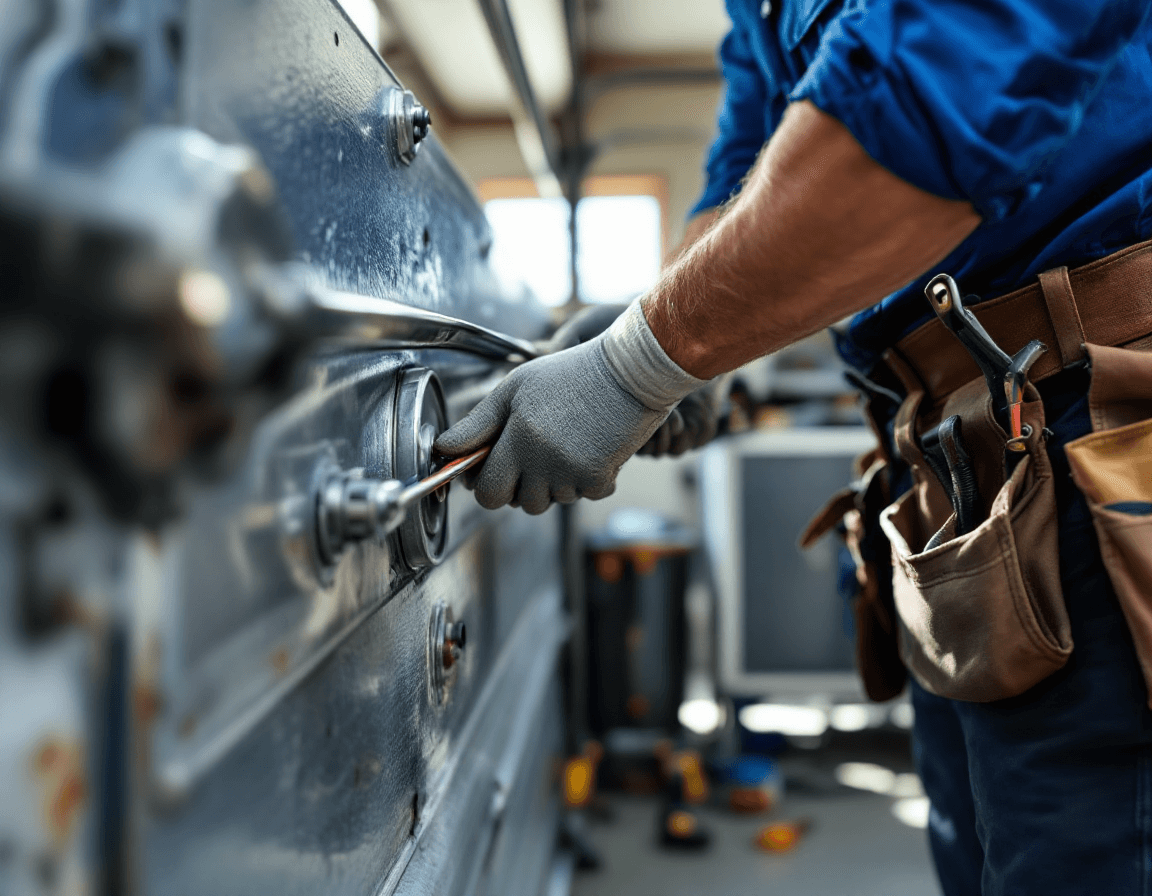
Garage Door Cable Replacement in Woodinville, WA is one of the more common repairs we handle for homeowners across the valley and up the slopes toward Hollywood Hill. When a lift cable snaps, frays, or slips off its drum, the door usually stops working all at once, often with a loud bang that makes you wonder what just happened. The door may be stuck halfway up, sagging at one corner, or refusing to close at all. Most of the time the cable itself is the culprit, and replacing it is a contained job, but it involves high-tension parts that can cause serious injury if handled carelessly.
This page explains what lift cables do, why they fail so often in our region, how to recognize trouble before a cable breaks, and what a professional replacement involves. We serve homes in 98072 and 98077 along with many neighboring communities in King County, so we have seen the full range of garage door setups, from newer builds with tidy torsion systems to older homes with original hardware that has spent decades in damp air. Our goal here is to give you a clear, honest picture so you can make good decisions and call for help at the right time. If your door is currently stuck or hanging unevenly, skip ahead to the section on safety and call (888) 799-3819.
What Lift Cables Do and Why Their Condition Matters
Your garage door is heavy, often weighing well over a couple hundred pounds for a standard double-car panel once you account for insulation, hardware, and windows. The springs carry most of that weight, but the lift cables are what translate spring energy into smooth, level movement. Each cable runs from the bottom bracket on the door, up over a pulley, and wraps around a drum mounted on the end of a torsion shaft. As the shaft turns, the cable winds or unwinds on the drum and lifts or lowers the door in a controlled way.
Because the cables are the physical link between the springs and the door, their condition has a direct effect on how the door behaves. A healthy cable keeps tension evenly distributed, so the door rises straight and stops where it should. A damaged cable can allow one side of the door to lift faster than the other, which is why many homeowners first notice a crooked or lopsided door before they ever see a broken cable. Cables are designed to carry loads that would be dangerous under any other circumstance, which is also why they should never be treated as ordinary rope.
Most residential doors use steel cables sized for the specific door weight and spring system. Replacement cables must match that specification, and the drum they wrap onto must be in good shape too. A cable that is the wrong gauge, the wrong length, or sized for a different door will fail early or create uneven lifting. This is one reason we insist on confirming the exact hardware before any cable goes on a door.
Local Weather and the Slow Damage That Adds Up
The Pacific Northwest climate is kind to lawns and hard on steel. Woodinville's long, damp stretches of late fall and winter keep humidity high inside many garages, especially in homes where the garage is not heated or where the door seals are worn and let in moist air. Steel cables do not need to be soaked to corrode. Repeated cycles of damp air, condensation on cold mornings, and occasional splashes from wet vehicles can leave a fine film of rust that works its way into the strands over time.
Temperature swings add another layer of stress. A cold snap can make metal more brittle and cause the door to move stiffly, which places extra load on the cables during opening and closing. Warmer spells then soften the lubricants on rollers and hinges, so friction changes from one week to the next. Over months and years, these shifts fatigue the wire strands, and a cable that looked fine in October may be frayed by February.
Garage doors in our area also see plenty of dust, pollen, and debris carried in on tires and shoes. Grit that settles into the drum grooves and cable path can act like sandpaper with every cycle. Homeowners who park vehicles close to the door, or who use the garage as a workshop, often notice more rapid wear on the lower sections of cable near the bottom brackets. Keeping the track area reasonably clean is a small habit that pays off, but it cannot stop corrosion that is already inside the wire.
Warning Signs That a Cable Is Failing
Lift cables rarely give up without warning, but the signs are easy to overlook if you only use the door once or twice a day. Paying attention to how the door looks and sounds during normal use is the best way to catch trouble early. The most common indicators include:
- Visible fraying, kinking, or loose wire strands along the length of the cable, especially near the drum or pulley
- Rust-colored stains or flaking on the cable, which often signal moisture damage inside the wire
- A door that hangs noticeably lower on one side when it is partly open
- Sections of the door that rise unevenly or seem to lag behind the other side
- Grinding, popping, or clicking sounds as the drum turns, which can mean the cable is catching or wrapping unevenly
- A cable that appears slack or loose on one side while the other remains tight
If you notice any of these signs, avoid running the door repeatedly to test it. Continued operation with a damaged cable can cause the other cable to overload, or allow the door to drop unexpectedly. Keep vehicles and people clear of the door path and schedule an inspection promptly. Early visits are usually simpler and less costly than emergency calls after a full failure.
What Happens When a Cable Snaps or Jumps the Drum
A cable that snaps often produces a sharp crack or bang that sounds like a gunshot inside the garage. Many homeowners describe the moment as sudden and disorienting, especially if the door was in motion. Once a cable breaks, the spring on that side no longer has a working connection to the door. The door usually sags or drops on the affected side, may pull out of its track, and can become jammed at an angle. In some cases the broken end of the cable whips around the drum or lodges inside the track, creating additional damage to rollers, brackets, and panels.
A cable that comes off the drum can cause a different pattern of problems. If the cable slips out of its groove, the door may still move, but it will lift unevenly and can wedge against the track. Sometimes the cable wraps loosely or piles up on itself, creating a tangled mess that prevents the drum from turning smoothly. Either way, the door is no longer balanced, and attempts to force it open or closed can strain the opener and bend hardware.
The safest response to a broken or disconnected cable is to stop using the door and keep everyone away from the area. Do not try to lift the door by hand to free it, and do not pull on loose cable or spring components. Disconnect the opener only if you know how to do so safely, and otherwise leave the system alone until a trained technician arrives. A door that has lost its cable can shift suddenly, and the stored energy in the springs is not something to test with improvised tools.
Understanding the Drum, Cable, and Spring Relationship
Garage doors with torsion springs, which are the most common style in newer Woodinville homes, rely on a coordinated set of parts. The torsion shaft runs across the top of the door opening and holds the springs. At each end, a cable drum attaches to the shaft, and the lift cable wraps around the drum as the door moves. When the door closes, the cable unwinds from the drum and the springs wind up to store energy. When the door opens, that energy releases and the cable winds back onto the drum, lifting the door.
Because the drum, cable, and spring all share a single system, replacing one component without checking the others can lead to repeated failures. A worn drum may chew through a new cable, or a spring that has lost tension may place uneven strain on one side. Technicians typically inspect the drum grooves, the set screws that hold the drum to the shaft, and the condition of the bearing plates and brackets during cable work. If a drum is cracked or stripped, it should be replaced at the same time as the cable.
Torsion springs store large amounts of energy and must be adjusted or replaced only by trained professionals with the right tools. Tampering with springs, even while replacing a cable, is one of the most dangerous tasks in residential maintenance. That is why we recommend licensed service for every cable and drum repair, and why homeowners should never attempt to disconnect or re-wind springs on their own.
Replacement Costs and What Shapes the Final Price
For most residential lift cable replacements, our pricing falls in the range of $110 to $300. The final amount depends on the condition of the door, the number of cables involved, and whether drum or hardware work is needed alongside the cable itself. A single cable on a standard door with accessible drums typically lands near the lower end of that range, while a job involving both sides, damaged drums, and additional hardware may move toward the higher end. We provide a clear estimate before beginning work so there are no surprises once the repair is underway.
Several factors influence the complexity of the job. Doors that are heavier, larger, or equipped with custom insulation or decorative panels can require more careful handling. Older doors sometimes have brackets or bearings that have corroded and need replacement to keep the new cable running true. Homes where the garage is difficult to access, or where the door is stuck in a partially open position, may require additional time for safe stabilization before the cable can be replaced. We discuss these details openly during the visit.
It is also worth thinking about the bigger picture. If your cables are original to a door that is well over a decade old, the drums, rollers, and springs may be approaching the end of their service life too. Replacing only the cable can be a sensible choice when the rest of the system is sound, but a technician should evaluate whether a broader tune-up makes more sense. We will explain the tradeoffs so you can choose the option that fits your home and budget.
Hillside Driveways and Sloped Lots Around Hollywood Hill
Many homes on and around Hollywood Hill sit on sloped lots, where the driveway rises or falls toward the garage. These setups can influence how a door performs. When the approach is steep, vehicles may be parked at an angle, and doors can experience uneven pressure on the bottom panel, particularly if the threshold or seals have shifted over time. Over years of use, that uneven loading can stretch cables unevenly and expose weaknesses that were not obvious on flat ground.
Sloped driveways also tend to carry more runoff during heavy rains. Water that pools at the base of a door can seep under the seal and reach the bottom brackets and cable anchors. Corrosion in those areas can weaken the attachment point and accelerate fraying. During cable replacement, we look closely at the lower brackets, the bottom roller assemblies, and the condition of the weatherstripping, because a cable repair that ignores water intrusion may not last as long as expected.
Homeowners on hillside properties sometimes notice their doors seem to close faster or bounce slightly at the bottom. That behavior can point to imbalance rather than a simple opener issue. If you live on a sloped lot and your door has started behaving differently after a storm or a season of heavy use, it is a good moment to schedule an inspection rather than waiting for a full failure.
Older Neighborhoods Near Cottage Lake and Original Hardware
Neighborhoods around Cottage Lake include a mix of home ages, and some properties still carry garage doors that have been in place for many years. Older doors often use lighter-gauge tracks, original drums, and cables that have simply reached the end of their service life. Because these components were designed to a different standard, matching replacement parts can take some careful sourcing. We check the existing door construction carefully before selecting cables so the new hardware fits the way the system was built.
Original steel cables from earlier decades may also carry a different stranding pattern or diameter than what is commonly stocked today. Using an incorrect cable can cause binding, uneven lifting, or early failure. That is why a thorough measurement and inspection come before any part is ordered. Our technicians look at the cable end fittings, drum attachment method, and bracket style to ensure compatibility.
Older homes also tend to have garage doors that were installed before modern safety features became standard. While this does not mean the door is unsafe on its own, it does mean that a cable repair may reveal other aging components that deserve attention. Tracks that have lost alignment, rollers that have flattened, and hinges that have loosened can all contribute to cable stress. We recommend addressing these items during the same visit when possible, since the door will otherwise continue to wear unevenly.
Our Replacement Process from First Call to Final Test
A professional cable replacement follows a clear sequence. It begins with a phone call or online request, where we ask about the symptoms you are seeing, the door's approximate size and style, and whether the door is currently stuck or safe to operate. This information helps us arrive with the right parts and tools. Once on site, the technician secures the door, assesses the spring system, and confirms which cable and drum components need attention.
A typical replacement involves these general steps:
- Securing the door and verifying that the springs and torsion system are stable before any parts are removed
- Inspecting the drums, brackets, rollers, and track for wear, damage, or misalignment
- Removing the damaged cable and checking the drum grooves and attachment points
- Installing the correct replacement cable with proper end fittings and routing
- Testing door balance, travel, and smooth operation through multiple full cycles
- Reviewing findings with the homeowner and explaining any recommended follow-up
Each step is performed with safety as the first priority. The door is never left in an unstable state, and technicians use specialized tools designed for high-tension work. Once the repair is complete, we test the door several times to confirm it lifts and closes evenly, stops correctly at the top and bottom, and does not bind on either side. You will receive a clear explanation of what was done and what to watch for in the coming weeks.
Between Visits: Simple Habits That Protect Your Cables
Homeowners can do a few simple things to support their cables between professional visits, without ever touching the tension system. A monthly visual check is a good place to start. Look at the visible portions of each cable for fraying, rust, or kinks, and note any changes. Watch the door as it operates and listen for unusual sounds. If anything seems different, make a note and schedule an inspection rather than waiting for the next seasonal tune-up.
Keeping the door path clear helps reduce wear. Remove stored items from the track area, keep the floor free of debris, and avoid parking so close to the door that the bottom panel is repeatedly stressed. Wiping down the tracks and rollers with a dry cloth can remove grit, though you should avoid soaking the components or applying heavy oil directly to cables. Use only lubricants recommended for garage door hardware, and apply them to hinges and rollers rather than to the cables themselves.
Ventilation and moisture control matter in our climate. Where possible, keep the garage from trapping damp air, and address leaks around the door seals promptly. Replacing worn weatherstripping can reduce water intrusion that corrodes brackets and cable anchors. These are modest steps, but together they can extend the life of the entire door system and help you avoid sudden failures during a busy week.
Keeping Safety First: Why Cable Work Belongs to Licensed Hands
Cable and spring work carries real risk. The tension stored in a residential torsion spring is substantial, and a mistake during cable replacement can cause the spring to release with enough force to cause serious injury. Even experienced homeowners who feel comfortable with basic tools should not attempt cable replacement, drum removal, or spring adjustment. The risk is not worth the savings, and a single error can damage the door, the opener, or the structure around it.
Seattle Garage Door Fix is licensed, bonded, and insured, and our technicians are trained to handle these systems safely. We bring the proper winding bars, clamps, and support equipment, and we follow procedures designed to keep both the technician and the homeowner out of harm's way. If you are unsure whether a problem is a cable issue or something else, the safest move is to stop using the door and call for an assessment. We will tell you plainly what we find and what we recommend.
Please keep children, pets, and visitors away from the garage during any repair. Do not stand under a door that is hanging unevenly or partially disconnected, and do not attempt to lift it manually. If the door has come off its tracks or the cable has visibly separated, treat the situation as urgent and contact a professional right away.
Scheduling Service Across 98072, 98077, and Nearby Communities
We provide garage door cable replacement across Woodinville and the surrounding areas, including homes within ZIP codes 98072 and 98077. Our dispatch team works to match your appointment window with the technician who is closest and best equipped for the job, which helps keep response times reasonable even during busy seasons. Because cable failures can happen unexpectedly, we aim to schedule urgent calls quickly while still allowing time for careful work.
When you call, be ready to describe what you see and hear. Tell us whether the door is open, closed, or stuck, whether one side appears lower than the other, and whether any loud noises occurred. Mention the approximate age of the door if you know it, and whether you have had recent repairs or adjustments. These details help us prepare and reduce the number of return visits. If the door is currently unsafe to operate, let the scheduler know so we can prioritize the call.
Whether your home sits near the wine country roads, tucked into a quiet cul-de-sac, or perched on a hillside lot, our goal is the same: a balanced, safe, and reliable garage door that operates the way it should. Our team is ready to inspect the cables, drums, and related hardware and explain the options clearly. For prompt help with a snapped, frayed, or off-track cable, call (888) 799-3819 today and let a licensed technician get your Woodinville garage door moving safely again.