
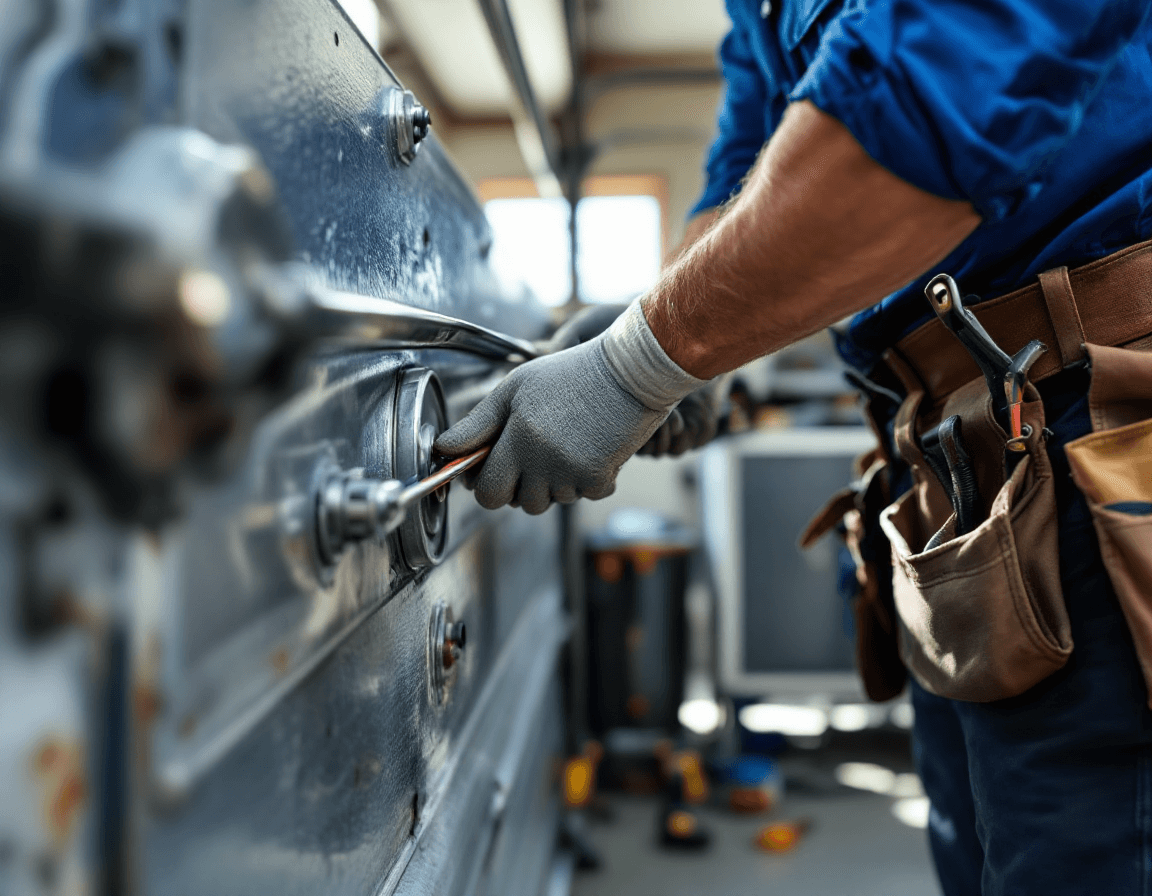
Garage Door Cable Replacement in Bothell, WA is one of the most common repairs we handle for homeowners across the north end of King County, and it is also one of the most misunderstood. Many people hear a loud bang in the garage and assume the opener has failed, when the real culprit is a lift cable that has snapped or jumped off its drum. Because the cables carry the weight of the door, a failure can leave a heavy panel hanging unevenly or stuck halfway open. Knowing what the problem looks like helps you decide quickly whether to keep the door closed and call for help.
Bothell homes vary widely, from older ranch-style houses near the older parts of town to newer builds around Canyon Park and the North Creek corridor. Each style tends to bring its own garage door setup, whether that is a standard torsion system with a shaft above the door or an extension system in a garage with a lower ceiling. Our technicians see the full range, and the cable issues we repair look different depending on the hardware, the age of the door, and how the door has been used. A cable that works fine for years can fail suddenly once it has been stressed by a single cold morning or a season of damp weather.
This page explains what a lift cable does, why cables fail in our climate, how to recognize trouble early, and what a proper replacement involves. We also cover why cable work and drum service should almost always be handled by a licensed, insured professional rather than a do-it-yourself project. Pricing for most cable replacements falls in the range of $110 to $300, though the final figure depends on the door, the parts involved, and whether the drum or other components need attention too. Read on for the details, and call us at (888) 799-3819 if your door is currently stuck or hanging wrong.
What Lift Cables Actually Do in a Residential Door
Lift cables are the steel lines that connect the bottom bracket of your garage door to the drums mounted near the top of the door track. As the spring system above the door winds and unwinds, the cables wrap and unwrap around those drums, which is what lifts and lowers the door in a controlled way. Each side of the door has its own cable, so a typical two-car door uses two cables that must stay balanced with each other. When both cables are in good shape and seated correctly, the door rises smoothly and stops where it should.
The cables are built to carry a large share of the door's weight and to do it thousands of times over the life of the system. They are usually made of braided or coated steel, and the ends are secured with fittings or swaged loops that anchor them to the drum and the bottom bracket. Because the cable runs over a curved drum under tension, it is constantly flexing, which is why wear and fatigue are the main enemies. The drum itself is a grooved cone or cylinder that guides each wrap of cable into a neat, consistent path.
Understanding this basic arrangement helps explain why a single failed cable does more than just stop one side of the door. Once one cable lets go, the remaining cable has to carry the imbalance, and the door will often tilt, bind in the tracks, or stop altogether. Even a slight loss of balance can cause the opener to strain or trip its safety reversal. That is why we recommend treating any cable symptom as a reason to get the door inspected rather than waiting to see whether it gets worse.
Why Western Washington Weather Takes a Toll on Cables
The Pacific Northwest climate is gentle in some ways, with mild temperatures for much of the year, but it is hard on steel garage hardware. Long stretches of drizzle and fog through the fall and winter keep humidity high inside many attached garages, and moisture is the leading cause of surface rust on cables and drums. Rust weakens the strands from the outside in, so a cable can look reasonably intact while the inner wires have already begun to fail. Garages that are not heated also see condensation when warm, damp air meets a cold door surface overnight.
Temperature swings add another layer of stress. A morning that drops near freezing followed by a mild afternoon causes metal parts to contract and expand, which can loosen fittings and add strain at the cable ends. Cold also makes lubricant thicken, so the drum and roller assemblies work harder and transfer more load to the cables. Homeowners in the Bothell area often notice that cable problems cluster in the first hard cold snap of the year, which is exactly when the system is least forgiving.
Seasonal rain can also work its way into the garage through gaps around the door seal, especially on older panels where the bottom weather seal has hardened or split. Water that pools near the bottom bracket or runs down the track can accelerate corrosion on the lowest portion of the cable and the fittings that hold it. Keeping the garage ventilated and addressing seal problems promptly makes a real difference over time. We will talk more about maintenance later on, but it helps to recognize that our climate is part of the reason cables wear out faster than a homeowner might expect.
Warning Signs That a Cable Is Getting Ready to Fail
Most cable failures do not come out of nowhere. Usually there are early signals that appear days, weeks, or even months before a snap, and catching them gives you the chance to schedule service on your terms rather than during an emergency. Paying attention to how the door sounds, moves, and sits when closed will reveal a lot. The following list covers the symptoms we hear about most often from Bothell homeowners:
- Visible fraying, kinks, or loose strands along the length of the cable
- Orange or brown rust spots, especially near the drum or the bottom bracket
- A door that rises unevenly, with one side climbing faster than the other
- A grinding, popping, or scraping noise during operation
- A door that closes slowly on one side or appears to bind in the track
- A cable that sits visibly looser on one drum than the other
Another useful habit is to look at the cables with the door fully closed, using a flashlight. Check whether each cable lies neatly in the groove of its drum, and whether the wraps look consistent without gaps or overlaps. Any cable that appears to ride up on the drum or sag where it should be taut deserves attention. If you notice more than one of these signs at once, the risk of an actual break goes up considerably.
It is worth stressing that you should never try to tighten, adjust, or reposition a cable while the spring system is under tension. Inspecting from a safe distance is fine, but any hands-on work belongs to a trained technician. If a sign is ambiguous, the safest assumption is that the cable needs a professional look.
What Happens When a Cable Snaps or Jumps the Drum
A cable that snaps usually produces a loud, sharp crack that sounds much like a gunshot inside a closed garage. The door typically drops a few inches or stops abruptly, often with one side noticeably lower than the other. On some doors the released cable whips around the drum or the track, which is why you should keep clear of the area until the situation is assessed. The opener may continue to run and try to lift the door, but without a balanced pair of cables it will usually fail to move it smoothly.
A cable that comes off the drum is a slightly different problem, though it can be just as disruptive. In this case the cable is still intact but has slipped out of its groove, sometimes because of a loose fitting, uneven wear, or a shifted drum. The door may rise a few inches and then jam, or it may hang crooked at an angle that looks obviously wrong. Homeowners often describe this as the door "walking" to one side when they try to open it.
In both situations the door is not safe to operate by hand or with the opener until a technician has looked at it. Forcing a stuck door can damage the track, the rollers, the opener, or the panel itself, and it can also put dangerous strain on the remaining hardware. We strongly recommend keeping vehicles and people away from the door and disconnecting the opener's power if you can do so safely. A quick call to (888) 799-3819 will get a technician started on diagnosing the situation.
Telling Frayed Cables From Rusted Ones
Not every compromised cable looks the same, and knowing the difference helps you explain the problem accurately when you call. A frayed cable shows individual wire strands that have broken, often clustering near the bottom bracket or where the cable bends around the drum. Frayed cable can look like a tuft of tiny hairs sticking out from the braid, and the damage often gets worse with each cycle of the door. Once strands start to break, the remaining wires carry more load, which speeds up the failure.
Rust is more of a surface and internal concern. Light surface rust may not be an immediate threat, but deep orange or brown corrosion that flakes off when you rub the cable indicates the metal has been weakened. Rust tends to hide in the lower coils of the cable and in the crimped or swaged fittings where moisture collects. A cable that looks clean on the outside can still be compromised inside, which is why a technician will often flex the cable and check the fittings rather than relying on appearance alone.
Wear is a third category, and it is the most gradual. Over many years the cable can stretch slightly, causing one side of the door to sit higher or lower than the other, and the cable may begin to ride unevenly on the drum. Wear is not always visible, so a door that starts to behave differently should be evaluated even if you cannot point to a specific problem. Whatever the cause, we replace cables that show meaningful damage rather than trying to nurse them along.
Why Drum Service Often Goes Hand in Hand With Cable Work
Cable replacement and drum service are closely related because the cable and the drum wear together. A drum with worn or chipped grooves can chew into a new cable, causing it to fray or jump again within a short time. For this reason, a technician who replaces a cable without looking at the drum is only solving half the problem. Inspecting the drum for groove damage, cracks, and looseness on the shaft is a standard part of a responsible repair.
Drum service may involve cleaning the grooves, tightening set screws, replacing a cracked drum, or aligning the drum so the cable feeds cleanly. On some doors the drum is attached to a shaft that has slipped or loosened, and that can create the impression of a cable problem when the root cause is mechanical. Taking the time to examine these components keeps you from paying twice for a repair that did not address the real issue. It also helps the door run quietly and evenly after the work is done.
When a drum is tangled or a cable has wrapped unevenly around it, the entire drum assembly may need to be reset with the proper tension procedure. This is precisely the type of work that calls for training and the right tools. Handling it without the right equipment is one of the fastest ways to get hurt, so we always recommend letting a licensed technician manage the drum and cable together.
Why Spring Tension Belongs in Professional Hands
Behind a cable on most residential doors is a torsion spring or extension spring system that stores enormous amounts of energy. Even a relatively small door carries spring tension capable of causing serious injury if it releases unexpectedly. When a cable is replaced, the technician must often secure the spring system, relieve tension in a controlled way, and then restore it accurately once the new cable is in place. Doing this incorrectly can cause the spring to unwind violently or leave the door dangerously unbalanced.
This is why we consider cable replacement and spring work to be professional jobs, not weekend projects. Our technicians are licensed, bonded, and insured, which means the work is handled by people trained to manage the hazards and accountable for the results. We carry the right winding bars, clamps, and safety equipment, and we follow procedures designed to keep both the homeowner and the technician protected. Choosing a qualified professional is the safest way to restore your door.
We also want to be clear about what homeowners should avoid. Do not attempt to unwind or adjust a torsion spring, do not remove a cable while the door is under tension, and do not try to force a jammed door open or closed. If you are unsure whether a situation is safe, step back, keep others away, and call a professional. A few minutes of caution is worth far more than the cost of a service call.
What a Typical Cable Replacement Visit Looks Like
When a technician arrives for a cable replacement, the first step is a complete inspection of the door, the cables, the drums, the springs, the bottom bracket, and the track alignment. We look at the door's balance, check how the rollers are running, and confirm whether the opener is causing any part of the issue. Identifying the full scope of the problem allows us to give an honest recommendation rather than simply swapping one part and leaving other stressed components behind. This step also helps us spot related issues like worn rollers or hinge damage that could cause a second failure soon.
Once the diagnosis is clear, the technician secures the door and the spring system before removing the damaged cable. The new cable is measured and prepared to match the original length and fitting style, then routed carefully over the drum and anchored at the bracket. The door is slowly raised and lowered to check that both cables carry equal load and that the drum is feeding them properly. We adjust as needed until the door tracks straight and closes evenly.
Before leaving, the technician tests the opener's safety reversal and confirms that the door stops and reverses correctly when it meets resistance. We walk through the results with the homeowner and explain what was replaced and why. Typical visits are straightforward, but every door is different, and some require additional components once they are opened up. Whatever the case, you should receive a clear explanation before any extra work is performed.
Understanding Cable Replacement Pricing in Bothell
Most cable replacements we perform fall within a range of $110 to $300. The exact cost depends on several factors, including the size and weight of the door, whether one or both cables need replacing, the type of cable and fittings required, and whether drum service or spring work is also needed. A simple single-cable swap on a standard door will usually land near the lower end of that range, while a multi-component repair involving both cables, a drum, and related hardware may run toward the higher end. We aim to explain the scope before work begins so there are no surprises.
It helps to understand that the cable is only one part of what you are paying for. The price reflects the technician's diagnosis, the parts, the proper equipment, and the licensing, bonding, and insurance that protect your home during the work. Cheap shortcuts in this area often lead to repeat calls, because a cable installed without correct balance or without addressing the drum can fail again. Paying for a complete, correct repair is usually more economical over the long run.
If you are unsure whether a quote fits your situation, call us at (888) 799-3819 and describe what you are seeing. Many questions can be answered over the phone, though a physical inspection is needed to confirm the full repair. We would rather explain the process clearly than give a vague estimate that changes once the door is open.
Caring for Your Cables Through Rainy Bothell Winters
Good maintenance will not stop every cable from eventually wearing out, but it can extend the life of your system and reduce the chance of an unexpected failure. The most useful habit is to inspect the cables and drums at least a few times a year, especially before the wet season sets in and again in late winter. Look for rust, fraying, and any sign that a cable is sitting out of its groove. Keeping the garage reasonably dry and ventilated also slows corrosion considerably.
Lubrication matters too, though it should be applied with care. Use a light lubricant recommended for garage door hardware on the rollers, hinges, and bearings, and avoid spraying heavy oils onto the cables themselves, since they can attract dirt and grit. Make sure the bottom weather seal is intact so rainwater does not run under the door and pool near the bottom bracket. A simple seal replacement can protect the lowest and most vulnerable part of the cable system.
Finally, pay attention to how the door behaves across the seasons. A door that runs smoothly in summer but starts to hesitate when temperatures drop is giving you useful information. Scheduling a professional check before the coldest weeks gives you a chance to catch developing issues early. Preventive attention is far less stressful than dealing with a stuck door on a cold, wet morning.
Serving Bothell Landing, Canyon Park, North Creek, and Nearby Neighborhoods
We provide garage door cable service throughout Bothell and the surrounding communities, including homes in the 98011, 98012, and 98021 ZIP codes. Our technicians are familiar with the layouts and garage styles common to neighborhoods near Bothell Landing, where many homes sit close to the waterfront and the shoreline influence adds moisture to the air. We also regularly work in the Canyon Park business and residential area, where a mix of newer construction and established homes means a wide variety of door hardware. The North Creek corridor brings its own mix of properties, and we routinely see the cable and drum issues that come with that range of ages and builds.
Because the cable issues we see in these areas often trace back to the same climate factors, our approach stays consistent across the region. Whether you live near the Bothell Landing shops, in a home off the main arterials near Canyon Park, or in a neighborhood close to North Creek, the most useful first step is a careful inspection. We will explain what we find in plain language and recommend only the work the door actually needs. Local familiarity helps us move efficiently, and it means we understand the conditions your garage faces every winter.
If your garage door is stuck, hanging crooked, or making a sharp snapping sound, do not wait for the problem to get worse. Keep people and vehicles clear of the door, avoid forcing it, and call a licensed professional for help. Reach our team at (888) 799-3819 to describe what you are seeing and schedule a visit. We would be glad to get your Bothell garage door back to balanced, quiet operation.