
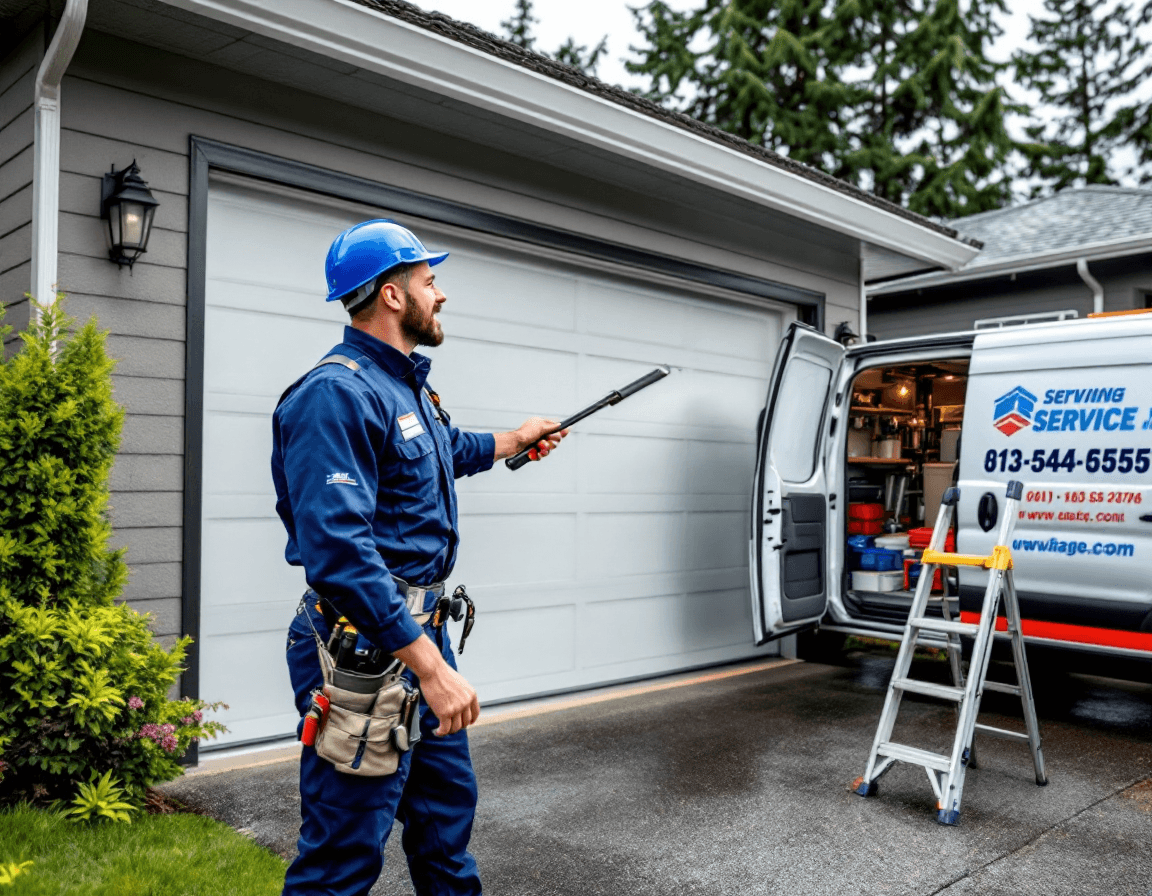
Garage door repair in Bothell, WA is a common need for homeowners across the city, from the newer subdivisions around Canyon Park to the older streets near downtown. A door that will not open, closes unevenly, or stops halfway can turn a normal morning into a scramble for the car keys and a rushed trip through the side door. Most of these problems have clear causes and manageable fixes, but they rarely announce themselves politely. They tend to show up on the coldest or wettest day of the week, just when you need the car out of the garage most.
Seattle Garage Door Fix works with homeowners in Bothell and the surrounding Eastside communities, including the neighborhoods that fall within the 98011, 98012, and 98021 ZIP codes. We are a licensed, bonded, and insured garage door company, and we handle residential repairs ranging from a dead opener to a panel that has shifted off its track. Our goal on every call is to identify the actual failure, explain it in plain language, and give you options before any work begins. This page walks through the most common problems we see in Bothell homes, what they usually mean, and what you can reasonably check yourself before picking up the phone.
Whether your door is a single-car unit tucked behind a townhouse near Bothell Landing or a double door on a larger lot off North Creek, the same principles apply. Garage doors are heavy, under tension, and connected to electrical controls, which makes them more complicated than they look. Understanding the symptoms helps you describe the problem accurately, which usually shortens the visit and keeps the repair price where it belongs. The sections below are organized around what you are likely to see, hear, or feel when something goes wrong.
Reading the Early Warning Signs Before a Door Quits
Most garage doors give some notice before they fail completely. A door that takes a little longer to start, pauses briefly at the top of its travel, or makes a new sound on the way down is often telling you that a component is wearing out. Catching these changes early is one of the simplest ways to avoid an emergency call in the middle of a rainy week. Many homeowners in Bothell mistake these early signs for normal aging and wait until the door refuses to move at all.
Pay attention to how the door behaves at both ends of its travel. If it stops a few inches short of fully closed, or if the opener strains before lifting, the cause might be a sagging panel, a loose drive chain or belt, or a track that has picked up debris. Try opening and closing the door slowly by hand while the power is off, using the emergency release cord, and notice whether it feels smooth or catches in one spot. A door that is noticeably heavier on one side than the other often has a balance issue that deserves prompt attention.
Visual clues matter too. Look for gaps between the bottom panel and the floor that were not there last year, rust-colored streaks on hinges or track brackets, or rollers with flat spots. Any of these can accelerate wear if left alone. If you notice any of these signs, write down what you saw and when it started, because that information helps a technician narrow down the problem quickly.
Why Pacific Northwest Damp Weather Wears Down Bothell Garage Doors
Western Washington's climate is gentle in many ways, but it is hard on mechanical systems that live outdoors or in semi-sheltered garages. Bothell gets long stretches of drizzle and overcast skies, and the moisture that settles on steel tracks, springs, and hardware can lead to surface rust in a surprisingly short time. Garages in shaded lots near creek corridors, including homes close to North Creek, can stay damp for days after a storm. That moisture works its way into roller bearings, hinge pivots, and the cable ends that hold a door in balance.
Temperature swings add another layer of stress. A cold snap that drops nights below freezing can make lubricants thicken, which forces the opener motor to work harder and can make a door feel stiffer than it did in September. When a warm afternoon follows, the metal expands and contracts, which can gradually shift tracks that were installed slightly out of plumb. Wood and composite doors respond to humidity too, swelling in wet months and tightening against the weatherseal or the tracks.
Practical maintenance helps. Wipe the tracks and rollers with a dry cloth once a season, and use a silicone-based or garage-door-specific lubricant on hinges and rollers rather than heavy grease, which attracts dust. Keep the door bottom seal intact so that wind-driven rain and debris stay outside. If your garage floor pools water near the door, improving drainage or adjusting the threshold can reduce the amount of moisture that reaches the lower hardware.
Doors That Reverse Before Reaching the Floor
One of the most common calls we hear from Bothell homeowners is that the door goes down, then suddenly reverses and goes back up before it closes. This behavior is usually a safety feature doing its job. Modern openers include a photo-eye sensor pair mounted near the floor on either side of the opening, and a door will reverse if the beam is interrupted or if the opener detects resistance. Both reactions are designed to protect people, pets, and cars, so they should be investigated rather than bypassed.
The most frequent causes are simple and often fixable in minutes. Sensors can be knocked out of alignment by a bumped broom, a shifted bin, or a vibrating door, and their status lights tell you whether they see each other. Spider webs, dust, and direct sunlight through a side window can also confuse the beam. Wiring that has been chewed, pinched at the door edge, or loosened at the sensor bracket can produce the same symptom, and so can a door that has a bottom section pressed against an uneven slab or a raised expansion strip.
If the sensors look fine but the door still reverses, the opener may be detecting extra force from a binding track, worn rollers, or an imbalanced door. In that case the door itself needs attention. Testing the auto-reverse feature is a useful habit, and you can place a piece of scrap wood in the closing path (never your hand or body) to confirm the door reverses on contact. A repeated reversal problem should be checked promptly, because a door that is working harder than it should will wear out faster.
Grinding, Squealing, and Banging: What Each Sound Usually Means
Garage doors are noisy by nature, but certain sounds indicate specific trouble. A high-pitched squeal usually points to dry rollers, dry hinges, or a stretched belt on a belt-drive opener. A grinding noise often comes from a worn gear inside the opener or from rollers that have failed and are scraping along the track. A rhythmic clunk or thump can mean a loose bracket, a worn bearing, or a track that has a gap or dent where a roller hits.
A sharp bang or loud pop is more concerning and should be treated seriously. Sudden popping sounds near the top of the door or at the spring assembly can indicate that a spring has broken or is about to. Springs store a great deal of energy, and a broken spring can cause the door to drop quickly or become impossible to lift by hand. If you hear a loud crack and the door now sits crooked or will not lift, stop using it and keep everyone clear of the area until a licensed technician can inspect it.
Keep a rough log of when the noise occurs. Does it happen when the door starts, halfway through its travel, or only when it stops? Is the sound worse in cold mornings? These details help distinguish a lubrication problem from a mechanical failure, and they make it easier to explain the issue on the phone.
- Squealing at startup: often dry hinges, rollers, or a belt that needs adjustment.
- Grinding through the middle of travel: frequently worn rollers or a gear issue in the opener.
- Loud bang at the top or bottom: check for loose hardware, but treat any spring-area noise as a safety concern.
- Rattling only in wind: loose track brackets or a panel that has shifted slightly.
When a Door Jams Halfway or Slips Off Its Track
A door that stops partway up or down, or one that has popped out of its tracks, is more than an annoyance. It can damage the panels, the opener, or the wall structure if someone tries to force it. Jams usually come from debris in the track, a bent track section, a roller that has come out of its channel, or a cable that has slipped off its drum. Off-track doors are often caused by impact, such as a vehicle clipping the edge or a panel that has been pushed sideways by a strong gust.
Do not try to force the door open or closed from the outside. Pull the emergency release cord to disconnect the opener from the door, then check whether the door moves freely by hand. Look for obvious obstructions, like a toy, a bag of soil, or a loose bracket. If you can see a roller that has popped out of its track, do not attempt to pry the door back into place while it is under spring tension. Those are the situations where people get hurt, and where a professional should step in.
Once the door is off track, the repair often involves realigning the track, replacing damaged rollers, and inspecting the cables and drums for wear. A door that has been knocked off track can also have bent sections that need to be replaced before it runs smoothly again. Bothell homes with uneven driveways or older track installations sometimes need a more thorough alignment to keep the door level as it travels.
Remote and Wall Button Troubleshooting You Can Do First
When the remote or wall button does nothing, the cause is often simpler than the opener itself. Start with the batteries in the remote, since a weak battery can work intermittently before it fails completely. Next, check whether the wall control and the remote both respond, because that tells you whether the problem is in the transmitter or in the opener's receiver. If the wall button works but the remote does not, the issue is probably the remote, its battery, or its programming.
Many openers have a learn button on the motor unit that you can use to reprogram remotes. The exact steps vary by brand and model, so consult the manual or the label on the motor housing. Keep in mind that a remote may stop working after a power outage, a surge, or a battery change that did not hold its code. Reprogramming usually takes only a few minutes, but make sure the door is in a safe position and nothing is blocking the sensors while you test it.
If none of the controls respond, check the breaker for the garage outlet and the opener's power cord. A tripped GFCI outlet in the garage is a surprisingly common reason for a dead opener in damp climates. If the opener still has no power or the lights blink in a pattern that does not match the manual, the problem likely lies in the logic board, a wiring fault, or the power supply. At that point a technician can test each component rather than guessing.
Springs and Cables: Why These Stay With a Licensed Technician
Springs and cables are the most important parts of a garage door to leave to professionals. Torsion springs and extension springs hold a large portion of the door's weight, and they are under very high tension even when the door appears to be sitting still. Mishandling a spring can cause serious injury, and attempting to adjust or replace one without the right tools and training is one of the fastest ways for a homeowner to get hurt. Cables carry the load along the sides of the door and can fray or snap, which can cause the door to drop unevenly.
Signs that a spring or cable needs attention include a door that is very hard to lift by hand, a door that slams down when released, a visible gap in a spring coil, or a cable that appears frayed or loose on the drum. A door that sits crooked or hangs lower on one side can also point to an imbalance in the spring system. If you notice any of these, avoid using the door until a licensed technician has inspected it.
Our technicians are licensed, bonded, and insured, and we recommend that all spring and cable work be handled by trained professionals. We do not suggest that homeowners attempt these repairs on their own, even when a video or online guide makes the process look straightforward. Spring replacement involves specialized winding bars, safety equipment, and a careful assessment of the door's weight and balance. Keeping the work with a licensed professional protects you, your family, and your property.
What a Typical Repair Visit Looks Like in Bothell
A good repair visit starts with a conversation about what the door is doing. Tell the technician when the problem began, what it looks like, what it sounds like, and whether it is getting worse. If you have already tested the sensors, checked the remote batteries, or noticed a gap or noise, mention that too. Those details save time and help the technician plan the right tools and parts before arriving, which is especially useful for Bothell homeowners who need same-day service to get a car out for work or school.
Once onsite, the technician will usually inspect the door balance, the tracks, the rollers, the hinges, the opener, the sensors, and the wiring. Each component is checked for wear, alignment, and function. The technician should then explain what was found, which parts are necessary, and which items can wait. You should receive a clear explanation before any work begins and have the chance to ask questions about the options.
After the repair, the door should be tested through a full cycle, including the auto-reverse function and the remote or wall controls. A good technician will also point out any maintenance that will help prevent the same problem from returning, such as lubrication intervals or tightening hardware. If you have questions after the visit, a short follow-up call can clear up anything that is unclear.
Understanding Our $95 to $450 Pricing Range
Most residential garage door repairs we complete in the Bothell area fall within a range of $95 to $450. The final price depends on the specific problem, the parts required, and the time needed to complete the work safely. A sensor realignment, a remote reprogramming, or a simple lubrication and adjustment usually sits near the lower end of that range. Replacing rollers, a damaged section of track, a faulty opener component, or a broken cable typically falls in the middle. More involved repairs, including spring replacement or multi-part work, can reach the higher end.
Because every door is different, we recommend asking for a clear explanation of what the price includes before authorizing the work. A reputable company should be able to describe the repair, the parts, and any warranty on the labor and components. If an estimate changes after inspection, you should be told why and given the option to proceed or wait. We aim to give you enough information to make a confident decision, rather than surprising you with unexpected add-ons.
Keep in mind that the lowest-cost option is not always the best value. A quick fix that does not address the root cause can lead to a second visit within weeks. Asking the technician to explain whether a repair is a temporary measure or a lasting solution helps you plan your budget and avoid repeated service calls.
Seasonal Habits That Keep a Bothell Garage Door Running
Preventive care is the most effective way to avoid emergency calls. A few simple habits, repeated through the seasons, can extend the life of your door and reduce the chance of a failure during a rainy weekend or a cold morning. Because Western Washington's damp winters are hard on metal and wood, timing your maintenance around the wet season makes a meaningful difference.
- Wipe down tracks and rollers with a dry cloth each spring and fall to remove grit and moisture.
- Apply a garage-door-specific lubricant to hinges, rollers, and the lock mechanism, but avoid spraying lubricant onto the tracks.
- Test the auto-reverse function monthly by placing a piece of wood in the door's path and confirming the door reverses.
- Check the sensor lenses for dirt and spider webs, and confirm both indicator lights are steady.
- Inspect the bottom weatherseal for cracks or gaps, and replace it if daylight or water is getting through.
- Keep the area around the door clear of stored items that could shift or interfere with the track.
Beyond these steps, schedule a professional inspection every year or two, especially if your door is more than a decade old or sees heavy daily use. A technician can spot early wear in springs, cables, and bearings that you may not notice from inside the garage. Catching a worn component early often costs less than waiting for it to fail and damage other parts.
Garage door problems in Bothell rarely fix themselves, and the longer a worn or misaligned door is used, the more likely it is that a small repair will turn into a larger one. If your door will not open, closes unevenly, reverses for no clear reason, makes grinding or banging noises, or has slipped off its track, call Seattle Garage Door Fix today at (888) 799-3819. Our licensed, bonded, and insured technicians serve Bothell and the surrounding communities in the 98011, 98012, and 98021 ZIP codes, and we will explain the problem and your options clearly before any work begins.