
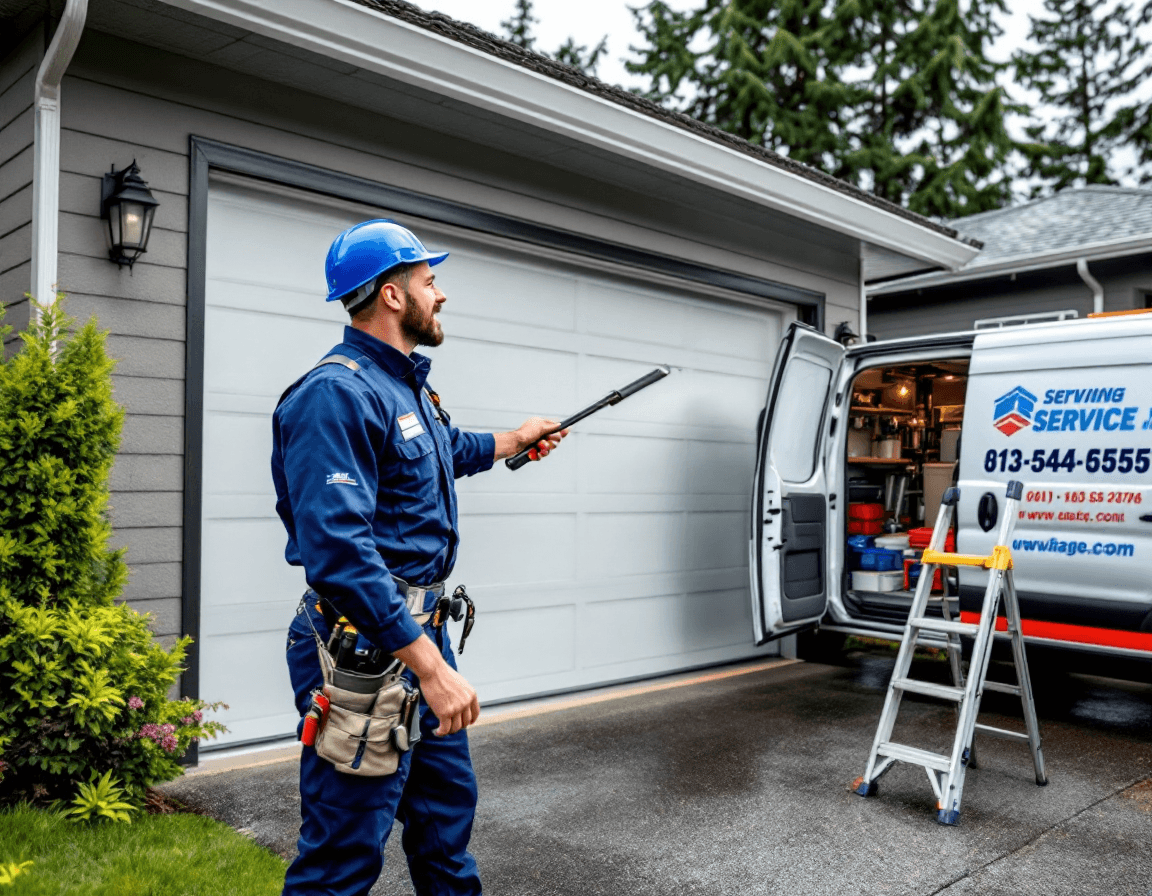
Garage Door Repair in Mill Creek, WA is a service many homeowners need sooner than they expect, especially in a community where the garage is often the main way in and out of the house. When a door stops responding to the remote, groans on the way up, or stalls halfway through its travel, the problem rarely fixes itself and usually gets more expensive the longer it waits. Our technicians serve Mill Creek and the surrounding Snohomish County neighborhoods, including homes near Mill Creek Town Center and the Silver Firs area, and we see the same handful of issues again and again. This page explains what those issues look like, what tends to cause them in our part of Western Washington, and what you can reasonably check before you call.
Most residential repairs we handle fall in the range of $95 to $450, depending on what has failed and how much labor is involved. A simple sensor realignment or a remote programming visit sits at the low end, while replacing a damaged panel, a broken drum, or a set of rollers can land higher. The final number always depends on an in-person inspection, because two doors that look identical from the driveway can need very different fixes. We would rather tell you what we found and what it costs before any work begins than hand you a surprise on the invoice. If you are unsure whether your problem is a quick adjustment or a bigger repair, describing the symptoms when you call usually gets you a useful answer within minutes.
Mill Creek homes are a mix of older builds and newer construction, and both come with garage door quirks worth understanding. Many of the doors we service are sectional steel or insulated models with torsion springs, bottom brackets, and track systems that depend on careful alignment. Because the area gets a lot of moisture, metal parts and fasteners can wear faster than people expect, and small problems left alone have a habit of turning into major ones. The sections below walk through the most common symptoms, what they usually point to, and when the safest move is to put the job in licensed hands.
Why Western Washington Winters Push Garage Doors Out of Balance
Our wet, mild winters are hard on garage doors in ways that are easy to overlook. Rain and fog settle into hinges, roller bearings, and the steel track, and that moisture can speed up corrosion on exposed hardware. Repeated cycles of damp and drying also loosen fasteners over time, so a bracket that was snug two years ago may now be wobbling just enough to throw the door off its line. Homes near wooded lots or along Mill Creek's greener stretches often see moss, pine needles, and debris collecting in the track channels, which adds friction to every opening and closing.
Temperature swings matter too, even when they are modest by Midwestern standards. A cold morning in the 30s can stiffen lubricant and make a door feel sluggish, while a warm afternoon can make it seem fine again. Those changes are part of why a door that worked perfectly in August may start complaining in November. When you notice a new sound or a slower motion that seems to come and go with the weather, that pattern is worth telling your technician about, because it often points to lubrication, moisture, or a tension issue rather than a broken part.
Keeping the door clean and dry helps, but it does not replace an inspection. A routine look at the rollers, hinges, and track can catch a worn component before it fails in the middle of a rainy commute. Simple steps like wiping the track, checking for rust spots, and listening for changes in sound will tell you a lot. Anything involving spring tension, cables, or the drum should stay with a licensed professional.
When the Door Stalls, Jams, or Stops Halfway Up
A door that freezes partway through its travel is one of the more alarming symptoms, and it usually has one of a few causes. The most common is a track that has shifted slightly, pinching a roller or catching a section as it moves. Another frequent culprit is an uneven spring tension, where one side of the door is doing more work than the other and the opener eventually gives up. Debris in the track, a bent section from a bump or a backing-up accident, and a failing opener motor can also produce the same behavior.
Many homeowners try to force the door the rest of the way by hitting the button repeatedly or pulling on the handle. That habit can strip gears, bend tracks further, or damage the opener, so it is better to stop once the door halts. If the opener has a manual release, disconnect the door from the opener only after you are sure the door is closed and stable, and keep your hands clear of the springs and cables. Even then, the door can be heavier than it looks, and a door that is stuck halfway is not safe to work under.
Here are a few quick checks that are reasonable for a homeowner to make before calling:
- Look along the tracks for visible gaps, bends, or debris lodged in the channel.
- Check whether the door is level when it is closed, and whether the bottom seal sits evenly on the floor.
- Confirm that the opener's power light is on and that the outlet or breaker has not tripped.
- Note whether the door stops at the same point each time, since that can help a technician pinpoint the problem.
If the door will not move after those checks, or if you notice a loud snap, a sagging section, or a cable hanging loose, leave it alone and call a professional.
Reversing Before the Floor: Understanding the Safety Sensors
A door that goes down and then springs back up before reaching the ground is doing exactly what it was designed to do, which is protect people and pets from being trapped. The safety sensors, sometimes called photo eyes, sit near the bottom of the door opening, one on each side, and they send an invisible beam across the gap. If that beam is interrupted, the door should stop and reverse. When the sensors are misaligned, dirty, or damaged, the door may reverse even when nothing is in the way, which is frustrating but important to diagnose correctly.
Mill Creek's damp conditions can contribute to sensor trouble. Spider webs, dust, and road grime collect on the lenses, and condensation or a bump from a vehicle can nudge the brackets out of alignment. Wiring that has been pinched or chewed by pests can cause intermittent faults that come and go. Many of these issues are simple to correct, which is why a service visit often resolves a reversing door quickly and affordably.
There are a few common reasons a door reverses early or refuses to close at all:
- The sensor lenses are dirty or obstructed by cobwebs, leaves, or dust.
- The two sensors are no longer pointed at each other, often after a bump or a loose bracket.
- A sensor indicator light is blinking or off, which usually signals a wiring or power problem.
- The door's close force or travel limits have drifted, so the opener thinks the door is hitting something it is not.
Please do not disable the safety reverse feature to make a door close. That function protects small children, pets, and anyone who might be under the door, and bypassing it creates a real hazard. A technician can align the sensors, test the reversal force, and confirm that the system works correctly before you rely on it again.
When the Remote or Wall Button Goes Silent
It is easy to assume a dead remote means a dead opener, but that is only sometimes true. Remote batteries are the first thing to check, and a weak battery can make a remote seem completely unresponsive even when the signal is partly working. If a wall button also fails, the problem is more likely to be the opener's power supply, its logic board, or the wiring between the button and the opener. Lightning activity and power surges, which occasionally hit the Puget Sound region during storm season, can also knock out an opener's electronics.
Frequency interference is another possibility, particularly in neighborhoods where many garages sit close together and multiple remotes are in use. Newer openers may also require reprogramming after a power outage or a change in the learning mode, and that process is not always obvious from the manual. A technician can check the receiver, confirm the signal range, and reprogram remotes or keypads so that every device you use works reliably.
For a quick homeowner check, replace the remote battery first, then confirm the opener's indicator light responds when you press the wall button. If one device works and another does not, the fault is likely with the device that fails rather than the opener. If nothing responds, check the breaker and the outlet before calling. Keypads with a lot of use sometimes wear out at the buttons, which can look like a complete failure when the issue is actually a single contact.
Decoding Grinding, Squealing, and Banging Noises
Garage doors make noise, but the type of noise tells you a lot about what is happening. A high-pitched squeal usually comes from dry or dirty rollers, hinges, or bearings that need lubrication. A grinding or rumbling sound often points to a worn gear inside the opener, a loose bracket, or rollers that have started to flatten on one side. A sharp bang at the top or bottom of the travel can mean the door is hitting its stops too hard, which may be a sign of uneven tension or a track that has moved.
Many of Mill Creek's older doors have original rollers that have seen many seasons of moisture and temperature change. Nylon rollers can crack or deform, and steel rollers can rust, which creates the kind of gritty, uneven sound that gets louder each week. Hinges and brackets that have loosened over time can rattle and shift, especially on wider two-car doors. Catching these sounds early often means a simple roller replacement or tightening job instead of a more serious repair.
A few general patterns help when describing the noise to a technician:
- A squeal that happens only in the cold morning is often lubrication-related.
- A grind that gets worse as the door moves higher can suggest a roller or track issue.
- A bang at the very top or bottom may indicate tension or stop-related problems.
- A rattle that comes from the ceiling area often points to loose hardware on the track or opener mount.
Do not try to lubricate or adjust spring components while the door is in use, and avoid spraying penetrating oils onto the springs themselves. Those tasks should be done by a licensed technician who knows how to work safely around tension.
Crooked Travel and Doors That Jump Off the Track
A door that moves unevenly, sits crooked when closed, or rises at an angle is telling you something about its balance. Crooked travel often starts with a single side running slightly lower or higher than the other, which can come from broken springs, a worn cable, a bent track, or a roller that has come out of its channel. Sometimes the door looks fine from the outside but leaves a visible gap at one corner or sits unevenly against the frame. Those gaps let in drafts, moisture, and pests, which matters more during our rainy months.
A door that has jumped off its track is a more serious situation. When a roller leaves the channel, the door can bind, bend sections, or drop unevenly, and forcing it can damage the panels and the opener. Do not try to lift or push the door back into the track yourself. The weight and tension involved are significant, and a door that is partially off track can shift unexpectedly. Keep people and vehicles clear of the opening and call for service.
Crooked travel is also a common sign of a worn spring or cable, which is why it should never be treated as a simple alignment fix at home. A technician will measure the balance, inspect the drum and cable, and determine whether the track needs realignment or whether a component needs replacement. Early attention can prevent a minor shift from becoming a bent track section or a damaged panel.
Slamming, Sagging, and the Gaps Along the Bottom
A door that slams shut too quickly is often a sign that the tension is off, the closing speed is set incorrectly, or the door is falling faster than it should because a spring has weakened. A door that sags in the middle, or that looks lower on one end, can indicate a broken spring, stretched cable, or a panel that has bent under its own weight. Both symptoms can be dangerous, since a door that drops without control can injure someone standing underneath it or damage a vehicle parked nearby.
Visible gaps at the top, sides, or bottom are equally important. The bottom seal, sometimes called a weatherstrip, keeps out water, cold air, and pests, and it wears down over time from sun, moisture, and the constant contact with the floor. In Mill Creek, a worn seal can let in water during heavy rain and make the garage noticeably colder in winter. Replacing the seal is often an affordable repair, but it works best when the door is level and the tracks are properly aligned, so the seal meets the floor evenly.
Look for these signs during a routine walk-around:
- Light showing through the bottom seal at any point along the width of the door.
- A section of the door that looks lower or higher than the rest when closed.
- Dents, cracks, or separated panels, especially near the hinges.
- A door that closes hard enough to shake the frame or rattle the windows.
If the door slams, drops, or sags, keep your hands and body clear of the opening and do not attempt a repair yourself. A licensed technician can measure the spring system and determine whether the door needs tension work, cable replacement, or a new seal.
Spring and Cable Work Belongs in Licensed Hands
Torsion springs and lift cables are the parts of a garage door most likely to cause serious injury, and they are the parts we most strongly urge homeowners to leave alone. Torsion springs store a large amount of energy, and when they break or are adjusted incorrectly, they can release that force suddenly. Cables can snap under tension and whip across the garage, and a drum that is not properly secured can spin unexpectedly. These are not tasks for a weekend project, no matter how handy you are.
Our technicians are licensed, bonded, and insured, and they work with the proper tools and procedures for spring and cable repair. That includes releasing tension safely, measuring the spring correctly, and making sure the door is balanced before it goes back into service. A repair done correctly protects your family and your vehicles and helps the door operate smoothly for years. Attempting the work with improvised tools or without the right training often leads to a second, more expensive call and sometimes to an injury.
If you hear a loud bang in the garage, notice the door hanging unevenly, or see a spring with visible gaps between coils, stop using the door and call for help. A broken spring often makes the door feel heavy, and forcing it can strain the opener and cause further damage. Your technician will explain the options, including whether a pair of springs should be replaced together to keep the balance even.
What a Typical Service Visit Covers and What It Costs
A repair visit usually begins with a conversation about what you have noticed, when it started, and whether the problem is constant or intermittent. The technician then inspects the door, tracks, rollers, hinges, springs, cables, opener, and safety sensors, looking for the root cause rather than just the most obvious symptom. You will receive a clear explanation of what is wrong and what it takes to fix it before any work is performed. Many common repairs can be completed in a single visit, though some parts may need to be ordered.
Pricing for most residential repairs falls between $95 and $450. Lower-cost visits often involve sensor alignment, remote programming, lubrication with appropriate products, or minor hardware tightening. Mid-range repairs commonly include roller replacement, bottom seal replacement, track adjustment, or opener reset. Higher-cost jobs may involve spring or cable replacement, panel repair, or opener component replacement. Every quote is based on what the inspection finds, and you are never obligated to approve work you do not want.
To help the visit go smoothly, consider the following before the technician arrives:
- Write down the symptoms, including the sounds and any patterns you noticed.
- Clear the area around the door and tracks so the technician can work safely.
- Locate your opener model number and any remote or keypad you use.
- Note whether the door has been bumped, struck, or modified recently.
Being prepared shortens the diagnosis and helps us give you a more accurate estimate.
Keeping a Mill Creek Garage Door Healthy Through the Seasons
Preventive attention goes a long way in a climate like ours. Wiping the tracks a few times a year, removing leaves and moss from the channels, and checking for rust spots on hinges and brackets can prevent many small problems from growing into expensive ones. Lubricating rollers, hinges, and the bearings with a silicone-based or manufacturer-recommended product, rather than heavy grease that attracts grit, keeps movement quiet and smooth. Those simple habits matter more in the wet months, when moisture can creep into every moving part.
It is also wise to test the door's safety features every month or two. Place a flat object, such as a piece of wood or a folded towel, on the floor in the door's path and confirm that the door reverses when it contacts the object. Check that the sensors are clean and aligned, and that the auto-reverse responds when the beam is interrupted. If anything fails the test, stop using the door in automatic mode and schedule service promptly.
Finally, pay attention to changes over time rather than waiting for a dramatic failure. A door that takes a little longer to open, a new squeak, or a faint gap at the bottom may be the early warning you need. A periodic inspection by a licensed technician can catch wear before it leads to a stuck door on a cold morning or a late-night call. Our team serves Mill Creek and the surrounding areas with that same goal in mind: a reliable door that does its job safely.
If your garage door is stuck, noisy, reversing on its own, or sitting crooked, call Seattle Garage Door Fix at (888) 799-3819 for prompt, licensed service in Mill Creek. We will listen to what is happening, explain the options clearly, and give you a fair price before any work begins.