
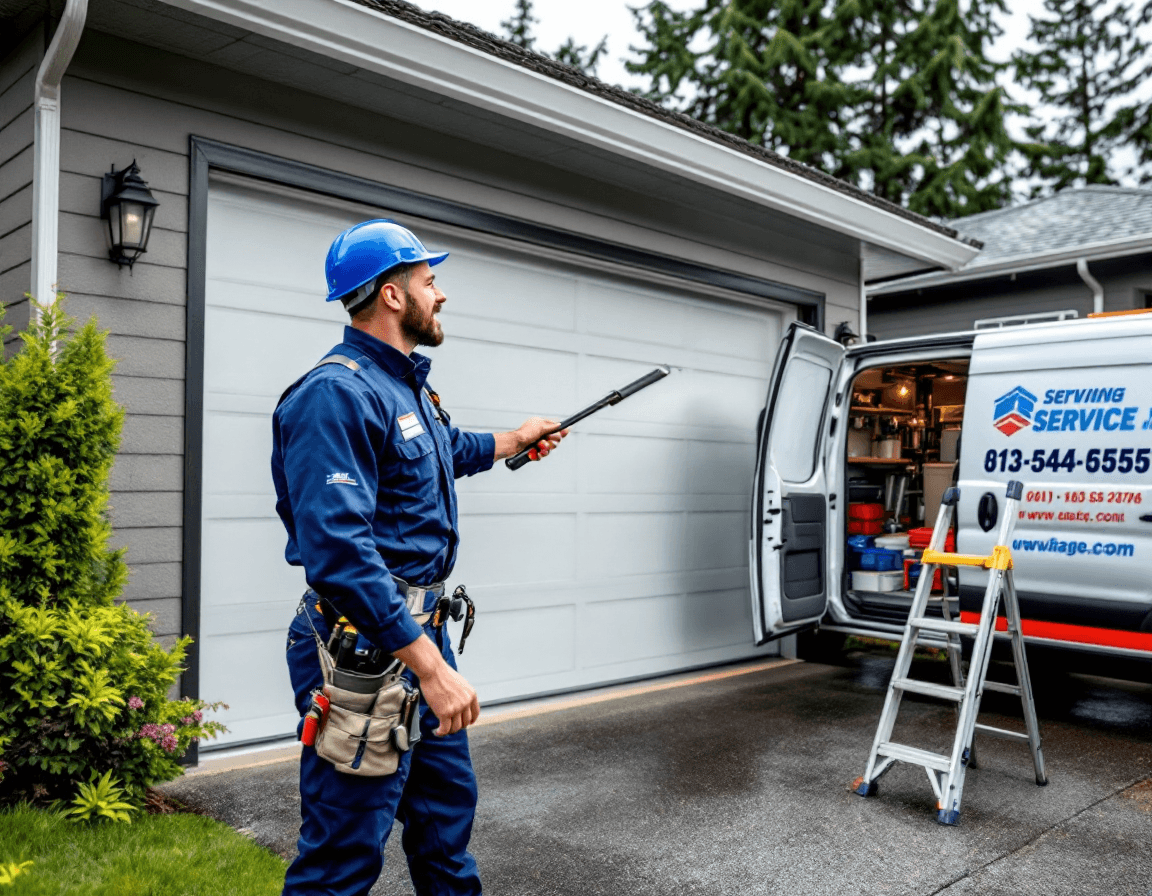
Garage Door Repair in Everett, WA is one of the most common calls we take from homeowners across Snohomish County, and it usually starts with a door that simply stops cooperating. Maybe it rolls up only halfway, or it shudders before lifting, or the wall button blinks at you and nothing happens. Whatever the symptom, a door that won't open, close, or move smoothly is a safety issue as well as an inconvenience, because the garage is often the main way in and out of the house, and a heavy panel under tension can cause serious injury if it fails unexpectedly.
Everett's weather adds its own pressure to a garage door system. Long stretches of drizzle, cool damp mornings, and the occasional hard winter storm off Possession Sound mean that moving parts are rarely fully dry for months at a time. Metal hardware corrodes, wooden door sections swell, and lubricants wash away faster than most homeowners expect. Those conditions don't cause every breakdown, but they explain why many of the repairs we handle here involve tracks, rollers, and hinges that have quietly worn down over several seasons.
This page walks through the symptoms we see most often in Everett homes, explains what usually causes each one, and describes how a professional repair typically unfolds. You'll also find practical notes on pricing, neighborhood-specific considerations, and maintenance you can safely do yourself. Where a problem involves high-tension springs or lifting cables, we'll say so plainly, because those components should only be handled by a licensed, trained technician.
Reading the Early Warning Signs Before a Door Fails Completely
Garage doors rarely die without warning. In most Everett homes, the first signs are subtle: a slightly longer lift time, a faint scrape near the bottom of the track, or a door that seems to hesitate when it starts moving. Catching these early often turns a small adjustment into a simple, affordable fix instead of an emergency call on a rainy Saturday. Paying attention to how the door sounds and moves each time you use it is one of the most useful habits a homeowner can build.
Look at the door from inside the garage with the opener running. Does it rise evenly on both sides, or does one edge climb faster than the other? Check whether the panels line up at the seams and whether the bottom seal still touches the floor along its full width. Small changes in alignment often point to worn rollers, a bent track section, or a cable that is beginning to fray, and each of those problems is easier to correct before the door jams.
Keep a simple mental log of the door's behavior over a few weeks. Note any new noises, any times it stops partway, and any days when the remote seems less responsive than usual. Patterns matter: a door that only misbehaves on wet mornings is telling you something different from one that fails every time the temperature drops below freezing. Sharing those observations with a technician speeds up diagnosis and often reduces the time you spend waiting for an answer.
When the Door Reverses Before It Reaches the Floor
One of the most frustrating symptoms we hear about is a door that starts to close, touches the floor or gets close, and then climbs back up on its own. This behavior is almost always a safety feature doing its job. Modern openers are designed to reverse when they sense resistance, and the most common trigger is the photo-eye sensor pair mounted a few inches above the floor on each side of the door opening. If those sensors are misaligned, dirty, or blocked by something as simple as a cobweb or a shifted bicycle, the opener will believe something is in the way.
Start with the sensors on your own. Make sure the two small units face each other, that their indicator lights are steady rather than blinking, and that nothing sits in the beam path. Wipe the lenses with a dry cloth, since road grime and dust from wet Everett streets can cloud them over time. If the lights are blinking or the door still reverses after you have aligned and cleaned the sensors, the wiring or the opener's logic board may need attention.
Reversal can also come from the door itself. A bent track, a bottom seal that has become stiff and uneven, or a section of the door that binds at one point can all create enough resistance to trigger the safety system. The force settings on the opener may also be set too tight for a door that has grown heavier from moisture or hardware wear. A technician can test the travel and force settings, check the balance of the door, and determine whether the reversal is a sensor issue, a mechanical issue, or a combination of both.
Sorting Out Grinding, Squealing, and Banging Noises
Noise is often the first clue that something inside the door system is failing, and each type of sound tends to point toward a different cause. A high-pitched squeal usually means metal rubbing on metal without enough lubrication, often at the rollers or hinges. A deep grinding noise during lifting can signal worn gears inside the opener or a roller that has flattened on one side. A sharp bang at the top or bottom of travel often comes from a loose bracket, a worn stop, or a track that has shifted slightly out of its intended position.
Homeowners sometimes assume a noisy door just needs oil, and lubrication does help in certain places. Spray a silicone-based or lithium-based lubricant on the hinges, roller stems, and the track's inside surfaces, but avoid greasing the track itself, since grease attracts grit and grime that will eventually gum up the rollers. Wipe off any excess so it does not drip onto the driveway. If the noise persists after a careful lubrication, the rollers themselves may be cracked or worn, and replacing them is usually the most effective repair.
Banging and rattling should always be taken seriously. Loose mounting brackets, a damaged track bracket, or a bottom bracket pulling away from the wall can allow the door to shift unpredictably. Never ignore a bang that happens every time the door reaches the top of its travel, because that repeated stress can eventually bend the track or crack a panel. Have a technician tighten the hardware, verify the track geometry, and check the opener's mounting to make sure everything is secure.
Stuck Halfway, Crooked, or Pulled Off the Track
A door that stops partway up or down is one of the most unsettling symptoms because it leaves the opening partially blocked and sometimes leaves the vehicle trapped inside or outside. Before you assume the worst, check whether the emergency release cord is still attached and whether the door has been manually disengaged from the opener. If the door is stuck and you can see a gap at the top or a panel leaning out of its track, do not try to force it open or lift it by hand, and keep people and pets well clear of the area.
Crooked doors, where one side sits lower or rises more slowly than the other, usually point to uneven tension, a worn cable drum, or a roller that has come out of the track. Because the springs and cables store large amounts of energy, adjusting them is not a do-it-yourself job. Even experienced homeowners can be seriously hurt when a spring releases unexpectedly. A licensed technician will inspect the cable condition, the drum seating, and the track alignment, then restore balance using the correct tools and procedures.
A door that has come completely off its track is a more serious emergency. Rollers can jump the track after a worn section fails, after an impact from a vehicle, or after a cable snaps. Keep the door closed if possible, disconnect the opener by pulling the emergency release, and call for professional help. Trying to reseat the door yourself risks damage to the panels, the track, and yourself, so it is worth paying for a technician who can get it back in service safely.
When the Remote and Wall Button Stop Working
Many calls begin with the phrase "my remote quit," but the real cause often lies somewhere other than the remote. Batteries are the first thing to check, since a weak battery in a key fob or wall-mounted keypad can make a reliable button behave erratically. Replace the battery with the correct type and test the system again before moving on. If the wall button also fails, the problem is more likely to be in the opener's power supply, the control wiring, or the safety circuit.
Look at the opener itself. Some units have a learn button that must be pressed to pair a new remote, and a power outage or firmware glitch can clear those settings. Check the breaker and the outlet the opener plugs into, because a tripped GFCI or a loose plug can make the whole system appear dead. If the opener's status light shows an error code, the owner's manual will often explain what it means, and that information is useful when you call for service.
Sometimes the signal itself is the issue. Radio frequency remotes can be disrupted by nearby electronics, and keypads exposed to wet weather may corrode or short. Everett's frequent rain makes outdoor keypads a common point of failure, especially if they are mounted on a wall that gets blown by wind-driven spray. A technician can test the transmitter and receiver, replace the keypad or remote if needed, and confirm that the opener's safety circuits are working before handing the system back to you.
Slamming Shut, Dropping Fast, and Other Balance Problems
A door that closes too quickly or drops with a thud is often suffering from a problem with its balance system, the springs and cables that counteract the weight of the panels. In a properly balanced door, the door should stay in place when lifted partway by hand and should rise and fall smoothly with the opener. When the balance is off, the opener has to work harder in one direction and the door can slam down or lurch upward. Repeated slamming stresses the hinges, rollers, and opener mechanism and can shorten the life of the entire system.
Balance problems are commonly caused by worn or broken springs. Torsion springs mounted above the door and extension springs running alongside the track both lose tension over time, and their cycle ratings are finite. When a spring breaks, the door can become very heavy to lift, and the opener may strain or stop. Never attempt to wind, replace, or adjust a spring yourself. The stored energy in these components is considerable, and improper handling can cause severe injuries. A licensed technician has the correct winding bars, safety equipment, and training to replace springs and rebalance the door.
Some balance issues are less dramatic. Worn cables that have started to fray, rusted drums, or loose cable connections can make a door sag or pull unevenly. Inspect the cables from a safe distance and look for visible fraying, kinks, or sections that appear shiny and stretched. Report those observations to your technician, who can determine whether the cable and drum assembly needs replacement along with the springs.
How Everett's Damp Climate and Salt Air Affect Garage Doors
The Pacific Northwest climate is hard on garage doors, and Everett sees its share of that weather. Long wet seasons keep wood sections swollen and metal parts exposed to moisture for extended periods. Steel doors can develop rust at the bottom edges, around hinges, and where scratches expose bare metal. Aluminum and steel tracks can pick up a film of grime that slows rollers and forces the opener to work harder than it should.
Homes closer to the water can see additional wear from salt-laden breezes and humid air carried in from Possession Sound and the surrounding waterways. Salt accelerates corrosion on hardware, springs, and fasteners, particularly in unpainted or lightly coated components. Homeowners in these areas benefit from rinsing exposed hardware with fresh water periodically during dry spells and from choosing galvanized or powder-coated replacement parts when possible. Even modest attention to corrosion can extend the working life of a door by years.
Temperature swings also matter. Cool mornings thicken lubricants and stiffen weatherstripping, while warmer afternoons can soften certain plastics and make seals more prone to tearing. Garages that are unheated and poorly ventilated can hold condensation on the inside of the door, which encourages mildew on the bottom seal and promotes rust on the lower panels. Improving ventilation, keeping the floor clear of standing water, and inspecting the seal each season all help reduce these effects.
Neighborhood Notes for Downtown Everett, Silver Lake, and Harbour Pointe
Every neighborhood has its own housing stock, and garage door needs vary accordingly. In and around Downtown Everett, many homes are older, with detached garages, narrower driveways, and sometimes non-standard door sizes that may need custom hardware. Older tracks can be out of square, and original openers may no longer meet current safety standards. When we service these properties, we often check the track geometry carefully and recommend upgrades where they make sense, rather than simply patching the most visible problem.
Around Silver Lake, the mix of homes includes many with attached garages built in several different decades, so the condition of the doors varies widely. Some residents have newer insulated doors with more complex springs and sensors, while others still run original steel doors that have been stressed by years of daily use. Lake-adjacent properties can see extra moisture in damp months, which makes checking the bottom seal and drainage around the opening especially worthwhile.
Harbour Pointe, which sits near the Mukilteo line south of town, includes many newer residences with larger two-car garages and more recent opener technology. Newer systems can offer smartphone control and advanced diagnostics, but they also rely on accurate alignment and clean wiring. Homeowners in these developments should keep an eye on the sensor placement and the door's balance, since heavier insulated panels amplify the effects of minor misadjustment. Whatever the neighborhood, our technicians will look at the specific door, opener, and environment in front of them before recommending a repair.
What a Typical Everett Repair Visit Involves and What It Costs
A repair visit usually starts with a conversation about the symptoms you have noticed and when they happen. The technician will then inspect the door from both inside and outside the garage, test the opener's travel and force settings, check the sensors, and look at the springs, cables, rollers, hinges, and track. Many problems can be identified within the first half hour, though intermittent faults sometimes require more testing. Clear communication at this stage helps everyone agree on a fair, efficient plan.
Pricing depends on the specific parts and labor required. For most residential repairs in our service area, the typical range is $95 to $450, covering common fixes like sensor realignment, roller replacement, track adjustment, opener reprogramming, and minor hardware replacement. More involved work, such as spring replacement, cable replacement, or opener component changes, will fall within that range or require a separate quote depending on the parts and labor. We recommend asking for a clear explanation of what is included before the work begins, so there are no surprises when you see the invoice.
Good repairs are also about restoring safety. Once the work is complete, the technician should test the door through several full cycles, confirm that the safety reversal works correctly, and check that the door stays put when manually disconnected and lifted partway. Ask your technician to walk you through what was done and to point out any wear items they are monitoring. That kind of transparency helps you plan future maintenance and avoid repeat calls.
Simple Maintenance You Can Safely Handle Between Service Calls
There are several maintenance tasks that most homeowners can handle without special tools or training, and they make a noticeable difference in how smoothly a door runs. Keeping these routines in place a few times each year can delay major repairs and make it easier to spot problems early.
- Clean the photo-eye sensor lenses and confirm both indicator lights are steady.
- Wipe the track and rollers with a dry cloth, removing grit and debris without greasing the track surface.
- Lubricate the hinges, roller stems, and the opener's chain or screw drive according to the manufacturer's directions.
- Check the bottom seal and weatherstripping for cracks, flattening, or gaps that let in water and cold air.
- Tighten visible nuts and bolts on brackets and hinges, but do not adjust tension on springs or cables.
- Test the auto-reverse by placing a board or similar object on the floor in the door's path, then confirming the door reverses on contact.
These tasks support the door, but they do not replace a professional inspection. Springs, cables, drums, and high-tension components should be left to licensed technicians. If anything looks bent, frayed, cracked, or out of alignment, stop using the door and schedule service rather than attempting a repair yourself.
Why High-Tension Springs and Cables Belong With a Licensed Technician
It is worth being direct about this point. Torsion springs and extension springs store enough energy to cause serious injury or worse if they are mishandled, and cables under tension can whip or snap with force. Many homeowners underestimate these dangers because the parts look ordinary, but the stored force inside a spring system is significant. This is why we always recommend a licensed, bonded, and insured professional for any spring or cable work, and why we will never encourage a customer to attempt it alone.
A qualified technician brings the right tools, follows established safety procedures, and knows how to match replacement springs to the specific door weight and cycle rating. They can also check the rest of the system while the door is apart, catching worn rollers, hinges, or bearings that would otherwise lead to another failure soon after. Investing in professional work for these components is one of the best ways to protect your household and your property.
If you are unsure whether a problem falls into this category, call us and describe what you are seeing. We will help you understand whether the issue can be handled with a simple adjustment or whether it needs professional spring or cable work. Either way, you will get a straightforward answer and a clear plan.
Whether your Everett garage door is reversing too early, grinding through its cycle, sitting crooked, or refusing to respond to the remote, a prompt and careful repair can restore safe, quiet operation. Call Seattle Garage Door Fix at (888) 799-3819 to schedule service, describe your symptoms, and get a clear explanation of what your door needs. Our licensed team serves Everett and surrounding Snohomish County communities, including the 98201, 98203, 98204, and 98208 ZIP codes, and we are ready to help you get back to using your garage with confidence.