
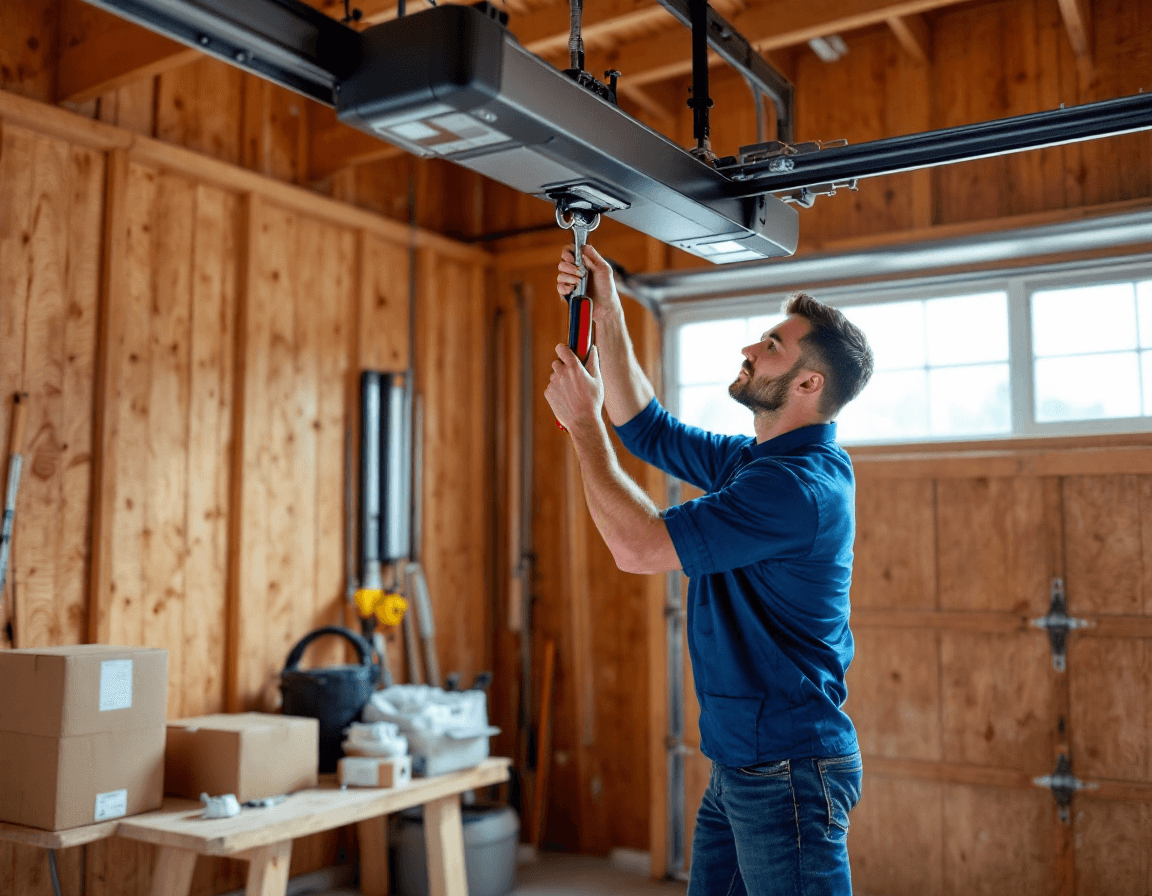
Garage Door Opener Installation & Replacement in Everett, WA is one of the most practical upgrades a homeowner can make, and it's often overlooked until the old unit groans, stalls halfway up, or quits during a windstorm. Seattle Garage Door Fix installs belt-drive, chain-drive, and wall-mount smart openers for homes across Everett, from the older bungalows near Downtown Everett to newer houses in the hillside neighborhoods above the waterfront. Installed pricing typically runs $275 to $650, depending on the opener model, drive type, and features you choose.
Everett's weather shapes how an opener ages. Our winters are mild by most national standards, but they're wet, and the moisture that settles into a garage from October through April works its way into wiring, sensors, and metal hardware. Add the Puget Sound air that drifts inland and you get slow corrosion on brackets and rail fasteners that homes farther east never have to think about. A good replacement accounts for all of that, from the way the motor is mounted to the way the control panel is sealed, rather than simply swapping one box for another.
If your opener is loud, slow, unreliable, or simply a decade old with no modern safety features, this page explains what to expect from a replacement, how to choose between drive types, and what happens on installation day. It also covers the questions we hear most often from homeowners in ZIP codes 98201, 98203, 98204, and 98208, including battery backup, Wi-Fi control, and when repair still makes sense. Read through the sections that match your situation, and call us at (888) 799-3819 if you'd like a technician to look at your specific setup.
Reading the Signs Your Opener Is Finished in a Damp Garage
Most openers don't fail all at once. They give warning signs over months, and in an Everett garage those signs often show up after a wet fall when humidity has been sitting in the space for weeks. A unit that once lifted the door smoothly may start to strain, hesitate at the top of its travel, or reverse for no obvious reason. Many homeowners first notice a clunking sound at startup or a rattle that gets worse each season, which usually points to worn gears, a loose trolley, or a motor that's working harder than it was designed to.
Reliability problems are harder to diagnose and more frustrating to live with. A remote that works from the driveway but not from the car, a keypad that responds only on dry days, or a door that stops partway and then completes its cycle on a second press all suggest either failing electronics or a receiver that has drifted out of tune. Moisture is a frequent culprit in our region, and corroded terminals inside the control board can cause intermittent faults that look like a remote problem. Because these symptoms overlap, it's worth having a technician test the whole system before assuming the remote is the issue.
Age and security also matter. Openers built before rolling-code technology use a fixed code that can be captured and reused by anyone with a basic signal scanner, which is a real concern for a home with an attached garage and an interior door into the house. Many older units also lack the photo-eye safety sensors and auto-reverse performance that current standards call for. If your opener is more than about ten years old and has any of the problems above, replacement is usually a better use of money than a series of patch repairs.
- Loud grinding, rattling, or banging during normal operation
- The door stops, hesitates, or reverses without an obvious cause
- Remotes or keypads work inconsistently, especially after rain
- No rolling-code security, or a unit that lacks modern safety reversal
- Repair quotes are approaching half the cost of a new installed opener
Belt Drive, Chain Drive, or Wall Mount: Matching the Motor to Your Door
The drive type is the part of the opener that carries the force from the motor to the door, and choosing the right one depends on how your garage is built and how you plan to use it. Chain-drive openers are the traditional, budget-friendly option. They're strong, straightforward, and well suited to heavier doors, but they run louder because metal links move across a metal rail. For a garage that's attached to a bedroom or sits under a living area, that noise can be hard to live with.
Belt-drive openers use a reinforced rubber belt in place of the chain, and the difference in sound is immediately noticeable. Operation is noticeably quieter, which is why belt drives are the usual recommendation for homes where the garage shares a wall with living space. Belts don't need the lubrication a chain requires, and they tend to run smoothly for years in a climate like ours, provided the belt stays properly tensioned. They cost somewhat more upfront than chain drives, but many homeowners find the quieter operation worth the difference.
Wall-mount openers attach the motor to the wall beside the door instead of the ceiling. This design frees up overhead space, which matters in garages used for storage, bike racks, or a lift. It also reduces stress on the ceiling, a real advantage when the garage has a finished space above or when the joists are older. Not every door and not every wall layout suits a wall mount, so a technician should measure the header, the wall thickness, and the door's track geometry before recommending one.
Quiet Evenings Near Silver Lake: Why Belt Drives Earn Their Place
Plenty of Everett neighborhoods are built with compact lots, so the garage is often only a few feet from a neighbor's bedroom window or a family room. Silver Lake and the streets around it have a lot of homes where that closeness is a daily reality, and a loud opener at 6:30 in the morning or 11 at night is a common complaint. When a homeowner asks us for the quietest option, we almost always start with a belt drive, because it removes the metallic chatter that carries through walls and across yards.
Quiet operation also depends on the rest of the setup, not only the drive. A belt tensioned correctly, a door balanced properly, and rollers and hinges in good condition all reduce the overall noise. A worn or out-of-balance door can make even a quality opener sound harsh, because the motor has to work against friction and uneven weight. During installation we check the door's balance and lubricate the moving parts, but we also explain that a door in poor condition will never be as quiet as one that has been maintained.
For the best results on a belt drive, keep the rail and belt clean, avoid overloading the door with heavy storage hung from the tracks, and call for service if the sound changes suddenly. A belt that starts to squeal, slip, or make a thumping noise may need adjustment or replacement. Because the belt is the part most sensitive to moisture and temperature swings, we also look at how the unit is mounted and whether the garage stays reasonably dry through the rainy months.
Rolling Codes and Wi-Fi Control Without the Security Headaches
Rolling-code technology changes the transmitted code every time you press a button, which makes it much harder for someone to capture a signal and replay it later. If your opener is an older model that still uses fixed codes, upgrading to a rolling-code unit is one of the most meaningful security improvements you can make, and it's often included in a standard replacement. For many Everett households, this matters more than the convenience features, especially if the garage opens into the house.
Smart Wi-Fi control, including myQ-compatible systems, lets you open, close, and check the door from a phone. Homeowners like being able to confirm the door closed after they've already left, or to let a delivery driver in without giving out a key. These features are useful, but they add a network connection to a device that sits in a garage, and that connection needs to be set up carefully. We set up the app, confirm the home network is stable in the garage, and walk you through who has access and how to remove a shared user if needed.
Connected openers also raise a few questions worth thinking about before you buy. Wi-Fi signal strength in an attached garage can be weak if the router is on the opposite side of the house, and a range extender may be needed. Some homeowners prefer to keep the smart features but disable remote access entirely, which is a reasonable choice. We'll explain the tradeoffs and set the system up the way you want it, so the convenience doesn't come at the cost of control you didn't intend to give away.
Keeping the Lights On: Battery Backup for Windstorm and Outage Season
Power outages are a real part of life in Western Washington. Windstorms that roll in off the water can bring down lines, and a garage door that won't open during an outage can trap a car inside or leave you stuck outside. Battery backup is the answer for many households, and it's worth understanding what it does and what it doesn't do before you choose an option. A backup battery lets the opener run for a limited number of cycles when the power goes out, usually enough to move the door a few times rather than run it all day.
Battery backup kits are typically sized to the opener, and some models include a charger that keeps the battery topped off in normal conditions. The battery should be checked periodically, and most units will alert you or show a status light when it's weak. Because batteries are sensitive to temperature, a garage that gets very cold in winter or hot in summer can shorten their life, so the location of the battery and the charging circuit matters. We'll recommend the option that fits your climate and how often you're likely to need it.
It's also important to remember that battery backup doesn't replace the manual release. Every opener has a red emergency release cord, and every homeowner should know where it is and how to use it safely. If the door is heavy, out of balance, or its springs are damaged, the manual release may not be safe to use alone, and that's a situation to call a professional for rather than force.
Installation Day in Downtown Everett Homes: What Actually Happens
A typical opener replacement starts with a careful look at what's already in the garage. Downtown Everett has a mix of older homes with detached garages, converted spaces, and houses where the electrical panel is a long way from the door, and each of those situations affects the install. We check the door's condition, the header and ceiling framing, the outlet location, and the existing wiring before we open the box. This is also when we confirm the drive type and the mounting method that suits the space.
Next comes removing the old opener, reinstalling the rail or wall bracket, and mounting the new motor securely. The rail must be straight and supported properly, and the header bracket must be fastened into solid framing rather than just drywall or thin sheathing. Once the motor is up, we connect the safety sensors, adjust the travel limits, and set the force so the door reverses correctly if it meets an obstacle. We then test the door many times, including auto-reverse, manual release, and any battery backup or smart features you selected.
Depending on the home and the work involved, some installs require a permit or electrical work beyond a simple outlet. Homeowners in the city should confirm with the City of Everett whether a permit applies to their particular project, and we'll tell you if we see something that needs one. Plan on a visit that usually takes a few hours, and expect a walk-through at the end where we explain the controls, the app, the release cord, and the maintenance schedule. Ask questions as we go; a good installation should leave you feeling comfortable with the system.
What Shapes the $275 to $650 Price Range
Installed pricing for an opener depends on several factors, and the $275 to $650 range reflects the most common options we install across Everett. The biggest variable is the opener model itself, since a basic chain-drive unit costs less than a belt-drive or wall-mount model with Wi-Fi control and battery backup. Features like rolling-code security, safety sensors, and quieter motors add to the price, but they also tend to improve daily use and long-term reliability. The price is for the installed opener, so it includes labor and the standard installation hardware.
Other factors can nudge the final cost up or down. A garage with an unusual ceiling height, a door that needs a new track or spring work, or an outlet that must be relocated will require additional time and materials. Replacing the door's cables or springs is a separate job with its own safety considerations, and it's not included in the opener price. We'll give you a clear quote before any work begins, so you know exactly what's included and what would be an optional add-on.
When comparing quotes, look at what's included rather than only the headline number. Ask whether the safety sensors, the battery backup, the Wi-Fi setup, the warranty, and the cleanup are covered. A slightly higher quote that includes proper installation, testing, and a walk-through can be a better value than a lower one that leaves the details for later. Our goal is to make sure you understand the price, the options, and the reasons behind each recommendation.
Harbour Pointe and Waterfront Garages: Corrosion, Salt Air, and Hardware Choices
Homes in and around the Harbour Pointe area, along with other properties closer to the water, face a particular set of challenges. Salt-laden air and persistent moisture can speed up corrosion on metal brackets, rail fasteners, and the springs and hardware that connect the opener to the door. A replacement opener installed in a coastal-influenced garage should use hardware and fasteners chosen for that environment, and the mounting surfaces should be checked for signs of rust or softening wood. Ignoring this can lead to a loose bracket or a sagging rail within a few seasons.
Electrical components are also vulnerable to humidity. A control board, outlet, or receiver that gets damp can develop intermittent faults, and a loose or corroded connection can create problems that look like a remote issue. We recommend sealing the outlet properly, keeping the control panel away from standing moisture, and checking the garage for leaks or poor drainage before the install. If the garage floor or walls show persistent dampness, that's worth addressing before you invest in a new opener.
Choosing the right hardware makes a noticeable difference over time. Galvanized or coated brackets, stainless or zinc-plated fasteners, and properly sealed electrical connections all help the system last longer in a damp, salty environment. We'll talk through these options during your estimate, and we'll note any issues with the existing door hardware that could shorten the life of a new opener. The goal is an installation that holds up through many Pacific Northwest winters, not just the first season.
Repair or Replace: Knowing When the Opener Is Beyond Saving
Not every opener needs replacing, and a good technician should tell you when a repair makes more sense. A failed capacitor, a worn remote, or a loose bracket can often be fixed for a modest cost, and a well-maintained unit that's only a few years old may have plenty of life left. The decision usually comes down to the age of the opener, the cost of the repair, and whether the unit has the safety and security features you want. If a single repair is inexpensive and the rest of the system is in good shape, repair is often the sensible choice.
The picture changes when multiple parts are failing, the motor is struggling, or the repair quote is approaching the cost of a new installed opener. At that point, you're paying for a unit that's near the end of its useful life, and every new fault is another bill. An opener without rolling-code security, modern auto-reverse, or any battery backup may also be worth replacing even if it still runs, because the safety and convenience gap is significant. We'll be honest about which path makes sense for your situation, even if it means recommending a smaller repair.
Before deciding, ask the technician to explain what's wrong and why. A clear diagnosis should identify the failing part, the reason it failed, and whether the same problem is likely to return. If the answer is vague or the recommendation seems to push you toward replacement without evidence, get a second opinion. Our approach is to match the solution to the actual condition of your equipment.
Safety Checks We Run Before Handing Back the Keys
Safety is the foundation of every opener installation, and we finish each job with a series of checks before we consider the work complete. We test the auto-reverse function by placing an object in the door's path and confirming the door reverses as designed. We verify the photo-eye sensors are aligned, clean, and wired correctly, because a misaligned sensor can fail to stop the door when someone is standing in the opening. We also confirm the manual release works and explain when it should and shouldn't be used.
Spring and cable work is a different category, and it's one we want to be clear about. Garage door springs carry tremendous tension, and a cable under load can cause serious injury if it breaks or the spring is released improperly. If your door needs spring or cable replacement, that job should be handled by a licensed professional with the right tools and training, not a do-it-yourself project. Even when the opener is the focus of the visit, we'll tell you if the springs, cables, or rollers show wear that calls for professional attention.
At the end of the visit, we'll walk you through the controls, the app if you've chosen one, the release cord, and a simple monthly check you can do yourself. Look at the door's balance by lifting it partway by hand with the opener disconnected, watch the sensors and the reversing action, and keep the area clear of obstructions. If anything changes, call us before it becomes a bigger problem. A little attention now helps your new opener serve your Everett home safely for years.
Ready to upgrade your garage opener in Everett? Call Seattle Garage Door Fix at (888) 799-3819 to schedule a licensed, bonded, and insured installation, ask about belt-drive and smart options, and get a clear quote before any work begins.